<h3><Strong><i>Automotive Engine Intake Valve Market is estimated to increase at a growth rate of 4.2% CAGR over the forecast period from 2024 to 2030.</h3></Strong></i>The global Automotive Engine Intake Valve Market study analyzes and forecasts the market size across 6 regions and 24 countries for diverse segments including By Type (Gasoline Engine Valve, Diesel Engine Valve), By Application (Passenger Vehicle, Commercial Vehicle).<h2>An Introduction to Global Automotive Engine Intake Valve Market, 2024</h2>The Automotive Engine Intake Valve market is a critical component of internal combustion engines, regulating the flow of air into the combustion chamber for efficient fuel combustion. Intake valves play a crucial role in engine performance, responsiveness, and emissions control by ensuring proper air-fuel mixture ratios and optimizing combustion efficiency. With the automotive industry's focus on engine efficiency, emissions reduction, and performance, the demand for high-quality intake valves continues to grow. Manufacturers in this market focus on developing valves with advanced materials, precision engineering, and optimized designs to meet the rigorous demands of modern engines and emission standards. Moreover, advancements in intake valve technology, including lightweight materials, improved sealing technologies, and thermal barrier coatings, drive innovation, enabling improved airflow, fuel economy, and power output. Additionally, as vehicle designs evolve to incorporate more electrification and alternative powertrains, the Automotive Engine Intake Valve market presents opportunities for further innovation and customization to meet the evolving needs of vehicle manufacturers and consumers, ensuring optimal engine performance and environmental sustainability.
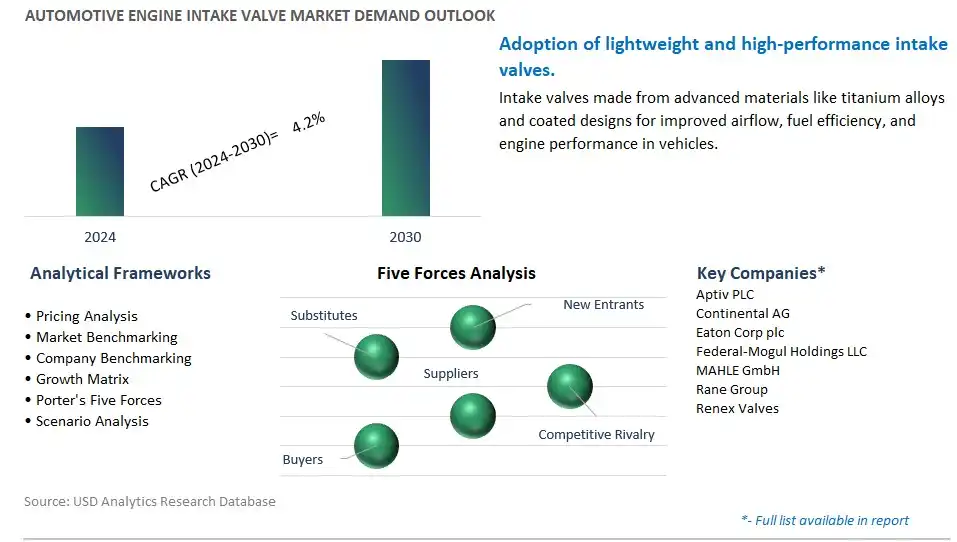
<h3>Automotive Engine Intake Valve Competitive Landscape</h3>The global Automotive Engine Intake Valve market is highly competitive with a large number of companies focusing on niche market segments. Amidst intense competitive conditions, Automotive Engine Intake Valve Companies are investing in new product launches and strengthening distribution channels. Key companies operating in the Automotive Engine Intake Valve Market Industry include- Aptiv PLC, Continental AG, Eaton Corp plc, Federal-Mogul Holdings LLC, MAHLE GmbH, Rane Group, Renex Valves.<h3>Automotive Engine Intake Valve Market Trend: Adoption of Lightweight and High-Performance Materials</h3>A prominent trend in the automotive engine intake valve market is the adoption of lightweight and high-performance materials. Engine intake valves play a critical role in the intake process by controlling the flow of air and fuel into the combustion chamber. Automakers and valve manufacturers are increasingly utilizing advanced materials such as titanium alloys, stainless steel, and nickel-based superalloys to develop intake valves that are not only lightweight but also offer improved strength, heat resistance, and corrosion resistance. This trend towards lightweight and high-performance materials in intake valves is driven by the need to optimize engine efficiency, reduce emissions, and enhance overall vehicle performance.<h3>Automotive Engine Intake Valve Market Driver: Demand for Fuel Efficiency and Emissions Reduction</h3>A significant driver shaping the automotive engine intake valve market is the demand for fuel efficiency and emissions reduction. With increasing regulatory pressure to meet stringent emissions standards and consumer demand for vehicles with improved fuel economy, automakers are focusing on enhancing engine efficiency and reducing environmental impact. Intake valves play a crucial role in optimizing engine performance by controlling airflow and combustion processes, directly impacting fuel efficiency and emissions levels. As automakers strive to meet these objectives, there's a growing demand for intake valves that offer superior airflow characteristics, thermal management, and durability to support the development of more efficient and environmentally friendly engines.<h3>Automotive Engine Intake Valve Market Opportunity: Development of Variable Valve Timing (VVT) Technologies</h3>An emerging opportunity in the automotive engine intake valve market lies in the development of variable valve timing (VVT) technologies. VVT systems adjust the timing of intake valve opening and closing to optimize engine performance under different operating conditions, such as engine speed, load, and temperature. By incorporating VVT technologies into intake valve designs, automakers can achieve greater control over engine airflow, combustion efficiency, and power output, leading to improvements in fuel economy, emissions, and performance. Manufacturers have the opportunity to develop innovative intake valves with integrated VVT mechanisms, offering automakers a competitive edge in the development of next-generation engines that meet the demands for improved efficiency and performance. This opportunity presents avenues for differentiation, innovation, and market leadership in the automotive engine intake valve segment.<h2>Automotive Engine Intake Valve Market Segmentation</h2><Strong>By Type</Strong>
Gasoline Engine Valve
Diesel Engine Valve
<Strong>By Application</Strong>
Passenger Vehicle
Commercial Vehicle
-Light Commercial Vehicles
-Heavy Commercial Vehicles<Strong>Geographical Analysis</Strong>
North America (United States, Canada, Mexico)
Europe (Germany, France, United Kingdom, Spain, Italy, Rest of Europe)
Asia Pacific (China, India, Japan, South Korea, Rest of Asia Pacific)
South America (Brazil, Argentina, Rest of South America)
Middle East and Africa (Saudi Arabia, UAE, Rest of Middle East, South Africa, Egypt, Rest of Africa<h2>Automotive Engine Intake Valve Companies</h2>Aptiv PLC
Continental AG
Eaton Corp plc
Federal-Mogul Holdings LLC
MAHLE GmbH
Rane Group
Renex Valves
*- List not Exhaustive
