
The global Degenerative Disc Disease Market Study analyzes and forecasts the market size across 6 regions and 24 countries for diverse segments including By Product (Drugs (Acetaminophen, Nsaids, Oral Steroids, Muscle Relaxants), Devices (Cervical Spine, Lumbar Spine, Thoracic Spine, Spinal Fusion)), By End-User (Hospitals, Ambulatory Surgical Centers, Orthopedic Centers, Others).
The Degenerative Disc Disease Market focuses on medical devices, therapies, and interventions for the management of degenerative disc disease, a spinal condition characterized by disc degeneration, disc herniation, back pain, and neurological symptoms. Treatment options include physical therapy, pain management, spinal fusion surgery, disc replacement surgery, and minimally invasive procedures targeting disc abnormalities and spinal instability. The market addresses the growing prevalence of degenerative disc disease and innovations in spine care to enhance patient outcomes and quality of life.
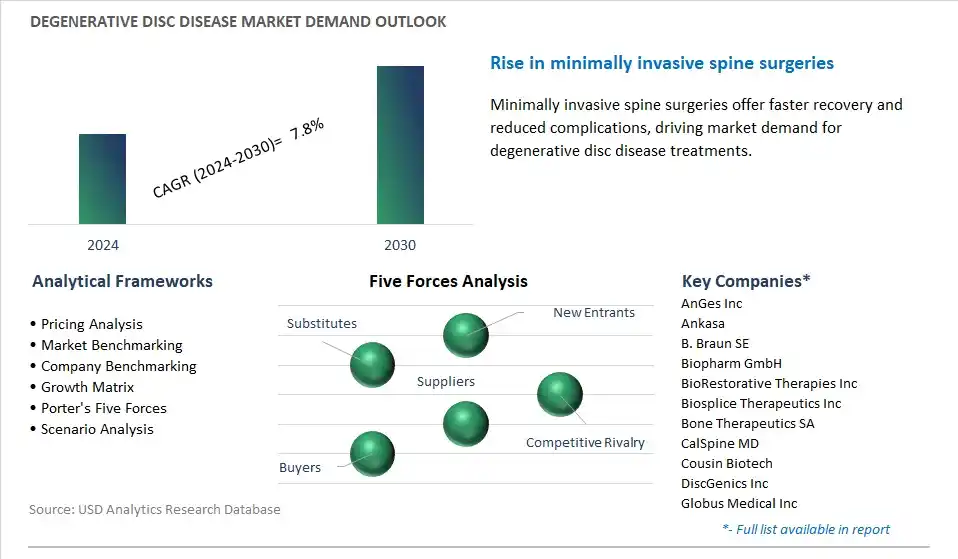
The global Degenerative Disc Disease Industry is highly competitive with a large number of companies focusing on niche market segments. Amidst intense competitive conditions, Degenerative Disc Disease Companies are investing in new product launches and strengthening distribution channels. Key companies operating in the Degenerative Disc Disease Industry include- AnGes Inc, Ankasa, B. Braun SE, Biopharm GmbH, BioRestorative Therapies Inc, Biosplice Therapeutics Inc, Bone Therapeutics SA, CalSpine MD, Cousin Biotech, DiscGenics Inc, Globus Medical Inc, Johnson and Johnson, Medtronic Plc, Pfizer Inc, RTI Surgical Inc, Smith and Nephew plc, Ulrich Medical USA Inc, Zimmer Biomet Holdings Inc.
A significant trend in the degenerative disc disease (DDD) market is the increasing adoption of minimally invasive treatment options and regenerative therapies for managing symptomatic disc degeneration. DDD, characterized by the progressive deterioration of intervertebral discs in the spine, often leads to chronic back pain, reduced mobility, and functional impairment. Traditional treatment modalities such as pain medications, physical therapy, and spinal fusion surgery have limitations in addressing the underlying cause of disc degeneration and may involve significant risks and long recovery times. In contrast, minimally invasive procedures such as percutaneous discectomy, endoscopic spine surgery, and spinal decompression offer targeted and less invasive alternatives for relieving disc-related symptoms, preserving spinal stability, and promoting faster recovery. Moreover, advancements in regenerative medicine approaches, including mesenchymal stem cell therapy, platelet-rich plasma (PRP) injections, and tissue engineering techniques, hold promise for repairing damaged discs, restoring disc hydration, and promoting tissue regeneration. By leveraging these innovative treatment modalities, healthcare providers can offer patients personalized and effective solutions for managing DDD, improving clinical outcomes, and enhancing patient satisfaction.
A primary driver fueling the degenerative disc disease market is the aging population and the associated increase in the prevalence of chronic spine disorders, such as disc degeneration and spinal osteoarthritis. With global demographic shifts and improvements in healthcare access and longevity, the number of older adults experiencing spine-related conditions continues to rise, driving demand for effective management strategies and innovative treatment options. Additionally, lifestyle factors such as sedentary behavior, obesity, and poor posture contribute to the development and progression of DDD, further exacerbating the burden on healthcare systems and driving the need for preventive and therapeutic interventions. As individuals seek to maintain active and independent lifestyles as they age, there is growing demand for safe, efficacious, and less invasive treatments that can alleviate pain, improve function, and preserve spinal mobility. The expanding market for degenerative disc disease treatments reflects the recognition of unmet medical needs, the economic burden of spine-related conditions, and the imperative to develop patient-centered care approaches that address the complexities of aging-related musculoskeletal disorders.
An emerging opportunity in the degenerative disc disease market lies in the integration of digital health solutions and telemedicine services for remote monitoring, patient education, and postoperative rehabilitation. As healthcare systems embrace digital transformation and virtual care delivery models, there is increasing potential to leverage technology-enabled platforms, wearable devices, and mobile applications to support patient self-management, facilitate remote consultations, and optimize treatment outcomes for individuals with DDD. Digital health solutions such as mobile health apps, tele-rehabilitation platforms, and wearable activity trackers can empower patients to track symptoms, monitor activity levels, and adhere to prescribed exercise regimens from the comfort of their homes. Moreover, telemedicine services offer opportunities for remote follow-up appointments, virtual consultations with multidisciplinary care teams, and real-time feedback on treatment progress, enhancing access to specialized care and improving patient engagement and satisfaction. By investing in digital health infrastructure, telehealth initiatives, and patient-centric technologies, healthcare providers can capitalize on this opportunity to deliver personalized, accessible, and cost-effective care for individuals living with degenerative disc disease, ultimately improving health outcomes and quality of life for affected patients.
Among the various products used in the treatment of degenerative disc disease (DDD), devices specifically designed for the lumbar spine are experiencing the fastest growth. This surge is propelled by several factors, including the increasing prevalence of DDD-related lumbar spine conditions and advancements in spinal device technologies. Degenerative disc disease often affects the lumbar spine, leading to symptoms such as chronic lower back pain, reduced mobility, and nerve compression. Devices designed for the lumbar spine, including spinal fusion systems, intervertebral disc prostheses, and minimally invasive surgical instruments, play a crucial role in addressing DDD-related symptoms and restoring spinal function. The growing demand for lumbar spine devices is also driven by the rising preference for less invasive treatment options that offer faster recovery times and improved patient outcomes compared to traditional surgical approaches. Additionally, the availability of these devices across various healthcare settings, including hospitals, ambulatory surgical centers, and orthopedic centers, ensures that patients have access to comprehensive and specialized care tailored to their individual needs. As the incidence of DDD continues to rise and technological innovations in spinal devices advance, the market for devices targeting the lumbar spine in degenerative disc disease is expected to continue its rapid growth trajectory, providing relief and improved quality of life for patients affected by this debilitating condition.
By Product
Drugs
-Acetaminophen
-Nsaids
-Oral Steroids
-Muscle Relaxants
Devices
-Cervical Spine
-Lumbar Spine
-Thoracic Spine
-Spinal Fusion
By End User
Hospitals
Ambulatory Surgical Centers
Orthopedic Centers
Others
Geographical Analysis
North America (United States, Canada, Mexico)
Europe (Germany, France, United Kingdom, Spain, Italy, Rest of Europe)
Asia Pacific (China, India, Japan, South Korea, Rest of Asia Pacific)
South America (Brazil, Argentina, Rest of South America)
Middle East and Africa (Saudi Arabia, UAE, Rest of Middle East, South Africa, Egypt, Rest of Africa)
AnGes Inc
Ankasa
B. Braun SE
Biopharm GmbH
BioRestorative Therapies Inc
Biosplice Therapeutics Inc
Bone Therapeutics SA
CalSpine MD
Cousin Biotech
DiscGenics Inc
Globus Medical Inc
Johnson and Johnson
Medtronic Plc
Pfizer Inc
RTI Surgical Inc
Smith and Nephew plc
Ulrich Medical USA Inc
Zimmer Biomet Holdings Inc
* List not Exhaustive
• Deepen your industry insights and navigate uncertainties for strategy formulation, CAPEX, and Operational decisions
• Gain access to detailed insights on the Degenerative Disc Disease Market, encompassing current market size, growth trends, and forecasts till 2030.
• Access detailed competitor analysis, enabling competitive advantage through a thorough understanding of market players, strategies, and potential differentiation opportunities
• Stay ahead of the curve with insights on technological advancements, innovations, and upcoming trends
• Identify lucrative investment avenues and expansion opportunities within the Degenerative Disc Disease Industry, guided by robust, data-backed analysis.
• Understand regional and global markets through country-wise analysis, regional market potential, regulatory nuances, and dynamics
• Execute strategies with confidence and speed through information, analytics, and insights on the industry value chain
• Corporate leaders, strategists, financial experts, shareholders, asset managers, and governmental representatives can make long-term planning scenarios and build an integrated and timely understanding of market dynamics
• Benefit from tailored solutions and expert consultation based on report insights, providing personalized strategies aligned with specific business needs.
TABLE OF CONTENTS
1 Introduction to 2024 Degenerative Disc Disease Market
1.1 Market Overview
1.2 Quick Facts
1.3 Scope/Objective of the Study
1.4 Market Definition
1.5 Countries and Regions Analyzed
1.6 Units, Currency, and Conversions
1.7 Industry Value Chain
2 Research Methodology
2.1 Market Size Estimation
2.2 Sources and Research Methodology
2.3 Data Triangulation
2.4 Assumptions and Limitations
3 Executive Summary
3.1 Global Degenerative Disc Disease Market Size Outlook, $ Million, 2021 to 2030
3.2 Degenerative Disc Disease Market Outlook by Type, $ Million, 2021 to 2030
3.3 Degenerative Disc Disease Market Outlook by Product, $ Million, 2021 to 2030
3.4 Degenerative Disc Disease Market Outlook by Application, $ Million, 2021 to 2030
3.5 Degenerative Disc Disease Market Outlook by Key Countries, $ Million, 2021 to 2030
4 Market Dynamics
4.1 Key Driving Forces of Degenerative Disc Disease Industry
4.2 Key Market Trends in Degenerative Disc Disease Industry
4.3 Potential Opportunities in Degenerative Disc Disease Industry
4.4 Key Challenges in Degenerative Disc Disease Industry
5 Market Factor Analysis
5.1 Value Chain Analysis
5.2 Competitive Landscape
5.2.1 Global Degenerative Disc Disease Market Share by Company (%), 2023
5.2.2 Product Offerings by Company
5.3 Porter’s Five Forces Analysis
5.4 Pricing Analysis and Outlook
6 Growth Outlook Across Scenarios
6.1 Growth Analysis-Case Scenario Definitions
6.2 Low Growth Scenario Forecasts
6.3 Reference Growth Scenario Forecasts
6.4 High Growth Scenario Forecasts
7 Global Degenerative Disc Disease Market Outlook by Segments
7.1 Degenerative Disc Disease Market Outlook by Segments, $ Million, 2021- 2030
By Product
Drugs
-Acetaminophen
-Nsaids
-Oral Steroids
-Muscle Relaxants
Devices
-Cervical Spine
-Lumbar Spine
-Thoracic Spine
-Spinal Fusion
By End User
Hospitals
Ambulatory Surgical Centers
Orthopedic Centers
Others
8 North America Degenerative Disc Disease Market Analysis and Outlook To 2030
8.1 Introduction to North America Degenerative Disc Disease Markets in 2024
8.2 North America Degenerative Disc Disease Market Size Outlook by Country, 2021-2030
8.2.1 United States
8.2.2 Canada
8.2.3 Mexico
8.3 North America Degenerative Disc Disease Market size Outlook by Segments, 2021-2030
By Product
Drugs
-Acetaminophen
-Nsaids
-Oral Steroids
-Muscle Relaxants
Devices
-Cervical Spine
-Lumbar Spine
-Thoracic Spine
-Spinal Fusion
By End User
Hospitals
Ambulatory Surgical Centers
Orthopedic Centers
Others
9 Europe Degenerative Disc Disease Market Analysis and Outlook To 2030
9.1 Introduction to Europe Degenerative Disc Disease Markets in 2024
9.2 Europe Degenerative Disc Disease Market Size Outlook by Country, 2021-2030
9.2.1 Germany
9.2.2 France
9.2.3 Spain
9.2.4 United Kingdom
9.2.4 Italy
9.2.5 Russia
9.2.6 Norway
9.2.7 Rest of Europe
9.3 Europe Degenerative Disc Disease Market Size Outlook by Segments, 2021-2030
By Product
Drugs
-Acetaminophen
-Nsaids
-Oral Steroids
-Muscle Relaxants
Devices
-Cervical Spine
-Lumbar Spine
-Thoracic Spine
-Spinal Fusion
By End User
Hospitals
Ambulatory Surgical Centers
Orthopedic Centers
Others
10 Asia Pacific Degenerative Disc Disease Market Analysis and Outlook To 2030
10.1 Introduction to Asia Pacific Degenerative Disc Disease Markets in 2024
10.2 Asia Pacific Degenerative Disc Disease Market Size Outlook by Country, 2021-2030
10.2.1 China
10.2.2 India
10.2.3 Japan
10.2.4 South Korea
10.2.5 Indonesia
10.2.6 Malaysia
10.2.7 Australia
10.2.8 Rest of Asia Pacific
10.3 Asia Pacific Degenerative Disc Disease Market size Outlook by Segments, 2021-2030
By Product
Drugs
-Acetaminophen
-Nsaids
-Oral Steroids
-Muscle Relaxants
Devices
-Cervical Spine
-Lumbar Spine
-Thoracic Spine
-Spinal Fusion
By End User
Hospitals
Ambulatory Surgical Centers
Orthopedic Centers
Others
11 South America Degenerative Disc Disease Market Analysis and Outlook To 2030
11.1 Introduction to South America Degenerative Disc Disease Markets in 2024
11.2 South America Degenerative Disc Disease Market Size Outlook by Country, 2021-2030
11.2.1 Brazil
11.2.2 Argentina
11.2.3 Rest of South America
11.3 South America Degenerative Disc Disease Market size Outlook by Segments, 2021-2030
By Product
Drugs
-Acetaminophen
-Nsaids
-Oral Steroids
-Muscle Relaxants
Devices
-Cervical Spine
-Lumbar Spine
-Thoracic Spine
-Spinal Fusion
By End User
Hospitals
Ambulatory Surgical Centers
Orthopedic Centers
Others
12 Middle East and Africa Degenerative Disc Disease Market Analysis and Outlook To 2030
12.1 Introduction to Middle East and Africa Degenerative Disc Disease Markets in 2024
12.2 Middle East and Africa Degenerative Disc Disease Market Size Outlook by Country, 2021-2030
12.2.1 Saudi Arabia
12.2.2 UAE
12.2.3 Oman
12.2.4 Rest of Middle East
12.2.5 Egypt
12.2.6 Nigeria
12.2.7 South Africa
12.2.8 Rest of Africa
12.3 Middle East and Africa Degenerative Disc Disease Market size Outlook by Segments, 2021-2030
By Product
Drugs
-Acetaminophen
-Nsaids
-Oral Steroids
-Muscle Relaxants
Devices
-Cervical Spine
-Lumbar Spine
-Thoracic Spine
-Spinal Fusion
By End User
Hospitals
Ambulatory Surgical Centers
Orthopedic Centers
Others
13 Company Profiles
13.1 Company Snapshot
13.2 SWOT Profiles
13.3 Products and Services
13.4 Recent Developments
13.5 Financial Profile
List of Companies
AnGes Inc
Ankasa
B. Braun SE
Biopharm GmbH
BioRestorative Therapies Inc
Biosplice Therapeutics Inc
Bone Therapeutics SA
CalSpine MD
Cousin Biotech
DiscGenics Inc
Globus Medical Inc
Johnson and Johnson
Medtronic Plc
Pfizer Inc
RTI Surgical Inc
Smith and Nephew plc
Ulrich Medical USA Inc
Zimmer Biomet Holdings Inc
14 Appendix
14.1 Customization Offerings
14.2 Subscription Services
14.3 Related Reports
14.4 Publisher Expertise
By Product
Drugs
-Acetaminophen
-Nsaids
-Oral Steroids
-Muscle Relaxants
Devices
-Cervical Spine
-Lumbar Spine
-Thoracic Spine
-Spinal Fusion
By End User
Hospitals
Ambulatory Surgical Centers
Orthopedic Centers
Others
The global Degenerative Disc Disease Market is one of the lucrative growth markets, poised to register a 7.8% growth (CAGR) between 2024 and 2030.
Emerging Markets across Asia Pacific, Europe, and Americas present robust growth prospects.
AnGes Inc, Ankasa, B. Braun SE, Biopharm GmbH, BioRestorative Therapies Inc, Biosplice Therapeutics Inc, Bone Therapeutics SA, CalSpine MD, Cousin Biotech, DiscGenics Inc, Globus Medical Inc, Johnson and Johnson, Medtronic Plc, Pfizer Inc, RTI Surgical Inc, Smith and Nephew plc, Ulrich Medical USA Inc, Zimmer Biomet Holdings Inc
Base Year- 2023; Estimated Year- 2024; Historic Period- 2018-2023; Forecast period- 2024 to 2030; Currency: USD; Volume