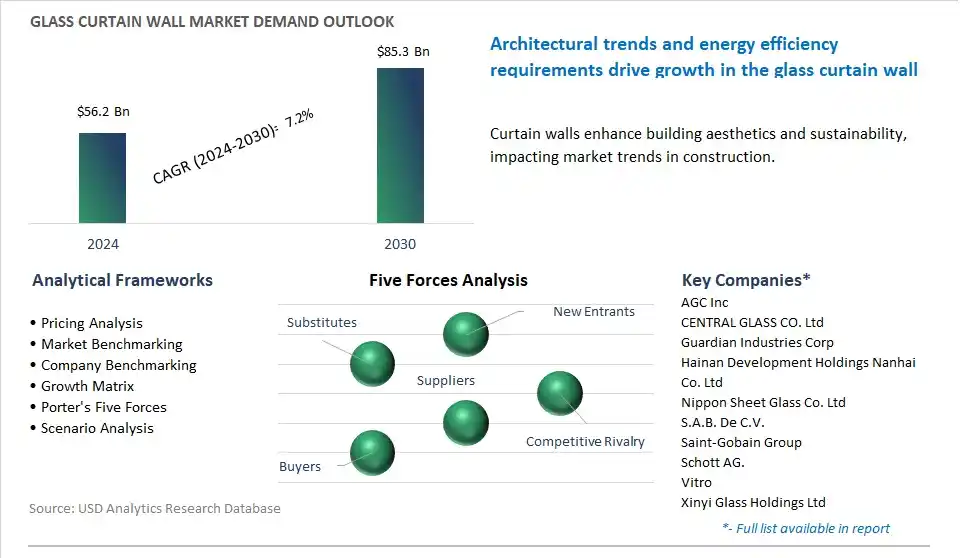
Global Glass Curtain Market is expected to reach 85.3 Billion USD by 2034 from 56.2 Billion USD in 2025, at a CAGR of 7.2%.
The global Glass Curtain Wall Market Study analyzes and forecasts the market size across 6 regions and 24 countries for diverse segments -By Type (Unitized Systems, Stick Systems), By Glazing Application (Exterior Glazed, Interior Glazed), By End-User (Residential, Office Buildings, Retail Spaces and Hotels, Healthcare Facilities, Educational Institutions, Others), By Sales Channel (Manufacturer, Installer).
An Introduction to Global Glass Curtain Wall Market in 2025
The glass curtain wall market is experiencing significant growth driven by the increasing demand for energy-efficient, aesthetically pleasing, and sustainable building envelope solutions in commercial, residential, and institutional construction projects. Key trends shaping the future of the industry include the adoption of advanced glass technologies, structural systems, and facade engineering techniques to optimize thermal performance, daylighting, and occupant comfort while meeting stringent building codes, green building certifications, and climate resilience standards. As architects, developers, and building owners seek to create iconic landmarks, high-performance buildings, and healthy indoor environments, there's a growing need for glass curtain walls that offer superior insulation, solar control, and noise reduction properties while enhancing architectural design flexibility, transparency, and visual appeal. Moreover, advancements in glass curtain wall design, fabrication, and installation are driving market expansion by enabling the integration of smart glass, dynamic shading, and renewable energy systems to enhance building performance, occupant well-being, and operational efficiency while reducing energy consumption, carbon footprint, and lifecycle costs associated with conventional building envelopes. Additionally, the growing adoption of glass curtain walls in mixed-use developments, urban regeneration projects, and high-rise buildings is fueling demand for customized solutions that address specific project requirements, site conditions, and climate challenges while promoting sustainable urbanization and responsible land use. Furthermore, the integration of glass curtain walls with Building Information Modeling (BIM), parametric design tools, and digital fabrication technologies is driving innovation and market growth in the construction industry, enabling the development of smarter, more resilient, and more sustainable solutions for the future of urban architecture, building performance, and environmental stewardship.
Glass Curtain Wall Market Competitive Landscape
The market report analyses the leading companies in the industry including AGC Inc, CENTRAL GLASS CO. Ltd, Guardian Industries Corp, Hainan Development Holdings Nanhai Co. Ltd, Nippon Sheet Glass Co. Ltd, S.A.B. De C.V., Saint-Gobain Group, Schott AG., Vitro, Xinyi Glass Holdings Ltd, Yuanda China Holdings Ltd.
Glass Curtain Wall Market Dynamics
Glass Curtain Wall Market Trend: Increasing Demand for Sustainable and Energy-Efficient Building Solutions
A significant trend in the glass curtain wall market is the growing demand for sustainable and energy-efficient building solutions driven by environmental concerns and regulatory requirements. Glass curtain walls, characterized by their transparency, aesthetics, and ability to maximize natural light, are gaining popularity in commercial and residential construction projects worldwide. With buildings accounting for a significant portion of global energy consumption and greenhouse gas emissions, there is a rising focus on green building practices and energy performance standards. Glass curtain walls offer benefits such as thermal insulation, daylighting, and solar heat gain control, helping to reduce reliance on artificial lighting, heating, and cooling systems, thereby lowering energy consumption and operating costs. This trend is reshaping the glass curtain wall market towards innovative designs and materials that prioritize sustainability, occupant comfort, and environmental performance in building construction.
Glass Curtain Wall Market Driver: Urbanization and Modernization of Infrastructure
A key driver propelling the glass curtain wall market is urbanization and the modernization of infrastructure in urban areas, where glass facades are increasingly used to create iconic landmarks, office towers, shopping malls, and high-rise residential buildings. As cities grow and populations concentrate in urban centers, there is a demand for innovative architectural solutions that optimize land use, enhance urban aesthetics, and improve livability. Glass curtain walls offer architects and developers the flexibility to design modern and visually striking buildings that reflect the aspirations of urban communities. Additionally, glass curtain walls contribute to the revitalization of urban landscapes, attracting investment, tourism, and economic development to city centers. The ongoing urbanization trend and the need for sustainable and efficient building solutions drive market demand for glass curtain walls as a key component of contemporary urban architecture and infrastructure projects.
Glass Curtain Wall Market Opportunity: Integration of Smart Technologies and Building Automation
An opportunity for market expansion lies in the integration of smart technologies and building automation systems into glass curtain wall designs, offering enhanced functionality, comfort, and efficiency for building occupants. With the rise of the Internet of Things (IoT) and digitalization trends in the construction industry, there is increasing demand for intelligent building solutions that optimize energy usage, enhance security, and provide personalized experiences for users. Glass curtain walls can be equipped with sensors, actuators, and control systems to monitor environmental conditions, adjust shading and lighting levels, and optimize building performance in real time. Additionally, smart glass technologies such as electrochromic glass, thermochromic glass, and switchable privacy glass offer opportunities to enhance the functionality and versatility of glass curtain walls, providing occupants with dynamic views, privacy control, and daylight harvesting capabilities. By embracing innovation and collaborating with technology providers, glass curtain wall manufacturers can seize opportunities to differentiate their products, add value for customers, and drive market growth in the era of smart and sustainable buildings.
Glass Curtain Wall Market Share Analysis: Unitized Systems segment generated the highest revenue in the industry
The Unitized Systems segment is the largest segment in the Glass Curtain Wall Market, driven by diverse key factors that underscore the advantages and widespread adoption of unitized curtain wall systems in modern architectural projects and commercial buildings. Unitized curtain wall systems are characterized by prefabricated panels or modules that are assembled and glazed off-site in a controlled factory environment before being transported to the construction site for installation. One primary reason for the dominance of the Unitized Systems segment is the efficiency, quality, and speed of installation associated with unitized curtain wall systems compared to stick-built curtain wall systems. Unitized systems offer significant time and labor savings during the construction phase, as they can be installed more rapidly and with fewer on-site labor requirements, reducing project timelines and construction costs. Additionally, unitized curtain wall panels are manufactured under controlled conditions, ensuring high precision, quality control, and consistency in panel dimensions, glass alignment, and joint integrity, which contribute to enhanced aesthetic appeal, weather performance, and durability of the curtain wall system. In addition, unitized systems offer architects, designers, and building owners greater design flexibility, customization options, and architectural expression, as they can accommodate complex geometries, custom configurations, and a variety of glazing options, including low-E coatings, insulated glass units, and decorative finishes. Further, unitized curtain wall systems are well-suited for high-rise buildings, skyscrapers, and large-scale commercial projects where speed of construction, structural integrity, and building envelope performance are paramount considerations. The ability to prefabricate and install large sections of curtain wall panels in a sequential manner enables faster enclosure of the building envelope, facilitating interior fit-out activities, tenant occupancy, and project completion deadlines. With the growing demand for energy-efficient, sustainable, and visually striking building facades in urban landscapes, the Unitized Systems segment of the Glass Curtain Wall Market is expected to maintain its leadership position, offering architects, developers, and contractors versatile and cost-effective solutions for achieving design excellence, building performance, and occupant comfort in diverse architectural projects and construction markets.
Glass Curtain Wall Market Share Analysis: Exterior Glazed Segment is poised to register the fastest growth rate (CAGR) over the forecast period to 2034
The Exterior Glazed segment is the fastest-growing segment in the Glass Curtain Wall Market, driven by diverse key factors that underscore the increasing preference for exterior glazed curtain wall systems in contemporary architectural designs, building aesthetics, and performance requirements. Exterior glazed curtain wall systems feature glass panels installed on the exterior face of the building structure, providing a sleek, transparent facade that enhances natural light penetration, visual transparency, and connection to the surrounding environment. One primary reason for the rapid growth of the Exterior Glazed segment is the growing demand for energy-efficient, sustainable building envelopes that prioritize daylighting, thermal performance, and occupant comfort while reducing reliance on artificial lighting, heating, and cooling systems. Exterior glazed curtain wall systems allow for maximum utilization of natural daylight, solar heat gain, and passive ventilation strategies, which help to minimize energy consumption, improve indoor environmental quality, and reduce operating costs over the life cycle of the building. Additionally, exterior glazed curtain wall systems offer architects, designers, and building owners greater design flexibility, creative expression, and architectural innovation, as they enable the incorporation of large expanses of glass, dynamic facade geometries, and seamless transitions between interior and exterior spaces. In addition, advancements in glass technology, coatings, and glazing systems have enhanced the performance, durability, and functionality of exterior glazed curtain wall systems, enabling them to meet stringent building codes, energy standards, and sustainability certifications while maintaining design aesthetics and structural integrity. Further, exterior glazed curtain wall systems are well-suited for a wide range of building typologies and applications, including commercial offices, institutional buildings, residential towers, and mixed-use developments, where they contribute to iconic landmarks, urban skylines, and vibrant cityscapes. With the growing emphasis on architectural transparency, daylight optimization, and environmental stewardship in building design and construction, the Exterior Glazed segment of the Glass Curtain Wall Market is poised for significant growth, offering architects, developers, and building owners innovative and high-performance solutions for achieving design excellence, occupant well-being, and sustainable urban development in a rapidly urbanizing world.
Glass Curtain Wall Market Share Analysis: Healthcare Facilities Segment is poised to register the fastest growth rate (CAGR) over the forecast period to 2034
The healthcare facilities segment is experiencing rapid growth within the glass curtain wall market due to diverse key factors. With the increasing emphasis on patient comfort and healing environments, healthcare institutions are incorporating more natural light and open spaces into their designs. Glass curtain walls offer an ideal solution, allowing ample sunlight to penetrate indoor spaces while providing a modern aesthetic. Additionally, advancements in glass technology have led to the development of specialized glass that offers enhanced privacy, sound insulation, and even antibacterial properties, catering specifically to the needs of healthcare settings. Further, the global focus on sustainable building practices has prompted healthcare facilities to adopt energy-efficient solutions, and glass curtain walls can contribute to reducing energy consumption by maximizing natural lighting and minimizing the need for artificial lighting. As a result, healthcare facilities are increasingly turning to glass curtain walls for their construction and renovation projects, driving significant growth in this segment of the market.
Glass Curtain Wall Market Report Segmentation
By Type
Unitized Systems
Stick Systems
By Glazing Application
Exterior Glazed
Interior Glazed
By End-User
Residential
Office Buildings
Retail Spaces and Hotels
Healthcare Facilities
Educational Institutions
Others
By Sales Channel
Manufacturer
Installer
Regions Included
North America (US, Canada, Mexico)
Europe (Germany, UK, France, Spain, Italy, Russia, Rest of Europe)
Asia Pacific (China, India, Japan, South Korea, Australia, South East Asia, Rest of Asia)
South America (Brazil, Argentina, Rest of South America)
Middle East and Africa (Saudi Arabia, UAE, Rest of Middle East, South Africa, Egypt, Rest of Africa)
Glass Curtain Wall Companies Profiled in the Market Study
AGC Inc
CENTRAL GLASS CO. Ltd
Guardian Industries Corp
Hainan Development Holdings Nanhai Co. Ltd
Nippon Sheet Glass Co. Ltd
S.A.B. De C.V.
Saint-Gobain Group
Schott AG.
Vitro
Xinyi Glass Holdings Ltd
Yuanda China Holdings Ltd
*- List Not Exhaustive
