
The global Microbial Agricultural Inoculants Market Study analyzes and forecasts the market size across 6 regions and 24 countries for diverse segments -By Type (Plant growth promoting micro-organisms, Biological pest control agents, Plant disease-resistance stimulants), By Application (Seed inoculation, Soil inoculation, Others).
The future of microbial agricultural inoculants is shaped by several key trends, including increasing demand for sustainable farming practices, advancements in microbial biotechnology and formulation techniques, and growing emphasis on soil health, crop productivity, and environmental stewardship. Microbial agricultural inoculants are formulations containing beneficial microorganisms such as bacteria, fungi, and algae, used to enhance plant growth, nutrient uptake, and soil fertility in agricultural systems. With the rise of climate change, soil degradation, and resource constraints, there's a growing need for microbial inoculants that offer biofertilization, biological pest control, and soil remediation capabilities while reducing reliance on chemical inputs and minimizing environmental impact. Moreover, advancements in microbial strain selection, genetic engineering, and carrier materials are driving the development of next-generation inoculants with improved efficacy, shelf-life, and compatibility with diverse cropping systems and environmental conditions. Additionally, the integration of microbial inoculants with precision agriculture technologies such as seed coating, drip irrigation, and biofumigation is enabling targeted application, optimized resource use, and sustainable intensification of agriculture, promoting soil health, crop resilience, and farmer profitability. Collaboration between microbial biologists, agronomists, crop consultants, and farmers is essential to drive innovation, ensure inoculant performance, and address market demands in the microbial agricultural inoculants industry.
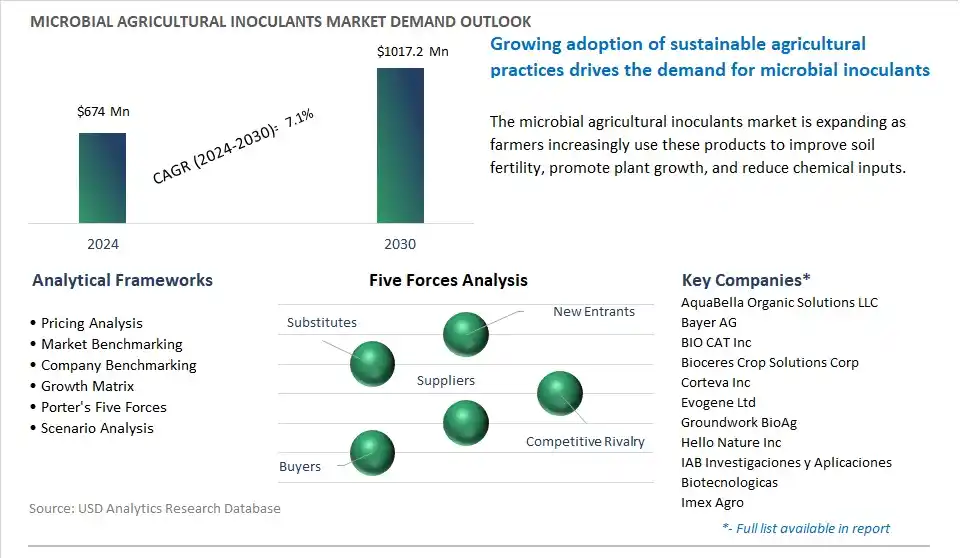
The market report analyses the leading companies in the industry including AquaBella Organic Solutions LLC, Bayer AG, BIO CAT Inc, Bioceres Crop Solutions Corp, Corteva Inc, Evogene Ltd, Groundwork BioAg, Hello Nature Inc, IAB Investigaciones y Aplicaciones Biotecnologicas, Imex Agro, Kemin Industries Inc, Lallemand Inc, Mycorrhizal Applications, New Edge Microbials Pty Ltd, Novozymes AS, Premier Tech Ltd, Queensland Agricultural Seeds, Soil Technologies Corp, Verdesian Life Sciences LLC.
A significant trend in the microbial agricultural inoculants market is the increasing adoption of sustainable agricultural practices. With growing concerns over soil degradation, chemical runoff, and environmental sustainability, there's a shift towards eco-friendly farming methods that promote soil health, crop productivity, and long-term agricultural sustainability. Microbial agricultural inoculants, which consist of beneficial microorganisms such as bacteria, fungi, and algae, play a vital role in enhancing soil fertility, nutrient uptake, and plant growth while reducing reliance on synthetic fertilizers and pesticides. This trend is driven by regulatory initiatives promoting sustainable agriculture, consumer preferences for organic and sustainably sourced food products, and the need to mitigate the environmental impact of conventional farming practices. As farmers seek to optimize crop yields while minimizing ecological footprint, the demand for microbial agricultural inoculants as a natural and sustainable solution for soil and crop management is expected to continue rising.
A major driver of the microbial agricultural inoculants market is the growing focus on soil health and crop yield optimization. As global population increases and arable land becomes scarcer, there's an intensified need to maximize agricultural productivity and ensure food security for future generations. Microbial inoculants offer a targeted approach to improving soil fertility, enhancing nutrient cycling, and promoting plant resilience to environmental stressors such as drought, disease, and pests. With advancements in biotechnology and microbiology, there's a growing understanding of the symbiotic relationships between plants and beneficial microorganisms, leading to the development of tailored inoculant formulations for specific crops and soil types. Additionally, the adoption of precision agriculture technologies and digital farming solutions enables farmers to optimize inoculant application strategies and monitor soil health in real-time, driving further demand for microbial agricultural inoculants as essential components of modern agricultural practices.
An opportunity within the microbial agricultural inoculants market lies in the expansion into new crop varieties and geographical regions. While microbial inoculants are commonly used in traditional crops such as cereals, legumes, and oilseeds, there's potential to explore new crop types such as fruits, vegetables, and specialty crops where microbial interactions play a crucial role in plant health and productivity. Additionally, there's an opportunity to expand into geographical regions with diverse agroecological conditions and farming systems, where microbial inoculants can address specific soil fertility challenges and agronomic constraints. By conducting research trials, collaborating with agricultural researchers and extension services, and establishing partnerships with local distributors and growers, companies can introduce their microbial inoculant products to new crop markets and geographic regions, thereby expanding their customer base and driving growth in the microbial agricultural inoculants market.
The largest segment in the Microbial Agricultural Inoculants Market is Plant growth promoting micro-organisms (PGPM). This dominance is primarily driving demand within this sector. PGPMs are beneficial microorganisms that colonize the rhizosphere and enhance plant growth and productivity through various mechanisms, such as nitrogen fixation, phosphorus solubilization, production of plant growth hormones, and suppression of soil-borne pathogens. PGPMs form symbiotic relationships with plants, improving nutrient uptake efficiency, drought tolerance, and disease resistance, leading to higher crop yields and quality. Additionally, PGPMs offer sustainable and environmentally friendly solutions for enhancing soil fertility and plant health, reducing the need for chemical fertilizers and pesticides. Further, the increasing awareness of the importance of soil health, sustainable agriculture practices, and organic farming drives the demand for PGPM-based inoculants among farmers and growers worldwide. Furthermore, advancements in microbial research, biotechnology, and formulation technologies have led to the development of novel PGPM strains and inoculant formulations tailored for specific crops and agroecological conditions, further supporting the dominance of the Plant growth promoting micro-organisms segment in the Microbial Agricultural Inoculants Market.
The fastest-growing segment in the Microbial Agricultural Inoculants Market is Seed inoculation. Seed inoculation involves the application of beneficial microorganisms, such as rhizobia for legumes or mycorrhizal fungi, directly onto seeds before planting. This method allows for the targeted delivery of microbial inoculants to the rhizosphere, where they can establish symbiotic relationships with plant roots from the early stages of plant growth. Seed inoculation offers potential advantages, including ease of application, cost-effectiveness, and enhanced efficiency in delivering inoculants to plants. Additionally, seed inoculants can provide immediate benefits to plants, such as improved nutrient uptake, disease resistance, and stress tolerance, leading to faster and more vigorous crop establishment. Further, seed inoculation is compatible with various cropping systems and agronomic practices, making it suitable for both conventional and organic farming operations. Furthermore, increasing adoption of precision agriculture techniques and seed treatment technologies drives the demand for seed inoculants as growers seek to optimize crop performance, reduce input costs, and minimize environmental impacts, supporting the rapid growth of the Seed inoculation segment in the Microbial Agricultural Inoculants Market.
By Type
Plant growth promoting micro-organisms
Biological pest control agents
Plant disease-resistance stimulants
By Application
Seed inoculation
Soil inoculation
Others
Regions Included
North America (US, Canada, Mexico)
Europe (Germany, UK, France, Spain, Italy, Russia, Rest of Europe)
Asia Pacific (China, India, Japan, South Korea, Australia, South East Asia, Rest of Asia)
South America (Brazil, Argentina, Rest of South America)
Middle East and Africa (Saudi Arabia, UAE, Rest of Middle East, South Africa, Egypt, Rest of Africa)
AquaBella Organic Solutions LLC
Bayer AG
BIO CAT Inc
Bioceres Crop Solutions Corp
Corteva Inc
Evogene Ltd
Groundwork BioAg
Hello Nature Inc
IAB Investigaciones y Aplicaciones Biotecnologicas
Imex Agro
Kemin Industries Inc
Lallemand Inc
Mycorrhizal Applications
New Edge Microbials Pty Ltd
Novozymes AS
Premier Tech Ltd
Queensland Agricultural Seeds
Soil Technologies Corp
Verdesian Life Sciences LLC
*- List Not Exhaustive
TABLE OF CONTENTS
1 Introduction to 2024 Microbial Agricultural Inoculants Market
1.1 Market Overview
1.2 Quick Facts
1.3 Scope/Objective of the Study
1.4 Market Definition
1.5 Countries and Regions Covered
1.6 Units, Currency, and Conversions
1.7 Industry Value Chain
2 Research Methodology
2.1 Market Size Estimation
2.2 Sources and Research Methodology
2.3 Data Triangulation
2.4 Assumptions and Limitations
3 Executive Summary
3.1 Global Microbial Agricultural Inoculants Market Size Outlook, $ Million, 2021 to 2030
3.2 Microbial Agricultural Inoculants Market Outlook by Type, $ Million, 2021 to 2030
3.3 Microbial Agricultural Inoculants Market Outlook by Product, $ Million, 2021 to 2030
3.4 Microbial Agricultural Inoculants Market Outlook by Application, $ Million, 2021 to 2030
3.5 Microbial Agricultural Inoculants Market Outlook by Key Countries, $ Million, 2021 to 2030
4 Market Dynamics
4.1 Key Driving Forces of Microbial Agricultural Inoculants Industry
4.2 Key Market Trends in Microbial Agricultural Inoculants Industry
4.3 Potential Opportunities in Microbial Agricultural Inoculants Industry
4.4 Key Challenges in Microbial Agricultural Inoculants Industry
5 Market Factor Analysis
5.1 Value Chain Analysis
5.2 Competitive Landscape
5.2.1 Global Microbial Agricultural Inoculants Market Share by Company (%), 2023
5.2.2 Product Offerings by Company
5.3 Porter’s Five Forces Analysis
5.4 Pricing Analysis and Outlook
6 Growth Outlook Across Scenarios
6.1 Growth Analysis-Case Scenario Definitions
6.2 Low Growth Scenario Forecasts
6.3 Reference Growth Scenario Forecasts
6.4 High Growth Scenario Forecasts
7 Global Microbial Agricultural Inoculants Market Outlook by Segments
7.1 Microbial Agricultural Inoculants Market Outlook by Segments, $ Million, 2021- 2030
By Type
Plant growth promoting micro-organisms
Biological pest control agents
Plant disease-resistance stimulants
By Application
Seed inoculation
Soil inoculation
Others
8 North America Microbial Agricultural Inoculants Market Analysis and Outlook To 2030
8.1 Introduction to North America Microbial Agricultural Inoculants Markets in 2024
8.2 North America Microbial Agricultural Inoculants Market Size Outlook by Country, 2021-2030
8.2.1 United States
8.2.2 Canada
8.2.3 Mexico
8.3 North America Microbial Agricultural Inoculants Market size Outlook by Segments, 2021-2030
By Type
Plant growth promoting micro-organisms
Biological pest control agents
Plant disease-resistance stimulants
By Application
Seed inoculation
Soil inoculation
Others
9 Europe Microbial Agricultural Inoculants Market Analysis and Outlook To 2030
9.1 Introduction to Europe Microbial Agricultural Inoculants Markets in 2024
9.2 Europe Microbial Agricultural Inoculants Market Size Outlook by Country, 2021-2030
9.2.1 Germany
9.2.2 France
9.2.3 Spain
9.2.4 United Kingdom
9.2.4 Italy
9.2.5 Russia
9.2.6 Norway
9.2.7 Rest of Europe
9.3 Europe Microbial Agricultural Inoculants Market Size Outlook by Segments, 2021-2030
By Type
Plant growth promoting micro-organisms
Biological pest control agents
Plant disease-resistance stimulants
By Application
Seed inoculation
Soil inoculation
Others
10 Asia Pacific Microbial Agricultural Inoculants Market Analysis and Outlook To 2030
10.1 Introduction to Asia Pacific Microbial Agricultural Inoculants Markets in 2024
10.2 Asia Pacific Microbial Agricultural Inoculants Market Size Outlook by Country, 2021-2030
10.2.1 China
10.2.2 India
10.2.3 Japan
10.2.4 South Korea
10.2.5 Indonesia
10.2.6 Malaysia
10.2.7 Australia
10.2.8 Rest of Asia Pacific
10.3 Asia Pacific Microbial Agricultural Inoculants Market size Outlook by Segments, 2021-2030
By Type
Plant growth promoting micro-organisms
Biological pest control agents
Plant disease-resistance stimulants
By Application
Seed inoculation
Soil inoculation
Others
11 South America Microbial Agricultural Inoculants Market Analysis and Outlook To 2030
11.1 Introduction to South America Microbial Agricultural Inoculants Markets in 2024
11.2 South America Microbial Agricultural Inoculants Market Size Outlook by Country, 2021-2030
11.2.1 Brazil
11.2.2 Argentina
11.2.3 Rest of South America
11.3 South America Microbial Agricultural Inoculants Market size Outlook by Segments, 2021-2030
By Type
Plant growth promoting micro-organisms
Biological pest control agents
Plant disease-resistance stimulants
By Application
Seed inoculation
Soil inoculation
Others
12 Middle East and Africa Microbial Agricultural Inoculants Market Analysis and Outlook To 2030
12.1 Introduction to Middle East and Africa Microbial Agricultural Inoculants Markets in 2024
12.2 Middle East and Africa Microbial Agricultural Inoculants Market Size Outlook by Country, 2021-2030
12.2.1 Saudi Arabia
12.2.2 UAE
12.2.3 Oman
12.2.4 Rest of Middle East
12.2.5 Egypt
12.2.6 Nigeria
12.2.7 South Africa
12.2.8 Rest of Africa
12.3 Middle East and Africa Microbial Agricultural Inoculants Market size Outlook by Segments, 2021-2030
By Type
Plant growth promoting micro-organisms
Biological pest control agents
Plant disease-resistance stimulants
By Application
Seed inoculation
Soil inoculation
Others
13 Company Profiles
13.1 Company Snapshot
13.2 SWOT Profiles
13.3 Products and Services
13.4 Recent Developments
13.5 Financial Profile
AquaBella Organic Solutions LLC
Bayer AG
BIO CAT Inc
Bioceres Crop Solutions Corp
Corteva Inc
Evogene Ltd
Groundwork BioAg
Hello Nature Inc
IAB Investigaciones y Aplicaciones Biotecnologicas
Imex Agro
Kemin Industries Inc
Lallemand Inc
Mycorrhizal Applications
New Edge Microbials Pty Ltd
Novozymes AS
Premier Tech Ltd
Queensland Agricultural Seeds
Soil Technologies Corp
Verdesian Life Sciences LLC
14 Appendix
14.1 Customization Offerings
14.2 Subscription Services
14.3 Related Reports
14.4 Publisher Expertise
By Type
Plant growth promoting micro-organisms
Biological pest control agents
Plant disease-resistance stimulants
By Application
Seed inoculation
Soil inoculation
Others
Countries Analyzed
North America (US, Canada, Mexico)
Europe (Germany, UK, France, Spain, Italy, Russia, Rest of Europe)
Asia Pacific (China, India, Japan, South Korea, Australia, South East Asia, Rest of Asia)
South America (Brazil, Argentina, Rest of South America)
Middle East and Africa (Saudi Arabia, UAE, Rest of Middle East, South Africa, Egypt, Rest of Africa)
Global Microbial Agricultural Inoculants is forecast to reach $1017.2 Million in 2030 from $674 Million in 2024, registering a CAGR of 7.1%
Emerging Markets across Asia Pacific, Europe, and Americas present robust growth prospects.
AquaBella Organic Solutions LLC, Bayer AG, BIO CAT Inc, Bioceres Crop Solutions Corp, Corteva Inc, Evogene Ltd, Groundwork BioAg, Hello Nature Inc, IAB Investigaciones y Aplicaciones Biotecnologicas, Imex Agro, Kemin Industries Inc, Lallemand Inc, Mycorrhizal Applications, New Edge Microbials Pty Ltd, Novozymes AS, Premier Tech Ltd, Queensland Agricultural Seeds, Soil Technologies Corp, Verdesian Life Sciences LLC
Base Year- 2023; Estimated Year- 2024; Historic Period- 2018-2023; Forecast period- 2024 to 2030; Currency: Revenue (USD); Volume