
The Neurosurgery Devices Market study analyzes and forecasts the market size across 6 regions and 24 countries for diverse segments- By Product (Neurosurgery Devices, External Neurosurgery Devices, Neuroendoscopy Devices), By Application (Spinal Cord Stimulation, Deep Brain Stimulation, Neuro-endoscopy), By End-User (Hospitals, Ambulatory Surgery Center, Others).
Neurosurgery devices are specialized instruments, implants, and systems used in surgical procedures to treat conditions affecting the brain, spinal cord, and peripheral nerves. In 2024, the market for neurosurgery devices continues to evolve, driven by technological advancements, expanding indications for surgical intervention, and the demand for minimally invasive approaches that reduce patient morbidity and improve surgical outcomes. Neurosurgery devices encompass a wide range of products, including surgical instruments (such as drills, retractors, and microscopes), implants (such as plates, screws, and shunts), and navigation systems (such as stereotactic guidance and intraoperative imaging), which enable neurosurgeons to perform precise, targeted interventions with optimal safety and efficacy. With innovations in materials science, robotics, and imaging technologies, neurosurgery devices offer improved ergonomics, visualization, and tissue preservation, enhancing the surgeon's ability to access and treat complex neuroanatomical structures. Moreover, the integration of neurophysiological monitoring, intraoperative imaging, and augmented reality visualization enhances surgical planning and execution, enabling real-time feedback and ensuring optimal patient outcomes. As neurosurgical techniques continue to advance and the demand for neurosurgical interventions grows, neurosurgery devices play a critical role in enabling neurosurgeons to address a wide range of neurological conditions, from brain tumors and vascular malformations to spinal cord injuries and movement disorders, ultimately improving patient outcomes and quality of life.
A prominent trend in the neurosurgery devices market is the continual advancements in minimally invasive neurosurgical techniques and technologies. Surgeons are increasingly adopting minimally invasive approaches for neurosurgical procedures to reduce patient trauma, shorten recovery times, and improve surgical outcomes. This trend is driving the demand for neurosurgery devices that support minimally invasive procedures, such as neuroendoscopes, stereotactic systems, and navigational systems. Additionally, technological innovations, such as robotic-assisted surgery and image-guided navigation, are further enhancing the precision and safety of minimally invasive neurosurgical interventions. As the adoption of minimally invasive techniques continues to grow, the neurosurgery devices market is witnessing a shift towards less invasive and more patient-friendly surgical approaches.
A key driver fueling the demand for neurosurgery devices is the rising incidence of neurological disorders and trauma worldwide. Neurological disorders, including brain tumors, stroke, epilepsy, and neurodegenerative diseases, impose a significant burden on individuals and healthcare systems, requiring surgical intervention for diagnosis and treatment. Additionally, traumatic brain injuries resulting from accidents, falls, and sports-related injuries contribute to the demand for neurosurgery devices, such as cranial implants, neurostimulation systems, and neurovascular stents. As the global population ages and lifestyles change, the prevalence of neurological disorders and trauma is expected to increase, driving market growth and innovation in neurosurgery devices to meet the growing clinical needs.
A significant opportunity for the neurosurgery devices market lies in the integration of advanced imaging and navigation technologies to enhance surgical precision and outcomes. High-resolution imaging modalities, such as magnetic resonance imaging (MRI), computed tomography (CT), and intraoperative neuro-navigation systems, provide detailed anatomical information and enable surgeons to visualize critical structures in real-time during neurosurgical procedures. By integrating advanced imaging and navigation technologies into neurosurgery devices, manufacturers can improve surgical planning, intraoperative guidance, and postoperative assessment, leading to more precise and effective surgical interventions. Furthermore, the integration of artificial intelligence (AI) and machine learning (ML) algorithms can analyze imaging data and provide predictive insights to support surgical decision-making and optimize patient outcomes. Collaborations between neurosurgeons, medical device companies, and imaging technology providers can drive innovation in neurosurgery devices, unlocking new opportunities for growth and differentiation in the market.
Among the segments listed, deep brain stimulation (DBS) devices for neurosurgery in hospitals are experiencing rapid growth in the neurosurgery devices market. This growth is primarily driven by the increasing prevalence of neurological disorders such as Parkinson's disease, essential tremor, and dystonia, and the expanding application of DBS as a surgical intervention for managing these conditions. DBS involves the implantation of electrodes into specific regions of the brain to deliver electrical impulses that modulate abnormal neural activity, effectively alleviating symptoms and improving quality of life for patients. As hospitals strive to enhance their neurosurgical capabilities and offer advanced treatment options for neurological conditions, the demand for DBS devices continues to surge. Moreover, ongoing advancements in DBS technology, including improvements in electrode design, targeting accuracy, and programming capabilities, further contribute to the growth of this segment. With the rising incidence of neurological disorders and increasing awareness of DBS therapy's efficacy, particularly in improving motor symptoms and enhancing patient outcomes, DBS devices represent a key growth segment in the neurosurgery devices market, facilitating enhanced neurosurgical interventions and improved patient care.
The market research study provides in-depth insights into leading companies including the SWOT analyses, product profile, financial details, and recent developments acrossAbbott Laboratories, Ackermann Instrumente GmbH, Adeor Medical AG, B. Braun Melsungen AG, Boston Scientific Corp, Hangzhou Hawk Optical Electronic Instruments Co. Ltd, KARL STORZ SE & Co. KG, Machida Endoscope Co. Ltd, Medtronic plc, Nevro Corp
By Product
Neurosurgery Devices
External Neurosurgery Devices
Neuroendoscopy Devices
By Application
Spinal Cord Stimulation
Deep Brain Stimulation
Neuro-endoscopy
By End-User
Hospitals
Ambulatory Surgery Center
Others
Geographical Analysis
North America (United States, Canada, Mexico)
Europe (Germany, France, United Kingdom, Spain, Italy, Rest of Europe)
Asia Pacific (China, India, Japan, South Korea, Rest of Asia Pacific)
South America (Brazil, Argentina, Rest of South America)
Middle East and Africa (Saudi Arabia, UAE, Rest of Middle East, South Africa, Egypt, Rest of Africa)
Abbott Laboratories
Ackermann Instrumente GmbH
Adeor Medical AG
B. Braun Melsungen AG
Boston Scientific Corp
Hangzhou Hawk Optical Electronic Instruments Co. Ltd
KARL STORZ SE & Co. KG
Machida Endoscope Co. Ltd
Medtronic plc
Nevro Corp
• Deepen your industry insights and navigate uncertainties for strategy formulation, CAPEX, and Operational decisions
• Gain access to detailed insights on the Neurosurgery Devices Market, encompassing current market size, growth trends, and forecasts till 2030.
• Access detailed competitor analysis, enabling competitive advantage through a thorough understanding of market players, strategies, and potential differentiation opportunities
• Stay ahead of the curve with insights on technological advancements, innovations, and upcoming trends
• Identify lucrative investment avenues and expansion opportunities within the Neurosurgery Devices Market industry, guided by robust, data-backed analysis.
• Understand regional and global markets through country-wise analysis, regional market potential, regulatory nuances, and dynamics
• Execute strategies with confidence and speed through information, analytics, and insights on the industry value chain
• Corporate leaders, strategists, financial experts, shareholders, asset managers, and governmental representatives can make long-term planning scenarios and build an integrated and timely understanding of market dynamics
• Benefit from tailored solutions and expert consultation based on report insights, providing personalized strategies aligned with specific business needs.
TABLE OF CONTENTS
1 Introduction to 2024 Neurosurgery Devices Market
1.1 Market Overview
1.2 Quick Facts
1.3 Scope/Objective of the Study
1.4 Market Definition
1.5 Countries and Regions Covered
1.6 Units, Currency, and Conversions
1.7 Industry Value Chain
2 Research Methodology
2.1 Market Size Estimation
2.2 Sources and Research Methodology
2.3 Data Triangulation
2.4 Assumptions and Limitations
3 Executive Summary
3.1 Global Neurosurgery Devices Market Size Outlook, $ Million, 2021 to 2030
3.2 Neurosurgery Devices Market Outlook by Type, $ Million, 2021 to 2030
3.3 Neurosurgery Devices Market Outlook by Product, $ Million, 2021 to 2030
3.4 Neurosurgery Devices Market Outlook by Application, $ Million, 2021 to 2030
3.5 Neurosurgery Devices Market Outlook by Key Countries, $ Million, 2021 to 2030
4 Market Dynamics
4.1 Key Driving Forces of Neurosurgery Devices Industry
4.2 Key Market Trends in Neurosurgery Devices Industry
4.3 Potential Opportunities in Neurosurgery Devices Industry
4.4 Key Challenges in Neurosurgery Devices Industry
5 Market Factor Analysis
5.1 Value Chain Analysis
5.2 Competitive Landscape
5.2.1 Global Neurosurgery Devices Market Share by Company (%), 2023
5.2.2 Product Offerings by Company
5.3 Porter’s Five Forces Analysis
5.4 Pricing Analysis and Outlook
6 Growth Outlook Across Scenarios
6.1 Growth Analysis-Case Scenario Definitions
6.2 Low Growth Scenario Forecasts
6.3 Reference Growth Scenario Forecasts
6.4 High Growth Scenario Forecasts
7 Global Neurosurgery Devices Market Outlook by Segments
7.1 Neurosurgery Devices Market Outlook by Segments, $ Million, 2021- 2030
By Product
Neurosurgery Devices
External Neurosurgery Devices
Neuroendoscopy Devices
By Application
Spinal Cord Stimulation
Deep Brain Stimulation
Neuro-endoscopy
By End-User
Hospitals
Ambulatory Surgery Center
Others
8 North America Neurosurgery Devices Market Analysis and Outlook To 2030
8.1 Introduction to North America Neurosurgery Devices Markets in 2024
8.2 North America Neurosurgery Devices Market Size Outlook by Country, 2021-2030
8.2.1 United States
8.2.2 Canada
8.2.3 Mexico
8.3 North America Neurosurgery Devices Market size Outlook by Segments, 2021-2030
By Product
Neurosurgery Devices
External Neurosurgery Devices
Neuroendoscopy Devices
By Application
Spinal Cord Stimulation
Deep Brain Stimulation
Neuro-endoscopy
By End-User
Hospitals
Ambulatory Surgery Center
Others
9 Europe Neurosurgery Devices Market Analysis and Outlook To 2030
9.1 Introduction to Europe Neurosurgery Devices Markets in 2024
9.2 Europe Neurosurgery Devices Market Size Outlook by Country, 2021-2030
9.2.1 Germany
9.2.2 France
9.2.3 Spain
9.2.4 United Kingdom
9.2.4 Italy
9.2.5 Russia
9.2.6 Norway
9.2.7 Rest of Europe
9.3 Europe Neurosurgery Devices Market Size Outlook by Segments, 2021-2030
By Product
Neurosurgery Devices
External Neurosurgery Devices
Neuroendoscopy Devices
By Application
Spinal Cord Stimulation
Deep Brain Stimulation
Neuro-endoscopy
By End-User
Hospitals
Ambulatory Surgery Center
Others
10 Asia Pacific Neurosurgery Devices Market Analysis and Outlook To 2030
10.1 Introduction to Asia Pacific Neurosurgery Devices Markets in 2024
10.2 Asia Pacific Neurosurgery Devices Market Size Outlook by Country, 2021-2030
10.2.1 China
10.2.2 India
10.2.3 Japan
10.2.4 South Korea
10.2.5 Indonesia
10.2.6 Malaysia
10.2.7 Australia
10.2.8 Rest of Asia Pacific
10.3 Asia Pacific Neurosurgery Devices Market size Outlook by Segments, 2021-2030
By Product
Neurosurgery Devices
External Neurosurgery Devices
Neuroendoscopy Devices
By Application
Spinal Cord Stimulation
Deep Brain Stimulation
Neuro-endoscopy
By End-User
Hospitals
Ambulatory Surgery Center
Others
11 South America Neurosurgery Devices Market Analysis and Outlook To 2030
11.1 Introduction to South America Neurosurgery Devices Markets in 2024
11.2 South America Neurosurgery Devices Market Size Outlook by Country, 2021-2030
11.2.1 Brazil
11.2.2 Argentina
11.2.3 Rest of South America
11.3 South America Neurosurgery Devices Market size Outlook by Segments, 2021-2030
By Product
Neurosurgery Devices
External Neurosurgery Devices
Neuroendoscopy Devices
By Application
Spinal Cord Stimulation
Deep Brain Stimulation
Neuro-endoscopy
By End-User
Hospitals
Ambulatory Surgery Center
Others
12 Middle East and Africa Neurosurgery Devices Market Analysis and Outlook To 2030
12.1 Introduction to Middle East and Africa Neurosurgery Devices Markets in 2024
12.2 Middle East and Africa Neurosurgery Devices Market Size Outlook by Country, 2021-2030
12.2.1 Saudi Arabia
12.2.2 UAE
12.2.3 Oman
12.2.4 Rest of Middle East
12.2.5 Egypt
12.2.6 Nigeria
12.2.7 South Africa
12.2.8 Rest of Africa
12.3 Middle East and Africa Neurosurgery Devices Market size Outlook by Segments, 2021-2030
By Product
Neurosurgery Devices
External Neurosurgery Devices
Neuroendoscopy Devices
By Application
Spinal Cord Stimulation
Deep Brain Stimulation
Neuro-endoscopy
By End-User
Hospitals
Ambulatory Surgery Center
Others
13 Company Profiles
13.1 Company Snapshot
13.2 SWOT Profiles
13.3 Products and Services
13.4 Recent Developments
13.5 Financial Profile
List of Companies
Abbott Laboratories
Ackermann Instrumente GmbH
Adeor Medical AG
B. Braun Melsungen AG
Boston Scientific Corp
Hangzhou Hawk Optical Electronic Instruments Co. Ltd
KARL STORZ SE & Co. KG
Machida Endoscope Co. Ltd
Medtronic plc
Nevro Corp
14 Appendix
14.1 Customization Offerings
14.2 Subscription Services
14.3 Related Reports
14.4 Publisher Expertise
By Product
Neurosurgery Devices
External Neurosurgery Devices
Neuroendoscopy Devices
By Application
Spinal Cord Stimulation
Deep Brain Stimulation
Neuro-endoscopy
By End-User
Hospitals
Ambulatory Surgery Center
Others
Countries Analyzed
North America (United States, Canada, Mexico)
Europe (Germany, France, United Kingdom, Spain, Italy, Rest of Europe)
Asia Pacific (China, India, Japan, South Korea, Rest of Asia Pacific)
South America (Brazil, Argentina, Rest of South America)
Middle East and Africa (Saudi Arabia, UAE, Rest of Middle East, South Africa, Egypt, Rest of Africa)
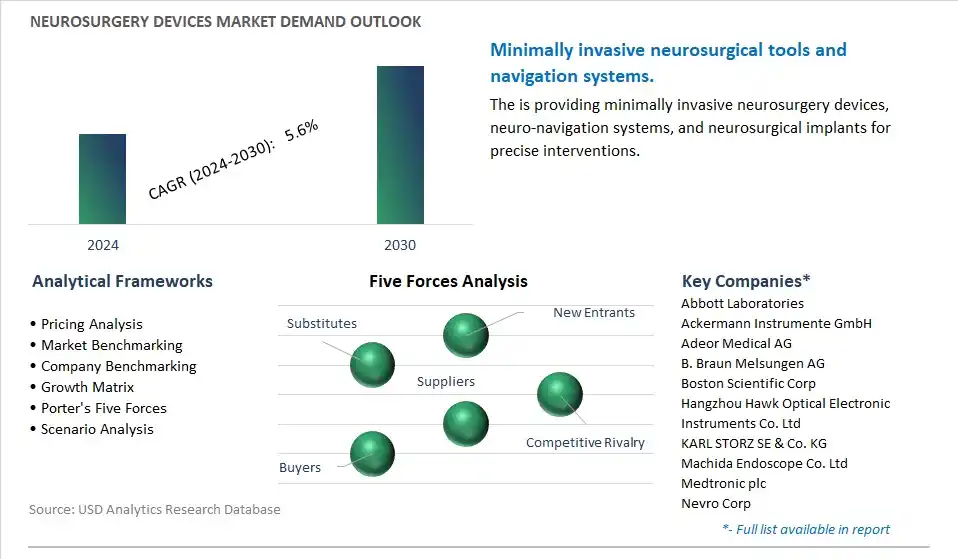
The global Neurosurgery Devices Market is one of the lucrative growth markets, poised to register a 5.6% growth (CAGR) between 2024 and 2030.
Emerging Markets across Asia Pacific, Europe, and Americas present robust growth prospects.
Abbott Laboratories, Ackermann Instrumente GmbH, Adeor Medical AG, B. Braun Melsungen AG, Boston Scientific Corp, Hangzhou Hawk Optical Electronic Instruments Co. Ltd, KARL STORZ SE & Co. KG, Machida Endoscope Co. Ltd, Medtronic plc, Nevro Corp
Base Year- 2023; Estimated Year- 2024; Historic Period- 2018-2023; Forecast period- 2024 to 2030; Currency: USD; Volume