
The Omeprazole and Antihistamine Market study analyzes and forecasts the market size across 6 regions and 24 countries for diverse segments- By Product (Omeprazole, Antihistamine), By Indication (Gastric Ulcer, Gastroesophageal Reflux Disease, Allergy, Dermatitis, Others), By Distribution Channel (Hospital Pharmacies, Retail Pharmacies, Online Pharmacies).
In 2024, the market for omeprazole and antihistamine medications continues to be a cornerstone of gastrointestinal and allergy management, offering effective relief for acid-related conditions such as gastroesophageal reflux disease (GERD), peptic ulcers, and dyspepsia, as well as allergic symptoms such as itching, sneezing, and nasal congestion. Omeprazole is a proton pump inhibitor (PPI) that reduces gastric acid production by inhibiting the proton pump in gastric parietal cells, providing relief from acid-related symptoms and promoting healing of esophageal and gastric mucosal lesions. Antihistamines are medications that block the action of histamine, a chemical mediator involved in allergic reactions, alleviating symptoms of allergic rhinitis, urticaria, and other allergic conditions. The combination of omeprazole and antihistamine medications offers synergistic effects in managing acid-related disorders with concomitant allergic symptoms, providing comprehensive relief for patients with complex medical conditions. Technological advancements in pharmaceutical formulations include the development of delayed-release formulations, combination products, and extended-release formulations for optimizing drug delivery, efficacy, and patient compliance. Moreover, the integration of patient education, lifestyle modifications, and adherence support services enhances treatment outcomes and patient satisfaction in managing chronic gastrointestinal and allergic conditions. With the increasing prevalence of acid-related disorders, and allergic diseases, and the demand for symptom relief and disease management options, the market for omeprazole and antihistamine medications is poised for continued growth and innovation, offering patients effective solutions for improving their quality of life and well-being.
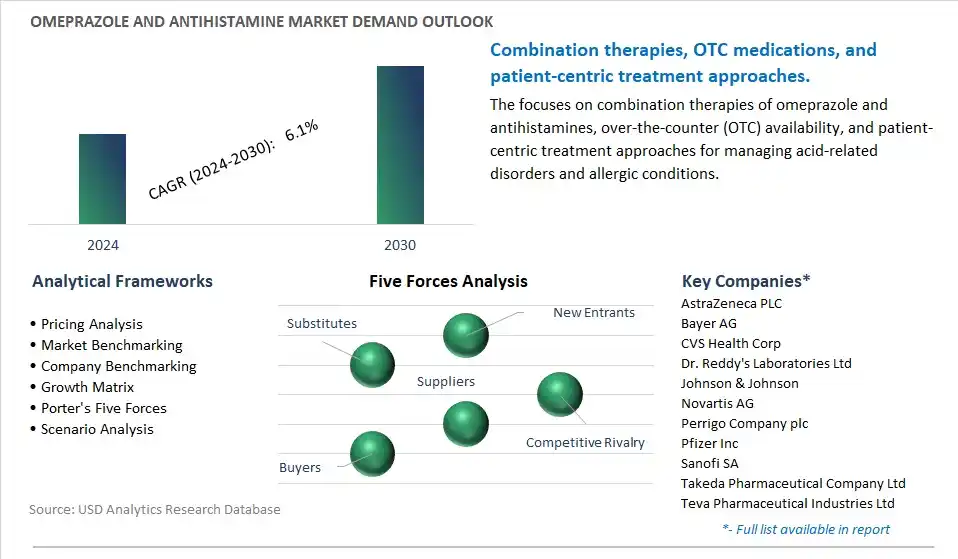
A prominent trend in the Omeprazole and Antihistamine market is the increasing adoption of combination therapy for the treatment of acid-related disorders such as gastroesophageal reflux disease (GERD), peptic ulcers, and gastritis. Combining omeprazole, a proton pump inhibitor (PPI), with an antihistamine such as ranitidine or famotidine offers synergistic effects in reducing gastric acid secretion and providing relief from symptoms such as heartburn, regurgitation, and dyspepsia. This trend is driven by the recognition of the multifactorial nature of acid-related disorders and the need for comprehensive treatment approaches that target both acid production and histamine-mediated acid secretion pathways. Additionally, combination therapy with omeprazole and antihistamine is supported by clinical evidence demonstrating superior efficacy in symptom control, mucosal healing, and prevention of disease recurrence compared to monotherapy with either drug class alone. As healthcare providers seek to optimize treatment outcomes and improve patient satisfaction in acid-related disorders, the market for omeprazole and antihistamine combination therapy is expected to witness significant growth and adoption, driven by the imperative to achieve better symptom control and quality of life for patients with acid-related gastrointestinal conditions.
The primary driver propelling the Omeprazole and Antihistamine market is the increasing prevalence of acid-related disorders, including GERD, peptic ulcers, and gastritis, driven by factors such as lifestyle changes, dietary habits, and the rising incidence of obesity. Acid-related disorders are among the most common gastrointestinal conditions worldwide, affecting millions of individuals and imposing a significant burden on healthcare systems. The growing prevalence of risk factors such as obesity, smoking, stress, and dietary indiscretion further exacerbates the incidence and severity of acid-related diseases, driving the demand for effective pharmacological treatments to alleviate symptoms and prevent complications. This driver is fueled by demographic shifts, urbanization, and changes in dietary patterns that contribute to the development of gastrointestinal conditions associated with excessive gastric acid secretion and mucosal damage. Additionally, the aging population and the increasing prevalence of chronic diseases such as diabetes and cardiovascular disorders are associated with a higher risk of developing acid-related disorders, further contributing to the growing disease burden and healthcare utilization. As healthcare providers strive to address the rising incidence of acid-related diseases and improve the quality of care for affected patients, the market for omeprazole and antihistamine combination therapy is expected to experience sustained growth and demand, driven by the imperative to optimize treatment outcomes and enhance patient well-being.
An opportunity within the Omeprazole and Antihistamine market lies in the development of fixed-dose combination products that offer convenient dosing, improved patient adherence, and enhanced treatment efficacy for acid-related disorders. Opportunities exist for pharmaceutical companies and drug developers to formulate fixed-dose combination tablets or capsules containing omeprazole and an antihistamine in a single dosage form, simplifying medication regimens and reducing pill burden for patients. This opportunity is driven by the recognition of the benefits of combination therapy in achieving better symptom control, faster symptom relief, and reduced risk of disease recurrence compared to sequential or separate administration of omeprazole and antihistamine medications. Additionally, fixed-dose combination products can improve medication adherence by reducing the complexity of treatment regimens, minimizing the risk of drug interactions, and enhancing patient convenience. Collaborations between pharmaceutical manufacturers, formulation scientists, and regulatory agencies can accelerate the development and approval of fixed-dose combination products for acid-related disorders, providing patients and healthcare providers with effective and user-friendly treatment options. As healthcare systems prioritize patient-centered care, medication adherence, and treatment optimization, the market presents opportunities for differentiation, market expansion, and leadership in delivering innovative fixed-dose combination therapies that address the unmet needs of patients with acid-related gastrointestinal conditions and improve their quality of life.
Within the Omeprazole and Antihistamine market, the segment experiencing rapid growth is Omeprazole. Omeprazole is a proton pump inhibitor (PPI) medication commonly used to treat gastric ulcers, gastroesophageal reflux disease (GERD), and other acid-related conditions. With the increasing prevalence of gastrointestinal disorders globally, the demand for omeprazole is on the rise. Additionally, omeprazole's effectiveness in reducing gastric acid production and relieving symptoms of acid reflux has contributed to its widespread adoption in clinical practice. Moreover, the availability of generic versions of omeprazole has made it more accessible and affordable to patients across various socioeconomic backgrounds. Omeprazole is predominantly distributed through retail pharmacies and online pharmacies, providing patients with convenient access to this essential medication. As healthcare providers continue to prescribe omeprazole for the management of gastric ulcers, GERD, and other indications, the market for omeprazole is expected to witness significant growth, driving the overall growth of the omeprazole and antihistamine market.
The market research study provides in-depth insights into leading companies including the SWOT analyses, product profile, financial details, and recent developments acrossAstraZeneca PLC, Bayer AG, CVS Health Corp, Dr. Reddy's Laboratories Ltd, Johnson & Johnson, Novartis AG, Perrigo Company plc, Pfizer Inc, Sanofi SA, Takeda Pharmaceutical Company Ltd, Teva Pharmaceutical Industries Ltd, The Procter & Gamble Company
By Product
Omeprazole
Antihistamine
-Sedating
-Non-Sedating
By Indication
Gastric Ulcer
Gastroesophageal Reflux Disease
Allergy
Dermatitis
Others
By Distribution Channel
Hospital Pharmacies
Retail Pharmacies
Online Pharmacies
Geographical Analysis
North America (United States, Canada, Mexico)
Europe (Germany, France, United Kingdom, Spain, Italy, Rest of Europe)
Asia Pacific (China, India, Japan, South Korea, Rest of Asia Pacific)
South America (Brazil, Argentina, Rest of South America)
Middle East and Africa (Saudi Arabia, UAE, Rest of Middle East, South Africa, Egypt, Rest of Africa)
AstraZeneca PLC
Bayer AG
CVS Health Corp
Dr. Reddy's Laboratories Ltd
Johnson & Johnson
Novartis AG
Perrigo Company plc
Pfizer Inc
Sanofi SA
Takeda Pharmaceutical Company Ltd
Teva Pharmaceutical Industries Ltd
The Procter & Gamble Company
• Deepen your industry insights and navigate uncertainties for strategy formulation, CAPEX, and Operational decisions
• Gain access to detailed insights on the Omeprazole and Antihistamine Market, encompassing current market size, growth trends, and forecasts till 2030.
• Access detailed competitor analysis, enabling competitive advantage through a thorough understanding of market players, strategies, and potential differentiation opportunities
• Stay ahead of the curve with insights on technological advancements, innovations, and upcoming trends
• Identify lucrative investment avenues and expansion opportunities within the Omeprazole and Antihistamine Market industry, guided by robust, data-backed analysis.
• Understand regional and global markets through country-wise analysis, regional market potential, regulatory nuances, and dynamics
• Execute strategies with confidence and speed through information, analytics, and insights on the industry value chain
• Corporate leaders, strategists, financial experts, shareholders, asset managers, and governmental representatives can make long-term planning scenarios and build an integrated and timely understanding of market dynamics
• Benefit from tailored solutions and expert consultation based on report insights, providing personalized strategies aligned with specific business needs.
TABLE OF CONTENTS
1 Introduction to 2024 Omeprazole and Antihistamine Market
1.1 Market Overview
1.2 Quick Facts
1.3 Scope/Objective of the Study
1.4 Market Definition
1.5 Countries and Regions Covered
1.6 Units, Currency, and Conversions
1.7 Industry Value Chain
2 Research Methodology
2.1 Market Size Estimation
2.2 Sources and Research Methodology
2.3 Data Triangulation
2.4 Assumptions and Limitations
3 Executive Summary
3.1 Global Omeprazole and Antihistamine Market Size Outlook, $ Million, 2021 to 2030
3.2 Omeprazole and Antihistamine Market Outlook by Type, $ Million, 2021 to 2030
3.3 Omeprazole and Antihistamine Market Outlook by Product, $ Million, 2021 to 2030
3.4 Omeprazole and Antihistamine Market Outlook by Application, $ Million, 2021 to 2030
3.5 Omeprazole and Antihistamine Market Outlook by Key Countries, $ Million, 2021 to 2030
4 Market Dynamics
4.1 Key Driving Forces of Omeprazole and Antihistamine Industry
4.2 Key Market Trends in Omeprazole and Antihistamine Industry
4.3 Potential Opportunities in Omeprazole and Antihistamine Industry
4.4 Key Challenges in Omeprazole and Antihistamine Industry
5 Market Factor Analysis
5.1 Value Chain Analysis
5.2 Competitive Landscape
5.2.1 Global Omeprazole and Antihistamine Market Share by Company (%), 2023
5.2.2 Product Offerings by Company
5.3 Porter’s Five Forces Analysis
5.4 Pricing Analysis and Outlook
6 Growth Outlook Across Scenarios
6.1 Growth Analysis-Case Scenario Definitions
6.2 Low Growth Scenario Forecasts
6.3 Reference Growth Scenario Forecasts
6.4 High Growth Scenario Forecasts
7 Global Omeprazole and Antihistamine Market Outlook by Segments
7.1 Omeprazole and Antihistamine Market Outlook by Segments, $ Million, 2021- 2030
By Product
Omeprazole
Antihistamine
-Sedating
-Non-Sedating
By Indication
Gastric Ulcer
Gastroesophageal Reflux Disease
Allergy
Dermatitis
Others
By Distribution Channel
Hospital Pharmacies
Retail Pharmacies
Online Pharmacies
8 North America Omeprazole and Antihistamine Market Analysis and Outlook To 2030
8.1 Introduction to North America Omeprazole and Antihistamine Markets in 2024
8.2 North America Omeprazole and Antihistamine Market Size Outlook by Country, 2021-2030
8.2.1 United States
8.2.2 Canada
8.2.3 Mexico
8.3 North America Omeprazole and Antihistamine Market size Outlook by Segments, 2021-2030
By Product
Omeprazole
Antihistamine
-Sedating
-Non-Sedating
By Indication
Gastric Ulcer
Gastroesophageal Reflux Disease
Allergy
Dermatitis
Others
By Distribution Channel
Hospital Pharmacies
Retail Pharmacies
Online Pharmacies
9 Europe Omeprazole and Antihistamine Market Analysis and Outlook To 2030
9.1 Introduction to Europe Omeprazole and Antihistamine Markets in 2024
9.2 Europe Omeprazole and Antihistamine Market Size Outlook by Country, 2021-2030
9.2.1 Germany
9.2.2 France
9.2.3 Spain
9.2.4 United Kingdom
9.2.4 Italy
9.2.5 Russia
9.2.6 Norway
9.2.7 Rest of Europe
9.3 Europe Omeprazole and Antihistamine Market Size Outlook by Segments, 2021-2030
By Product
Omeprazole
Antihistamine
-Sedating
-Non-Sedating
By Indication
Gastric Ulcer
Gastroesophageal Reflux Disease
Allergy
Dermatitis
Others
By Distribution Channel
Hospital Pharmacies
Retail Pharmacies
Online Pharmacies
10 Asia Pacific Omeprazole and Antihistamine Market Analysis and Outlook To 2030
10.1 Introduction to Asia Pacific Omeprazole and Antihistamine Markets in 2024
10.2 Asia Pacific Omeprazole and Antihistamine Market Size Outlook by Country, 2021-2030
10.2.1 China
10.2.2 India
10.2.3 Japan
10.2.4 South Korea
10.2.5 Indonesia
10.2.6 Malaysia
10.2.7 Australia
10.2.8 Rest of Asia Pacific
10.3 Asia Pacific Omeprazole and Antihistamine Market size Outlook by Segments, 2021-2030
By Product
Omeprazole
Antihistamine
-Sedating
-Non-Sedating
By Indication
Gastric Ulcer
Gastroesophageal Reflux Disease
Allergy
Dermatitis
Others
By Distribution Channel
Hospital Pharmacies
Retail Pharmacies
Online Pharmacies
11 South America Omeprazole and Antihistamine Market Analysis and Outlook To 2030
11.1 Introduction to South America Omeprazole and Antihistamine Markets in 2024
11.2 South America Omeprazole and Antihistamine Market Size Outlook by Country, 2021-2030
11.2.1 Brazil
11.2.2 Argentina
11.2.3 Rest of South America
11.3 South America Omeprazole and Antihistamine Market size Outlook by Segments, 2021-2030
By Product
Omeprazole
Antihistamine
-Sedating
-Non-Sedating
By Indication
Gastric Ulcer
Gastroesophageal Reflux Disease
Allergy
Dermatitis
Others
By Distribution Channel
Hospital Pharmacies
Retail Pharmacies
Online Pharmacies
12 Middle East and Africa Omeprazole and Antihistamine Market Analysis and Outlook To 2030
12.1 Introduction to Middle East and Africa Omeprazole and Antihistamine Markets in 2024
12.2 Middle East and Africa Omeprazole and Antihistamine Market Size Outlook by Country, 2021-2030
12.2.1 Saudi Arabia
12.2.2 UAE
12.2.3 Oman
12.2.4 Rest of Middle East
12.2.5 Egypt
12.2.6 Nigeria
12.2.7 South Africa
12.2.8 Rest of Africa
12.3 Middle East and Africa Omeprazole and Antihistamine Market size Outlook by Segments, 2021-2030
By Product
Omeprazole
Antihistamine
-Sedating
-Non-Sedating
By Indication
Gastric Ulcer
Gastroesophageal Reflux Disease
Allergy
Dermatitis
Others
By Distribution Channel
Hospital Pharmacies
Retail Pharmacies
Online Pharmacies
13 Company Profiles
13.1 Company Snapshot
13.2 SWOT Profiles
13.3 Products and Services
13.4 Recent Developments
13.5 Financial Profile
List of Companies
AstraZeneca PLC
Bayer AG
CVS Health Corp
Dr. Reddy's Laboratories Ltd
Johnson & Johnson
Novartis AG
Perrigo Company plc
Pfizer Inc
Sanofi SA
Takeda Pharmaceutical Company Ltd
Teva Pharmaceutical Industries Ltd
The Procter & Gamble Company
14 Appendix
14.1 Customization Offerings
14.2 Subscription Services
14.3 Related Reports
14.4 Publisher Expertise
By Product
Omeprazole
Antihistamine
-Sedating
-Non-Sedating
By Indication
Gastric Ulcer
Gastroesophageal Reflux Disease
Allergy
Dermatitis
Others
By Distribution Channel
Hospital Pharmacies
Retail Pharmacies
Online Pharmacies
Countries Analyzed
North America (United States, Canada, Mexico)
Europe (Germany, France, United Kingdom, Spain, Italy, Rest of Europe)
Asia Pacific (China, India, Japan, South Korea, Rest of Asia Pacific)
South America (Brazil, Argentina, Rest of South America)
Middle East and Africa (Saudi Arabia, UAE, Rest of Middle East, South Africa, Egypt, Rest of Africa)
The global Omeprazole and Antihistamine Market is one of the lucrative growth markets, poised to register a 6.1% growth (CAGR) between 2024 and 2030.
Emerging Markets across Asia Pacific, Europe, and Americas present robust growth prospects.
AstraZeneca PLC, Bayer AG, CVS Health Corp, Dr. Reddy's Laboratories Ltd, Johnson & Johnson, Novartis AG, Perrigo Company plc, Pfizer Inc, Sanofi SA, Takeda Pharmaceutical Company Ltd, Teva Pharmaceutical Industries Ltd, The Procter & Gamble Company
Base Year- 2023; Estimated Year- 2024; Historic Period- 2018-2023; Forecast period- 2024 to 2030; Currency: USD; Volume