The global UPF Sun Protective Clothing Market is poised to register a 8.6% CAGR from $2.4 Billion in 2024 to $3.9 Billion in 2030.
The global UPF Sun Protective Clothing Market Study analyzes and forecasts the market size across 6 regions and 24 countries for diverse segments -By Type (Hats and Caps, Shirts, T-shirt, Jacket and Hoodies, Pants and Shorts, Swimwear, Others), By UPF Type (UPF 30+, UPF 40+, UPF 50+, UPF 100+, Others), By Sales Channel (Offline, Online), By End-User (Women, Men, Children).
An Introduction to Global UPF Sun Protective Clothing Market in 2024
UPF (Ultraviolet Protection Factor) sun protective clothing is specially designed apparel that offers enhanced protection against harmful UV radiation from the sun, reducing the risk of sunburn, skin aging, and skin cancer for outdoor enthusiasts, athletes, and individuals with sun-sensitive skin. The future of UPF sun protective clothing is shaped by several key trends, including advancements in fabric technology, garment design, and consumer awareness to promote sun safety, skin health, and sustainable fashion practices. One significant trend is the development of UPF-rated textiles with embedded UV-absorbing additives, tightly woven fibers, and special finishes that block a high percentage of harmful UV radiation while maintaining breathability, moisture management, and comfort for wearers in various outdoor activities and climates. Textile manufacturers and apparel brands are investing in research and development to engineer innovative UPF fabrics made from natural fibers, recycled materials, and eco-friendly dyes that offer superior UV protection, durability, and biodegradability compared to conventional synthetic fibers, promoting sustainability and environmental stewardship in the textile and apparel industry. Additionally, the integration of UPF sun protective features into everyday clothing, sportswear, and swimwear is driving innovations in garment design, construction, and labeling that enable consumers to make informed choices about sun protection, style, and performance when selecting apparel for outdoor activities, travel, and leisure pursuits. Fashion designers and retailers are collaborating with dermatologists, skin cancer foundations, and health organizations to raise awareness about the importance of UPF clothing in sun safety education campaigns, promoting preventive measures and healthy behaviors to reduce UV exposure and minimize the risk of sun-related skin damage and diseases. Moreover, the increasing demand for functional and fashionable UPF clothing in the global market is driving investments in supply chain transparency, ethical sourcing, and fair labor practices to ensure responsible manufacturing, marketing, and distribution of sun protective apparel that meets international standards for quality, safety, and social responsibility, fostering consumer trust, brand loyalty, and industry sustainability in the fashion marketplace. Furthermore, collaborations between textile mills, apparel brands, and dermatologists are driving innovation and market growth by delivering stylish, effective UPF sun protective clothing solutions that meet the specific needs, preferences, and values of diverse consumer segments and lifestyles, ensuring continued advancement and adoption of UPF clothing as a key element of sun safety and skin cancer prevention strategies worldwide.
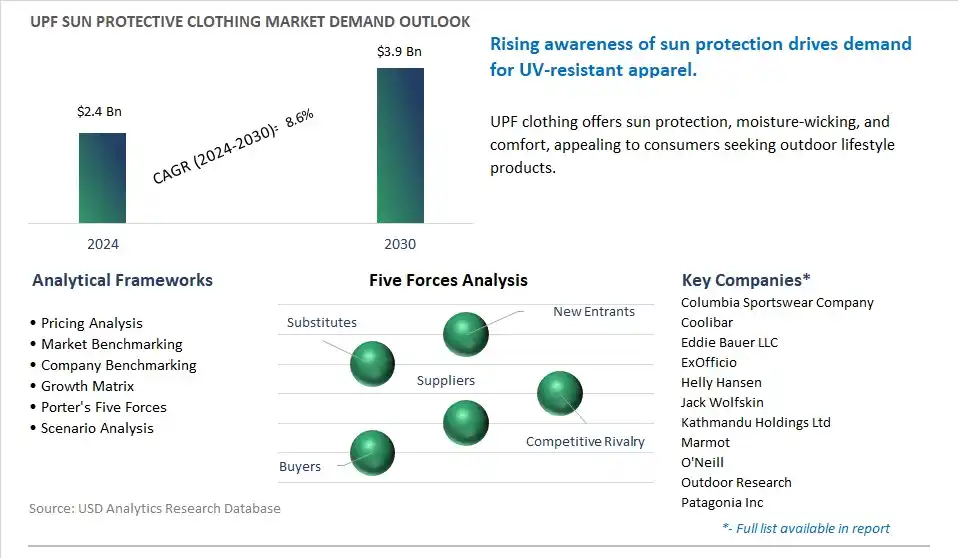
UPF Sun Protective Clothing Market Competitive Landscape
The market report analyses the leading companies in the industry including Columbia Sportswear Company, Coolibar, Eddie Bauer LLC, ExOfficio, Helly Hansen, Jack Wolfskin, Kathmandu Holdings Ltd, Marmot, O'Neill, Outdoor Research, Patagonia Inc, Quiksilver, Solumbra, The North Face, Under Armour Inc, UV-Fashions.
UPF Sun Protective Clothing Market Dynamics
UPF Sun Protective Clothing Market Trend: Increasing Awareness of Sun Protection
A prominent market trend in the UPF sun protective clothing industry is the growing awareness of the importance of sun protection. With rising concerns about skin cancer, premature aging, and the harmful effects of ultraviolet (UV) radiation, consumers are increasingly seeking clothing that offers effective sun protection. UPF (Ultraviolet Protection Factor) clothing provides a physical barrier against UV rays, blocking a significant portion of the sun's harmful radiation and reducing the risk of sunburn and skin damage. This trend is driven by factors such as public health campaigns, educational initiatives by dermatologists and skincare experts, and the desire for proactive measures to protect against sun-related health risks.
UPF Sun Protective Clothing Market Driver: Health and Wellness Trends
A key driver behind the growth of the UPF sun protective clothing market is the increasing focus on health and wellness among consumers. As people become more health-conscious and prioritize preventative healthcare measures, there is a growing demand for products that support overall well-being, including sun protection clothing. The popularity of outdoor activities such as hiking, running, swimming, and outdoor sports further drives demand for UPF clothing that offers reliable sun protection without compromising comfort or style. Additionally, as the population ages and individuals seek to maintain healthy lifestyles, there is a greater emphasis on sun-safe practices and the adoption of protective clothing as part of daily routines. This driver is further supported by the influence of social media, celebrity endorsements, and influencer marketing, which promote sun protection as a fashionable and essential aspect of self-care and personal health.
UPF Sun Protective Clothing Market Opportunity: Innovation in Fabric Technology and Design
An opportunity exists for manufacturers of UPF sun protective clothing to innovate in fabric technology and design to meet evolving consumer preferences and market demands. By incorporating advanced UV-blocking fibers, such as tightly woven fabrics, synthetic blends, or specialty coatings, clothing manufacturers can enhance the UPF rating of their products and improve sun protection performance. Additionally, there is opportunity to develop UPF clothing lines with moisture-wicking properties, temperature regulation features, and breathability for enhanced comfort and performance in various outdoor activities and climates. Furthermore, by collaborating with fashion designers and incorporating stylish designs, colors, and patterns, UPF clothing brands can appeal to a broader audience and attract consumers who prioritize both sun protection and fashion. By embracing innovation and offering versatile and fashionable UPF clothing options, manufacturers can capitalize on the growing market for sun protective apparel and establish themselves as leaders in the health-conscious fashion industry.
UPF Sun Protective Clothing Market Share Analysis: Shirts generated the highest revenue in 2024
The largest segment in the UPF Sun Protective Clothing Market is the Shirts segment. This is primarily because shirts are one of the most commonly worn garments and offer extensive coverage of the upper body, including the torso, arms, and shoulders, which are highly susceptible to sun exposure. Additionally, shirts are versatile and suitable for various outdoor activities and occasions, ranging from casual wear to sports and recreational activities. Sun protective shirts feature UPF (Ultraviolet Protection Factor) fabric that blocks harmful UV radiation, providing effective protection against sunburn, skin damage, and the risk of skin cancer. Further, the popularity of sun protective shirts has increased due to growing awareness of the adverse effects of UV radiation on skin health and the importance of sun protection measures. Furthermore, advancements in textile technology have led to the development of lightweight, breathable, and moisture-wicking fabrics that offer UPF protection without compromising comfort and style. As consumers prioritize sun safety and seek out clothing options that offer reliable UV protection, the Shirts segment is the largest in the UPF Sun Protective Clothing Market.
UPF Sun Protective Clothing Market Share Analysis: UPF 50+ segment is poised to register the fastest growth rate (CAGR) over the forecast period to 2030
The fastest-growing segment in the UPF Sun Protective Clothing Market is the UPF 50+ segment. UPF 50+ clothing offers the highest level of UV protection available, blocking at least 98% of UV radiation, which is particularly appealing to consumers seeking maximum sun protection for extended outdoor activities. As awareness of the harmful effects of UV radiation on skin health increases, there is a growing demand for clothing with superior sun protection properties. Additionally, UPF 50+ clothing provides peace of mind to consumers, especially those with sensitive skin or a history of skin cancer, by offering effective protection against sunburn, premature aging, and skin cancer risks. Further, advancements in textile technology have made it possible to manufacture UPF 50+ clothing using lightweight, breathable, and moisture-wicking fabrics that offer comfort and functionality without compromising on sun protection. Furthermore, endorsements and recommendations from dermatologists, skin cancer organizations, and sun safety advocates have contributed to the popularity of UPF 50+ clothing as an essential component of sun protection strategies. As consumers prioritize sun safety and seek out clothing options with the highest level of UV protection, the UPF 50+ segment is expected to experience rapid growth in the UPF Sun Protective Clothing Market.
UPF Sun Protective Clothing Market Share Analysis: Online sales channel segment is poised to register the fastest growth rate (CAGR) over the forecast period to 2030
The fastest-growing segment in the UPF Sun Protective Clothing Market is the Online sales channel segment. The proliferation of e-commerce platforms and the increasing adoption of online shopping have made it more convenient and accessible for consumers to purchase sun protective clothing from the comfort of their homes. Online shopping offers a wide selection of products, including UPF clothing, from various brands and retailers, allowing consumers to compare prices, read reviews, and make informed purchasing decisions. Additionally, online retailers often offer discounts, promotions, and exclusive deals, incentivizing consumers to shop for UPF clothing online. Further, the COVID-19 pandemic has accelerated the shift towards online shopping as consumers prioritize safety and avoid crowded physical retail spaces. Furthermore, the ability to reach a broader audience and target specific consumer segments through digital marketing and advertising strategies has contributed to the growth of online sales channels for UPF sun protective clothing. As consumers increasingly value convenience, choice, and safety in their shopping experiences, the Online sales channel segment is expected to continue experiencing rapid growth in the UPF Sun Protective Clothing Market.
UPF Sun Protective Clothing Market Report Segmentation
By Type
Hats and Caps
Shirts
T-shirt
Jacket and Hoodies
Pants and Shorts
Swimwear
Others
By UPF Type
UPF 30+
UPF 40+
UPF 50+
UPF 100+
Others
By Sales Channel
Offline
Online
By End-User
Women
Men
Children
Regions Included
North America (US, Canada, Mexico)
Europe (Germany, UK, France, Spain, Italy, Russia, Rest of Europe)
Asia Pacific (China, India, Japan, South Korea, Australia, South East Asia, Rest of Asia)
South America (Brazil, Argentina, Rest of South America)
Middle East and Africa (Saudi Arabia, UAE, Rest of Middle East, South Africa, Egypt, Rest of Africa)
UPF Sun Protective Clothing Companies Profiled in the Market Study
Columbia Sportswear Company
Coolibar
Eddie Bauer LLC
ExOfficio
Helly Hansen
Jack Wolfskin
Kathmandu Holdings Ltd
Marmot
O'Neill
Outdoor Research
Patagonia Inc
Quiksilver
Solumbra
The North Face
Under Armour Inc
UV-Fashions
*- List Not Exhaustive
TABLE OF CONTENTS
1 Introduction to 2024 UPF Sun Protective Clothing Market
1.1 Market Overview
1.2 Quick Facts
1.3 Scope/Objective of the Study
1.4 Market Definition
1.5 Countries and Regions Covered
1.6 Units, Currency, and Conversions
1.7 Industry Value Chain
2 Research Methodology
2.1 Market Size Estimation
2.2 Sources and Research Methodology
2.3 Data Triangulation
2.4 Assumptions and Limitations
3 Executive Summary
3.1 Global UPF Sun Protective Clothing Market Size Outlook, $ Million, 2021 to 2030
3.2 UPF Sun Protective Clothing Market Outlook by Type, $ Million, 2021 to 2030
3.3 UPF Sun Protective Clothing Market Outlook by Product, $ Million, 2021 to 2030
3.4 UPF Sun Protective Clothing Market Outlook by Application, $ Million, 2021 to 2030
3.5 UPF Sun Protective Clothing Market Outlook by Key Countries, $ Million, 2021 to 2030
4 Market Dynamics
4.1 Key Driving Forces of UPF Sun Protective Clothing Industry
4.2 Key Market Trends in UPF Sun Protective Clothing Industry
4.3 Potential Opportunities in UPF Sun Protective Clothing Industry
4.4 Key Challenges in UPF Sun Protective Clothing Industry
5 Market Factor Analysis
5.1 Value Chain Analysis
5.2 Competitive Landscape
5.2.1 Global UPF Sun Protective Clothing Market Share by Company (%), 2023
5.2.2 Product Offerings by Company
5.3 Porter’s Five Forces Analysis
5.4 Pricing Analysis and Outlook
6 Growth Outlook Across Scenarios
6.1 Growth Analysis-Case Scenario Definitions
6.2 Low Growth Scenario Forecasts
6.3 Reference Growth Scenario Forecasts
6.4 High Growth Scenario Forecasts
7 Global UPF Sun Protective Clothing Market Outlook by Segments
7.1 UPF Sun Protective Clothing Market Outlook by Segments, $ Million, 2021- 2030
By Type
Hats and Caps
Shirts
T-shirt
Jacket and Hoodies
Pants and Shorts
Swimwear
Others
By UPF Type
UPF 30+
UPF 40+
UPF 50+
UPF 100+
Others
By Sales Channel
Offline
Online
By End-User
Women
Men
Children
8 North America UPF Sun Protective Clothing Market Analysis and Outlook To 2030
8.1 Introduction to North America UPF Sun Protective Clothing Markets in 2024
8.2 North America UPF Sun Protective Clothing Market Size Outlook by Country, 2021-2030
8.2.1 United States
8.2.2 Canada
8.2.3 Mexico
8.3 North America UPF Sun Protective Clothing Market size Outlook by Segments, 2021-2030
By Type
Hats and Caps
Shirts
T-shirt
Jacket and Hoodies
Pants and Shorts
Swimwear
Others
By UPF Type
UPF 30+
UPF 40+
UPF 50+
UPF 100+
Others
By Sales Channel
Offline
Online
By End-User
Women
Men
Children
9 Europe UPF Sun Protective Clothing Market Analysis and Outlook To 2030
9.1 Introduction to Europe UPF Sun Protective Clothing Markets in 2024
9.2 Europe UPF Sun Protective Clothing Market Size Outlook by Country, 2021-2030
9.2.1 Germany
9.2.2 France
9.2.3 Spain
9.2.4 United Kingdom
9.2.4 Italy
9.2.5 Russia
9.2.6 Norway
9.2.7 Rest of Europe
9.3 Europe UPF Sun Protective Clothing Market Size Outlook by Segments, 2021-2030
By Type
Hats and Caps
Shirts
T-shirt
Jacket and Hoodies
Pants and Shorts
Swimwear
Others
By UPF Type
UPF 30+
UPF 40+
UPF 50+
UPF 100+
Others
By Sales Channel
Offline
Online
By End-User
Women
Men
Children
10 Asia Pacific UPF Sun Protective Clothing Market Analysis and Outlook To 2030
10.1 Introduction to Asia Pacific UPF Sun Protective Clothing Markets in 2024
10.2 Asia Pacific UPF Sun Protective Clothing Market Size Outlook by Country, 2021-2030
10.2.1 China
10.2.2 India
10.2.3 Japan
10.2.4 South Korea
10.2.5 Indonesia
10.2.6 Malaysia
10.2.7 Australia
10.2.8 Rest of Asia Pacific
10.3 Asia Pacific UPF Sun Protective Clothing Market size Outlook by Segments, 2021-2030
By Type
Hats and Caps
Shirts
T-shirt
Jacket and Hoodies
Pants and Shorts
Swimwear
Others
By UPF Type
UPF 30+
UPF 40+
UPF 50+
UPF 100+
Others
By Sales Channel
Offline
Online
By End-User
Women
Men
Children
11 South America UPF Sun Protective Clothing Market Analysis and Outlook To 2030
11.1 Introduction to South America UPF Sun Protective Clothing Markets in 2024
11.2 South America UPF Sun Protective Clothing Market Size Outlook by Country, 2021-2030
11.2.1 Brazil
11.2.2 Argentina
11.2.3 Rest of South America
11.3 South America UPF Sun Protective Clothing Market size Outlook by Segments, 2021-2030
By Type
Hats and Caps
Shirts
T-shirt
Jacket and Hoodies
Pants and Shorts
Swimwear
Others
By UPF Type
UPF 30+
UPF 40+
UPF 50+
UPF 100+
Others
By Sales Channel
Offline
Online
By End-User
Women
Men
Children
12 Middle East and Africa UPF Sun Protective Clothing Market Analysis and Outlook To 2030
12.1 Introduction to Middle East and Africa UPF Sun Protective Clothing Markets in 2024
12.2 Middle East and Africa UPF Sun Protective Clothing Market Size Outlook by Country, 2021-2030
12.2.1 Saudi Arabia
12.2.2 UAE
12.2.3 Oman
12.2.4 Rest of Middle East
12.2.5 Egypt
12.2.6 Nigeria
12.2.7 South Africa
12.2.8 Rest of Africa
12.3 Middle East and Africa UPF Sun Protective Clothing Market size Outlook by Segments, 2021-2030
By Type
Hats and Caps
Shirts
T-shirt
Jacket and Hoodies
Pants and Shorts
Swimwear
Others
By UPF Type
UPF 30+
UPF 40+
UPF 50+
UPF 100+
Others
By Sales Channel
Offline
Online
By End-User
Women
Men
Children
13 Company Profiles
13.1 Company Snapshot
13.2 SWOT Profiles
13.3 Products and Services
13.4 Recent Developments
13.5 Financial Profile
Columbia Sportswear Company
Coolibar
Eddie Bauer LLC
ExOfficio
Helly Hansen
Jack Wolfskin
Kathmandu Holdings Ltd
Marmot
O'Neill
Outdoor Research
Patagonia Inc
Quiksilver
Solumbra
The North Face
Under Armour Inc
UV-Fashions
14 Appendix
14.1 Customization Offerings
14.2 Subscription Services
14.3 Related Reports
14.4 Publisher Expertise
By Type
Hats and Caps
Shirts
T-shirt
Jacket and Hoodies
Pants and Shorts
Swimwear
Others
By UPF Type
UPF 30+
UPF 40+
UPF 50+
UPF 100+
Others
By Sales Channel
Offline
Online
By End-User
Women
Men
Children
Countries Analyzed
North America (US, Canada, Mexico)
Europe (Germany, UK, France, Spain, Italy, Russia, Rest of Europe)
Asia Pacific (China, India, Japan, South Korea, Australia, South East Asia, Rest of Asia)
South America (Brazil, Argentina, Rest of South America)
Middle East and Africa (Saudi Arabia, UAE, Rest of Middle East, South Africa, Egypt, Rest of Africa)
