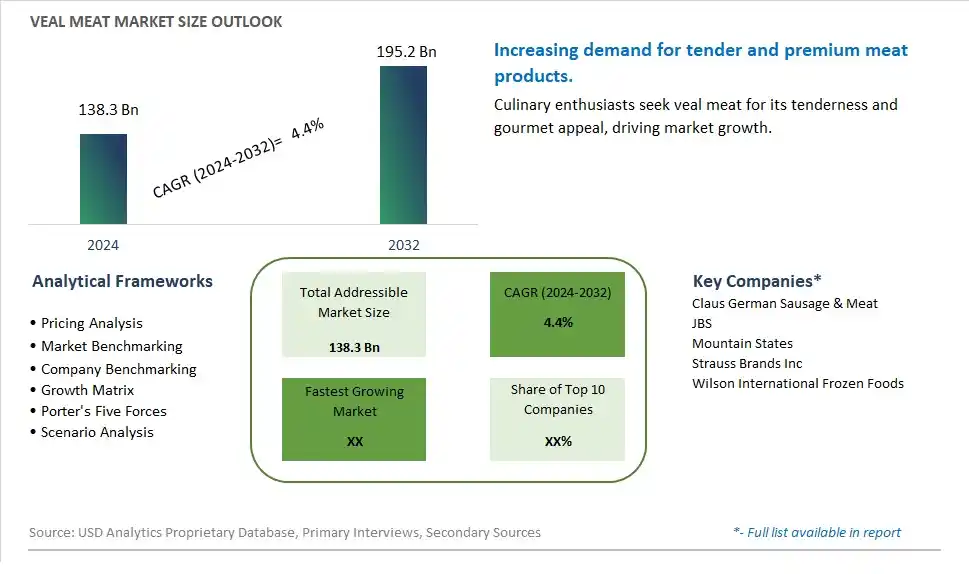
Global Veal Meat Market Size is valued at $138.3 Billion in 2024 and is forecast to register a growth rate (CAGR) of 4.4% to reach $195.2 Billion by 2032.
The global Veal Meat Market Comprehensive Study analyzes and forecasts the market size across 6 regions and 24 countries for diverse segments -By Type (Fresh Veal Meat, Processed Veal Meat), By Application (Supermarkets/ Hypermarkets, Restaurant, Delicatessen, Others)
An Introduction to Veal Meat Market
In 2024, the veal meat market is navigating a landscape marked by evolving consumer preferences and regulatory changes. As a premium meat product, veal is appreciated for its tender texture and delicate flavor, often featured in gourmet and high-end dining. However, ethical concerns regarding animal welfare and sustainable farming practices are influencing market dynamics. Producers are increasingly adopting humane and environmentally friendly practices to meet the demands of conscientious consumers. Additionally, the rise of culinary tourism and the growing popularity of diverse cuisines are expanding veal meat's market reach. Innovations in packaging and preservation techniques are also enhancing product quality and shelf life, further boosting market growth. As consumers become more adventurous and discerning in their culinary choices, the veal meat market is poised for continued expansion.
Veal Meat Competitive Landscape
The market report analyses the leading companies in the industry including Claus German Sausage & Meat, JBS, Mountain States, Strauss Brands Inc, Wilson International Frozen Foods, and Others.
Veal Meat Market Dynamics
Veal Meat Market Trend: Growing Preference for Premium and Ethically Sourced Meat Products
The market trend for veal meat reflects a growing preference among consumers for premium and ethically sourced meat products. As awareness of animal welfare, sustainability, and food quality increases, there is a shift towards choosing meats that align with ethical and environmental values. Veal meat, known for its tender texture and delicate flavor, is gaining popularity as a premium protein option. Furthermore, consumers are seeking assurances regarding the humane treatment of veal calves, leading to the emergence of certified and responsibly sourced veal products in the market. This trend is indicative of a broader movement towards conscientious consumption and the desire for transparency in food production practices.
Market Driver: Culinary Diversity and Exploration of Gourmet Cuisine
The market for veal meat is being driven by the growing culinary diversity and exploration of gourmet cuisine worldwide. As global travel becomes more accessible and cultural exchange flourishes, consumers are increasingly exposed to a variety of culinary traditions and flavors. Veal meat, prized for its versatility and ability to complement a wide range of dishes, appeals to adventurous food enthusiasts seeking unique gastronomic experiences. Moreover, the influence of celebrity chefs, cooking shows, and social media platforms showcasing innovative veal recipes contributes to the rising demand for veal as a gourmet ingredient. This driver highlights the evolving palate preferences and culinary curiosity driving the market for veal meat.
Market Opportunity: Promotion of Sustainable Veal Production Practices
An exciting opportunity for the veal meat market lies in the promotion of sustainable veal production practices. While veal consumption has faced scrutiny in the past due to concerns about animal welfare and environmental impact, there is an opportunity for the industry to adopt sustainable farming methods and transparent supply chains. By embracing initiatives such as pasture-raised veal, group housing systems, and feed optimization strategies, producers can enhance the welfare of veal calves while reducing the ecological footprint of veal production. Furthermore, highlighting the nutritional benefits of veal meat, such as its high protein content and low fat profile, can position veal as a healthy and sustainable protein choice. By aligning with sustainability principles and consumer preferences for ethical and nutritious food options, the veal meat market can seize the opportunity to differentiate itself and drive growth in a competitive market landscape. Market Trend: Increasing Demand for Cruelty-Free and Vegan Beauty ProductsThe market trend for vegan cosmetics showcases a significant increase in demand for cruelty-free and vegan beauty products. With a growing awareness of animal welfare and environmental sustainability, consumers are seeking cosmetics that are not only free from animal-derived ingredients but also produced without animal testing. This trend reflects a shift towards ethical and conscious consumption in the beauty industry, with vegan cosmetics gaining traction among a diverse range of consumers, including vegans, vegetarians, and those concerned about animal welfare.
Market Driver: Shift Towards Clean Beauty and Ingredient Transparency
The market for vegan cosmetics is being driven by the broader shift towards clean beauty and ingredient transparency. As consumers become more discerning about the products they use on their skin, there is a demand for cosmetics formulated with natural, non-toxic ingredients that are safe and effective. Vegan cosmetics, which typically eschew animal-derived ingredients and harmful chemicals, resonate with consumers seeking clean beauty alternatives. Additionally, the emphasis on ingredient transparency and product labeling further fuels the adoption of vegan cosmetics, as consumers prioritize understanding the composition of their beauty products and making informed choices about their skincare routines.
Market Opportunity: Innovation in Sustainable Packaging and Eco-Friendly Formulations
An exciting opportunity for the vegan cosmetics market lies in innovation, particularly in sustainable packaging and eco-friendly formulations. With growing concern about plastic pollution and environmental degradation, there is a rising demand for cosmetics packaged in recyclable, biodegradable, or reusable materials. Companies can capitalize on this opportunity by developing vegan cosmetics with eco-conscious packaging solutions, such as compostable containers, refillable compacts, and packaging made from recycled materials. Moreover, there is potential for innovation in eco-friendly formulations that minimize environmental impact throughout the product lifecycle, from sourcing raw materials to manufacturing processes. By embracing sustainability and offering innovative, planet-friendly beauty solutions, the vegan cosmetics market can attract environmentally conscious consumers and drive positive change within the beauty industry. Market Trend: Growing Demand for Plant-Based Alternatives in Fast FoodThe market trend for vegan fast foods illustrates a significant increase in demand for plant-based alternatives in the fast food industry. With the rise of veganism, flexitarianism, and health-conscious dining habits, consumers are seeking convenient and accessible options that align with their dietary preferences and values. Vegan fast food establishments and menu offerings are expanding rapidly, catering to a diverse range of tastes and lifestyles. This trend reflects a broader shift towards sustainable and compassionate food choices, with vegan fast foods becoming increasingly mainstream and appealing to a wider audience beyond the traditional vegan demographic.
Market Driver: Health and Environmental Consciousness Driving Dietary Choices
The market for vegan fast foods is being driven by the growing consciousness surrounding health and the environment, influencing consumers' dietary choices. As people become more aware of the health risks associated with excessive meat consumption and the environmental impact of animal agriculture, there is a growing interest in plant-based diets as a sustainable and ethical alternative. Vegan fast foods, which offer familiar comfort foods without the use of animal products, appeal to individuals looking to reduce their carbon footprint, improve their health, and support cruelty-free dining options. This driver underscores the importance of sustainability and ethical considerations in shaping the future of the fast food industry.
Market Opportunity: Expansion into Mainstream Fast Food Chains and Market Segments
An exciting opportunity for the vegan fast food market lies in the expansion into mainstream fast food chains and market segments. While dedicated vegan fast food establishments have experienced significant growth, there is potential for collaboration and integration within existing fast food chains to offer plant-based options alongside traditional menu items. By partnering with major fast food brands or introducing vegan-friendly menu items, such as plant-based burgers, sandwiches, and wraps, vegan fast food companies can reach a broader audience and capitalize on the growing demand for meatless alternatives. Moreover, targeting diverse market segments, including families, students, and busy professionals, can further drive adoption and acceptance of vegan fast foods as convenient and satisfying meal choices. By embracing innovation and inclusivity, the vegan fast food market can continue to disrupt the fast food industry and shape the future of dining. Market Trend: Surge in Demand for Health-Conscious Baking AlternativesThe market trend for vegetable-based baking mixes showcases a significant surge in demand for health-conscious baking alternatives. As consumers become increasingly mindful of their dietary choices and seek to incorporate more nutritious ingredients into their baking endeavors, there is a growing interest in vegetable-based baking mixes. These mixes offer a convenient way to add vegetables' nutritional benefits, such as vitamins, minerals, and fiber, to baked goods while reducing reliance on traditional flour-based recipes. This trend reflects a broader shift towards healthier eating habits and the desire for wholesome, nutrient-rich baked treats that cater to diverse dietary preferences and wellness goals.
Market Driver: Rise in Dietary Restrictions and Allergen Sensitivities
The market for vegetable-based baking mixes is being driven by the rise in dietary restrictions and allergen sensitivities among consumers. With an increasing number of individuals adopting gluten-free, dairy-free, or plant-based diets due to health concerns or lifestyle choices, there is a need for baking alternatives that accommodate these dietary preferences. Vegetable-based baking mixes offer a versatile and inclusive solution, allowing individuals with dietary restrictions or allergens to enjoy homemade baked goods without compromising taste or texture. Additionally, the growing prevalence of food allergies and intolerances has heightened awareness of ingredient labels, prompting consumers to seek out products with transparent labeling and minimal allergen risks, further driving the demand for vegetable-based baking mixes.
Market Opportunity: Innovation in Flavor Profiles and Culinary Applications
An exciting opportunity for the vegetable-based baking mixes market lies in innovation, particularly in flavor profiles and culinary applications. While traditional baking mixes typically focus on staple vegetables like carrots or zucchini, there is potential for expanding the variety of vegetable-based ingredients used in baking mixes to include less common options such as sweet potatoes, beets, or spinach. By incorporating a diverse range of vegetables, companies can offer unique flavor combinations and nutritional benefits that appeal to adventurous bakers and health-conscious consumers alike. Moreover, there is an opportunity to explore savory baking mixes that incorporate vegetables for savory muffins, bread, or pancakes, catering to consumers' evolving tastes and preferences for versatile baking ingredients. By embracing innovation and creativity in product development, the vegetable-based baking mixes market can capitalize on consumers' desire for nutritious and flavorful baking alternatives while expanding its reach in the competitive baking industry. Market Trend: Growing Preference for Healthy Snacking OptionsThe market trend for vegetable chips illustrates a significant increase in the preference for healthy snacking options among consumers. With a rising awareness of the importance of balanced nutrition and the detrimental effects of excessive consumption of traditional potato chips and other unhealthy snacks, there is a growing demand for alternatives that offer both taste and nutritional value. Vegetable chips, made from a variety of vegetables such as sweet potatoes, beets, kale, and carrots, are gaining popularity as a healthier alternative to traditional snacks. This trend reflects a broader shift towards mindful eating habits and the desire for convenient, on-the-go snacks that align with consumers' wellness goals.
Market Driver: Increasing Health Consciousness and Wellness Trends
The market for vegetable chips is being driven by increasing health consciousness and wellness trends among consumers. As more individuals prioritize their health and well-being, there is a growing demand for snacks that provide nutritional benefits and contribute to a balanced diet. Vegetable chips offer a way to satisfy cravings for crunchy, savory snacks while also delivering vitamins, minerals, and fiber derived from the vegetables used in their production. Additionally, the influence of wellness influencers, nutritionists, and health-conscious celebrities promoting vegetable-based diets and mindful snacking habits further drives the adoption of vegetable chips as a guilt-free snack option.
Market Opportunity: Diversification of Flavor Profiles and Packaging Innovations
An exciting opportunity for the vegetable chips market lies in diversifying flavor profiles and exploring packaging innovations. While traditional vegetable chips are often seasoned with basic flavors such as sea salt or pepper, there is potential for introducing a wider variety of innovative seasoning blends inspired by global cuisines. Flavors like spicy sriracha, tangy barbecue, or exotic herbs and spices can cater to diverse taste preferences and enhance the appeal of vegetable chips to a broader audience. Moreover, packaging innovations such as resealable pouches, single-serve packs, or portion-controlled packaging can enhance convenience and freshness, making vegetable chips more attractive for on-the-go snacking and lunchbox inclusion. By embracing flavor innovation and packaging creativity, the vegetable chips market can capture consumer interest and drive growth in the competitive snack industry. Market Trend: Increasing Demand for Fresh and Locally Sourced ProduceThe market trend for Venezuela fruits and vegetables highlights a growing demand for fresh and locally sourced produce. With consumers becoming more conscious of food quality, safety, and sustainability, there is a preference for fruits and vegetables that are grown and harvested locally, ensuring optimal freshness and nutritional value. This trend is fueled by a desire to support local farmers, reduce carbon footprint associated with long-distance transportation, and enjoy seasonal produce at its peak flavor. Additionally, as global supply chain disruptions and economic challenges impact imported produce availability and affordability, consumers are turning to domestically grown fruits and vegetables as reliable and accessible alternatives.
Market Driver: Focus on Healthy Eating and Nutritional Awareness
The market for Venezuela fruits and vegetables is being driven by a focus on healthy eating and nutritional awareness among consumers. As health-conscious lifestyles and wellness trends gain momentum, there is a heightened interest in incorporating more fruits and vegetables into daily diets to promote overall health and well-being. Fruits and vegetables are rich in essential vitamins, minerals, and antioxidants, making them integral components of a balanced diet. Moreover, the diverse range of tropical fruits and indigenous vegetables found in Venezuela offers unique flavors, textures, and nutritional benefits that appeal to discerning consumers seeking variety and nutrient-dense food options.
Market Opportunity: Expansion of Export Opportunities and Agricultural Innovation
An exciting opportunity for the Venezuela fruits and vegetables market lies in the expansion of export opportunities and agricultural innovation. Despite facing challenges such as economic instability and infrastructure limitations, Venezuela boasts an abundance of diverse fruits and vegetables with export potential. By leveraging strategic partnerships, market access agreements, and agricultural technology advancements, the country can tap into international markets and showcase its rich agricultural heritage. Additionally, investing in sustainable farming practices, irrigation systems, and post-harvest technologies can improve crop yields, quality, and shelf life, enhancing the competitiveness of Venezuelan fruits and vegetables in both domestic and global markets. By capitalizing on export opportunities and embracing agricultural innovation, Venezuela can stimulate economic growth, support rural communities, and promote the export of high-quality fruits and vegetables to international consumers. Market Trend: Increasing Urbanization and Space ConstraintsThe market trend for vertical garden construction reflects the growing urbanization and space constraints in cities worldwide. As urban populations continue to rise, there is a growing demand for innovative solutions to maximize green space and integrate nature into urban environments. Vertical gardens offer a sustainable and aesthetically pleasing way to incorporate greenery into densely populated areas, such as residential complexes, office buildings, and public spaces. This trend is driven by a desire to improve air quality, enhance urban biodiversity, and create visually appealing landscapes in urban settings where traditional horizontal gardens may not be feasible due to limited space.
Market Driver: Focus on Sustainability and Environmental Consciousness
The market for vertical garden construction is being driven by a focus on sustainability and environmental consciousness. With increasing concern about climate change and ecological degradation, there is a growing emphasis on green building practices and eco-friendly design solutions. Vertical gardens provide numerous environmental benefits, including air purification, heat reduction, stormwater management, and habitat creation for pollinators and wildlife. Additionally, incorporating green infrastructure into building designs can contribute to energy efficiency, reduce urban heat island effects, and mitigate carbon emissions, aligning with global sustainability goals and green building certification standards.
Market Opportunity: Expansion into Residential and Commercial Real Estate Markets
An exciting opportunity for the vertical garden construction market lies in expansion into residential and commercial real estate markets. While vertical gardens have traditionally been associated with public spaces and commercial developments, there is increasing interest from homeowners, property developers, and businesses in integrating vertical gardens into residential properties, office buildings, retail spaces, and hospitality establishments. By offering customizable vertical garden solutions tailored to different architectural styles, space requirements, and aesthetic preferences, vertical garden construction companies can tap into a lucrative market segment seeking to enhance property value, improve occupant well-being, and differentiate their buildings in a competitive real estate market. Moreover, providing maintenance services, irrigation systems, and plant selection guidance can add value to vertical garden projects and foster long-term client relationships, positioning vertical garden construction firms for sustained growth and success in the evolving built environment landscape. Market Trend: Growing Demand for Ornamental Plants and FlowersThe market trend for Vietnam floriculture highlights a significant increase in the demand for ornamental plants and flowers across the country. With rising disposable incomes and changing consumer preferences, there is a growing appreciation for floral arrangements, indoor plants, and landscaping services for both residential and commercial purposes. This trend is driven by a desire to enhance living spaces, celebrate special occasions, and create aesthetically pleasing environments. Additionally, the popularity of social media platforms and influencer culture has fueled interest in home decor and lifestyle trends, further driving the demand for floriculture products and services in Vietnam.
Market Driver: Expansion of Tourism and Hospitality Industry
The market for Vietnam floriculture is being driven by the expansion of the tourism and hospitality industry in the country. As Vietnam emerges as a popular tourist destination for both domestic and international travelers, there is a growing demand for floral decorations, landscaping, and event planning services in hotels, resorts, restaurants, and entertainment venues. Flowers and ornamental plants play a crucial role in creating welcoming and memorable experiences for guests, whether through lobby arrangements, banquet centerpieces, or outdoor garden spaces. Moreover, the rise of destination weddings and corporate events in Vietnam presents lucrative opportunities for florists and floral designers to showcase their creativity and expertise in creating visually stunning floral installations.
Market Opportunity: Export Potential and Global Market Penetration
An exciting opportunity for the Vietnam floriculture market lies in export potential and global market penetration. With a rich diversity of tropical flowers, foliage, and ornamental plants indigenous to the region, Vietnam has the potential to become a significant player in the international floriculture trade. By leveraging its favorable climate, fertile land, and skilled workforce, Vietnam can cultivate high-quality flowers and plants for export to markets around the world. Additionally, strategic partnerships with international wholesalers, florists, and retailers can facilitate market access and distribution channels for Vietnamese floriculture products. Furthermore, promoting the unique cultural heritage and craftsmanship of Vietnamese floral arrangements can differentiate Vietnam's offerings in the global market and attract discerning consumers seeking exotic and distinctive floral products. By capitalizing on export opportunities and showcasing the beauty of Vietnam's floriculture industry on a global stage, the country can stimulate economic growth, create employment opportunities, and elevate its reputation as a leading floriculture hub in the region. Market Trend: Surge in Demand for Artisanal and Specialty VinegarsThe market trend for vinegar demonstrates a surge in demand for artisanal and specialty varieties. As consumers increasingly prioritize unique flavors and gourmet culinary experiences, there is a growing interest in exploring different types of vinegar beyond traditional white or apple cider vinegar. Artisanal vinegars crafted from specialty ingredients such as balsamic, sherry, rice, and fruit vinegars are gaining popularity for their complex flavors and versatility in cooking, salad dressings, and marinades. This trend reflects a broader shift towards premiumization and culinary experimentation in the food and beverage industry.
Market Driver: Emphasis on Health and Wellness Benefits of Vinegar
The market for vinegar is being driven by the emphasis on the health and wellness benefits associated with its consumption. Vinegar, particularly varieties like apple cider vinegar and balsamic vinegar, is touted for its potential health benefits, including aiding digestion, regulating blood sugar levels, and supporting weight management. As consumers become more health-conscious and seek natural remedies for common ailments, there is a growing interest in incorporating vinegar into daily diets as a functional ingredient. Moreover, the rise of holistic wellness trends and the popularity of natural health remedies further fuel the demand for vinegar-based products and supplements.
Market Opportunity: Innovation in Vinegar-Based Beverages and Condiments
An exciting opportunity for the vinegar market lies in innovation, particularly in vinegar-based beverages and condiments. While vinegar is traditionally used in cooking and culinary applications, there is potential to explore new product categories and formats that cater to changing consumer preferences and lifestyle trends. Vinegar-based beverages such as shrubs, drinking vinegars, and kombucha offer refreshing alternatives to sugary sodas and artificially flavored drinks, appealing to health-conscious consumers seeking natural and functional beverages. Additionally, there is an opportunity to develop innovative vinegar-based condiments such as flavored vinegar sprays, infused vinegar dipping sauces, and gourmet vinegar-infused oils, expanding the usage occasions and culinary possibilities for vinegar in modern kitchens. By embracing innovation and diversification, the vinegar market can unlock new growth opportunities and stay relevant in the dynamic food and beverage landscape. Market Trend: Increasing Focus on Digital Eye Strain ManagementThe market trend for vision care showcases a significant increase in the focus on managing digital eye strain. With the proliferation of digital devices and prolonged screen time, there is a growing concern about the adverse effects of blue light exposure on eye health. Consequently, there is a rising demand for vision care products and services designed to alleviate digital eye strain, including blue light blocking glasses, specialized lenses, and eye exercises. This trend reflects a shift in consumer behavior towards prioritizing proactive measures to protect and maintain eye health in the digital age.
Market Driver: Aging Population and Rising Incidence of Eye Conditions
The market for vision care is being driven by the aging population and the rising incidence of age-related eye conditions. As the global population ages, there is a corresponding increase in the prevalence of eye conditions such as presbyopia, cataracts, and age-related macular degeneration. Additionally, lifestyle factors such as unhealthy diet, sedentary behavior, and exposure to environmental pollutants contribute to the onset of eye diseases at an earlier age. Consequently, there is a growing need for vision correction solutions, ocular health assessments, and preventive eye care services to address the diverse needs of an aging population and mitigate the impact of age-related vision impairments.
Market Opportunity: Integration of Technology and Telemedicine in Vision Care
An exciting opportunity for the vision care market lies in the integration of technology and telemedicine to enhance access to eye care services. With advancements in telehealth platforms, remote diagnostic tools, and virtual consultation services, there is potential to expand the reach of vision care beyond traditional brick-and-mortar clinics and optometry practices. Telemedicine offers convenience, flexibility, and cost-effectiveness for patients seeking routine eye exams, prescription renewals, and specialist consultations. Moreover, leveraging technology such as artificial intelligence and augmented reality can improve diagnostic accuracy, personalize treatment plans, and enhance patient education and engagement in vision care. By embracing digital innovation and telehealth solutions, the vision care industry can overcome barriers to access, improve patient outcomes, and adapt to evolving consumer preferences in healthcare delivery. Market Trend: Increasing Demand for Convenient Snacking OptionsThe market trend for wafer biscuits illustrates a significant increase in the demand for convenient snacking options. With busy lifestyles and on-the-go consumption habits becoming the norm, consumers are seeking convenient and portable snacks that offer both taste and convenience. Wafer biscuits, with their light and crispy texture, are gaining popularity as a convenient snacking choice for people of all ages. This trend is driven by the need for convenient and satisfying snacks that can be enjoyed anytime, anywhere, whether at work, school, or during leisure activities.
Market Driver: Innovation in Flavor Varieties and Packaging Formats
The market for wafer biscuits is being driven by innovation in flavor varieties and packaging formats. As consumers' taste preferences continue to evolve, there is a demand for a wide range of flavor options beyond traditional chocolate and vanilla. Manufacturers are responding to this demand by introducing innovative flavor combinations such as matcha, salted caramel, and cookies and cream, catering to diverse taste preferences and culinary trends. Additionally, packaging innovations such as single-serve packs, resealable pouches, and portion-controlled packaging enhance convenience and freshness, making wafer biscuits more appealing for on-the-go snacking and lunchbox inclusion.
Market Opportunity: Expansion into Health-Conscious and Premium Segments
An exciting opportunity for the wafer biscuits market lies in expansion into health-conscious and premium segments. While wafer biscuits are traditionally perceived as indulgent treats, there is potential to tap into the growing health and wellness trend by offering healthier and better-for-you options. By incorporating natural ingredients, reducing sugar and fat content, and highlighting nutritional benefits such as whole grains and fiber, manufacturers can attract health-conscious consumers seeking guilt-free snacking alternatives. Moreover, there is an opportunity to position wafer biscuits as premium gourmet treats by focusing on high-quality ingredients, artisanal craftsmanship, and unique flavor profiles. By leveraging these opportunities, the wafer biscuits market can cater to a broader audience and drive growth in an increasingly competitive snacking landscape.
Veal Meat Market Share Analysis: Fresh Veal Meat held the dominant market share in 2024
In the Veal Meat Market segmented by types, the Fresh Veal Meat category is the largest segment. This dominance is primarily due to the high demand for fresh veal meat among consumers seeking premium-quality, unprocessed cuts for culinary purposes. Fresh veal meat is prized for its tender texture, delicate flavor, and versatility in cooking, making it a popular choice for gourmet dishes and traditional recipes. Further, fresh veal meat is perceived as a healthier option compared to processed veal meat, as it contains fewer additives and preservatives. Additionally, the increasing consumer focus on ethically sourced and sustainably produced meats has led to a preference for fresh veal from reputable suppliers known for their humane farming practices. As a result, suppliers and retailers focus on providing a wide variety of fresh veal cuts to meet the diverse needs and preferences of consumers, ensuring the continued dominance of this segment in the veal meat market.
Veal Meat Market Share Analysis: Supermarkets/Hypermarkets market is poised to register the fastest growth rae over the forecast period to 2032
In the Veal Meat Market segmented by applications, the Supermarkets/Hypermarkets category is the fastest-growing segment. This rapid growth is primarily driven by the increasing consumer preference for convenient and one-stop shopping experiences offered by supermarkets and hypermarkets. These large-scale retail outlets provide a wide selection of veal meat cuts and products, including fresh veal, pre-packaged veal cuts, and value-added veal products, catering to diverse consumer preferences and cooking needs. Additionally, supermarkets and hypermarkets often offer competitive pricing, promotional discounts, and loyalty programs, attracting budget-conscious consumers seeking value for money. Further, the COVID-19 pandemic has accelerated the shift towards grocery shopping at supermarkets and hypermarkets due to safety concerns and social distancing measures, further driving the growth of this segment. As a result, suppliers and producers focus on strengthening their partnerships with supermarkets and hypermarkets, optimizing product placement and marketing strategies, and expanding their product offerings to capitalize on the growing demand for veal meat through these retail channels, fueling the rapid expansion of this segment in the market.
Veal Meat Market Segmentation
By Type
Fresh Veal Meat
Processed Veal Meat
By Application
Supermarkets/ Hypermarkets
Restaurant
Delicatessen
Others
Countries Analyzed
North America (US, Canada, Mexico)
Europe (Germany, UK, France, Spain, Italy, Russia, Rest of Europe)
Asia Pacific (China, India, Japan, South Korea, Australia, South East Asia, Rest of Asia)
South America (Brazil, Argentina, Rest of South America)
Middle East and Africa (Saudi Arabia, UAE, Rest of Middle East, South Africa, Egypt, Rest of Africa)
Veal Meat Companies Profiled in the Study
Claus German Sausage & Meat
JBS
Mountain States
Strauss Brands Inc
Wilson International Frozen Foods
*- List Not Exhaustive
