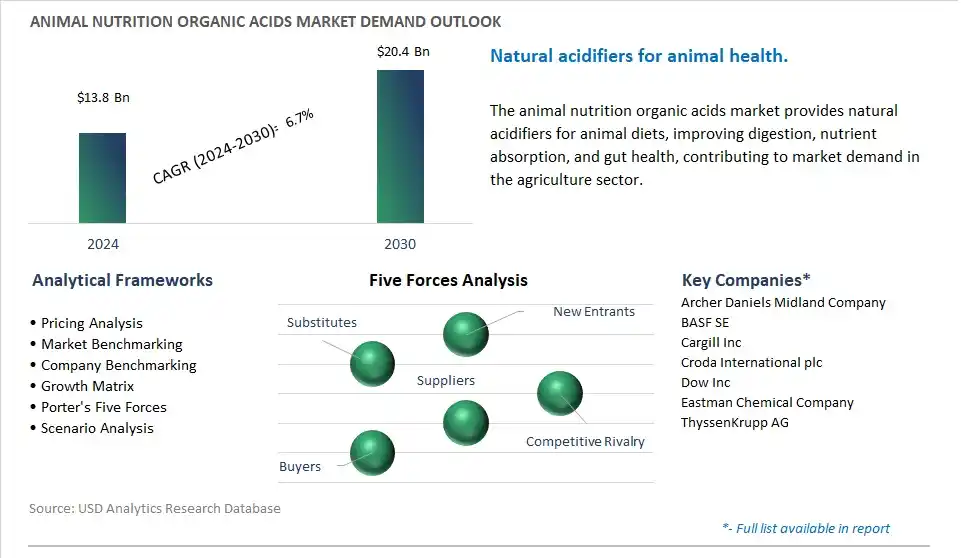
The global Animal Nutrition Organic Acids Market is poised to register a 6.7% CAGR from $13.8 Billion in 2024 to $20.4 Billion in 2030.
The global Animal Nutrition Organic Acids Market Study analyzes and forecasts the market size across 6 regions and 24 countries for diverse segments -By Type (Acetic Acid, Citric Acid, Formic Acid, Lactic Acid, Propionic Acid, Ascorbic Acid, Gluconic Acid, Fumaric Acid, Malic Acid), By Application (Poultry, Livestock).
An Introduction to Global Animal Nutrition Organic Acids Market in 2024
The market for animal nutrition organic acids is experiencing growth driven by the increasing emphasis on gut health, feed efficiency, and antibiotic reduction in livestock production. Key trends shaping the future of this industry include the utilization of organic acids such as formic acid, propionic acid, and butyric acid as dietary supplements to improve nutrient utilization, inhibit pathogen growth, and maintain a balanced gut microbiota in animals. Additionally, advancements in encapsulation and slow-release technologies enhance the efficacy and stability of organic acid formulations, ensuring targeted delivery to the gastrointestinal tract and prolonged activity. Moreover, the adoption of organic acids as alternatives to in-feed antibiotics supports animal health and performance while addressing concerns about antimicrobial resistance and residues in food products. As regulatory pressures and consumer preferences drive the shift towards natural and sustainable feed additives, the demand for organic acids in animal nutrition is expected to continue growing, driving innovation and market expansion in this sector.
Animal Nutrition Organic Acids Market Competitive Landscape
The market report analyses the leading companies in the industry including Archer Daniels Midland Company, BASF SE, Cargill Inc, Croda International plc, Dow Inc, Eastman Chemical Company, ThyssenKrupp AG.
Animal Nutrition Organic Acids Market Dynamics
Animal Nutrition Organic Acids Market Trend: Growing Demand for Natural Feed Additives
Animal nutrition organic acids is witnessing demand for natural feed additives, driven by increasing consumer preferences for organic and natural food products, as well as regulatory pressures to reduce the use of antibiotics and synthetic chemicals in animal agriculture. Organic acids, derived from natural sources such as fruits, grains, and fermentation processes, are gaining popularity as alternatives to conventional feed additives due to their perceived safety, efficacy, and sustainability. With rising concerns over antimicrobial resistance, food safety, and environmental impact, there is a shift towards natural solutions that support animal health, performance, and welfare. This is leading to an increased adoption of organic acids in animal feed formulations, driving the commitment to sustainable and responsible livestock production practices.
Animal Nutrition Organic Acids Market Driver: Focus on Gut Health and Feed Efficiency
A key driver propelling the market for animal nutrition organic acids is the focus on gut health and feed efficiency in modern animal farming systems. Organic acids play a crucial role in maintaining the balance of gut microflora, improving nutrient absorption, and enhancing feed conversion efficiency in livestock and poultry. With increasing pressure to optimize production efficiency, reduce feed costs, and minimize environmental impact, livestock producers are seeking feed additives that promote digestive health, immune function, and overall performance of animals. Organic acids offer benefits such as pathogen control, pH modulation, and growth promotion, making them valuable tools for improving feed efficiency and animal productivity. The focus on gut health and feed efficiency drives market demand for animal nutrition organic acids as essential components in balanced feed formulations, supporting sustainable and efficient livestock production practices.
Animal Nutrition Organic Acids Market Opportunity: Development of Specialty Blends and Formulations
Animal nutrition organic acids are focusing on the development of specialty blends and formulations tailored to specific animal species, production goals, and environmental conditions. With advancements in feed technology and nutritional science, there is growing potential to formulate organic acid blends that address the unique needs and challenges of different livestock and poultry populations. Manufacturers aim to capitalize on this opportunity by offering customized blends, combinations, and concentrations of organic acids that target specific pathogens, optimize gut health, and enhance performance in various production systems. Additionally, there is potential to develop specialty formulations for niche markets such as organic production, antibiotic-free systems, and stress-prone environments, catering to the diverse needs and preferences of livestock producers.
Animal Nutrition Organic Acids Market Ecosystem
The animal nutrition organic acids market involves diverse key stages, with raw material acquisition, where companies including BASF SE, Eastman Chemical Company, and Archer Daniels Midland Company source various organic acids used in feed production.
Processing and upgrading are characterized by the presence of chemical manufacturers including BASF or specialized processors to ensure specific applications in animal feed. Quality control is paramount, with rigorous checks performed by producers and independent laboratories to maintain purity and potency.
Formulation and blending are crucial steps, where organic acids are tailored into blends suitable for different animal needs, either by the producer or premix manufacturers including Cargill. Packaging, storage, distribution, and sales follow, involving direct sales teams or specialty distributors reaching large feed mills and farms. End users, including integrated feed millers and independent farms, incorporate organic acid blends into feed formulations to enhance animal health and performance.
Animal Nutrition Organic Acids Market Share Analysis: Lactic Acid held the dominant revenue share in 2024
In the Animal Nutrition Organic Acids Market, the lactic acid segment is the largest, driven by diverse pivotal factors. Lactic acid, a naturally occurring organic acid produced during fermentation, has gained significant traction in animal nutrition due to its multifaceted benefits and versatile applications. As a feed additive, lactic acid offers various advantages, including improved gut health, enhanced nutrient absorption, and inhibition of pathogenic bacteria in the gastrointestinal tract. Its ability to lower the pH of the digestive system creates an environment conducive to beneficial microbial growth while suppressing the proliferation of harmful pathogens, thereby promoting digestive health and reducing the risk of gastrointestinal disorders in animals. Additionally, lactic acid exhibits antimicrobial properties against a wide range of pathogens, including Salmonella, Escherichia coli, and Clostridium spp., contributing to improved food safety and animal health. In addition, lactic acid supplementation in animal feed has been shown to enhance feed efficiency, growth performance, and overall productivity in various livestock species, including poultry, swine, cattle, and aquaculture species. As a result of these favorable attributes and proven efficacy, the lactic acid segment dominates the Animal Nutrition Organic Acids Market, reflecting the growing demand for natural and sustainable feed additives that promote animal health, performance, and welfare. Further, ongoing research and innovation aimed at optimizing lactic acid formulations and delivery methods continue to drive the growth of this segment in the animal nutrition industry.
Animal Nutrition Organic Acids Market Share Analysis: Poultry is the fastest growing market segment over the forecast period to 2030
In the Animal Nutrition Organic Acids Market, the poultry segment is the fastest-growing sector, propelled by diverse key factors. Poultry farming, including broilers, layers, and breeders, represents a significant segment of the livestock industry, with increasing global demand for poultry meat and eggs. Organic acids, such as lactic acid, acetic acid, and formic acid, play a crucial role in poultry nutrition, offering multiple benefits for health, performance, and disease control. In poultry production, organic acids are commonly used as feed additives to promote gut health, enhance nutrient utilization, and mitigate the growth of pathogenic bacteria, thereby reducing the risk of digestive disorders and improving overall flock performance. Further, organic acids contribute to the reduction of microbial contamination in poultry feed and drinking water, enhancing food safety and reducing the prevalence of foodborne pathogens such as Salmonella and Campylobacter. With the intensification of poultry production systems and the increasing pressure to reduce antibiotic usage, organic acids have emerged as effective alternatives for sustainably promoting poultry health and productivity. As a result, the poultry segment experiences rapid growth in the Animal Nutrition Organic Acids Market, driven by the expanding poultry industry and the demand for natural and effective solutions to optimize poultry production while ensuring animal welfare and food safety standards. Additionally, ongoing research and development efforts focused on novel organic acid formulations and application methods contribute to the continued growth of this segment in poultry nutrition.
Animal Nutrition Organic Acids Market Report Scope-
By Type
Acetic Acid
Citric Acid
Formic Acid
Lactic Acid
Propionic Acid
Ascorbic Acid
Gluconic Acid
Fumaric Acid
Malic Acid
By Application
Poultry
Livestock
Animal Nutrition Organic Acids Market Companies Profiled
Archer Daniels Midland Company
BASF SE
Cargill Inc
Croda International plc
Dow Inc
Eastman Chemical Company
ThyssenKrupp AG
*- List Not Exhaustive
TABLE OF CONTENTS
1 Introduction to 2024 Animal Nutrition Organic Acids Market
1.1 Market Overview
1.2 Quick Facts
1.3 Scope/Objective of the Study
1.4 Market Definition
1.5 Countries and Regions Covered
1.6 Units, Currency, and Conversions
1.7 Industry Value Chain
2 Research Methodology
2.1 Market Size Estimation
2.2 Sources and Research Methodology
2.3 Data Triangulation
2.4 Assumptions and Limitations
3 Executive Summary
3.1 Global Animal Nutrition Organic Acids Market Size Outlook, $ Million, 2021 to 2030
3.2 Animal Nutrition Organic Acids Market Outlook by Type, $ Million, 2021 to 2030
3.3 Animal Nutrition Organic Acids Market Outlook by Product, $ Million, 2021 to 2030
3.4 Animal Nutrition Organic Acids Market Outlook by Application, $ Million, 2021 to 2030
3.5 Animal Nutrition Organic Acids Market Outlook by Key Countries, $ Million, 2021 to 2030
4 Market Dynamics
4.1 Key Driving Forces of Animal Nutrition Organic Acids Industry
4.2 Key Market Trends in Animal Nutrition Organic Acids Industry
4.3 Potential Opportunities in Animal Nutrition Organic Acids Industry
4.4 Key Challenges in Animal Nutrition Organic Acids Industry
5 Market Factor Analysis
5.1 Value Chain Analysis
5.2 Competitive Landscape
5.2.1 Global Animal Nutrition Organic Acids Market Share by Company (%), 2023
5.2.2 Product Offerings by Company
5.3 Porter’s Five Forces Analysis
5.4 Pricing Analysis and Outlook
6 Growth Outlook Across Scenarios
6.1 Growth Analysis-Case Scenario Definitions
6.2 Low Growth Scenario Forecasts
6.3 Reference Growth Scenario Forecasts
6.4 High Growth Scenario Forecasts
7 Global Animal Nutrition Organic Acids Market Outlook by Segments
7.1 Animal Nutrition Organic Acids Market Outlook by Segments, $ Million, 2021- 2030
By Type
Acetic Acid
Citric Acid
Formic Acid
Lactic Acid
Propionic Acid
Ascorbic Acid
Gluconic Acid
Fumaric Acid
Malic Acid
By Application
Poultry
Livestock
8 North America Animal Nutrition Organic Acids Market Analysis and Outlook To 2030
8.1 Introduction to North America Animal Nutrition Organic Acids Markets in 2024
8.2 North America Animal Nutrition Organic Acids Market Size Outlook by Country, 2021-2030
8.2.1 United States
8.2.2 Canada
8.2.3 Mexico
8.3 North America Animal Nutrition Organic Acids Market size Outlook by Segments, 2021-2030
By Type
Acetic Acid
Citric Acid
Formic Acid
Lactic Acid
Propionic Acid
Ascorbic Acid
Gluconic Acid
Fumaric Acid
Malic Acid
By Application
Poultry
Livestock
9 Europe Animal Nutrition Organic Acids Market Analysis and Outlook To 2030
9.1 Introduction to Europe Animal Nutrition Organic Acids Markets in 2024
9.2 Europe Animal Nutrition Organic Acids Market Size Outlook by Country, 2021-2030
9.2.1 Germany
9.2.2 France
9.2.3 Spain
9.2.4 United Kingdom
9.2.4 Italy
9.2.5 Russia
9.2.6 Norway
9.2.7 Rest of Europe
9.3 Europe Animal Nutrition Organic Acids Market Size Outlook by Segments, 2021-2030
By Type
Acetic Acid
Citric Acid
Formic Acid
Lactic Acid
Propionic Acid
Ascorbic Acid
Gluconic Acid
Fumaric Acid
Malic Acid
By Application
Poultry
Livestock
10 Asia Pacific Animal Nutrition Organic Acids Market Analysis and Outlook To 2030
10.1 Introduction to Asia Pacific Animal Nutrition Organic Acids Markets in 2024
10.2 Asia Pacific Animal Nutrition Organic Acids Market Size Outlook by Country, 2021-2030
10.2.1 China
10.2.2 India
10.2.3 Japan
10.2.4 South Korea
10.2.5 Indonesia
10.2.6 Malaysia
10.2.7 Australia
10.2.8 Rest of Asia Pacific
10.3 Asia Pacific Animal Nutrition Organic Acids Market size Outlook by Segments, 2021-2030
By Type
Acetic Acid
Citric Acid
Formic Acid
Lactic Acid
Propionic Acid
Ascorbic Acid
Gluconic Acid
Fumaric Acid
Malic Acid
By Application
Poultry
Livestock
11 South America Animal Nutrition Organic Acids Market Analysis and Outlook To 2030
11.1 Introduction to South America Animal Nutrition Organic Acids Markets in 2024
11.2 South America Animal Nutrition Organic Acids Market Size Outlook by Country, 2021-2030
11.2.1 Brazil
11.2.2 Argentina
11.2.3 Rest of South America
11.3 South America Animal Nutrition Organic Acids Market size Outlook by Segments, 2021-2030
By Type
Acetic Acid
Citric Acid
Formic Acid
Lactic Acid
Propionic Acid
Ascorbic Acid
Gluconic Acid
Fumaric Acid
Malic Acid
By Application
Poultry
Livestock
12 Middle East and Africa Animal Nutrition Organic Acids Market Analysis and Outlook To 2030
12.1 Introduction to Middle East and Africa Animal Nutrition Organic Acids Markets in 2024
12.2 Middle East and Africa Animal Nutrition Organic Acids Market Size Outlook by Country, 2021-2030
12.2.1 Saudi Arabia
12.2.2 UAE
12.2.3 Oman
12.2.4 Rest of Middle East
12.2.5 Egypt
12.2.6 Nigeria
12.2.7 South Africa
12.2.8 Rest of Africa
12.3 Middle East and Africa Animal Nutrition Organic Acids Market size Outlook by Segments, 2021-2030
By Type
Acetic Acid
Citric Acid
Formic Acid
Lactic Acid
Propionic Acid
Ascorbic Acid
Gluconic Acid
Fumaric Acid
Malic Acid
By Application
Poultry
Livestock
13 Company Profiles
13.1 Company Snapshot
13.2 SWOT Profiles
13.3 Products and Services
13.4 Recent Developments
13.5 Financial Profile
Archer Daniels Midland Company
BASF SE
Cargill Inc
Croda International plc
Dow Inc
Eastman Chemical Company
ThyssenKrupp AG
14 Appendix
14.1 Customization Offerings
14.2 Subscription Services
14.3 Related Reports
14.4 Publisher Expertise
By Type
Acetic Acid
Citric Acid
Formic Acid
Lactic Acid
Propionic Acid
Ascorbic Acid
Gluconic Acid
Fumaric Acid
Malic Acid
By Application
Poultry
Livestock
Countries Analyzed
North America (US, Canada, Mexico)
Europe (Germany, UK, France, Spain, Italy, Russia, Rest of Europe)
Asia Pacific (China, India, Japan, South Korea, Australia, South East Asia, Rest of Asia)
South America (Brazil, Argentina, Rest of South America)
Middle East and Africa (Saudi Arabia, UAE, Rest of Middle East, South Africa, Egypt, Rest of Africa)
