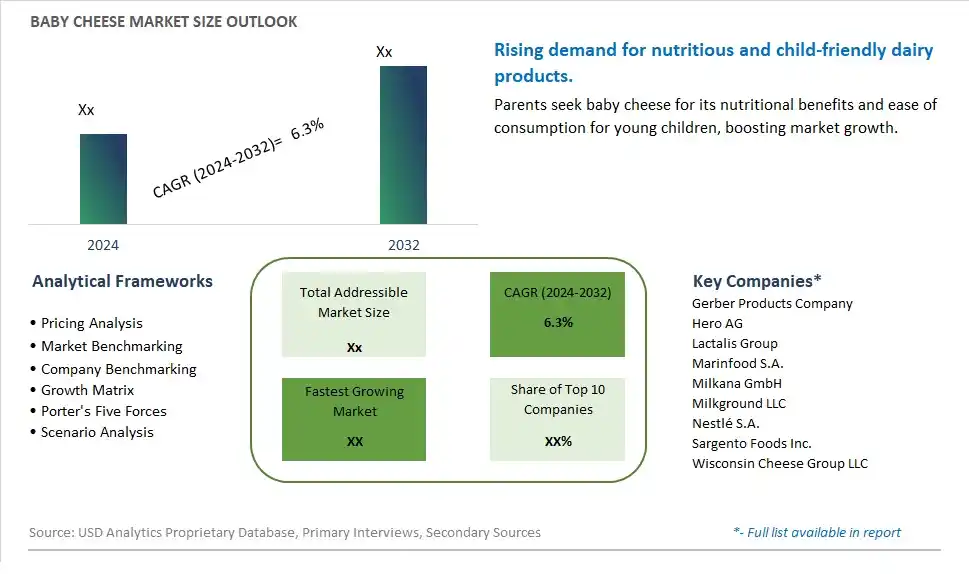
Global Baby Cheese Market Size is valued at $XX Million in 2024 and is forecast to register a growth rate (CAGR) of 6.3% to reach $XX Million by 2032.
The global Baby Cheese Market Comprehensive Study analyzes and forecasts the market size across 6 regions and 24 countries for diverse segments -By Product (Sliced Cheese, Cheese Bar), By Application (Infant, Children), By Channel (Direct Sales, Distributor)
An Introduction to Baby Cheese Market
In 2024, the Baby Cheese market is witnessing significant growth, driven by the increasing demand for nutritious and convenient dairy products for infants and toddlers. Baby cheese, designed to meet the dietary needs of young children, is rich in essential nutrients such as calcium, protein, and vitamins. The market is supported by rising consumer awareness of the importance of early childhood nutrition. Innovations in product formulation and packaging are enhancing the safety, taste, and appeal of baby cheese. The market is also benefiting from the trend towards organic and clean-label baby foods, appealing to health-conscious parents seeking high-quality nutrition for their children.
Baby Cheese Competitive Landscape
The market report analyses the leading companies in the industry including Gerber Products Company, Hero AG, Lactalis Group, Marinfood S.A., Milkana GmbH, Milkground LLC, Nestlé S.A., Sargento Foods Inc., Wisconsin Cheese Group LLC, and Others.
Baby Cheese Market Dynamics
Baby Cheese Market Trend: Growing Demand for Specialty and Gourmet Dairy Products
The most prominent market trend for Baby Cheese is the growing demand for specialty and gourmet dairy products among consumers. As consumers become more adventurous in their culinary preferences and seek unique flavors and textures, there's an increasing interest in artisanal and premium cheeses, including baby cheeses. Baby cheeses, known for their delicate flavors, creamy textures, and small size, cater to this trend by offering a distinctive and indulgent cheese experience that appeals to cheese enthusiasts, foodies, and those looking to elevate their culinary creations.
Baby Cheese Market Driver: Shift Towards Premiumization and Artisanal Food Choices
A key market driver for Baby Cheese is the shift towards premiumization and the preference for artisanal food choices. Consumers are willing to pay a premium for high-quality, handcrafted products that reflect craftsmanship, authenticity, and superior taste. Baby cheeses, often made using traditional methods, premium milk sources, and unique aging techniques, align with this driver by providing a luxurious cheese option that embodies quality, flavor complexity, and artisanal expertise, driving demand among discerning cheese connoisseurs and food enthusiasts.
Baby Cheese Market Opportunity: Diversification and Flavor Innovation
A potential opportunity within the Baby Cheese market lies in diversification and flavor innovation to cater to evolving consumer preferences and culinary trends. Collaborations with cheesemakers, flavor experts, and culinary influencers can lead to the development of new baby cheese varieties with innovative flavors, such as infused herbs, spices, fruits, or aged in unique environments like wine barrels or caves. Additionally, exploring partnerships with retailers, specialty cheese shops, and online platforms can expand distribution channels and reach new audiences seeking novel and distinctive cheese experiences. By capitalizing on flavor innovation and diversification, the baby cheese market can tap into the growing demand for premium and artisanal dairy products in the global food market.
Baby Cheese Market Share Analysis: Sliced Cheese segment generated the highest revenue share in the industry
In the Baby Cheese Market, the largest segment is the Sliced Cheese category. This segment has witnessed significant growth and dominance due to several factors driving its popularity and consumption. Sliced cheese offers convenience and versatility, making it a preferred choice for parents and caregivers when preparing meals for babies and young children. The pre-sliced format eliminates the need for cutting, saving time and effort, especially in busy households. Additionally, sliced cheese maintains portion control, ensuring that parents can easily manage and serve appropriate amounts for their little ones. The convenience factor extends to its use in sandwiches, snacks, and quick meal preparations, catering to the on-the-go lifestyle of modern families. Further, sliced cheese varieties often come in different flavors and textures, appealing to varying taste preferences and providing options for introducing new tastes to babies during their developmental stages. With the growing demand for convenient and nutritious food options for infants and toddlers, the Sliced Cheese segment is expected to continue its growth trajectory in the Baby Cheese Market.
Baby Cheese Market Share Analysis: Infant is the fastest growing segment over the forecast period to 2032
The fastest-growing segment in the Baby Cheese Market is the Infant application category. This growth can be attributed to several factors that make cheese a popular choice among parents and caregivers for infants. Cheese, particularly in the form of soft and mild varieties, is rich in essential nutrients like calcium, protein, and vitamins, making it a nutritious addition to an infant's diet. It plays a crucial role in supporting healthy bone development, promoting growth, and providing a source of energy for infants during their early stages of life. Additionally, cheese is easy to digest for most infants and can be introduced as a complementary food alongside breastfeeding or formula feeding. The versatility of cheese allows for various serving options, such as mashed or pureed, making it suitable for different stages of an infant's feeding journey. As awareness regarding the nutritional benefits of cheese continues to grow, coupled with the emphasis on providing balanced and wholesome diets for infants, the Infant segment within the Baby Cheese Market is projected to experience rapid growth leading up to 2032.
Baby Cheese Market Share Analysis: Direct Sales segment generated the highest revenue share in the industry
The largest segment in the Baby Cheese Market is Direct Sales. This segment represents the distribution channel where baby cheese products are sold directly to consumers without intermediaries such as distributors. Direct sales channels include various outlets such as supermarkets, hypermarkets, convenience stores, specialty baby stores, and online platforms specifically catering to baby products. The prominence of direct sales can be attributed to several factors. Firstly, direct sales offer manufacturers and brands greater control over product placement, pricing strategies, and customer interactions, enabling them to build stronger relationships with their target audience. Further, direct sales channels often provide a more personalized shopping experience for consumers, allowing them to make informed decisions based on product specifications, nutritional information, and brand reputation. Additionally, direct sales enable manufacturers to implement direct marketing initiatives, promotional campaigns, and loyalty programs tailored to their customer base, fostering brand loyalty and repeat purchases. With the increasing demand for healthy and convenient baby food options, the Direct Sales segment within the Baby Cheese Market is expected to maintain its status as the largest and most influential distribution channel in the coming years.
Baby Cheese Market Segmentation
By Product
Sliced Cheese
Cheese Bar
By Application
Infant
Children
By Channel
Direct Sales
Distributor
Countries Analyzed
North America (US, Canada, Mexico)
Europe (Germany, UK, France, Spain, Italy, Russia, Rest of Europe)
Asia Pacific (China, India, Japan, South Korea, Australia, South East Asia, Rest of Asia)
South America (Brazil, Argentina, Rest of South America)
Middle East and Africa (Saudi Arabia, UAE, Rest of Middle East, South Africa, Egypt, Rest of Africa)
Baby Cheese Companies Profiled in the Study
Gerber Products Company
Hero AG
Lactalis Group
Marinfood S.A.
Milkana GmbH
Milkground LLC
Nestlé S.A.
Sargento Foods Inc.
Wisconsin Cheese Group LLC
*- List Not Exhaustive
