
The global Cocoa Based Polyphenols Market Study analyzes and forecasts the market size across 6 regions and 24 countries for diverse segments -By Application (Functional Foods, Functional Beverages, Dietary Supplements, Others).
The market for cocoa-based polyphenols is expanding as consumers increasingly recognize the health benefits and functional properties of these natural compounds derived from cocoa beans. Cocoa polyphenols, such as flavonoids and procyanidins, are known for their antioxidant, anti-inflammatory, and cardiovascular health-promoting effects, driving demand for cocoa-based products in the food, beverage, and nutraceutical industries. Key trends include innovations in extraction methods to preserve polyphenol content and bioactivity, as well as developments in product formulations to incorporate cocoa polyphenols into functional foods, supplements, and beverages. Additionally, research into the therapeutic potential of cocoa polyphenols in areas such as cognitive health, skin care, and sports nutrition is driving market growth and diversification. Moreover, the rising consumer preference for natural and clean label ingredients aligns with the use of cocoa polyphenols as functional additives, further fueling market expansion. As awareness of the health benefits of cocoa polyphenols continues to grow, the market is poised for continued innovation and product development to meet evolving consumer demands for functional and nutritious products.
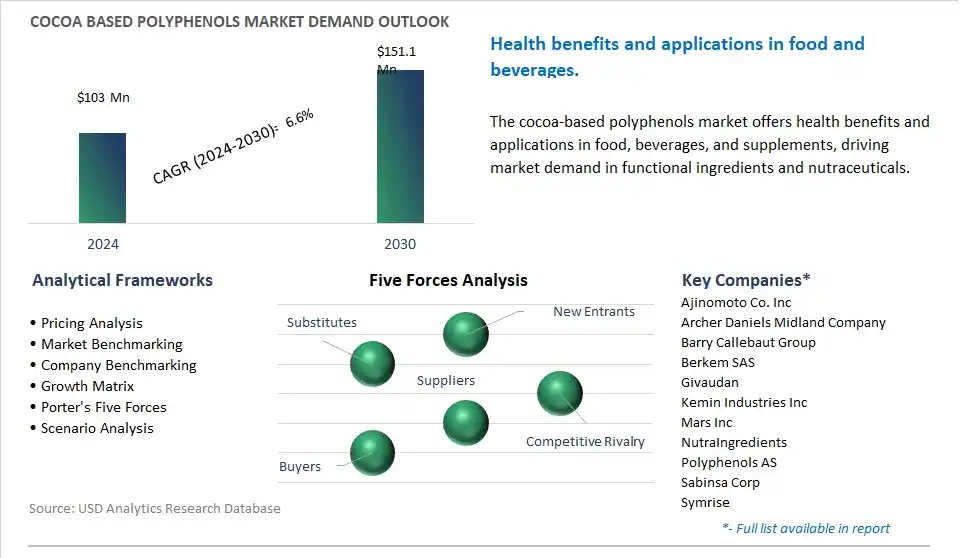
The market report analyses the leading companies in the industry including Ajinomoto Co. Inc, Archer Daniels Midland Company, Barry Callebaut Group, Berkem SAS, Givaudan, Kemin Industries Inc, Mars Inc, NutraIngredients, Polyphenols AS, Sabinsa Corp, Symrise.
A prominent trend in the market for cocoa-based polyphenols is the increasing demand for natural antioxidants in the food and beverage industry. With growing consumer awareness of the health benefits of antioxidants and the preference for clean label ingredients, there is a rising demand for natural sources of polyphenols derived from cocoa beans. Cocoa-based polyphenols, known for their antioxidant properties and potential health benefits such as cardiovascular health, anti-inflammatory effects, and cognitive function improvement, are being incorporated into a wide range of food and beverage products. This is driven by consumer preferences for healthier and functional foods, as well as the food industry's focus on natural ingredients and product innovation to meet evolving consumer demands.
A significant driver fueling the demand for cocoa-based polyphenols is the growing interest in functional foods and nutraceuticals. With increasing health-consciousness and the aging population, there is a rising demand for food and beverage products that offer additional health benefits beyond basic nutrition. Cocoa-based polyphenols, with their antioxidant, anti-inflammatory, and other bioactive properties, are being recognized as valuable ingredients in functional foods, dietary supplements, and nutraceutical formulations aimed at promoting health and wellness. This driver is further supported by scientific research highlighting the health-promoting effects of cocoa polyphenols, as well as marketing efforts by food and beverage companies to communicate the health benefits of products containing cocoa-derived ingredients.
An opportunity within the market for cocoa-based polyphenols lies in expansion into cosmetics and personal care products. While cocoa polyphenols are primarily used in food and beverage applications, there is potential for growth in the cosmetics and personal care industry due to their antioxidant and skin-protective properties. Cocoa-based polyphenols can be utilized in skincare formulations such as moisturizers, anti-aging creams, and sunscreens to help protect the skin from oxidative damage, UV radiation, and environmental stressors. Additionally, cocoa polyphenols offer potential benefits for hair care products, including improving scalp health, enhancing hair growth, and preventing hair damage. By capitalizing on this opportunity and developing innovative formulations for cosmetics and personal care products, manufacturers of cocoa-based polyphenols can diversify their product portfolio, enter new markets, and capitalize on the growing demand for natural and functional ingredients in the beauty and personal care industry.
The largest segment in the cocoa-based polyphenols market is functional foods. Cocoa-based polyphenols are widely used as functional ingredients in various food products due to their antioxidant properties and potential health benefits. Functional foods enriched with cocoa polyphenols, such as chocolates, snacks, and baked goods, have gained popularity among health-conscious consumers seeking natural antioxidants and wellness-promoting compounds. The incorporation of cocoa polyphenols in functional food formulations enhances their nutritional profile and contributes to the growing demand for these products in the functional foods segment. While cocoa polyphenols also find applications in functional beverages, dietary supplements, and other sectors, functional foods remain the dominant application area for cocoa-based polyphenols due to their widespread consumption and market demand.
By Application
Functional Foods
Functional Beverages
Dietary Supplements
Others
Regions Included
North America (US, Canada, Mexico)
Europe (Germany, UK, France, Spain, Italy, Russia, Rest of Europe)
Asia Pacific (China, India, Japan, South Korea, Australia, South East Asia, Rest of Asia)
South America (Brazil, Argentina, Rest of South America)
Middle East and Africa (Saudi Arabia, UAE, Rest of Middle East, South Africa, Egypt, Rest of Africa)
Ajinomoto Co. Inc
Archer Daniels Midland Company
Barry Callebaut Group
Berkem SAS
Givaudan
Kemin Industries Inc
Mars Inc
NutraIngredients
Polyphenols AS
Sabinsa Corp
Symrise
*- List Not Exhaustive
TABLE OF CONTENTS
1 Introduction to 2024 Cocoa Based Polyphenols Market
1.1 Market Overview
1.2 Quick Facts
1.3 Scope/Objective of the Study
1.4 Market Definition
1.5 Countries and Regions Covered
1.6 Units, Currency, and Conversions
1.7 Industry Value Chain
2 Research Methodology
2.1 Market Size Estimation
2.2 Sources and Research Methodology
2.3 Data Triangulation
2.4 Assumptions and Limitations
3 Executive Summary
3.1 Global Cocoa Based Polyphenols Market Size Outlook, $ Million, 2021 to 2030
3.2 Cocoa Based Polyphenols Market Outlook by Type, $ Million, 2021 to 2030
3.3 Cocoa Based Polyphenols Market Outlook by Product, $ Million, 2021 to 2030
3.4 Cocoa Based Polyphenols Market Outlook by Application, $ Million, 2021 to 2030
3.5 Cocoa Based Polyphenols Market Outlook by Key Countries, $ Million, 2021 to 2030
4 Market Dynamics
4.1 Key Driving Forces of Cocoa Based Polyphenols Industry
4.2 Key Market Trends in Cocoa Based Polyphenols Industry
4.3 Potential Opportunities in Cocoa Based Polyphenols Industry
4.4 Key Challenges in Cocoa Based Polyphenols Industry
5 Market Factor Analysis
5.1 Value Chain Analysis
5.2 Competitive Landscape
5.2.1 Global Cocoa Based Polyphenols Market Share by Company (%), 2023
5.2.2 Product Offerings by Company
5.3 Porter’s Five Forces Analysis
5.4 Pricing Analysis and Outlook
6 Growth Outlook Across Scenarios
6.1 Growth Analysis-Case Scenario Definitions
6.2 Low Growth Scenario Forecasts
6.3 Reference Growth Scenario Forecasts
6.4 High Growth Scenario Forecasts
7 Global Cocoa Based Polyphenols Market Outlook by Segments
7.1 Cocoa Based Polyphenols Market Outlook by Segments, $ Million, 2021- 2030
By Application
Functional Foods
Functional Beverages
Dietary Supplements
Others
8 North America Cocoa Based Polyphenols Market Analysis and Outlook To 2030
8.1 Introduction to North America Cocoa Based Polyphenols Markets in 2024
8.2 North America Cocoa Based Polyphenols Market Size Outlook by Country, 2021-2030
8.2.1 United States
8.2.2 Canada
8.2.3 Mexico
8.3 North America Cocoa Based Polyphenols Market size Outlook by Segments, 2021-2030
By Application
Functional Foods
Functional Beverages
Dietary Supplements
Others
9 Europe Cocoa Based Polyphenols Market Analysis and Outlook To 2030
9.1 Introduction to Europe Cocoa Based Polyphenols Markets in 2024
9.2 Europe Cocoa Based Polyphenols Market Size Outlook by Country, 2021-2030
9.2.1 Germany
9.2.2 France
9.2.3 Spain
9.2.4 United Kingdom
9.2.4 Italy
9.2.5 Russia
9.2.6 Norway
9.2.7 Rest of Europe
9.3 Europe Cocoa Based Polyphenols Market Size Outlook by Segments, 2021-2030
By Application
Functional Foods
Functional Beverages
Dietary Supplements
Others
10 Asia Pacific Cocoa Based Polyphenols Market Analysis and Outlook To 2030
10.1 Introduction to Asia Pacific Cocoa Based Polyphenols Markets in 2024
10.2 Asia Pacific Cocoa Based Polyphenols Market Size Outlook by Country, 2021-2030
10.2.1 China
10.2.2 India
10.2.3 Japan
10.2.4 South Korea
10.2.5 Indonesia
10.2.6 Malaysia
10.2.7 Australia
10.2.8 Rest of Asia Pacific
10.3 Asia Pacific Cocoa Based Polyphenols Market size Outlook by Segments, 2021-2030
By Application
Functional Foods
Functional Beverages
Dietary Supplements
Others
11 South America Cocoa Based Polyphenols Market Analysis and Outlook To 2030
11.1 Introduction to South America Cocoa Based Polyphenols Markets in 2024
11.2 South America Cocoa Based Polyphenols Market Size Outlook by Country, 2021-2030
11.2.1 Brazil
11.2.2 Argentina
11.2.3 Rest of South America
11.3 South America Cocoa Based Polyphenols Market size Outlook by Segments, 2021-2030
By Application
Functional Foods
Functional Beverages
Dietary Supplements
Others
12 Middle East and Africa Cocoa Based Polyphenols Market Analysis and Outlook To 2030
12.1 Introduction to Middle East and Africa Cocoa Based Polyphenols Markets in 2024
12.2 Middle East and Africa Cocoa Based Polyphenols Market Size Outlook by Country, 2021-2030
12.2.1 Saudi Arabia
12.2.2 UAE
12.2.3 Oman
12.2.4 Rest of Middle East
12.2.5 Egypt
12.2.6 Nigeria
12.2.7 South Africa
12.2.8 Rest of Africa
12.3 Middle East and Africa Cocoa Based Polyphenols Market size Outlook by Segments, 2021-2030
By Application
Functional Foods
Functional Beverages
Dietary Supplements
Others
13 Company Profiles
13.1 Company Snapshot
13.2 SWOT Profiles
13.3 Products and Services
13.4 Recent Developments
13.5 Financial Profile
Ajinomoto Co. Inc
Archer Daniels Midland Company
Barry Callebaut Group
Berkem SAS
Givaudan
Kemin Industries Inc
Mars Inc
NutraIngredients
Polyphenols AS
Sabinsa Corp
Symrise
14 Appendix
14.1 Customization Offerings
14.2 Subscription Services
14.3 Related Reports
14.4 Publisher Expertise
By Application
Functional Foods
Functional Beverages
Dietary Supplements
Others
Countries Analyzed
North America (US, Canada, Mexico)
Europe (Germany, UK, France, Spain, Italy, Russia, Rest of Europe)
Asia Pacific (China, India, Japan, South Korea, Australia, South East Asia, Rest of Asia)
South America (Brazil, Argentina, Rest of South America)
Middle East and Africa (Saudi Arabia, UAE, Rest of Middle East, South Africa, Egypt, Rest of Africa)
Global Cocoa Based Polyphenols is forecast to reach $151.1 Million in 2030 from $103 Million in 2024, registering a CAGR of 6.6%
Emerging Markets across Asia Pacific, Europe, and Americas present robust growth prospects.
Ajinomoto Co. Inc, Archer Daniels Midland Company, Barry Callebaut Group, Berkem SAS, Givaudan, Kemin Industries Inc, Mars Inc, NutraIngredients, Polyphenols AS, Sabinsa Corp, Symrise
Base Year- 2023; Estimated Year- 2024; Historic Period- 2018-2023; Forecast period- 2024 to 2030; Currency: Revenue (USD); Volume