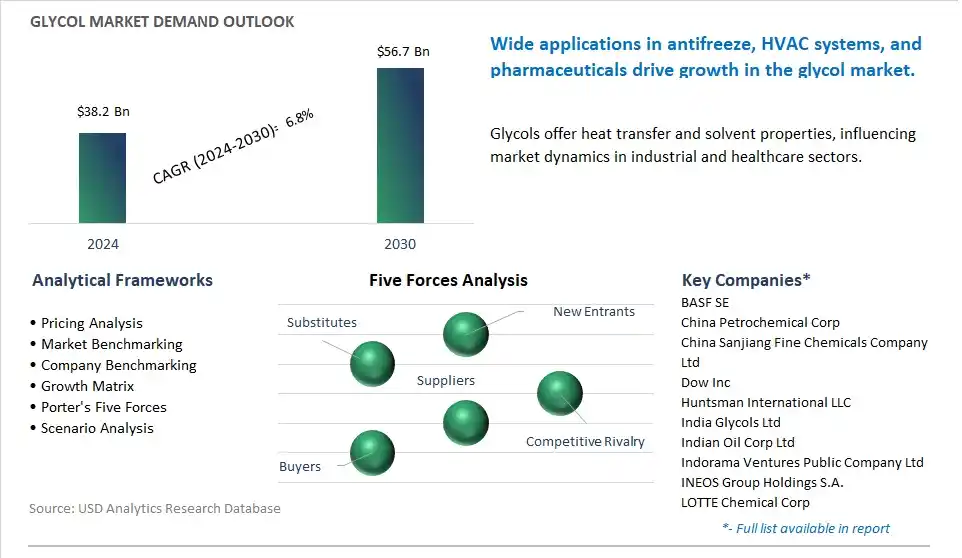
The global Glycol Market is poised to register a 6.8% CAGR from $38.2 Billion in 2024 to $56.7 Billion in 2030.
The global Glycol Market Study analyzes and forecasts the market size across 6 regions and 24 countries for diverse segments -By Product (Ethylene Glycol, Propylene Glycol), By Application (Automotive, HVAC, Textiles, Airlines, Medical, Pipeline Maintenance, Polyester Fibers & Resins, Food & Beverage, Others).
An Introduction to Global Glycol Market in 2024
The glycol market is witnessing robust growth driven by its widespread applications in various industries such as automotive, HVAC (Heating, Ventilation, and Air Conditioning), pharmaceuticals, and food processing. Key trends shaping the future of the industry include the increasing demand for glycol-based heat transfer fluids, antifreeze agents, and solvent carriers, driven by their excellent thermal properties, low toxicity, and compatibility with a wide range of materials while meeting stringent performance standards and regulatory requirements. As industries seek to improve energy efficiency, reduce emissions, and enhance product quality and safety, there's a growing need for glycols that offer superior heat transfer efficiency, freeze protection, and corrosion inhibition properties in automotive cooling systems, HVAC installations, and industrial processes. Moreover, advancements in glycol production methods, including synthesis routes, catalysts, and process optimization, are driving market expansion by improving product purity, yield, and cost-effectiveness while reducing environmental impact, energy consumption, and waste generation associated with traditional manufacturing processes. Additionally, the growing adoption of glycols in pharmaceutical formulations, food and beverage applications, and personal care products is fueling demand for high-quality ingredients that meet strict quality standards, safety regulations, and consumer preferences for natural, sustainable, and safe-to-use materials. Furthermore, the integration of glycols with renewable feedstocks, biobased chemicals, and green chemistry principles is driving innovation and market growth in the glycol industry, enabling the development of smarter, more sustainable, and more efficient solutions for the future of heat transfer, fluid management, and chemical processing applications.
Glycol Market Competitive Landscape
The market report analyses the leading companies in the industry including BASF SE, China Petrochemical Corp, China Sanjiang Fine Chemicals Company Ltd, Dow Inc, Huntsman International LLC, India Glycols Ltd, Indian Oil Corp Ltd, Indorama Ventures Public Company Ltd, INEOS Group Holdings S.A., LOTTE Chemical Corp, LyondellBasell Industries N.V., MEGlobal International FZE, Mitsubishi Chemical Holdings Corp, Nouryon, Petro Rabigh, PETRONAS Chemicals Group Berhad, Reliance Industries Ltd, Royal Dutch Shell plc, Saudi Basic Industries Corp.
Glycol Market Dynamics
Glycol Market Trend: Increasing Demand for Eco-Friendly Antifreeze Solutions
A significant trend in the glycol market is the rising demand for eco-friendly antifreeze solutions driven by environmental regulations, sustainability initiatives, and consumer preferences for greener products. Glycols, particularly ethylene glycol and propylene glycol, are commonly used as antifreeze agents in automotive coolant formulations to prevent engine overheating and corrosion. With concerns about environmental pollution and toxicity associated with traditional antifreeze products containing ethylene glycol, there is a growing shift towards safer and more sustainable alternatives such as propylene glycol-based antifreeze. Propylene glycol offers similar performance characteristics to ethylene glycol while being less toxic and environmentally friendly, making it a preferred choice for automotive, industrial, and HVAC applications. This trend is reshaping the glycol market towards increased adoption of eco-friendly antifreeze solutions that meet regulatory requirements, minimize environmental impact, and align with corporate sustainability goals.
Glycol Market Driver: Growth in Automotive and HVAC Industries
A key driver propelling the glycol market is the growth in automotive and HVAC industries where glycols are used as essential components in antifreeze, coolant, and heat transfer fluids. In the automotive sector, glycol-based antifreeze formulations are critical for maintaining engine performance and protecting vehicle components from freezing, overheating, and corrosion in extreme temperatures. With the increasing global vehicle parc, expansion of automotive aftermarket services, and rising demand for electric and hybrid vehicles, there is a steady demand for glycol-based antifreeze products to support vehicle maintenance and repair activities. Similarly, in the HVAC industry, glycol-based heat transfer fluids are used in heating, ventilation, air conditioning, and refrigeration systems to facilitate heat exchange, temperature control, and energy efficiency. The growth of these industries, driven by urbanization, infrastructure development, and technological advancements, fuels market demand for glycols as essential fluids for automotive and HVAC applications, driving growth and opportunities for glycol manufacturers and suppliers.
Glycol Market Opportunity: Development of Bio-based and Renewable Glycols
An opportunity for market expansion lies in the development of bio-based and renewable glycols as sustainable alternatives to petroleum-derived glycols, offering solutions for environmental sustainability and reducing reliance on fossil fuels. With increasing emphasis on reducing carbon emissions, mitigating climate change, and promoting circular economy principles, there is growing interest in bio-based glycols derived from renewable feedstocks such as biomass, agricultural residues, and waste materials. Bio-based glycols, such as bioethylene glycol and biopropylene glycol, can be produced through fermentation, enzymatic processes, or chemical conversion technologies, offering similar performance characteristics to petroleum-derived glycols while reducing greenhouse gas emissions and environmental impact. By investing in research and development and collaborating with biotechnology and chemical engineering partners, glycol manufacturers can capitalize on opportunities to develop bio-based glycols, enter sustainable markets, and meet the growing demand for eco-friendly and renewable solutions, driving growth and innovation in the glycol market.
Glycol Market Share Analysis: Ethylene Glycol segment generated the highest revenue in the industry
Ethylene glycol is the largest segment in the glycol market, primarily due to its extensive use in various industrial applications, particularly as an antifreeze agent and coolant in automotive engines and heating, ventilation, and air conditioning (HVAC) systems. Ethylene glycol is a versatile chemical compound with excellent thermal properties, making it ideal for use in applications where heat transfer and freeze protection are essential. In automotive applications, ethylene glycol-based antifreeze solutions are used to prevent engine coolant from freezing in cold temperatures and overheating in hot conditions, thus maintaining optimal engine performance and protecting engine components from damage. Similarly, in HVAC systems, ethylene glycol-based coolants are used to transfer heat efficiently and regulate temperatures, enhancing system efficiency and reliability. In addition, ethylene glycol finds applications in other industries such as textiles, plastics, and pharmaceuticals, further contributing to its dominance in the glycol market. Additionally, ethylene glycol is produced on a large scale globally and is cost-effective compared to propylene glycol, further solidifying its position as the largest segment in the glycol market. Over the forecast period, the widespread use, excellent thermal properties, and cost-effectiveness of ethylene glycol make it the preferred choice for numerous industrial applications, driving its dominance in the glycol market.
Glycol Market Share Analysis: HVAC (Heating, Ventilation, and Air Conditioning) Segment is poised to register the fastest growth rate (CAGR) over the forecast period to 2030
The HVAC segment is the fastest-growing segment in the glycol market, driven by diverse key factors. The there is a growing global demand for heating, ventilation, and air conditioning systems, fueled by factors such as urbanization, population growth, and increasing temperatures due to climate change. HVAC systems are essential for maintaining comfortable indoor environments in residential, commercial, and industrial buildings, as well as for ensuring optimal conditions in critical facilities such as hospitals and data centers. Glycol-based solutions, particularly ethylene glycol and propylene glycol, are widely used as heat transfer fluids and antifreeze agents in HVAC systems. These glycol solutions help to regulate temperatures, prevent freezing, and protect equipment from corrosion and scale buildup, thus enhancing system efficiency, reliability, and longevity. Secondly, advancements in HVAC technology and the adoption of energy-efficient systems are driving the demand for glycol-based solutions that can support these high-performance systems while minimizing environmental impact and energy consumption. Glycol-based heat transfer fluids offer advantages such as high thermal conductivity, low viscosity, and stable performance over a wide range of temperatures, making them well-suited for modern HVAC applications. Additionally, the HVAC industry's increasing focus on sustainability and green building practices further accelerates the adoption of glycol-based solutions, as they offer benefits such as recyclability, non-toxicity, and compatibility with renewable energy sources. Over the forecast period, the combination of growing demand for HVAC systems, technological advancements, and sustainability considerations positions the HVAC segment as the fastest-growing segment in the glycol market.
Glycol Market Report Segmentation
By Product
Ethylene Glycol
-Monoethylene Glycol (MEG)
-Diethylene Glycol (DEG)
-Triethylene Glycol (TEG)
Propylene Glycol
By Application
Automotive
HVAC
Textiles
Airlines
Medical
Pipeline Maintenance
Polyester Fibers & Resins
Food & Beverage
Others
Regions Included
North America (US, Canada, Mexico)
Europe (Germany, UK, France, Spain, Italy, Russia, Rest of Europe)
Asia Pacific (China, India, Japan, South Korea, Australia, South East Asia, Rest of Asia)
South America (Brazil, Argentina, Rest of South America)
Middle East and Africa (Saudi Arabia, UAE, Rest of Middle East, South Africa, Egypt, Rest of Africa)
Glycol Companies Profiled in the Market Study
BASF SE
China Petrochemical Corp
China Sanjiang Fine Chemicals Company Ltd
Dow Inc
Huntsman International LLC
India Glycols Ltd
Indian Oil Corp Ltd
Indorama Ventures Public Company Ltd
INEOS Group Holdings S.A.
LOTTE Chemical Corp
LyondellBasell Industries N.V.
MEGlobal International FZE
Mitsubishi Chemical Holdings Corp
Nouryon
Petro Rabigh
PETRONAS Chemicals Group Berhad
Reliance Industries Ltd
Royal Dutch Shell plc
Saudi Basic Industries Corp
*- List Not Exhaustive
TABLE OF CONTENTS
1 Introduction to 2024 Glycol Market
1.1 Market Overview
1.2 Quick Facts
1.3 Scope/Objective of the Study
1.4 Market Definition
1.5 Countries and Regions Covered
1.6 Units, Currency, and Conversions
1.7 Industry Value Chain
2 Research Methodology
2.1 Market Size Estimation
2.2 Sources and Research Methodology
2.3 Data Triangulation
2.4 Assumptions and Limitations
3 Executive Summary
3.1 Global Glycol Market Size Outlook, $ Million, 2021 to 2030
3.2 Glycol Market Outlook by Type, $ Million, 2021 to 2030
3.3 Glycol Market Outlook by Product, $ Million, 2021 to 2030
3.4 Glycol Market Outlook by Application, $ Million, 2021 to 2030
3.5 Glycol Market Outlook by Key Countries, $ Million, 2021 to 2030
4 Market Dynamics
4.1 Key Driving Forces of Glycol Industry
4.2 Key Market Trends in Glycol Industry
4.3 Potential Opportunities in Glycol Industry
4.4 Key Challenges in Glycol Industry
5 Market Factor Analysis
5.1 Value Chain Analysis
5.2 Competitive Landscape
5.2.1 Global Glycol Market Share by Company (%), 2023
5.2.2 Product Offerings by Company
5.3 Porter’s Five Forces Analysis
5.4 Pricing Analysis and Outlook
6 Growth Outlook Across Scenarios
6.1 Growth Analysis-Case Scenario Definitions
6.2 Low Growth Scenario Forecasts
6.3 Reference Growth Scenario Forecasts
6.4 High Growth Scenario Forecasts
7 Global Glycol Market Outlook by Segments
7.1 Glycol Market Outlook by Segments, $ Million, 2021- 2030
By Product
Ethylene Glycol
-Monoethylene Glycol (MEG)
-Diethylene Glycol (DEG)
-Triethylene Glycol (TEG)
Propylene Glycol
By Application
Automotive
HVAC
Textiles
Airlines
Medical
Pipeline Maintenance
Polyester Fibers & Resins
Food & Beverage
Others
8 North America Glycol Market Analysis and Outlook To 2030
8.1 Introduction to North America Glycol Markets in 2024
8.2 North America Glycol Market Size Outlook by Country, 2021-2030
8.2.1 United States
8.2.2 Canada
8.2.3 Mexico
8.3 North America Glycol Market size Outlook by Segments, 2021-2030
By Product
Ethylene Glycol
-Monoethylene Glycol (MEG)
-Diethylene Glycol (DEG)
-Triethylene Glycol (TEG)
Propylene Glycol
By Application
Automotive
HVAC
Textiles
Airlines
Medical
Pipeline Maintenance
Polyester Fibers & Resins
Food & Beverage
Others
9 Europe Glycol Market Analysis and Outlook To 2030
9.1 Introduction to Europe Glycol Markets in 2024
9.2 Europe Glycol Market Size Outlook by Country, 2021-2030
9.2.1 Germany
9.2.2 France
9.2.3 Spain
9.2.4 United Kingdom
9.2.4 Italy
9.2.5 Russia
9.2.6 Norway
9.2.7 Rest of Europe
9.3 Europe Glycol Market Size Outlook by Segments, 2021-2030
By Product
Ethylene Glycol
-Monoethylene Glycol (MEG)
-Diethylene Glycol (DEG)
-Triethylene Glycol (TEG)
Propylene Glycol
By Application
Automotive
HVAC
Textiles
Airlines
Medical
Pipeline Maintenance
Polyester Fibers & Resins
Food & Beverage
Others
10 Asia Pacific Glycol Market Analysis and Outlook To 2030
10.1 Introduction to Asia Pacific Glycol Markets in 2024
10.2 Asia Pacific Glycol Market Size Outlook by Country, 2021-2030
10.2.1 China
10.2.2 India
10.2.3 Japan
10.2.4 South Korea
10.2.5 Indonesia
10.2.6 Malaysia
10.2.7 Australia
10.2.8 Rest of Asia Pacific
10.3 Asia Pacific Glycol Market size Outlook by Segments, 2021-2030
By Product
Ethylene Glycol
-Monoethylene Glycol (MEG)
-Diethylene Glycol (DEG)
-Triethylene Glycol (TEG)
Propylene Glycol
By Application
Automotive
HVAC
Textiles
Airlines
Medical
Pipeline Maintenance
Polyester Fibers & Resins
Food & Beverage
Others
11 South America Glycol Market Analysis and Outlook To 2030
11.1 Introduction to South America Glycol Markets in 2024
11.2 South America Glycol Market Size Outlook by Country, 2021-2030
11.2.1 Brazil
11.2.2 Argentina
11.2.3 Rest of South America
11.3 South America Glycol Market size Outlook by Segments, 2021-2030
By Product
Ethylene Glycol
-Monoethylene Glycol (MEG)
-Diethylene Glycol (DEG)
-Triethylene Glycol (TEG)
Propylene Glycol
By Application
Automotive
HVAC
Textiles
Airlines
Medical
Pipeline Maintenance
Polyester Fibers & Resins
Food & Beverage
Others
12 Middle East and Africa Glycol Market Analysis and Outlook To 2030
12.1 Introduction to Middle East and Africa Glycol Markets in 2024
12.2 Middle East and Africa Glycol Market Size Outlook by Country, 2021-2030
12.2.1 Saudi Arabia
12.2.2 UAE
12.2.3 Oman
12.2.4 Rest of Middle East
12.2.5 Egypt
12.2.6 Nigeria
12.2.7 South Africa
12.2.8 Rest of Africa
12.3 Middle East and Africa Glycol Market size Outlook by Segments, 2021-2030
By Product
Ethylene Glycol
-Monoethylene Glycol (MEG)
-Diethylene Glycol (DEG)
-Triethylene Glycol (TEG)
Propylene Glycol
By Application
Automotive
HVAC
Textiles
Airlines
Medical
Pipeline Maintenance
Polyester Fibers & Resins
Food & Beverage
Others
13 Company Profiles
13.1 Company Snapshot
13.2 SWOT Profiles
13.3 Products and Services
13.4 Recent Developments
13.5 Financial Profile
BASF SE
China Petrochemical Corp
China Sanjiang Fine Chemicals Company Ltd
Dow Inc
Huntsman International LLC
India Glycols Ltd
Indian Oil Corp Ltd
Indorama Ventures Public Company Ltd
INEOS Group Holdings S.A.
LOTTE Chemical Corp
LyondellBasell Industries N.V.
MEGlobal International FZE
Mitsubishi Chemical Holdings Corp
Nouryon
Petro Rabigh
PETRONAS Chemicals Group Berhad
Reliance Industries Ltd
Royal Dutch Shell plc
Saudi Basic Industries Corp
14 Appendix
14.1 Customization Offerings
14.2 Subscription Services
14.3 Related Reports
14.4 Publisher Expertise
By Product
Ethylene Glycol
-Monoethylene Glycol (MEG)
-Diethylene Glycol (DEG)
-Triethylene Glycol (TEG)
Propylene Glycol
By Application
Automotive
HVAC
Textiles
Airlines
Medical
Pipeline Maintenance
Polyester Fibers & Resins
Food & Beverage
Others
Countries Analyzed
North America (US, Canada, Mexico)
Europe (Germany, UK, France, Spain, Italy, Russia, Rest of Europe)
Asia Pacific (China, India, Japan, South Korea, Australia, South East Asia, Rest of Asia)
South America (Brazil, Argentina, Rest of South America)
Middle East and Africa (Saudi Arabia, UAE, Rest of Middle East, South Africa, Egypt, Rest of Africa)
