The global Halal Cosmetics Market is poised to register a 8.8% CAGR from $38.6 Billion in 2024 to $64 Billion in 2030.
The global Halal Cosmetics Market Study analyzes and forecasts the market size across 6 regions and 24 countries for diverse segments -By Product (Personal Care Products, Color Cosmetics, Fragrances), By Application (Hair Care, Skin Care, Face Care, Beauty Care), By Distribution Channel (Offline, Online).
An Introduction to Global Halal Cosmetics Market in 2024
Halal cosmetics, which adhere to Islamic Shariah law and do not contain ingredients prohibited by Islam, are experiencing rapid growth driven by increasing Muslim population, rising awareness of halal principles, and changing consumer preferences for ethical and natural products. One key trend shaping the future of the halal cosmetics industry is the expansion of product offerings to include a wider range of cosmetics and personal care products, such as skincare, haircare, and fragrances, catering to diverse consumer needs and preferences. Manufacturers are investing in research and development to innovate halal-certified formulations with natural and organic ingredients, free from alcohol, animal-derived ingredients, and harsh chemicals, appealing to health-conscious and environmentally conscious consumers. Additionally, the growing influence of social media influencers and online beauty communities is driving demand for halal cosmetics, with consumers seeking authentic, inclusive, and transparent brands that resonate with their values and beliefs. Moreover, the globalization of halal certification standards and the establishment of halal regulatory bodies are facilitating market expansion and international trade, creating opportunities for brands to tap into new markets and reach a broader audience. As halal cosmetics gain mainstream acceptance and recognition, the industry is poised for continued growth, with potential for innovation, collaboration, and market differentiation to meet evolving consumer demands and preferences.
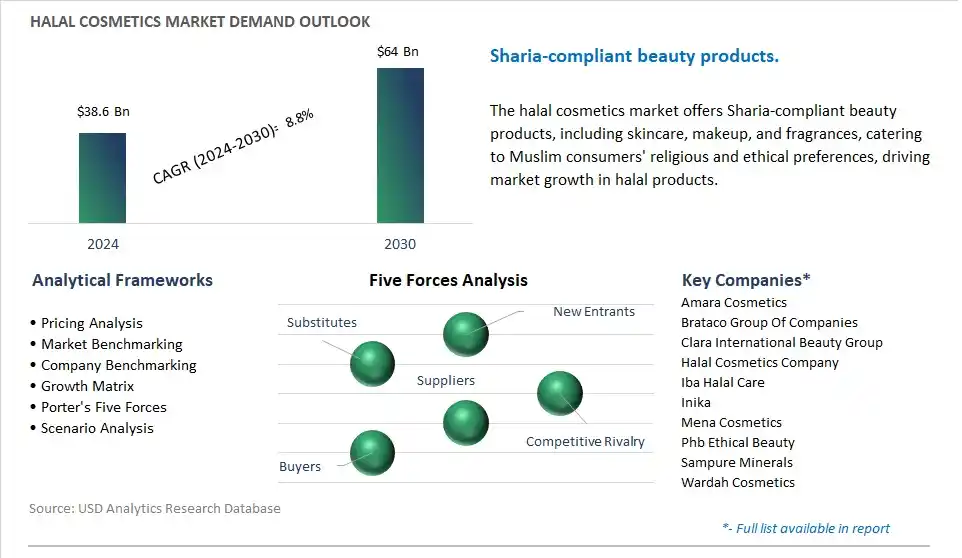
Halal Cosmetics Market Competitive Landscape
The market report analyses the leading companies in the industry including Amara Cosmetics, Brataco Group Of Companies, Clara International Beauty Group, Halal Cosmetics Company, Iba Halal Care, Inika, Mena Cosmetics, Phb Ethical Beauty, Sampure Minerals, Wardah Cosmetics.
Halal Cosmetics Market Dynamics
Halal Cosmetics Market Trend: Growing Demand for Halal-Certified Cosmetics
A prominent trend in the market for Halal Cosmetics is the increasing demand for Halal-certified cosmetic products among Muslim consumers worldwide. With a growing Muslim population and rising awareness of religious and ethical considerations in personal care products, there is a rising preference for cosmetics that comply with Islamic Shariah laws and principles. Halal-certified cosmetics are free from ingredients such as alcohol, pork-derived substances, and animal-derived ingredients that are prohibited in Islam, making them suitable for use by observant Muslims. This is driven by factors such as religious beliefs, cultural preferences, and the need for products that align with Halal standards, leading to significant growth in the Halal cosmetics market globally.
Halal Cosmetics Market Driver: Growing Muslim Population and Middle-Class Consumer Base
The market for Halal Cosmetics is being driven by the growing Muslim population and middle-class consumer base in Muslim-majority countries and Muslim communities around the world. With rising disposable incomes, urbanization, and access to global trends through digital channels, Muslim consumers are increasingly seeking Halal-certified cosmetics that meet their religious and lifestyle requirements. Additionally, the emergence of Halal cosmetics as a segment within the broader Halal industry ecosystem, which includes food, pharmaceuticals, and lifestyle products, is fueling market growth. The demand for Halal cosmetics is further driven by factors such as changing consumer demographics, urbanization, and the influence of social media and digital marketing platforms in promoting Halal beauty ideals and trends.
Halal Cosmetics Market Opportunity: Expansion into Non-Muslim Markets and Mainstream Retail Channels
An exciting opportunity within the market for Halal Cosmetics lies in the expansion into non-Muslim markets and mainstream retail channels. While Halal cosmetics have traditionally been targeted at Muslim consumers, there is potential to attract a broader customer base by positioning Halal products as ethical, inclusive, and environmentally friendly alternatives. Companies can leverage Halal certification as a mark of quality, safety, and transparency to appeal to conscious consumers seeking cruelty-free, vegan, and eco-friendly cosmetic options. Additionally, there is an opportunity to collaborate with mainstream retailers, beauty influencers, and celebrities to promote Halal cosmetics and increase visibility and accessibility in global markets. By embracing diversity and inclusivity and tapping into emerging beauty trends such as clean beauty and ethical consumerism, companies can capitalize on the growing demand for Halal cosmetics and expand their market reach beyond traditional boundaries.
Halal Cosmetics Market Ecosystem
The halal cosmetics Market Ecosystem begins with raw material acquisition, where ingredient suppliers including KLK Kosher and Robertet provide halal-certified raw materials, ensuring traceability and ethical sourcing. Product development and formulation are led by halal cosmetics manufacturers including The Halal Cosmetics Company and Nayla, which adhere to halal principles, avoiding certain ingredients and ensuring contamination-free production processes.
Halal certification is characterized by the presence of bodies including Emirates International Accreditation Centre and IFANCA, verifying compliance with Islamic guidelines through audits and ingredient scrutiny. Packaging and labeling are provided by companies including Huhtamaki Group and AptarGroup, ensuring halal compliance and clear communication of certification.
Distribution and sales involve specialized distributors including Alif Distribution and retailers ranging from specialty halal stores to online platforms, catering primarily to Muslim consumers seeking cosmetics aligned with their religious beliefs.
Halal Cosmetics Market Share Analysis: Personal Care Products held the dominant revenue share in 2024
The largest segment in the Halal Cosmetics Market is the "Personal Care Products" segment. This is because personal care products encompass a wide range of items that are essential for daily grooming and hygiene, including skincare, haircare, oral care, and body care products. The demand for Halal-certified personal care products is significant among consumers who adhere to Islamic dietary and lifestyle principles, as well as those seeking ethical and sustainable beauty options. Halal-certified personal care products ensure compliance with Islamic laws and regulations, including the sourcing of ingredients, manufacturing processes, and packaging. Additionally, the personal care products segment includes a diverse array of items catering to various skin and hair types, concerns, and preferences, making it a versatile and essential category within the Halal Cosmetics Market. As a result, the Personal Care Products segment is the largest in the Halal Cosmetics Market due to its broad appeal and necessity in daily grooming routines.
Halal Cosmetics Market Share Analysis: Skin Care is the fastest growing market segment over the forecast period to 2030
The fastest-growing segment in the Halal Cosmetics Market is the "Skin Care" segment. This growth is driven by there is a rising demand for skincare products among consumers globally, driven by increasing awareness of the importance of skincare routines and the desire for healthy and youthful-looking skin. Additionally, the skin care segment encompasses a wide range of products tailored to address various skin concerns, including cleansing, moisturizing, anti-aging, acne treatment, and sun protection, catering to diverse consumer needs and preferences. In addition, the growing popularity of natural and organic skincare formulations aligns with the principles of Halal cosmetics, as consumers seek products that are free from alcohol, animal-derived ingredients, and other prohibited substances. Further, advancements in skincare technology and ingredient innovation contribute to the development of effective and Halal-certified skincare solutions that deliver visible results without compromising on safety or ethics. As a result, the Skin Care segment in the Halal Cosmetics Market is expected to experience rapid growth, driven by the increasing demand for high-quality, ethical, and effective skincare products among consumers worldwide.
Halal Cosmetics Market Share Analysis: Online is the fastest growing market segment over the forecast period to 2030
The fastest-growing segment in the Halal Cosmetics Market is the "Online" distribution channel. This growth is driven by the increasing penetration of the internet and smartphones has led to a significant shift in consumer shopping behavior, with more individuals opting to purchase products online for convenience and accessibility. Additionally, online shopping offers a wide range of Halal cosmetics products from various brands and retailers, allowing consumers to compare prices, read reviews, and make informed purchasing decisions from the comfort of their homes. In addition, the COVID-19 pandemic has further accelerated the adoption of online shopping channels, as consumers prioritize safety and social distancing measures, leading to a surge in e-commerce transactions across all sectors, including cosmetics. Further, online platforms provide a global reach, enabling Halal cosmetics brands to reach a broader audience beyond their traditional geographic boundaries, driving growth opportunities in new markets. As a result, the Online distribution channel in the Halal Cosmetics Market is expected to experience rapid growth, fueled by changing consumer preferences, technological advancements, and the increasing demand for convenient and accessible shopping experiences.
Halal Cosmetics Market Report Scope-
By Product
Personal Care Products
Color Cosmetics
Fragrances
By Application
Hair Care
Skin Care
Face Care
Beauty Care
By Distribution Channel
Offline
Online
Halal Cosmetics Market Companies Profiled
Amara Cosmetics
Brataco Group Of Companies
Clara International Beauty Group
Halal Cosmetics Company
Iba Halal Care
Inika
Mena Cosmetics
Phb Ethical Beauty
Sampure Minerals
Wardah Cosmetics
*- List Not Exhaustive
TABLE OF CONTENTS
1 Introduction to 2024 Halal Cosmetics Market
1.1 Market Overview
1.2 Quick Facts
1.3 Scope/Objective of the Study
1.4 Market Definition
1.5 Countries and Regions Covered
1.6 Units, Currency, and Conversions
1.7 Industry Value Chain
2 Research Methodology
2.1 Market Size Estimation
2.2 Sources and Research Methodology
2.3 Data Triangulation
2.4 Assumptions and Limitations
3 Executive Summary
3.1 Global Halal Cosmetics Market Size Outlook, $ Million, 2021 to 2030
3.2 Halal Cosmetics Market Outlook by Type, $ Million, 2021 to 2030
3.3 Halal Cosmetics Market Outlook by Product, $ Million, 2021 to 2030
3.4 Halal Cosmetics Market Outlook by Application, $ Million, 2021 to 2030
3.5 Halal Cosmetics Market Outlook by Key Countries, $ Million, 2021 to 2030
4 Market Dynamics
4.1 Key Driving Forces of Halal Cosmetics Industry
4.2 Key Market Trends in Halal Cosmetics Industry
4.3 Potential Opportunities in Halal Cosmetics Industry
4.4 Key Challenges in Halal Cosmetics Industry
5 Market Factor Analysis
5.1 Value Chain Analysis
5.2 Competitive Landscape
5.2.1 Global Halal Cosmetics Market Share by Company (%), 2023
5.2.2 Product Offerings by Company
5.3 Porter’s Five Forces Analysis
5.4 Pricing Analysis and Outlook
6 Growth Outlook Across Scenarios
6.1 Growth Analysis-Case Scenario Definitions
6.2 Low Growth Scenario Forecasts
6.3 Reference Growth Scenario Forecasts
6.4 High Growth Scenario Forecasts
7 Global Halal Cosmetics Market Outlook by Segments
7.1 Halal Cosmetics Market Outlook by Segments, $ Million, 2021- 2030
By Product
Personal Care Products
Color Cosmetics
Fragrances
By Application
Hair Care
Skin Care
Face Care
Beauty Care
By Distribution Channel
Offline
Online
8 North America Halal Cosmetics Market Analysis and Outlook To 2030
8.1 Introduction to North America Halal Cosmetics Markets in 2024
8.2 North America Halal Cosmetics Market Size Outlook by Country, 2021-2030
8.2.1 United States
8.2.2 Canada
8.2.3 Mexico
8.3 North America Halal Cosmetics Market size Outlook by Segments, 2021-2030
By Product
Personal Care Products
Color Cosmetics
Fragrances
By Application
Hair Care
Skin Care
Face Care
Beauty Care
By Distribution Channel
Offline
Online
9 Europe Halal Cosmetics Market Analysis and Outlook To 2030
9.1 Introduction to Europe Halal Cosmetics Markets in 2024
9.2 Europe Halal Cosmetics Market Size Outlook by Country, 2021-2030
9.2.1 Germany
9.2.2 France
9.2.3 Spain
9.2.4 United Kingdom
9.2.4 Italy
9.2.5 Russia
9.2.6 Norway
9.2.7 Rest of Europe
9.3 Europe Halal Cosmetics Market Size Outlook by Segments, 2021-2030
By Product
Personal Care Products
Color Cosmetics
Fragrances
By Application
Hair Care
Skin Care
Face Care
Beauty Care
By Distribution Channel
Offline
Online
10 Asia Pacific Halal Cosmetics Market Analysis and Outlook To 2030
10.1 Introduction to Asia Pacific Halal Cosmetics Markets in 2024
10.2 Asia Pacific Halal Cosmetics Market Size Outlook by Country, 2021-2030
10.2.1 China
10.2.2 India
10.2.3 Japan
10.2.4 South Korea
10.2.5 Indonesia
10.2.6 Malaysia
10.2.7 Australia
10.2.8 Rest of Asia Pacific
10.3 Asia Pacific Halal Cosmetics Market size Outlook by Segments, 2021-2030
By Product
Personal Care Products
Color Cosmetics
Fragrances
By Application
Hair Care
Skin Care
Face Care
Beauty Care
By Distribution Channel
Offline
Online
11 South America Halal Cosmetics Market Analysis and Outlook To 2030
11.1 Introduction to South America Halal Cosmetics Markets in 2024
11.2 South America Halal Cosmetics Market Size Outlook by Country, 2021-2030
11.2.1 Brazil
11.2.2 Argentina
11.2.3 Rest of South America
11.3 South America Halal Cosmetics Market size Outlook by Segments, 2021-2030
By Product
Personal Care Products
Color Cosmetics
Fragrances
By Application
Hair Care
Skin Care
Face Care
Beauty Care
By Distribution Channel
Offline
Online
12 Middle East and Africa Halal Cosmetics Market Analysis and Outlook To 2030
12.1 Introduction to Middle East and Africa Halal Cosmetics Markets in 2024
12.2 Middle East and Africa Halal Cosmetics Market Size Outlook by Country, 2021-2030
12.2.1 Saudi Arabia
12.2.2 UAE
12.2.3 Oman
12.2.4 Rest of Middle East
12.2.5 Egypt
12.2.6 Nigeria
12.2.7 South Africa
12.2.8 Rest of Africa
12.3 Middle East and Africa Halal Cosmetics Market size Outlook by Segments, 2021-2030
By Product
Personal Care Products
Color Cosmetics
Fragrances
By Application
Hair Care
Skin Care
Face Care
Beauty Care
By Distribution Channel
Offline
Online
13 Company Profiles
13.1 Company Snapshot
13.2 SWOT Profiles
13.3 Products and Services
13.4 Recent Developments
13.5 Financial Profile
Amara Cosmetics
Brataco Group Of Companies
Clara International Beauty Group
Halal Cosmetics Company
Iba Halal Care
Inika
Mena Cosmetics
Phb Ethical Beauty
Sampure Minerals
Wardah Cosmetics
14 Appendix
14.1 Customization Offerings
14.2 Subscription Services
14.3 Related Reports
14.4 Publisher Expertise
By Product
Personal Care Products
Color Cosmetics
Fragrances
By Application
Hair Care
Skin Care
Face Care
Beauty Care
By Distribution Channel
Offline
Online
Countries Analyzed
North America (US, Canada, Mexico)
Europe (Germany, UK, France, Spain, Italy, Russia, Rest of Europe)
Asia Pacific (China, India, Japan, South Korea, Australia, South East Asia, Rest of Asia)
South America (Brazil, Argentina, Rest of South America)
Middle East and Africa (Saudi Arabia, UAE, Rest of Middle East, South Africa, Egypt, Rest of Africa)
