<h3><Strong><i>Medical Mobility Aids Market is estimated to increase at a growth rate of 3.2% CAGR over the forecast period from 2024 to 2030.</h3></Strong></i>The global Medical Mobility Aids Market Study analyzes and forecasts the market size across 6 regions and 24 countries for diverse segments including By Type (Wheelchairs, Walkers, Crutches, Stretchers, Rollators, Accessories, Others), By Application (Hospitals, Clinics, Ambulatory Surgical Centers, Home Care Settings, Rehabilitation Centre, Others).
<h2>An Introduction to Medical Mobility Aids Market in 2024</h2>The Medical Mobility Aids Market in 2024 caters to the diverse mobility needs of individuals with disabilities or age-related mobility limitations, offering assistive devices and equipment to enhance independence and mobility. Medical mobility aids encompass a wide range of products, including walking aids, wheelchairs, crutches, and mobility scooters, designed to facilitate safe and efficient ambulation for individuals with mobility challenges. The market witnesses dynamic growth driven by aging demographics, increasing prevalence of chronic conditions such as arthritis and neurological disorders, and growing demand for homecare solutions. Moreover, technological advancements in mobility aid design, ergonomics, and customization options further bolster market expansion, enabling individuals to maintain active lifestyles and improve overall quality of life.
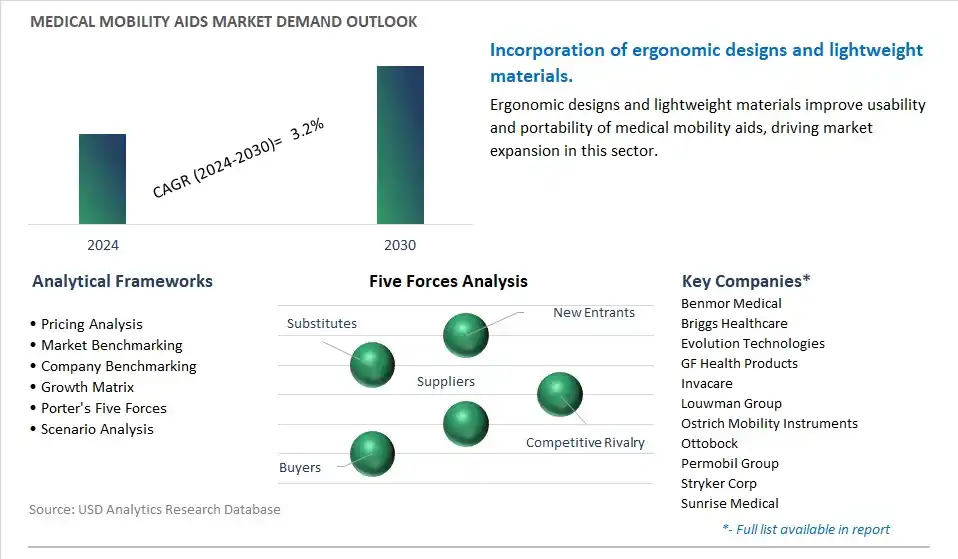
<h3>Medical Mobility Aids Market Competitive Landscape</h3>The global Medical Mobility Aids Industry is highly competitive with a large number of companies focusing on niche market segments. Amidst intense competitive conditions, Medical Mobility Aids Companies are investing in new product launches and strengthening distribution channels. Key companies operating in the Medical Mobility Aids Industry include- Benmor Medical, Briggs Healthcare, Evolution Technologies, GF Health Products, Invacare, Louwman Group, Ostrich Mobility Instruments, Ottobock, Permobil Group, Stryker Corp, Sunrise Medical.<h3>Medical Mobility Aids Market Trend: Rise in Demand for Innovative and Ergonomic Mobility Solutions</h3>A prominent trend in the medical mobility aids market is the increasing demand for innovative and ergonomic mobility solutions, driven by demographic shifts, lifestyle changes, and advancements in assistive technology. Traditional mobility aids such as canes, walkers, and wheelchairs have evolved to incorporate ergonomic designs, lightweight materials, and customizable features to enhance user comfort, independence, and mobility. Manufacturers are focusing on developing mobility aids with adjustable height settings, padded handles, and foldable frames to accommodate diverse user needs and preferences. Additionally, technological advancements have led to the development of powered mobility devices such as electric wheelchairs and mobility scooters, offering enhanced maneuverability, longer battery life, and intuitive controls for individuals with mobility impairments. Moreover, the integration of smart features, connectivity options, and assistive apps enables users to track usage data, receive maintenance alerts, and access navigation assistance, enhancing their overall mobility experience. As aging populations seek to maintain active lifestyles and age in place, the demand for user-friendly, aesthetically pleasing, and technologically advanced mobility aids is expected to grow, driving innovation and market expansion in the medical mobility aids sector.<h3>Medical Mobility Aids Market Driver: Aging Population and Increasing Disability Rates</h3>The aging population and the increasing prevalence of disabilities represent significant drivers for the medical mobility aids market, fueled by demographic changes, chronic health conditions, and healthcare trends. As the global population ages, the incidence of age-related disabilities such as mobility impairments, arthritis, and neurological disorders continues to rise, leading to greater reliance on mobility aids to maintain independence and quality of life. Additionally, lifestyle factors such as sedentary behavior, obesity, and physical inactivity contribute to higher rates of musculoskeletal conditions and mobility limitations among individuals of all ages. Furthermore, advancements in medical care, rehabilitation therapies, and assistive technology have enabled individuals with disabilities to lead more active and fulfilling lives, prompting greater demand for mobility aids that support community participation, social engagement, and vocational activities. Moreover, government initiatives, disability rights legislation, and healthcare reimbursement policies have emphasized the importance of accessibility, mobility assistance, and inclusive design in public spaces, workplaces, and healthcare facilities, driving investment in mobility aids and accessibility solutions. As healthcare systems prioritize rehabilitation services, home care support, and disability inclusion, the demand for medical mobility aids is expected to increase, fueled by the need to address the diverse mobility needs of aging populations and individuals with disabilities.<h3>Medical Mobility Aids Market Opportunity: Expansion of E-commerce Channels and Direct-to-Consumer Sales</h3>A Market Opportunity in the medical mobility aids market lies in the expansion of e-commerce channels and direct-to-consumer sales models, leveraging digital platforms, online marketplaces, and virtual consultations to reach a broader audience of consumers and caregivers. Traditionally, medical mobility aids were primarily distributed through healthcare providers, durable medical equipment (DME) suppliers, and specialty retailers, requiring in-person assessments, fittings, and demonstrations. However, the proliferation of e-commerce platforms, mobile apps, and telehealth services has transformed the way consumers shop for healthcare products and access assistive devices, offering convenience, affordability, and personalized shopping experiences. By establishing online storefronts, virtual showrooms, and telemedicine partnerships, companies can showcase their product offerings, provide educational resources, and offer virtual consultations with mobility specialists to assist customers in selecting the most suitable mobility aids for their needs. Moreover, direct-to-consumer sales models enable manufacturers to bypass traditional distribution channels, reduce overhead costs, and maintain greater control over pricing, branding, and customer relationships. By embracing digital innovation and omnichannel strategies, companies can capitalize on the growing trend of online shopping, consumer empowerment, and personalized healthcare experiences, driving market penetration and brand visibility in the competitive landscape of medical mobility aids.<h3>Medical Mobility Aids Market Share Analysis: Rollators is the fastest growing market segment over the forecast period to 2030</h3>Among medical mobility aids, Rollators are experiencing the fastest growth. Rollators, also known as rolling walkers, are equipped with wheels, brakes, and a seat, providing enhanced support and stability for individuals with mobility issues. They offer a convenient and efficient means of mobility for those who require assistance with walking or standing for extended periods. Rollators are particularly popular among elderly individuals and those recovering from surgery or injury, as they allow for greater independence and mobility compared to traditional walkers or crutches. Moreover, modern rollators come with various features such as adjustable height, padded seats, and storage compartments, catering to the diverse needs of users. With the growing aging population and increasing demand for home healthcare solutions, the market for rollators is expected to witness significant expansion in the coming years.<h2>Medical Mobility Aids Market Segmentation</h2><Strong>By Type</Strong>
Wheelchairs
Walkers
Crutches
Stretchers
Rollators
Accessories
Others
<Strong>By Application</Strong>
Hospitals
Clinics
Ambulatory Surgical Centers
Home Care Settings
Rehabilitation Centre
Others
<Strong>Geographical Analysis</Strong>
North America (United States, Canada, Mexico)
Europe (Germany, France, United Kingdom, Spain, Italy, Rest of Europe)
Asia Pacific (China, India, Japan, South Korea, Rest of Asia Pacific)
South America (Brazil, Argentina, Rest of South America)
Middle East and Africa (Saudi Arabia, UAE, Rest of Middle East, South Africa, Egypt, Rest of Africa)<h2>Medical Mobility Aids Companies</h2>Benmor Medical
Briggs Healthcare
Evolution Technologies
GF Health Products
Invacare
Louwman Group
Ostrich Mobility Instruments
Ottobock
Permobil Group
Stryker Corp
Sunrise Medical
* List not Exhaustive
<h3>Reasons to Buy the Medical Mobility Aids Market Study</h3>• Deepen your industry insights and navigate uncertainties for strategy formulation, CAPEX, and Operational decisions
• Gain access to detailed insights on the Medical Mobility Aids Market, encompassing current market size, growth trends, and forecasts till 2030.
• Access detailed competitor analysis, enabling competitive advantage through a thorough understanding of market players, strategies, and potential differentiation opportunities
• Stay ahead of the curve with insights on technological advancements, innovations, and upcoming trends
• Identify lucrative investment avenues and expansion opportunities within the Medical Mobility Aids Industry, guided by robust, data-backed analysis.
• Understand regional and global markets through country-wise analysis, regional market potential, regulatory nuances, and dynamics
• Execute strategies with confidence and speed through information, analytics, and insights on the industry value chain
• Corporate leaders, strategists, financial experts, shareholders, asset managers, and governmental representatives can make long-term planning scenarios and build an integrated and timely understanding of market dynamics
• Benefit from tailored solutions and expert consultation based on report insights, providing personalized strategies aligned with specific business needs.
