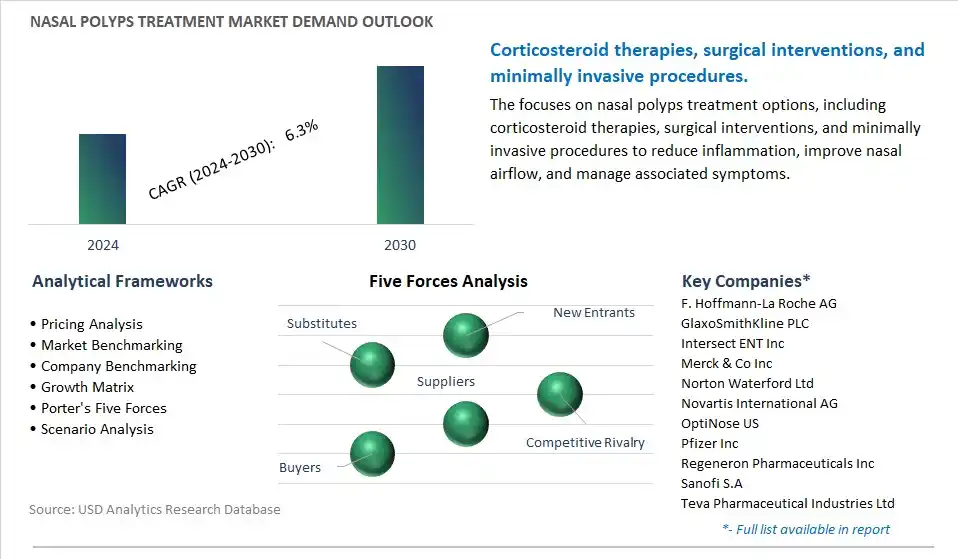
Nasal Polyps Treatment Market is estimated to increase at a Compounded Annual Growth Rate of 6.3% CAGR over the forecast period from 2024 to 2030
The Nasal Polyps Treatment Market study analyzes and forecasts the market size across 6 regions and 24 countries for diverse segments- By Drug Class (Corticosteroids, Antibiotics, Leukotriene Inhibitors, Others), By Route of Administration (Oral, Nasal, Others), By Distribution Channel (Hospital Pharmacies, Retail Pharmacies, Online Pharmacies).
An Introduction to Nasal Polyps Treatment Market in 2024
In 2024, the market for nasal polyps treatment continues to address the needs of individuals suffering from this common chronic inflammatory condition of the nasal passages and sinuses. Nasal polyps are benign growths that result from prolonged inflammation of the nasal mucosa, leading to the formation of grape-like swellings that obstruct the nasal passages and impair airflow, resulting in symptoms such as nasal congestion, loss of smell, facial pain or pressure, and recurrent sinus infections. Treatment options for nasal polyps include medications such as corticosteroids to reduce inflammation and shrink polyp size, antibiotics to treat associated infections, saline nasal irrigation to clear nasal passages, and in some cases, surgical removal of polyps via endoscopic sinus surgery. Technological advancements in nasal polyps treatment include the development of targeted biologic therapies, such as monoclonal antibodies against inflammatory mediators like interleukin-4 (IL-4) and interleukin-5 (IL-5), which offer improved efficacy and reduced recurrence rates compared to traditional medications. Moreover, innovative surgical techniques, such as image-guided navigation systems and balloon sinuplasty, enable more precise and minimally invasive removal of nasal polyps, resulting in faster recovery times and improved patient outcomes. With the increasing prevalence of chronic rhinosinusitis with nasal polyps (CRSwNP) and the growing demand for effective, personalized treatment options, the market for nasal polyps treatment is poised for continued growth and innovation, offering hope to millions of individuals affected by this bothersome and often debilitating condition.
Market Trend: Shift Towards Minimally Invasive Treatment Options
A prominent trend in the nasal polyps treatment market is the shift towards minimally invasive treatment options for managing nasal polyps. Nasal polyps, noncancerous growths in the nasal passages, can cause symptoms such as nasal congestion, loss of smell, and sinus infections. Traditional treatment approaches often involve oral corticosteroids, nasal sprays, or surgery. However, there is a growing preference among patients and healthcare providers for minimally invasive procedures, such as endoscopic sinus surgery (ESS), balloon sinuplasty, and steroid-eluting sinus implants, which offer reduced recovery times, fewer complications, and improved patient outcomes. This trend is driven by advancements in endoscopic techniques, imaging technology, and surgical instrumentation, which enable precise and targeted removal of nasal polyps while preserving normal nasal anatomy. Additionally, the shift towards value-based healthcare models and patient-centered care further fuels the demand for minimally invasive treatments that optimize symptom relief and quality of life for patients with nasal polyps.
Market Driver: Rising Prevalence of Chronic Rhinosinusitis with Nasal Polyps
The primary driver propelling the nasal polyps treatment market is the rising prevalence of chronic rhinosinusitis with nasal polyps (CRSwNP) worldwide. CRSwNP is a chronic inflammatory condition of the nasal and sinus passages characterized by the presence of nasal polyps, mucosal edema, and recurrent sinus infections. It is estimated that approximately 2-4% of the global population suffers from CRSwNP, with the prevalence increasing with age and comorbid conditions such as asthma, aspirin sensitivity, and cystic fibrosis. The burden of CRSwNP on patient quality of life, productivity, and healthcare utilization is significant, driving the need for effective treatment options to manage symptoms, prevent recurrence, and improve long-term outcomes. This driver is further fueled by factors such as air pollution, allergen exposure, and changing environmental conditions, which contribute to the development and exacerbation of nasal polyps and associated sinusitis. Additionally, advancements in diagnostic techniques, biomarker identification, and personalized medicine create opportunities for tailored treatment approaches that address the underlying pathophysiology of CRSwNP and optimize therapeutic responses.
Market Opportunity: Development of Targeted Biologic Therapies
An opportunity within the nasal polyps treatment market lies in the development of targeted biologic therapies that address the underlying inflammatory pathways driving nasal polyp formation and recurrence. Biologic therapies, such as monoclonal antibodies targeting interleukin-4 (IL-4), interleukin-5 (IL-5), and interleukin-13 (IL-13), have shown promising results in clinical trials for the treatment of CRSwNP by reducing nasal polyp size, improving symptom control, and preventing disease recurrence. By targeting specific cytokines and inflammatory mediators implicated in the pathogenesis of nasal polyps, biologic therapies offer the potential for more effective and durable treatment outcomes compared to traditional corticosteroids or surgery. Additionally, the development of biologic therapies for CRSwNP presents opportunities for personalized medicine approaches, biomarker-driven treatment selection, and combination therapies tailored to individual patient profiles. As researchers and pharmaceutical companies continue to explore the therapeutic potential of biologics in nasal polyps treatment, the market for targeted biologic therapies represents a promising opportunity to address unmet medical needs and improve patient outcomes in CRSwNP management.
Nasal Polyps Treatment Market Share Analysis: Corticosteroids
The fast-growing segment within the nasal polyps treatment market is for corticosteroids. This growth is propelled by several factors. Firstly, corticosteroids are the cornerstone of medical management for nasal polyps due to their potent anti-inflammatory effects, which help reduce polyp size, alleviate nasal congestion, improve nasal airflow, and alleviate associated symptoms such as rhinorrhea, facial pressure, and anosmia. Corticosteroids can be administered via various routes, including nasal sprays, oral tablets, and injectable formulations, with nasal sprays being the preferred route for localized drug delivery to the nasal mucosa and paranasal sinuses, where nasal polyps typically originate. Secondly, the efficacy and safety profile of corticosteroid nasal sprays, such as fluticasone propionate, mometasone furoate, and budesonide, have been well-established in clinical trials and real-world practice, leading to widespread adoption and utilization as first-line therapy for nasal polyps in both adults and children. Corticosteroid nasal sprays work by inhibiting inflammatory pathways, reducing edema and mucosal swelling, suppressing cytokine production, and preventing the formation of nasal polyps. Additionally, corticosteroid nasal sprays offer advantages such as targeted drug delivery, minimal systemic absorption, and local anti-inflammatory action, minimizing the risk of systemic side effects associated with oral corticosteroids. Moreover, the convenience, ease of use, and patient compliance associated with corticosteroid nasal sprays contribute to their preference among healthcare providers and patients for long-term maintenance therapy and prevention of nasal polyp recurrence. Furthermore, the expanding distribution channels for corticosteroid nasal sprays, including hospital pharmacies, retail pharmacies, and online pharmacies, enhance accessibility and availability of these medications to patients with nasal polyps, driving market growth and adoption. Overall, the combination of therapeutic efficacy, safety, and convenience positions corticosteroids as the fast-growing segment within the nasal polyps treatment market.
Nasal Polyps Treatment Competitive Analysis
The market research study provides in-depth insights into leading companies including the SWOT analyses, product profile, financial details, and recent developments acrossF. Hoffmann-La Roche AG, GlaxoSmithKline PLC, Intersect ENT Inc, Merck & Co Inc, Norton Waterford Ltd, Novartis International AG, OptiNose US, Pfizer Inc, Regeneron Pharmaceuticals Inc, Sanofi S.A, Teva Pharmaceutical Industries Ltd
Nasal Polyps Treatment Market Segmentation
By Drug Class
Corticosteroids
Antibiotics
Leukotriene Inhibitors
Others
By Route of Administration
Oral
Nasal
Others
By Distribution Channel
Hospital Pharmacies
Retail Pharmacies
Online Pharmacies
Geographical Analysis
North America (United States, Canada, Mexico)
Europe (Germany, France, United Kingdom, Spain, Italy, Rest of Europe)
Asia Pacific (China, India, Japan, South Korea, Rest of Asia Pacific)
South America (Brazil, Argentina, Rest of South America)
Middle East and Africa (Saudi Arabia, UAE, Rest of Middle East, South Africa, Egypt, Rest of Africa)
Nasal Polyps Treatment Market Companies
F. Hoffmann-La Roche AG
GlaxoSmithKline PLC
Intersect ENT Inc
Merck & Co Inc
Norton Waterford Ltd
Novartis International AG
OptiNose US
Pfizer Inc
Regeneron Pharmaceuticals Inc
Sanofi S.A
Teva Pharmaceutical Industries Ltd
Reasons to Buy the Nasal Polyps Treatment Market Study
• Deepen your industry insights and navigate uncertainties for strategy formulation, CAPEX, and Operational decisions
• Gain access to detailed insights on the Nasal Polyps Treatment Market, encompassing current market size, growth trends, and forecasts till 2030.
• Access detailed competitor analysis, enabling competitive advantage through a thorough understanding of market players, strategies, and potential differentiation opportunities
• Stay ahead of the curve with insights on technological advancements, innovations, and upcoming trends
• Identify lucrative investment avenues and expansion opportunities within the Nasal Polyps Treatment Market industry, guided by robust, data-backed analysis.
• Understand regional and global markets through country-wise analysis, regional market potential, regulatory nuances, and dynamics
• Execute strategies with confidence and speed through information, analytics, and insights on the industry value chain
• Corporate leaders, strategists, financial experts, shareholders, asset managers, and governmental representatives can make long-term planning scenarios and build an integrated and timely understanding of market dynamics
• Benefit from tailored solutions and expert consultation based on report insights, providing personalized strategies aligned with specific business needs.
TABLE OF CONTENTS
1 Introduction to 2024 Nasal Polyps Treatment Market
1.1 Market Overview
1.2 Quick Facts
1.3 Scope/Objective of the Study
1.4 Market Definition
1.5 Countries and Regions Covered
1.6 Units, Currency, and Conversions
1.7 Industry Value Chain
2 Research Methodology
2.1 Market Size Estimation
2.2 Sources and Research Methodology
2.3 Data Triangulation
2.4 Assumptions and Limitations
3 Executive Summary
3.1 Global Nasal Polyps Treatment Market Size Outlook, $ Million, 2021 to 2030
3.2 Nasal Polyps Treatment Market Outlook by Type, $ Million, 2021 to 2030
3.3 Nasal Polyps Treatment Market Outlook by Product, $ Million, 2021 to 2030
3.4 Nasal Polyps Treatment Market Outlook by Application, $ Million, 2021 to 2030
3.5 Nasal Polyps Treatment Market Outlook by Key Countries, $ Million, 2021 to 2030
4 Market Dynamics
4.1 Key Driving Forces of Nasal Polyps Treatment Industry
4.2 Key Market Trends in Nasal Polyps Treatment Industry
4.3 Potential Opportunities in Nasal Polyps Treatment Industry
4.4 Key Challenges in Nasal Polyps Treatment Industry
5 Market Factor Analysis
5.1 Value Chain Analysis
5.2 Competitive Landscape
5.2.1 Global Nasal Polyps Treatment Market Share by Company (%), 2023
5.2.2 Product Offerings by Company
5.3 Porter’s Five Forces Analysis
5.4 Pricing Analysis and Outlook
6 Growth Outlook Across Scenarios
6.1 Growth Analysis-Case Scenario Definitions
6.2 Low Growth Scenario Forecasts
6.3 Reference Growth Scenario Forecasts
6.4 High Growth Scenario Forecasts
7 Global Nasal Polyps Treatment Market Outlook by Segments
7.1 Nasal Polyps Treatment Market Outlook by Segments, $ Million, 2021- 2030
By Drug Class
Corticosteroids
Antibiotics
Leukotriene Inhibitors
Others
By Route of Administration
Oral
Nasal
Others
By Distribution Channel
Hospital Pharmacies
Retail Pharmacies
Online Pharmacies
8 North America Nasal Polyps Treatment Market Analysis and Outlook To 2030
8.1 Introduction to North America Nasal Polyps Treatment Markets in 2024
8.2 North America Nasal Polyps Treatment Market Size Outlook by Country, 2021-2030
8.2.1 United States
8.2.2 Canada
8.2.3 Mexico
8.3 North America Nasal Polyps Treatment Market size Outlook by Segments, 2021-2030
By Drug Class
Corticosteroids
Antibiotics
Leukotriene Inhibitors
Others
By Route of Administration
Oral
Nasal
Others
By Distribution Channel
Hospital Pharmacies
Retail Pharmacies
Online Pharmacies
9 Europe Nasal Polyps Treatment Market Analysis and Outlook To 2030
9.1 Introduction to Europe Nasal Polyps Treatment Markets in 2024
9.2 Europe Nasal Polyps Treatment Market Size Outlook by Country, 2021-2030
9.2.1 Germany
9.2.2 France
9.2.3 Spain
9.2.4 United Kingdom
9.2.4 Italy
9.2.5 Russia
9.2.6 Norway
9.2.7 Rest of Europe
9.3 Europe Nasal Polyps Treatment Market Size Outlook by Segments, 2021-2030
By Drug Class
Corticosteroids
Antibiotics
Leukotriene Inhibitors
Others
By Route of Administration
Oral
Nasal
Others
By Distribution Channel
Hospital Pharmacies
Retail Pharmacies
Online Pharmacies
10 Asia Pacific Nasal Polyps Treatment Market Analysis and Outlook To 2030
10.1 Introduction to Asia Pacific Nasal Polyps Treatment Markets in 2024
10.2 Asia Pacific Nasal Polyps Treatment Market Size Outlook by Country, 2021-2030
10.2.1 China
10.2.2 India
10.2.3 Japan
10.2.4 South Korea
10.2.5 Indonesia
10.2.6 Malaysia
10.2.7 Australia
10.2.8 Rest of Asia Pacific
10.3 Asia Pacific Nasal Polyps Treatment Market size Outlook by Segments, 2021-2030
By Drug Class
Corticosteroids
Antibiotics
Leukotriene Inhibitors
Others
By Route of Administration
Oral
Nasal
Others
By Distribution Channel
Hospital Pharmacies
Retail Pharmacies
Online Pharmacies
11 South America Nasal Polyps Treatment Market Analysis and Outlook To 2030
11.1 Introduction to South America Nasal Polyps Treatment Markets in 2024
11.2 South America Nasal Polyps Treatment Market Size Outlook by Country, 2021-2030
11.2.1 Brazil
11.2.2 Argentina
11.2.3 Rest of South America
11.3 South America Nasal Polyps Treatment Market size Outlook by Segments, 2021-2030
By Drug Class
Corticosteroids
Antibiotics
Leukotriene Inhibitors
Others
By Route of Administration
Oral
Nasal
Others
By Distribution Channel
Hospital Pharmacies
Retail Pharmacies
Online Pharmacies
12 Middle East and Africa Nasal Polyps Treatment Market Analysis and Outlook To 2030
12.1 Introduction to Middle East and Africa Nasal Polyps Treatment Markets in 2024
12.2 Middle East and Africa Nasal Polyps Treatment Market Size Outlook by Country, 2021-2030
12.2.1 Saudi Arabia
12.2.2 UAE
12.2.3 Oman
12.2.4 Rest of Middle East
12.2.5 Egypt
12.2.6 Nigeria
12.2.7 South Africa
12.2.8 Rest of Africa
12.3 Middle East and Africa Nasal Polyps Treatment Market size Outlook by Segments, 2021-2030
By Drug Class
Corticosteroids
Antibiotics
Leukotriene Inhibitors
Others
By Route of Administration
Oral
Nasal
Others
By Distribution Channel
Hospital Pharmacies
Retail Pharmacies
Online Pharmacies
13 Company Profiles
13.1 Company Snapshot
13.2 SWOT Profiles
13.3 Products and Services
13.4 Recent Developments
13.5 Financial Profile
List of Companies
F. Hoffmann-La Roche AG
GlaxoSmithKline PLC
Intersect ENT Inc
Merck & Co Inc
Norton Waterford Ltd
Novartis International AG
OptiNose US
Pfizer Inc
Regeneron Pharmaceuticals Inc
Sanofi S.A
Teva Pharmaceutical Industries Ltd
14 Appendix
14.1 Customization Offerings
14.2 Subscription Services
14.3 Related Reports
14.4 Publisher Expertise
By Drug Class
Corticosteroids
Antibiotics
Leukotriene Inhibitors
Others
By Route of Administration
Oral
Nasal
Others
By Distribution Channel
Hospital Pharmacies
Retail Pharmacies
Online Pharmacies
Countries Analyzed
North America (United States, Canada, Mexico)
Europe (Germany, France, United Kingdom, Spain, Italy, Rest of Europe)
Asia Pacific (China, India, Japan, South Korea, Rest of Asia Pacific)
South America (Brazil, Argentina, Rest of South America)
Middle East and Africa (Saudi Arabia, UAE, Rest of Middle East, South Africa, Egypt, Rest of Africa)
