Pet Grooming Products Market Outlook– Premiumization, E-Commerce Expansion, and Technological Innovations
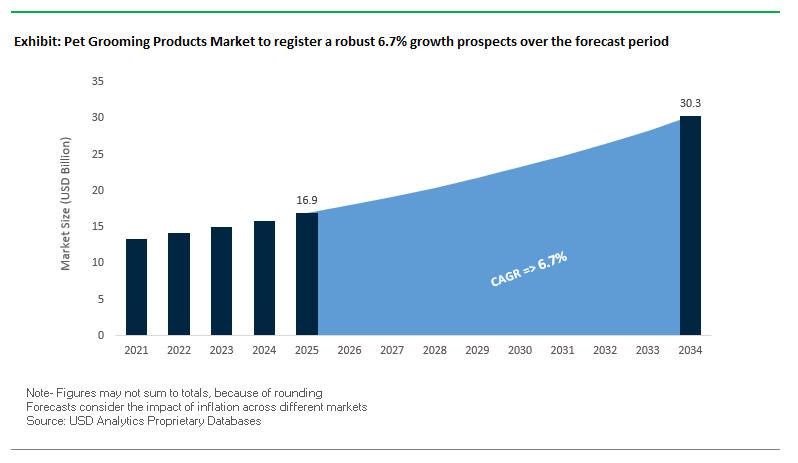
The global pet grooming products market will grow from USD 16.9 billion in 2025 to USD 30.3 billion in 2034 at a CAGR of 6.7%. Sales are fueled by growing pet adoption, pet humanization, and growing demand for premium grooming options that enhance pet health and comfort. Consumers are gravitating towards organic shampoos, medicated grooming products, and green labels, and with technological advancements in grooming tools, the process is becoming faster, safer, and more efficient. Growth in e-commerce and direct-to-consumer channels is also transforming the purchasing behavior, offering customers greater access to products and price transparency.
Key Insights for Industry Professionals
- Premium & Specialized Grooming – Demand for breed-specific, organic, and veterinary-recommended grooming products is rising sharply.
- Pet Health Awareness – Increased understanding of skin, coat, and dental care is driving purchases of preventive grooming items.
- Eco-Friendly Innovations – Biodegradable wipes, plant-based shampoos, and sustainable packaging are gaining market share.
- Technology-Integrated Grooming – Smart clippers, cordless trimmers, and AI-enabled grooming tools are emerging in the premium segment.
- E-Commerce Acceleration – Online platforms dominate sales growth due to broader availability, competitive pricing, and targeted marketing.
Pet Grooming Products Market Analysis – Recent Developments and Industry Shifts
The past year has seen a wave of innovations, sustainability commitments, and market expansions. In April 2024, Andis introduced the ceramicEDGE® Wide Blade Line, which improved grooming efficiency for professional groomers. In January 2025, YEEDI introduced the M14 PLUS robot with temperature-controlled mop washing, demonstrating how hygiene technology in other industries could translate to pet grooming applications.
Strategic investments are still the signature of the competitive marketplace. Incline Equity Partners' February 2025 purchase of Med-Vet International solidified veterinary and grooming supply distribution. In July 2025, the American Pet Products Association launched compliance webinars to discuss changing trade regulations affecting grooming product imports.
Safety and sustainability are top of mind. The May 2025 EPA review of Seresto collars shows growing regulatory attention to pet care. Supertails opened India's first fear-free certified veterinary clinic in January 2025, with grooming as part of wellness services. Cross-segment mergers and acquisitions, like Perfect Corp.'s purchase of Wannaby for augmented reality marketing, indicate virtual pet product try-ons.
Innovative Trends and High-Growth Opportunities in the Pet Grooming Products Market
CBD-Infused Coat & Skin Therapies: Functional Grooming for Sensitive Pets
CBD use in pet grooming products is revolutionizing the therapeutic, skin-soothing care category. CBD shampoos, conditioners, and sprays with Full Spectrum Hemp Extract and plant potencies are being sold as high-end, vet-endorsed grooming products for sensitive-skinned pets, allergies, or chronic conditions. Cannabidiol's anti-inflammatory effects well established in human dermatology now have supporting veterinary research on the rise that validates their suitability for animals. Products are generally THC-free, safe, and often blended with coconut oil to nourish the skin barrier and maintain a healthy microbiome. Expansion for the category comes from the shift away from traditional oatmeal shampoos to science-driven cannabinoid solutions, attractive to owners seeking natural but clinically validated grooming.
Waterless Nanotech Cleaning: Sustainable and Convenient Grooming Innovation
Waterless nanotech grooming is emerging as a high-tech, eco-friendly grooming solution for time-conscious pet owners. Silver and gold nanomaterial-engineered products achieve antibacterial and anti-odor benefits with reduced water use and chemical exposure. Repelz-It Nano Protection Technology is a high-tech coating that is resistant to dirt adhesion and bacterial contamination, keeping coats fresh longer. Plant-derived, biodegradable, and low in aquatic toxicity, many are perfect for eco-conscious consumers. The best part is that they deliver double benefits of being eco-friendly and easy to use, ideal for between-bath grooming, travel, or for stressed dogs subjected to traditional bathing.
Breed-Specific Genetic Formulations for Precision Grooming
DNA personalization is a new tech offering in the pet grooming product category. Through the use of breed-specific DNA information in formulation, companies can specifically target individual coat types, skin sensitivities, and vulnerabilities to problems such as ear infections or dry skin. For example, a shampoo for Golden Retrievers formulated with DNA might be concentrated on undercoat control, while an ear cleaner formulated for Beagles might prevent repeat infections. As pet DNA testing goes mainstream, grooming companies can leverage these platforms to create tailored care lines, engaging customers more deeply and commanding the higher-end personalization space.
SaaS Platforms for Mobile Groomer Business Optimization
Mobile pet grooming expansion introduces new need for SaaS solutions that combine route optimization, scheduling, customer management, and inventory tracking. Features like GrooMore's "smart scheduling" reduce travel inefficiencies and operating cost, and mobile payments and automated booking systems improve customer convenience. Inventory reminders for grooming products provide preparedness, and fleet management features enable scaling of multi-van operations. With mobile grooming of interest to urban pet owners concerned about convenience, such digital tools represent a B2B growth opportunity that indirectly spurs consumption of grooming products.
Market Share Insights of Pet Grooming Products
Market Share by Product Type: Shampoo & Conditioner Dominate, Paw Care Gains Traction
Shampoo & Conditioner products reign supreme in 40% of the pet grooming products market due to frequent use and increasing demand for organic, hypoallergenic, and breed-specific products. Premiumization trends propel the category, with brands introducing functional lines of grooming products for specific skin conditions or coat types. Shears & Trimming Tools account for 15% of the market, with professional groomers and owners interested in at-home use attracted to ergonomic designs and precision engineering. Paw & Nail Care is a rapidly developing category, with no-cut grinders, paw moisturizers, and anti-crack balms fueled by pet wellness as a category. Combs & Brushes are daily-use essentials, with innovation in self-cleaning and de-shedding models attracting convenience-oriented owners. Deodorizers & Perfumes are creating a niche for in-between-bath freshness, frequently employing safe, botanical fragrances.
.png)
Market Share by Pet Type: Dogs Lead While Cats Drive Specialized Tool Innovation
Dogs control 70% of the pet grooming product market due to their frequent grooming, niche breed-specific needs, and owner willingness to pay for premium care solutions. The cat grooming market is growing consistently on stress-relieving products such as waterless shampoos, quiet trimmers, and ergonomic brushes to address feline comfort needs. Rabbits and guinea pigs contribute 4% to market share, but their specialty requirement of gentle grooming tools, mini-clippers, and safe wipes is drawing specialty product lines. The "others" category of birds and reptiles is still a micro-niche but has potential for targeted growth in specialty grooming accessories. This segmentation points toward twin growth path based on dominant care for dogs and growth in underserved niches based on customized products.
Competitive Landscape – Leading Brands Driving Innovation and Growth in Pet Grooming Products
The market for pet grooming products is controlled by established multinationals and specialist niches with strong brand equity, R&D capability, and extensive product portfolios. These firms are focusing on premium grooming, green products, and international expansion to gain long-term market share. The major players named here are Andis Company, Wahl Clipper Corporation, Earthbath, Petco Health and Wellness Company, Inc., PetSmart LLC, Spectrum Brands Holdings Inc., The Hartz Mountain Corporation, Mars, Incorporated, Coastal Pet Products, Ancol Pet Products, Chris Christensen Systems, Bio-Groom, Hydra Pet Spa & Senses, SynergyLabs, TropiClean, Others.
Bissell Inc. – Pet Owner Specialized Cleaning Solutions
Bissell has built a strong brand equity within the cleaning segment, broadening its experience to pet solutions for hair, dander, and smell. Its Pet Hair Eraser line with tangle-free brush rolls, sealed allergen systems, and hands-free emptying addresses significant pet owner pain points. Bissell offers a wide range of products from upright vacuums to handheld portable cleaners, with solutions for different household requirements. The brand's strategic focus is purpose-engineered pet cleaning solutions, complemented by continued innovation in suction power and filtration systems. Its marketing emphasis is on performance and pet-friendly ease of use, with a focus on multi-pet households.
Wahl Clipper Corporation – Professional-Grade Grooming Products with International Presence
Wahl is renowned for manufacturing high-performance grooming equipment in human as well as animal segments. Its pet grooming division includes cordless clippers, trimmers, and professional-grade grooming kits for every coat type. Wahl's equipment is coveted for its durability, accuracy, and ergonomic design and is much sought after by professional groomers and home users alike. The company's shampoos, conditioners, and grooming sprays extend its reach from equipment to consumables. With a strong global presence, Wahl has manufacturing units all over the world, and it can cater to diversified markets. Its focus remains engineering excellence and professional endorsement, and hence it is a favorite with grooming parlors and homes too.
Andis Company – Professional Grooming Solutions at its Best
Andis is a leading manufacturer of high-end grooming equipment, known for innovation and high-quality production. Its April 2024 launch of its ceramicEDGE Wide Blade Line is a testament to its drive to improve efficiency and finish quality in professional groomers. Its product line consists of clippers, trimmers, blades, shears, and brushes, with innovative features like the beSPOKE Clipper with wireless induction charging. Andis rounds out its offerings with educational programs, including online instruction and grooming seminars, to further engage the professional grooming community. Its strategy is focused on innovation in cordless technology, precision engineering, and user comfort, remaining a market leader in high-performance grooming.
Mars Petcare – Global Leader in Pet Care with Iconic Brands and Grooming Solutions
Mars Petcare is a global leader in pet care, with such brands as PEDIGREE, WHISKAS, Royal Canin, and IAMS known around the world. Nutritionally acclaimed, Mars is also a significant supplier of grooming aids, such as shampoos, conditioners, and dental care items, often developed based on the results of research conducted by its Waltham Petcare Science Institute. Its dedication to sustainability is evident in its 2025 commitment to powering its veterinary hospital locations around the world using 100% renewable energy. Mars is expanding in emerging markets like Greater China, extending its grooming range to more consumers. In its quest for an "A Better World For Pets," Mars uses brand trust, global reach, and science-driven product innovation to lead the way in grooming and hygiene.
United States: Technology-Driven Grooming, Retail Expansion, and Sustainability Leadership
The U.S. pet grooming products market is at the forefront of technological innovation, with the introduction of smart devices such as PetSafe’s Smart Pet Nail Grinder, which uses sensors to prevent over-grinding, and a growing number of IoT-enabled pet dryers and brushes. Major retailers are expanding their physical and digital presence, as seen in Walmart’s move to enhance pet service centers in states like Arizona and Georgia with a wider range of grooming products and services.
Direct-to-consumer (DTC) models are reshaping sales channels, with brands like Wagmo and Ollie delivering personalized grooming subscriptions and breed-specific at-home kits. Sustainability is also a major theme, with companies like Earthbath developing biodegradable shampoos and grooming tools packaged in recycled materials. Recent investment activity, such as Woof Gang Bakery & Grooming’s expansion in Florida, underscores the market’s appetite for premium grooming services and eco-friendly products.
United Kingdom: Brand Revitalization, E-Commerce Growth, and Demand for Natural Formulations
In the UK, strategic rebranding and marketing are playing a major role in shaping consumer perceptions, with companies like "dogs at Home" launching a new brand identity to position themselves as comprehensive pet care providers, including grooming. The shift toward e-commerce and digital marketing is strong, with social media campaigns and DTC platforms boosting brand visibility and sales.
Demand for natural and organic grooming solutions is growing rapidly, with products featuring ingredients such as aloe vera, oatmeal, and herbal extracts gaining traction among pet owners concerned about allergies and sensitivities. Specialized grooming products such as shampoos tailored for specific coat types and anti-flea/tick treatments are on the rise, reflecting increased awareness of pet health and targeted care.
Japan – E-Commerce Dominance, Luxury Grooming, and Aging Pet Considerations
Japan’s pet grooming products market is heavily influenced by e-commerce convenience, with online platforms offering a vast variety of products that cater to the growing “at-home” pet care movement. The pet humanization trend is particularly strong, driving demand for luxury and spa-grade grooming products, premium accessories, and wellness-oriented treatments.
A steady increase in pet adoptions, as reported by the Japanese Pet Food Association, is expanding the consumer base, while the aging pet population is creating demand for products designed for senior pets, including waterless shampoos and ergonomic grooming tools for reduced strain. This combination of premiumization and demographic shifts is shaping a unique and high-value segment in the Japanese market.
Germany – Sustainability-First Grooming, Digitalization, and Premium Product Preferences
Germany’s market is driven by strong consumer demand for eco-friendly and sustainable grooming products, with innovations such as mussel shell-based cat litter and biodegradable packaging making headlines. Digitalization is playing an increasing role, with mobile apps and automation extending from aquatics into broader pet care, including smart grooming devices.
The rise of multi-pet households is influencing demand for cost-effective, multi-purpose grooming tools. German consumers show a willingness to invest in premium, human-grade grooming products, including those with clean-label formulations and personalized care options. The market’s alignment with human wellness trends continues to push innovation toward functional, high-quality grooming solutions.
Australia – Urbanization-Driven Growth, Health-Oriented Products, and Retail Service Integration
Urban growth in regions like Queensland is boosting pet ownership among young families and millennials, fueling demand for grooming products in Australia. Health and wellness are central themes, with pet owners increasingly seeking hypoallergenic products, natural formulations, and grooming items designed to promote coat and skin health.
Retailers like Petstock are expanding their physical presence and service offerings, including professional grooming services and DIY wash stations. E-commerce continues to reshape the market, making specialized and niche products more widely accessible, even in regional areas.
Brazil – Government Support, Premiumization, and Sustainable Innovation
Brazil’s grooming products market is benefiting from government initiatives such as public pet hospitals, which promote pet wellness and indirectly support grooming product adoption. The humanization of pets trend is fueling premiumization, with high-quality shampoos, conditioners, and styling products gaining market share.
Sustainability is also a focus, with companies investing in innovative production techniques, including gamma radiation sterilization for product safety and the use of agricultural by-products to minimize environmental impact. This blend of premium demand and eco-conscious development is shaping Brazil into a rapidly evolving grooming market in Latin America.
Pet Grooming Products Market Report Scope
Pet Grooming Products Market
|
Parameter
|
Details
|
|
Market Size (2025)
|
$16.9 Billion
|
|
Market Size (2034)
|
$30.3 Billion
|
|
Market Growth Rate
|
6.7%
|
|
Segments
|
By Product Type (Shampoo & Conditioner, Shears & Trimming Tools, Combs & Brushes, Paw & Nail Care, Deodorizers & Perfumes), By Pet Type (Dogs, Cats, Small Animals (Rabbits, Guinea Pigs), Others (Birds, Horses)), By Distribution Channel (Specialty Pet Stores, Veterinary Clinics, Supermarkets & Hypermarkets, Grooming Salons, E-commerce Platforms, Direct-to-Consumer Websites)
|
|
Study Period
|
2019- 2024 and 2025-2034
|
|
Units
|
Revenue (USD)
|
|
Qualitative Analysis
|
Porter’s Five Forces, SWOT Profile, Market Share, Scenario Forecasts, Market Ecosystem, Company Ranking, Market Dynamics, Industry Benchmarking
|
|
Companies
|
Andis Company, Wahl Clipper Corporation, Earthbath, Petco Health and Wellness Company, Inc., PetSmart LLC, Spectrum Brands Holdings Inc., The Hartz Mountain Corporation, Mars, Incorporated, Coastal Pet Products, Ancol Pet Products, Chris Christensen Systems, Bio-Groom, Hydra Pet Spa & Senses, SynergyLabs, TropiClean, Others.
|
|
Countries
|
US, Canada, Mexico, Germany, France, Spain, Italy, UK, Russia, China, India, Japan, South Korea, Australia, South East Asia, Brazil, Argentina, Middle East, Africa
|
Pet Grooming Products Market Segmentation
By Product
- Shampoo & Conditioner
- Shears & Trimming Tools
- Combs & Brushes
- Paw & Nail Care
- Deodorizers & Perfumes
By Pet
- Dogs
- Cats
- Small Animals (Rabbits, Guinea Pigs)
- Others
By Distribution Channel
- Specialty Pet Stores
- Veterinary Clinics
- Supermarkets & Hypermarkets
- Grooming Salons
- E-commerce Platforms
- Direct-to-Consumer Websites
Countries Analyzed
- North America (US, Canada, Mexico)
- Europe (Germany, UK, France, Spain, Italy, Russia, Rest of Europe)
- Asia Pacific (China, India, Japan, South Korea, Australia, South East Asia, Rest of Asia)
- South America (Brazil, Argentina, Rest of South America)
- Middle East and Africa (Saudi Arabia, UAE, Rest of Middle East, South Africa, Egypt, Rest of Africa)
Top Companies in Pet Grooming Products Market
- Andis Company
- Wahl Clipper Corporation
- Earthbath
- Petco Health and Wellness Company Inc.
- PetSmart LLC
- Spectrum Brands Holdings Inc.
- The Hartz Mountain Corporation
- Mars Incorporated
- Coastal Pet Products
- Ancol Pet Products
- Chris Christensen Systems
- Bio-Groom
- Hydra Pet Spa & Senses
- SynergyLabs
- TropiClean
* List Not Exhaustive
Research Coverage
This USDAnalytics study maps the global Pet Grooming Products Market across premiumization, eco-design, and tech-enabled tools; this report investigates demand shifts, regulatory cues, and channel mix while benchmarking leaders and disruptors. It synthesizes breakthroughs in waterless/nanotech cleaning, CBD-functional topicals, breed-specific personalization, and mobile-grooming SaaS. Our analysis reviews pricing ladders, refill/subscription attach, and online conversion drivers, and highlights regional adoption curves from North America to APAC. Built for category owners and investors, this report is an essential resource for sizing high-growth niches, framing go-to-market, and stress-testing margins under sustainability and compliance scenarios. Scope includes-
- Segmentation:
- By Product – Shampoo & Conditioner; Shears & Trimming Tools; Combs & Brushes; Paw & Nail Care; Deodorizers & Perfumes.
- By Pet – Dogs; Cats; Small Animals (Rabbits, Guinea Pigs); Others.
- By Distribution Channel – Specialty Pet Stores; Veterinary Clinics; Supermarkets & Hypermarkets; Grooming Salons; E-commerce Platforms; Direct-to-Consumer Websites.
- Geographic Scope: Coverage of 25+ countries across North America, Europe, Asia Pacific, Latin America, and the Middle East & Africa.
- Time Horizon: Historical data 2021–2024 with forecasts 2025–2034.
- Companies: 15+ company analyses/profiles spanning multinationals and specialty brands.
Methodology
We combine executive interviews (brand owners, pro groomers, veterinary buyers, DTC operators, distributors) with secondary intelligence (financial filings, customs/tariff updates, retail SKU/price panels, patent & regulatory databases, web-scraped PDPs/reviews). Bottom-up models estimate units, ASPs, replenishment, and device-to-consumable ratios by channel and region; top-down reconciliation uses pet population, ownership cohorts, and spend per pet. We apply S-curve adoption for smart devices, cohort migration for natural/plant-based formats, and Monte Carlo bands for input costs, regulation, and e-commerce share. Quality control includes triangulation, outlier pruning, and back-testing against prior years’ forecast error.
Deliverables:
- Comprehensive Market Research Report (PDF and Excel) with detailed tables, charts, and interactive visualizations.
- Country-Specific Forecasts & Analysis.
- Segment-Wise Revenue Forecasts (2025–2034).
- Competitive Analysis, Benchmarking, and SWOT Profiles.
- Recent Developments & Innovation Tracker.
- Executive Summary & Analyst Commentary.
- Post-Purchase Analyst Support for Client-Specific Questions and Custom Data Requirements.
