Seamless Sports Bras Market Outlook: Comfort-Driven Innovation, E-commerce Expansion, Advanced Fabric Technologies
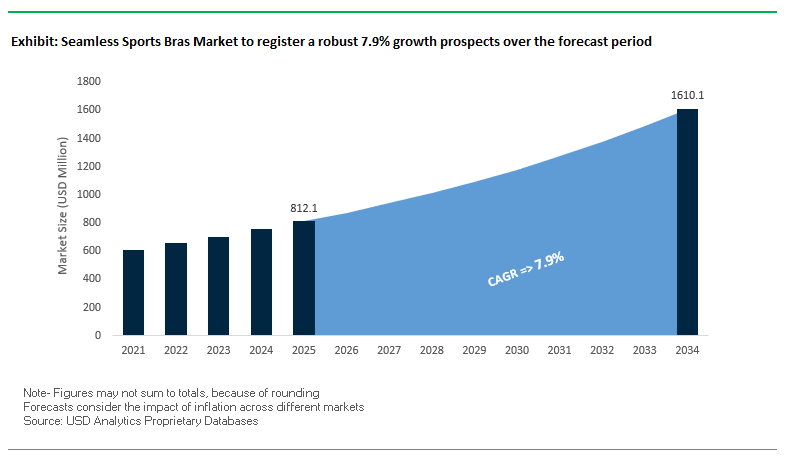
The global seamless sports bras market is expected to grow from $812.1 million in 2025 to $1,609.9 million in 2034 with a CAGR of 7.9%. The segment is becoming one of the most vibrant segments in the activewear segment driven by the convergence of premium comfort, performance functionality, and fabric technology. For trade specialists, the growth path of the market is motivated by the changing needs of consumers toward sustainable, chafe-free, and performance-focused sports bras making seamless technology a competitive necessity and not an niche product.
Demand is fueled by higher health and wellness participation, higher female sports participation, and the utilization of sustainability-aware materials like recycled polyester and recycled nylon. Digital, and specifically mobile-first, channels are capturing the lion's share of the marketplace with 44% mobile app purchase growth and a 49% online brand comparison rate, reflecting a competitive online marketplace.
Key Insights for Industry Professionals:
- Seamless Technology Dominance: 44% of consumers actively seek seamless bras for smoother fit and reduced chafing.
- Performance Prioritization: 58% of activewear buyers emphasize support and breathable, moisture-wicking fabrics.
- E-commerce Growth: Mobile app-based purchases and virtual fitting tools driving higher engagement and sales.
- Material Innovation: 41% of brands using sustainable, anti-odor, and advanced performance fabrics.
- Athleisure Influence: Demand boosted by crossover usage for both gym and casual wear.
Recent Developments and Strategic Moves in Seamless Sports Bras Industry
Recent innovation in the seamless sports bra category has witnessed a tidal wave of technical fabric creation, performance design, and retail experience optimization. Lululemon introduced next-generation seamless sports bras made of Nulu fabric in July 2025, to provide a "next-to-nothing" sensation, addressing customers' demand for very light yet high-performance clothing. This follows Adidas's April 2025 introduction of the TECHFIT CONTROL BRA in partnership with Rheon Labs, featuring a reactive super polymer that responds to high-impact movements that address one of the largest performance pain points: breast discomfort during exercise.
In May 2025, a leading sportswear brand introduced an experience-based retail store concept in an urban city setting, a retailing movement in the direction of experiential brand environments building greater consumer attachment. Under Armour's August 2024 introduction of the HeatGear Armour High Sports Bra for high-impact training helped reinforce the brand's performance-led positioning. In the meantime, collaborations like Hanky Panky x Saalt's March 2024 leak-proof intimates collection illustrated how performance and sustainability are converging in women's performance apparel.
The sector is also turning to other nearby industries for ideas. Other consumer industry trends such as the adoption of mobile ordering technologies are affecting activewear retail, with virtual try-on technologies and artificial intelligence size guides now becoming standard in the sports bra online shopping space. Greater investments in women's sports and fitness ecosystems such as The Sports Bra bar's April 2024 announcement of franchising are indirectly compelling apparel demand, offering rich soil for seamless sports bra adoption.
Trends and Opportunities Shaping the Global Seamless Sports Bras Market
3D-Knitted Custom-Fit Technology Enhancing Performance and Comfort
The seamless sports bra market is being transformed through the application of whole-garment knitting and 3D printing technologies. By eliminating traditional seams, these manufacturing processes reduce chafing, enhance durability, and enable complex, anatomically supportive constructions that adapt to the wearer's biomechanics. Whole-garment knitting uses a single, unbroken yarn to create a whole bra without seaming, allowing knit density variations in select areas for optimum support and ventilation. Similarly, 3D printing is enabling brands like Nike to produce lightweight, ventilated bras with denser constructions in high-support areas, allowing athletes more containment without the need for bulking compression layers. The process not only optimizes athletic performance but also offers brands the opportunity for mass customization through body scan data, offering a precision fit that optimizes comfort and reduces bounce for high-impact sports.
Medical-Grade Post-Surgical Seamless Sports Bras Entering the Mainstream
The medical segment is a strong growth area for the seamless sports bra market, with a growing demand for post-surgical and mastectomy-specific styles. The bras are designed with front closure for easy use, seamless soft construction to avoid irritation on incision sites, and gentle compression to manage swelling and discomfort during recovery. Companies like Marena and Amoena are introducing aesthetics to these medical-grade styles so that patients can have confidence restored after a surgery. Expansion in this segment is driven by a rising breast cancer incidence rate and greater awareness of the role supportive wear can have on recovery success. This medical-athletic hybrid product segment will continue to expand as healthcare professionals and athletic apparel manufacturers collaborate to produce functionally advanced yet fashionable designs.
Expanding into Men’s Sports Bras for Gynecomastia and Activewear
An untapped opportunity exists in developing seamless compression sports bras for men with gynecomastia. Current solutions are modified from women's sports bras or compression tops, which may not provide the anatomical fit required in male physiology. A seamless sports bra designed specifically for men could provide targeted compression, moisture management, and a low-profile silhouette, meeting medical and performance demands. With the growing interest in men's well-being and body confidence, this product category could carve a niche in sportswear and healthcare markets. Overcoming social stigma with good marketing and sports star endorsement will be key to unlocking the potential of this underdeveloped product segment.
Integration of Phase-Change Materials (PCMs) for Smart Temperature Control
The application of phase-change material in seamless sports bras presents a premium-performance segment for athletes training in extreme conditions. PCMs take up body heat and store it as temperatures rise, releasing it as temperatures fall, creating a constant thermal equilibrium. The technology has the potential to reduce sweat output by up to half, improving comfort and endurance. Already incorporated into bedding and tactical wear, PCM application in sports bras can appeal to professional athletes, outdoor athletes, and endurance trainers requiring performance-enhancing wear. Its premium positioning also squares in the luxury athleisure segment, offering brands a high-margin, technology-driven product.
Market Share Insights of the Seamless Sports Bras Industry
Market Share by Material: Synthetic Fibers Maintain Dominance, Natural Blends Gain Traction
Synthetic fibers dominate 65% of seamless sports bra market share, spearheaded by nylon, polyester, and spandex fibers prized for their moisture-wicking ability, tensile strength, and elasticity. Ongoing R&D is yielding high-tech synthetic blends that deliver maximum compression and recovery from stretch with minimum weight. Natural and blended fibers such as organic cotton, bamboo, and Tencel are on the rise based on their green credentials and enhanced breathability. Hybrid technologies combining recycled synthetics and natural fibers are also emerging as a premium segment, appealing to those who prioritize both performance and sustainability.
.png)
Market Share by Distribution Channel: Online Retail Leads, D2C Brands Accelerate Growth
Online retail accounts for 45% of sales, propelled by the growth of e-commerce platforms, virtual fitting technologies, and easy return policies. Customers are increasingly seeking new seamless sports bra brands online, fueled by influencer marketing and social media promotion. Direct-to-consumer (D2C) business models capture 15% market share and are growing rapidly with brands leveraging subscription models, data-driven personalization, and community branding to fuel loyalty. High-performance products still require specialty stores, but department stores provide more style assortment and access to mass consumers. Channel mix reflects a hybrid retail universe supported by digital convenience and physical retail expertise to serve a diverse customer base.
Market Leaders Driving Fabric Technology, Fit Innovation, and Sustainable Practices in Seamless Sports Bras
The seamless sports bras market is dominated by globally recognized activewear leaders that combine technical fabric mastery, sports performance credibility, and multi-channel retail expertise to maintain a competitive edge. Key players included are Nike, Inc., Adidas AG, Lululemon Athletica Inc., Under Armour, Inc., Hanesbrands Inc. (Jockey, Champion), Puma SE, Gymshark, SHEFIT, MAS Holdings, Decathlon S.A., Ubras, NEIWAI, Victoria's Secret & Co., Brooks Sports, Inc., Reebok International Ltd., Others.
Nike Inc. – Performance-Driven Designs with Global Brand Authority
Nike leverages its global brand leadership position and applies it to deliver sleek sports bras that blend Dri-FIT and Dri-FIT ADV moisture management and high-performance fit. Its products, such as Nike Swoosh and Nike Indy, vary from light to high support, with racerback silhouettes, adjustable pads, and sustainable material blends. Nike's emphasis on sustainable supply chains and athlete-led product testing puts it at the forefront in sports bra innovation.
Adidas AG – Adaptive Support Through Advanced Polymer Technology
Adidas blends European sports tradition with forward-thinking product innovation, as with the April 2025 TECHFIT CONTROL BRA. Designed with Rheon Labs, the bra features reactive super polymer support that adapts dynamically with movement. Innovations like AEROREADY offer ventilation, illustrating Adidas' twin focus on fashion and performance in training and athleisure categories.
Lululemon Athletica Inc. – Premium Lifestyle Positioning with Fabric Innovation
Lululemon dominates the premium performance activewear market with patented materials like Nulu, Everlux, and Nulux, complemented by a smooth sports bra collection designed for yoga, running, and intense workouts. The release in July 2025 of its ultra-light seamless line reiterates its comfort-no-compromise brand promise, complemented by its community-based marketing approach.
Under Armour Inc. – High-Impact Support Engineered for Elite Athletes
Under Armour's introduction of the HeatGear Armour High Sports Bra in August 2024 demonstrates its emphasis on intense training. With its moisture-wicking HeatGear® and ColdGear® technologies, Under Armour is the go-to brand for sportsmen and women who require performance solutions that maximize endurance and comfort even in harsh environments.
Puma SE – Blending Performance with Fashion-Forward Appeal
Puma uses its sports sponsorships and celebrity endorsements to offer stylish sports bras with DryCELL moisture management and PWRFRAME structural support. Its support level is low to high and meets the diverse needs of athletes with a fashion-driven brand image appealing to sports and lifestyle consumers.
United States: AI-Driven Personalization and Athleisure-Ready Innovation
The United States seamless sports bras market is being reshaped by AI-powered fitting technology and the rise of smart activewear. Leading brands are investing in 3D body scanning, virtual try-ons, and AI-driven size recommendation engines to deliver highly personalized products, significantly reducing return rates and enhancing consumer trust in online purchases. This precision approach is complemented by the integration of biometric tracking features with sports bras now incorporating embedded sensors that monitor heart rate, breathing patterns, and even posture, providing real-time performance insights to athletes and fitness enthusiasts.
The U.S. market is also deeply influenced by the athleisure movement, which drives demand for designs that transition seamlessly from gym sessions to casual daily wear. Minimalist silhouettes, neutral color palettes, and premium fabric blends are particularly popular among urban consumers. Brands are expanding inclusive sizing and customization options, ensuring accessibility across body types and fitness levels. The combination of high-performance fabrics, seamless construction, and data-enabled functionality positions the U.S. as a leader in the next generation of activewear innovation, appealing to both elite athletes and style-conscious consumers.
China: Manufacturing Powerhouse and Fabric Technology Leader
China remains the global manufacturing hub for seamless sports bras, powered by an advanced ecosystem of circular knitting machines that enable one-piece garment production, eliminating seams and reducing fabric waste. This capability allows manufacturers to meet surging global demand with speed, precision, and cost efficiency. Domestic leaders such as Ubras, Bananain, and NEIWAI have strengthened their foothold in the market by combining comfort-focused designs with trend-forward aesthetics, appealing to the fashion-conscious fitness segment.
The country’s e-commerce dominance through platforms like Taobao, Tmall, and JD.com combined with live-streaming commerce has transformed how sports bras are marketed and sold. Beyond mass production, Chinese textile innovators are advancing high-performance materials with moisture-wicking, antibacterial, and high-elasticity properties, enabling bras to offer enhanced durability and functionality for both high-intensity workouts and everyday wear. The fusion of manufacturing scale, fabric innovation, and digital-first retail strategies makes China not only a key supplier but also a rapidly expanding consumer market for seamless sports bras.
United Kingdom: Sustainability and Inclusive Performance Wear
The United Kingdom seamless sports bras market is being driven by sustainability-first consumer behavior and a growing commitment to inclusive, performance-driven activewear. Brands are responding by incorporating recycled polyester, organic cotton, and biodegradable fibers into seamless designs, appealing to eco-conscious buyers. The market is also witnessing a strong emphasis on gender-neutral designs and extended size ranges, reflecting the UK’s focus on inclusivity and body positivity.
E-commerce continues to dominate the UK retail landscape, with direct-to-consumer activewear brands leveraging strong online communities to influence purchasing decisions. While style remains important, performance is a key differentiator consumers seek bras that combine high-impact support with breathability and stretch, particularly for running, HIIT, and yoga. Strategic partnerships with fitness influencers and community-driven campaigns have become central to brand engagement, ensuring that sustainability and functionality coexist without compromising aesthetics.
Germany: Precision Engineering and Sustainable Innovation
Germany’s seamless sports bras market is characterized by engineering precision, premium durability, and sustainable production. German brands place a high value on material integrity, often sourcing advanced fabrics engineered for strategic compression, ventilation, and moisture control. These features enhance athletic performance while maintaining long-term garment resilience.
The concept of “elevated sportswear” is strong in Germany, blending gym-ready functionality with minimalist designs suitable for daily wear. Consumers prioritize products manufactured through ethical, environmentally responsible processes, with a preference for locally sourced and certified sustainable materials. The country’s meticulous approach to product testing and performance evaluation ensures that seamless sports bras meet stringent European quality standards, making Germany a hub for premium, performance-oriented, and eco-conscious activewear.
Seamless Sports Bras Market Report Scope
Seamless Sports Bras Market
|
Parameter
|
Details
|
|
Market Size (2025)
|
$812.1 Million
|
|
Market Size (2034)
|
$1609.9 Million
|
|
Market Growth Rate
|
7.9%
|
|
Segments
|
By Support Level (Low Support, Medium Support, High Support), By Padding (Padded, Non-Padded, Removable Pads), By Application (Gym & Training, Yoga & Pilates, Running, Everyday Wear), By Material (Synthetic (Nylon, Spandex, Polyester), Natural & Blends (Cotton, Bamboo)), By Distribution Channel (Online Retail, Specialty Stores, Department Stores, Direct-to-Consumer)
|
|
Study Period
|
2019- 2024 and 2025-2034
|
|
Units
|
Revenue (USD)
|
|
Qualitative Analysis
|
Porter’s Five Forces, SWOT Profile, Market Share, Scenario Forecasts, Market Ecosystem, Company Ranking, Market Dynamics, Industry Benchmarking
|
|
Companies
|
Nike, Inc., Adidas AG, Lululemon Athletica Inc., Under Armour, Inc., Hanesbrands Inc. (Jockey, Champion), Puma SE, Gymshark, SHEFIT, MAS Holdings, Decathlon S.A., Ubras, NEIWAI, Victoria's Secret & Co., Brooks Sports, Inc., Reebok International Ltd., Others.
|
|
Countries
|
US, Canada, Mexico, Germany, France, Spain, Italy, UK, Russia, China, India, Japan, South Korea, Australia, South East Asia, Brazil, Argentina, Middle East, Africa
|
Seamless Sports Bras Market Segmentation
By Support Level
- Low Support
- Medium Support
- High Support
By Padding
- Padded
- Non-Padded
- Removable Pads
By Application
- Gym & Training
- Yoga & Pilates
- Running
- Everyday Wear
By Material
- Synthetic (Nylon, Spandex, Polyester)
- Natural & Blends (Cotton, Bamboo)
By Distribution Channel
- Online Retail
- Specialty Stores
- Department Stores
- Direct-to-Consumer
Countries Analyzed
- North America (US, Canada, Mexico)
- Europe (Germany, UK, France, Spain, Italy, Russia, Rest of Europe)
- Asia Pacific (China, India, Japan, South Korea, Australia, South East Asia, Rest of Asia)
- South America (Brazil, Argentina, Rest of South America)
- Middle East and Africa (Saudi Arabia, UAE, Rest of Middle East, South Africa, Egypt, Rest of Africa)
Top Companies in Seamless Sports Bras Market
- Nike Inc.
- Adidas AG
- Lululemon Athletica Inc.
- Under Armour Inc.
- Hanesbrands Inc. (Jockey, Champion)
- Puma SE
- Gymshark
- SHEFIT
- MAS Holdings
- Decathlon S.A.
- Ubras
- NEIWAI
- Victoria's Secret & Co.
- Brooks Sports Inc.
- Reebok International Ltd.
* List Not Exhaustive
Research Coverage
This report investigates the Seamless Sports Bras Market with a focus on comfort-driven innovation, e-commerce expansion, and advanced fabric technologies. USDAnalytics delivers a detailed analysis reviewing market trends, breakthroughs in fabric engineering, and competitive strategies adopted by global activewear leaders. It highlights key drivers such as rising female sports participation, sustainability-focused material adoption, and AI-enabled personalization in sports bra retail. This report is an essential resource for industry professionals, offering insights into 3D-knitted manufacturing, medical-grade post-surgical bras, phase-change material integration, and the growing influence of athleisure. It spans developments from March 2024 to July 2025 and provides forecasts up to 2034, enabling stakeholders to identify profitable opportunities across regions, segments, and sales channels. Scope includes-
- Segmentation:
- By Support Level: Low Support, Medium Support, High Support
- By Padding: Padded, Non-Padded, Removable Pads
- By Application: Gym & Training, Yoga & Pilates, Running, Everyday Wear
- By Material: Synthetic (Nylon, Spandex, Polyester), Natural & Blends (Cotton, Bamboo)
- By Distribution Channel: Online Retail, Specialty Stores, Department Stores, Direct-to-Consumer
- Geographic Scope: Analysis spans 25+ countries across North America, Europe, Asia Pacific, South America, Middle East & Africa
- Historic Data: 2021–2024
- Forecast Data: 2025–2034
- Companies Covered: 15+ companies including Nike Inc., Adidas AG, Lululemon Athletica Inc., Under Armour Inc., Puma SE, Gymshark, SHEFIT, MAS Holdings, Decathlon S.A., Ubras, NEIWAI, Victoria's Secret & Co., Brooks Sports Inc., Reebok International Ltd., Hanesbrands Inc. (Jockey, Champion).
Methodology
The report employs a hybrid research methodology combining primary and secondary sources. Primary research involved interviews with activewear designers, textile engineers, retailers, and professional athletes to validate demand drivers and product innovation trends. Secondary research utilized industry publications, regulatory filings, patent databases, and company announcements to identify technological advancements and competitive positioning. Data modeling used bottom-up segment analysis and top-down regional forecasting, incorporating factors such as e-commerce adoption rates, performance wear innovation cycles, and sustainability certifications. The result is a fact-based, forward-looking projection of the seamless sports bras market from 2025 to 2034, with emphasis on innovation pipelines, channel strategies, and regional growth hotspots.
Deliverables:
- Comprehensive Market Research Report (PDF and Excel) with detailed tables, charts, and interactive visualizations.
- Country-Specific Forecasts & Analysis.
- Segment-Wise Revenue Forecasts (2025–2034).
- Competitive Analysis, Benchmarking, and SWOT Profiles.
- Recent Developments & Innovation Tracker.
- Executive Summary & Analyst Commentary.
- Post-Purchase Analyst Support for Client-Specific Questions and Custom Data Requirements.
Deliverables:
- Comprehensive Market Research Report (PDF and Excel) with detailed tables, charts, and interactive visualizations.
- Country-Specific Forecasts & Analysis.
- Segment-Wise Revenue Forecasts (2025–2034).
- Competitive Analysis, Benchmarking, and SWOT Profiles.
- Recent Developments & Innovation Tracker.
- Executive Summary & Analyst Commentary.
- Post-Purchase Analyst Support for Client-Specific Questions and Custom Data Requirements.
