Market Overview: Automation, Bakery Applications, and Sustainability Drive Growth
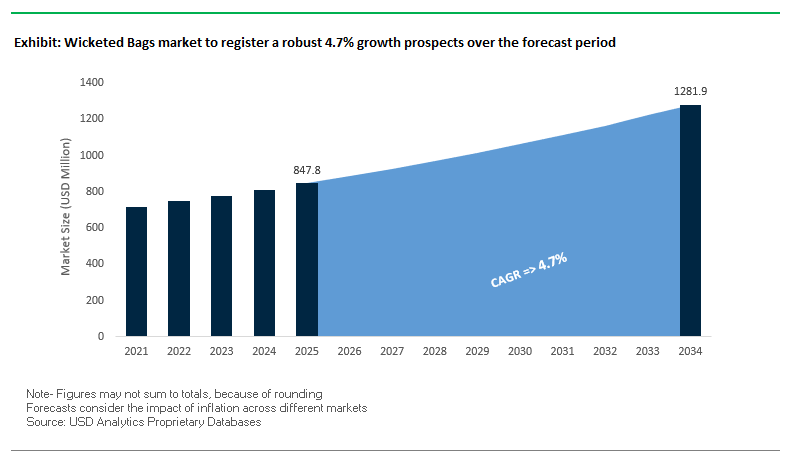
The global wicketed bags market is projected to grow from USD 847.8 million in 2025 to USD 1,281.8 million by 2034, advancing at a healthy CAGR of 4.7%. This growth is underpinned by rising adoption across automated packaging lines, bakery products, e-commerce fulfillment, and sustainable packaging solutions. For industry professionals, the key challenge lies in balancing automation efficiency, sustainability compliance, and cost optimization, while serving both food and non-food industries.
Over 75% of wicketed bags are used in automated or semi-automated packaging lines, a testament to their efficiency in high-volume manufacturing environments. The bakery industry remains the largest end-use sector, with sliced bread, bagels, and buns packaged in wicketed bags that ensure hygiene, durability, and brand visibility. At the same time, a sustainability shift is transforming the industry, with manufacturers increasingly turning to recyclable polyethylene, bio-based polymers, and post-consumer recycled (PCR) materials. Beyond food, e-commerce is emerging as a growth engine, where wicketed bags are being deployed for apparel and retail logistics due to their compatibility with automated fulfillment centers.
Key Insights for Market Buyers and Professionals:
Automation dominates: Over 75% of wicketed bags are deployed in automated packaging lines.
Bakery industry leadership: Bread and bakery applications account for the largest end-use sector.
Sustainability transition: Rising adoption of recyclable, bio-based, and PCR materials.
E-commerce demand: Surging adoption in apparel and retail logistics as automation expands.
Market Analysis: Recent Developments Shaping the Wicketed Bags Industry
The wicketed bags market is undergoing portfolio expansions, acquisitions, and innovations that highlight a strong focus on sustainability and automation-driven demand.
In August 2025, Mondi Group launched a new high-barrier paper-based packaging solution, expanding production of its FunctionalBarrier Paper Ultimate to address growing demand for sustainable alternatives to plastic bags. Earlier, in July 2025, ProAmpac unveiled recyclable high-barrier fiber-based technology with 90% fiber content, targeted for thermoforming but directly relevant to the sustainable packaging trend influencing wicketed bags. In June 2025, Coveris acquired Hadepol Flexo in Poland, strengthening its position in flexible packaging and wicketed bag manufacturing in Europe.
Mergers and consolidations are also redefining competition. Amcor finalized its USD 8.4 billion acquisition of Berry Global in May 2025, significantly broadening its flexible plastic capabilities, including wicketed bag solutions. The company’s earlier announcement in November 2024 reflected a broader consolidation trend across the global packaging industry. Parallel innovation is driving adoption in e-commerce: in October 2024, Toray Plastics launched Lumirror® TKU2-C, a biaxially oriented PET film with enhanced barrier performance designed to extend shelf life in online retail packaging.
Macroeconomic and regulatory drivers are also reshaping the industry. The U.S. Census Bureau reported in August 2024 that U.S. e-commerce sales rose 5.3% YoY in Q2 2024, directly boosting demand for automated packaging solutions like wicketed bags. Meanwhile, the Australian Packaging Covenant Organization reported in July 2024 that PCR content in packaging grew from 40% to 44%, signaling stronger adoption of circular economy models.
Wicketed Bags Market: Trends and Opportunities Transforming Flexible Packaging
Material Science Innovation Driven by Regulatory Pressure and Brand Sustainability Goals
The wicketed bags market is undergoing a profound shift as regulatory frameworks and corporate sustainability commitments accelerate innovation in material science. The European Union’s Packaging and Packaging Waste Regulation (PPWR) is central to this transformation, setting ambitious recycled content thresholds: 10% PCR by 2030 and 25% by 2040 for plastic packaging other than PET. In the U.S., California and Washington have enacted similar mandates, compelling manufacturers to redesign wicketed bags with sustainable feedstocks.
In response, global packaging companies are investing in high-performance paper-based alternatives. Mondi’s FunctionalBarrier Paper Ultimate, produced at its Solec plant in Poland, demonstrates the industry’s pivot toward recyclable solutions that run efficiently on existing high-speed filling lines. Simultaneously, mono-material innovations are gaining traction. Mondi’s re/cycle WicketBag, made entirely from PE or PP, enables recyclability in single polymer streams, reducing contamination risks and improving the value of recycled outputs. This material science innovation is not generic but highly targeted balancing sustainability, machinability, and high-barrier performance to meet the exacting requirements of food and non-food packaging operations.
Automation and Integration with Smart Packaging Lines for E-commerce Fulfillment
A second major trend is the rapid integration of wicketed bags into automated e-commerce fulfillment systems. With global online retail volumes surging, packaging suppliers are engineering wicketed bags to seamlessly interface with high-speed bagging machines. WestRock, for example, has developed systems capable of producing up to 1,000 recyclable mailers per hour, cutting labor costs while ensuring consistency and throughput.
Automation also enables right-sized packaging, which eliminates void fill, reduces material consumption, and optimizes dimensional weight charges. This directly addresses shipping cost reduction while improving consumer satisfaction. Moreover, wicketed bags are being engineered with value-added features for non-food segments, including tamper-evident seals and customized dimensions for apparel, electronics, and personal care products. These innovations ensure product safety in transit while delivering a premium unboxing experience that strengthens brand loyalty in the competitive e-commerce market.
Development of High-Performance PCR and Mono-Material Plastic Films
The transition toward sustainability opens a critical growth opportunity for packaging companies to scale PCR-integrated and mono-material plastic films for wicketed bags. The challenge is not simply adding recycled content, but engineering films that maintain strength, clarity, sealability, and machinability under the demanding conditions of automated, high-speed filling lines.
Companies like Mondi are leading the way by incorporating ISCC Plus certified PCR materials into wicketed bags, ensuring traceability and compliance while helping brands align with 2030 and 2040 sustainability mandates. Meanwhile, mono-material designs are advancing recyclability by simplifying recovery in established PE and PP waste streams. The key hurdle is ensuring that PCR integration does not compromise regulatory safety standards such as UN-Rating compliance for transport packaging or product performance. Brands that can strike this balance will be positioned to capture significant market share as global regulations tighten and consumer preference for recyclable flexible packaging grows.
Integration of Digital Watermarking for Advanced Sorting and Waste Stream Management
Another transformative opportunity lies in embedding digital watermarking technologies into wicketed bags to enable high-precision sorting at material recovery facilities (MRFs). The HolyGrail 2.0 initiative, which brings together over 130 stakeholders, has already validated the technology’s potential, achieving over 90% detection efficiency under real-world conditions. This breakthrough addresses one of the greatest challenges in flexible packaging sorting accuracy.
Digital watermarks make it possible to differentiate food-grade from non-food-grade packaging, creating higher-value recyclates that can re-enter food packaging applications. This capability directly supports the creation of a closed-loop recycling system for plastics, reducing dependency on virgin polymers. Moreover, watermarking aligns seamlessly with regulatory requirements such as the EU PPWR’s mandatory recycled content thresholds, providing brand owners with a compliance pathway while advancing their circular economy goals. For the wicketed bags market, this represents a strategic opportunity to transform flexible packaging from a recycling problem into a recycling enabler, strengthening both brand reputation and regulatory alignment.
Competitive Landscape: Leading Companies in the Wicketed Bags Market
The global wicketed bags market is competitive, with leading players investing in sustainable materials, automation-ready formats, and high-quality graphics. Companies are consolidating portfolios while regional players expand capabilities to serve bakery, frozen food, e-commerce, and retail packaging sectors.
Amcor plc: Expanding Wicketed Bag Solutions Through Acquisition
Amcor is a leader in flexible packaging, offering wicketed bags for fresh produce, frozen goods, and non-food items. Its May 2025 acquisition of Berry Global for USD 8.4 billion expanded its rigid and flexible packaging portfolio. Amcor’s commitment to 100% recyclable or compostable packaging by 2025 reinforces its sustainability leadership. With a global supply network, it provides end-to-end packaging solutions that enhance efficiency and brand visibility.
Novolex: Broad Portfolio of Sustainable Wicketed Bags
Novolex manufactures plastic and paper wicketed bags, serving applications from bakery to retail. Its EcoCraft® and Dubl Life® brands highlight its commitment to PCR-based and compostable solutions. Novolex’s ability to customize bag formats with gussets and barrier properties positions it strongly in bakery, ice, and produce packaging. Its scale and diversified product range make it a trusted supplier for supermarkets and food service companies.
Hood Packaging Corporation: Delivering High-Speed and High-Quality Bagging Solutions
Hood Packaging produces wicketed bags widely used for bread, tortillas, and ice packaging. Its products are engineered for high-speed automated lines and feature 10-color advanced printing, enabling strong branding for bakery and retail applications. In August 2025, Hood Container invested USD 118.9 million to modernize its Louisiana paper mill, reinforcing its long-term supply security and commitment to packaging innovation.
InterFlex Group: Differentiating with High-Definition Printing Technology
InterFlex Group specializes in customized wicketed bags, combining barrier performance with premium graphics. Its Project Blue print process provides gravure-quality Ultra High-Definition graphics, a differentiator in consumer packaging. InterFlex also develops shelf-life extension technologies for improved moisture and oxygen barriers. Since joining the TOPPAN Group in 2023, it leverages global technical resources while offering local responsiveness in the U.S. and UK.
International Plastics Inc.: Flexible and Cost-Effective Wicketed Bag Manufacturing
International Plastics Inc. offers custom and stock wicketed bags across bakery, hardware, and retail applications. With expertise in polypropylene and polyethylene bags featuring gussets and perforations, it provides durable, cost-effective solutions for small retailers and large grocery chains. Its bags are designed for compatibility with automated bagging equipment, making it a reliable supplier for businesses prioritizing speed and efficiency.
Wicketed Bags Market Share Insights
Food & Beverages Secure Wicketed Bags Market Share by Application
Food & beverages dominate the wicketed bags market in 2025, accounting for 60% of total demand, highlighting the perfect alignment between automated bagging systems and the needs of high-volume food production. Wicketed bags are the backbone of fresh bakery packaging bread, buns, rolls and are widely used for produce, frozen foods, and snacks due to their ability to be rapidly filled, sealed, and labeled in high-speed automated lines. Their hygienic handling minimizes human contact, a critical requirement in food safety compliance, while lightweight film structures reduce packaging costs. Industrial goods and commercial goods represent secondary demand streams, utilizing heavier gauges and customized printing, while pharmaceuticals and personal care sectors leverage wicketed bags for sterile packaging and branded retail presentation. However, the scale and consistency of the global food supply chain, combined with the shift toward sustainable films (bio-based and recycled plastics), ensures food & beverage remains the most influential application segment, driving technological innovation across the wicketed bags market.
Side Gusset Bags Lead Wicketed Bags Market Share by Product Type
Side gusset bags hold the largest share of the wicketed bags market in 2025 at 35%, solidifying their position as the efficiency leader in automated packaging systems. Their expandable design creates a flat base, enabling the bags to stand upright for both rapid filling on production lines and enhanced retail display qualities that are critical for bakery goods, produce, and hardware packaging. Bottom gusset bags maintain a strong presence in premium food and specialty categories, while re-closable bags are gaining momentum as the fastest-growing format, catering to consumer demand for resealability and freshness. Non-re-closable and loose flap bags remain relevant in cost-sensitive and niche applications but face substitution pressures. The enduring dominance of side gusset bags reflects their superior balance of automation compatibility, retail visibility, and material efficiency, positioning them as the most critical format for large-scale manufacturers and retailers pursuing both productivity and branding goals.
United States: Automation and Sustainability Shaping the Wicketed Bags Market
The United States wicketed bags market is being driven by evolving consumer preferences, particularly the growing demand for fresh produce, bakery items, and ready-to-eat foods. Wicketed bags are increasingly preferred in both retail and e-commerce for their hygienic, efficient, and protective packaging capabilities, ensuring product safety while maintaining shelf appeal. Food safety and hygiene regulations imposed by the FDA and other authorities further bolster the adoption of high-quality, food-safe materials, positioning wicketed bags as a key solution for protecting products from dirt, moisture, and contamination during handling and transit.
Technological advancements are transforming the U.S. market, with automated wicketed bagging machines becoming standard in high-speed production environments. This innovation enhances operational efficiency and reduces labor costs while ensuring precision and consistency in packaging. Sustainability remains a critical focus, with manufacturers introducing recyclable, biodegradable, and compostable wicketed bags to align with corporate ESG goals and growing consumer demand for environmentally friendly packaging. Together, these factors underscore the U.S. market’s position at the forefront of efficient, safe, and sustainable food packaging solutions.
Germany: Regulatory Compliance and Circular Economy Driving Eco-Friendly Wicketed Bags
Germany’s wicketed bags market operates under a rigorous regulatory environment, including the EU Packaging and Packaging Waste Regulation (PPWR) and the upcoming single-use plastics levy from 2024, creating strong incentives for businesses to adopt sustainable packaging alternatives. The market emphasizes eco-design and circular economy principles, encouraging manufacturers to produce bags with high recycled content and recyclable materials that comply with stringent national and EU sustainability targets.
Technological innovation is also a defining feature in Germany. Companies are developing wicketed bags from paper and plant-based polymers, which not only meet environmental regulations but also cater to the growing demand for sustainable retail and e-commerce packaging. This combination of regulatory compliance, eco-design, and technological advancements positions Germany as a global leader in sustainable and recyclable wicketed bag solutions, serving both domestic and international markets.
China: Industrial Growth and Green Transformation Fueling Wicketed Bags Demand
China’s position as a global manufacturing powerhouse drives its wicketed bags market, supported by robust industrial growth in the food, pharmaceutical, and retail sectors. The massive expansion of manufacturing and logistics operations has created a strong demand for durable and reliable packaging solutions, where wicketed bags play a critical role in streamlining high-volume packaging operations while maintaining product integrity.
The Chinese government’s dual carbon goals are reshaping the packaging landscape, promoting eco-friendly, reduced, and reusable materials. Manufacturers are responding with innovative solutions suitable for automated and robotic handling, enhancing efficiency in high-speed operations. Additionally, the rise of e-commerce and express logistics has further accelerated demand for wicketed bags that combine sustainability with operational reliability, solidifying China’s role as a key growth market in the global packaging industry.
India: E-Commerce Expansion and Government Initiatives Boosting Wicketed Bags Market
India’s wicketed bags market is expanding due to the government’s “Make in India” and “Zero Effect Zero Defect” initiatives, which foster domestic manufacturing and technological innovation in packaging. Investments in industrial infrastructure and regulatory support are enabling Indian manufacturers to meet the growing demand for high-quality, food-safe packaging solutions.
The rapid growth of e-commerce platforms, particularly in grocery and food delivery sectors, is driving demand for water-resistant and durable wicketed bags that can handle high volumes and maintain product integrity. Technological advancements, including collaborations between companies and academic institutions, are further enhancing production efficiency. Upgrades to wash lines, extruders, and de-contamination units, supported by investments exceeding INR 10,000 crore since 2022, are improving recycling capacities and enabling the production of eco-friendly and sustainable wicketed bags, aligning with global environmental trends.
Japan: Advanced Materials and Research Innovations Strengthening Wicketed Bags Market
Japan’s wicketed bags industry is supported by one of the world’s most advanced recycling and resource circulation systems, including the Plastic Resource Circulation Act, which encourages the use of recycled materials in packaging. The country is increasingly focusing on bio-based materials, such as bio-polypropylene (bio-PP), to meet sustainability goals and reduce reliance on traditional plastics, providing new opportunities for eco-friendly food and pharmaceutical packaging solutions.
Innovation in functionality is a key driver in Japan. For example, Toppan has developed a transparent vapor-deposited barrier film with superior stability, widely used globally for food packaging. Additionally, academic research, such as that conducted at Yamagata University’s Innovation Center for Organic Electronics, has produced printable UV-densified barrier films with glass-like performance. These breakthroughs are enhancing food safety, shelf life, and usability, positioning Japan as a leader in technologically advanced and sustainable wicketed bag solutions for both domestic and international markets.
Wicketed Bags Market Report Scope
Wicketed Bags market
Parameter
Details
Market Size (2025)
$847.8 Million
Market Size (2034)
$1281.8 Million
Market Growth Rate
4.7%
Segments
By Material Type (PE, PP, Paper, Bio-based Materials, Other Materials), By Product Type (Loose Flap, Bottom Gusset, Side Gusset, Re-closable Bags, Non-re-closable Bags), By Application (Food & Beverages, Pharmaceuticals & Healthcare, Personal Care & Cosmetics, Industrial Goods, Commercial Goods, Other Applications)
Study Period
2019- 2024 and 2025-2034
Units
Revenue (USD)
Qualitative Analysis
Porter’s Five Forces, SWOT Profile, Market Share, Scenario Forecasts, Market Ecosystem, Company Ranking, Market Dynamics, Industry Benchmarking
Companies
Mondi Group, Amcor plc, Berry Global Inc., Novolex, International Paper, Huhtamäki Oyj, Sonoco Products Company, Sealed Air Corporation, Rengo Co., Ltd., EPL Limited, Graphic Packaging Holding Company, St. Johns Packaging Ltd., UFlex Limited, Mondi Group, NNZ USA
Countries
US, Canada, Mexico, Germany, France, Spain, Italy, UK, Russia, China, India, Japan, South Korea, Australia, South East Asia, Brazil, Argentina, Middle East, Africa
Wicketed Bags Market Segmentation
By Material Type
PE
PP
Paper
Bio-based Materials
Other Materials
By Product Type
Loose Flap
Bottom Gusset
Side Gusset
Re-closable Bags
Non-re-closable Bags
By Application
Food & Beverages
Pharmaceuticals & Healthcare
Personal Care & Cosmetics
Industrial Goods
Commercial Goods
Other Applications
Countries Analyzed
North America (US, Canada, Mexico)
Europe (Germany, UK, France, Spain, Italy, Russia, Rest of Europe)
Asia Pacific (China, India, Japan, South Korea, Australia, South East Asia, Rest of Asia)
South America (Brazil, Argentina, Rest of South America)
Middle East and Africa (Saudi Arabia, UAE, Rest of Middle East, South Africa, Egypt, Rest of Africa)
Top Companies in Wicketed Bags Market
Mondi Group
Amcor plc
Berry Global Inc.
Novolex
International Paper
Huhtamäki Oyj
Sonoco Products Company
Sealed Air Corporation
Rengo Co., Ltd.
EPL Limited
Graphic Packaging Holding Company
St. Johns Packaging Ltd.
UFlex Limited
Mondi Group
NNZ USA
*List not Exhaustive
Research Coverage
This report by USDAnalytics investigates the global wicketed bags market, providing an in-depth review of technological breakthroughs, material innovations, automation integration, and sustainability trends reshaping the industry. The analysis reviews recent mergers, acquisitions, and strategic expansions that influence market dynamics across food, e-commerce, and industrial packaging sectors. It highlights how automation, advanced material science, and regulatory compliance are driving efficiency and environmental stewardship, while offering insights into emerging opportunities such as PCR-based films, mono-material solutions, and digital watermarking for recyclable streams. This report is an essential resource for packaging professionals, procurement specialists, and industry analysts seeking actionable intelligence on market drivers, competitive positioning, and innovation strategies. It also evaluates regional growth patterns and country-specific trends, ensuring a comprehensive understanding of both mature and emerging markets. The insights presented support strategic decision-making, supplier selection, product development, and sustainability alignment in high-volume automated packaging and bakery, retail, and e-commerce operations.
Scope Highlights:
Segmentation: By Material Type (PE, PP, Paper, Bio-based Materials, Other Materials), By Product Type (Loose Flap, Bottom Gusset, Side Gusset, Re-closable Bags, Non-re-closable Bags), By Application (Food & Beverages, Pharmaceuticals & Healthcare, Personal Care & Cosmetics, Industrial Goods, Commercial Goods, Other Applications)
Geographic Scope: Analysis spans 25+ countries across North America, Europe, Asia Pacific, Latin America, the Middle East & Africa
Timeframe: Historic data from 2021 to 2024 and forecast data from 2025 to 2034
Companies: Analysis and profiles of 15+ leading companies, including Mondi Group, Amcor plc, Berry Global Inc., Novolex, International Paper, Huhtamäki Oyj, Sonoco Products Company, Sealed Air Corporation, Rengo Co., Ltd., EPL Limited, Graphic Packaging Holding Company, St. Johns Packaging Ltd., UFlex Limited, and NNZ USA
Methodology
The research methodology for the Wicketed Bags Market combines primary and secondary data collection to deliver a robust and credible analysis. Primary research involved consultations with packaging engineers, industry executives, and sustainability managers from leading companies, complemented by expert interviews with market consultants. Secondary sources include company annual reports, regulatory filings, trade publications, sustainability disclosures, and regional packaging authority databases. Quantitative modeling techniques, including CAGR projections, market sizing, and historical trend analysis, were employed to forecast market growth from 2025 to 2034. In addition, supply chain mapping, competitive benchmarking, and technological trend assessments were used to evaluate product adoption, material innovations, and automation integration. Data validation was ensured through triangulation, cross-referencing multiple sources to maintain accuracy and reliability. This methodology ensures that the report delivers actionable insights tailored for experienced professionals, investors, and strategic decision-makers in packaging, bakery, e-commerce, and industrial sectors.
Deliverables:
Comprehensive Market Research Report (PDF and Excel) with detailed tables, charts, and interactive visualizations.
Country-Specific Forecasts & Analysis.
Segment-Wise Revenue Forecasts (2025–2034).
Competitive Analysis, Benchmarking, and SWOT Profiles.
Recent Developments & Innovation Tracker.
Executive Summary & Analyst Commentary.
Post-Purchase Analyst Support for Client-Specific Questions and Custom Data Requirements.
2. Wicketed Bags Market Landscape & Outlook (2025–2034)
2.1. Introduction to Wicketed Bags Market
2.2. Market Valuation and Growth Projections (2025–2034)
2.3. Key Market Drivers: Automation and Sustainable Packaging Adoption
2.4. Challenges in Cost Optimization and Regulatory Compliance
2.5. E-commerce Expansion and Shifts in End-Use Demand
3. Innovations Reshaping the Wicketed Bags Market
3.1. Trend: Automation Integration in Bakery and E-commerce Fulfillment Lines
3.2. Trend: Regulatory Push for Circular Economy and Recyclable Materials
3.3. Opportunity: Development of High-Performance PCR and Mono-Material Films
3.4. Opportunity: Digital Watermarking and Smart Sorting for Waste Management
4. Competitive Landscape and Strategic Initiatives
4.1. Mergers, Acquisitions and Strategic Alliances
4.2. R&D and Material Innovation
4.3. Sustainability and Circular Economy Strategies
4.4. Market Expansion and Regional Focus
5. Market Share and Segmentation Insights: Wicketed Bags Market
5.1. By Material Type
5.1.1. Polyethylene (PE)
5.1.2. Polypropylene (PP)
5.1.3. Paper
5.1.4. Bio-based Materials
5.1.5. Other Materials
5.2. By Product Type
5.2.1. Loose Flap Bags
5.2.2. Bottom Gusset Bags
5.2.3. Side Gusset Bags
5.2.4. Re-closable Bags
5.2.5. Non-re-closable Bags
5.3. By Application
5.3.1. Food & Beverages
5.3.2. Pharmaceuticals & Healthcare
5.3.3. Personal Care & Cosmetics
5.3.4. Industrial Goods
5.3.5. Commercial Goods
5.3.6. Other Applications
6. Country Analysis and Outlook of Wicketed Bags Market
6.1. United States
6.2. Canada
6.3. Mexico
6.4. Germany
6.5. France
6.6. Spain
6.7. Italy
6.8. UK
6.9. Russia
6.10. China
6.11. India
6.12. Japan
6.13. South Korea
6.14. Australia
6.15. South East Asia
6.16. Brazil
6.17. Argentina
6.18. Middle East
6.19. Africa
7. Wicketed Bags Market Size Outlook by Region (2025–2034)
7.1. North America Wicketed Bags Market Size Outlook to 2034
7.1.1. By Material Type
7.1.2. By Product Type
7.1.3. By Application
7.1.4. By End-User Industry
7.2. Europe Wicketed Bags Market Size Outlook to 2034
7.2.1. By Material Type
7.2.2. By Product Type
7.2.3. By Application
7.2.4. By End-User Industry
7.3. Asia Pacific Wicketed Bags Market Size Outlook to 2034
7.3.1. By Material Type
7.3.2. By Product Type
7.3.3. By Application
7.3.4. By End-User Industry
7.4. South America Wicketed Bags Market Size Outlook to 2034
7.4.1. By Material Type
7.4.2. By Product Type
7.4.3. By Application
7.4.4. By End-User Industry
7.5. Middle East and Africa Wicketed Bags Market Size Outlook to 2034
7.5.1. By Material Type
7.5.2. By Product Type
7.5.3. By Application
7.5.4. By End-User Industry
8. Company Profiles: Leading Players in the Wicketed Bags Market
8.1. Mondi Group
8.2. Amcor plc
8.3. Berry Global Inc.
8.4. Novolex
8.5. International Paper
8.6. Huhtamäki Oyj
8.7. Sonoco Products Company
8.8. Sealed Air Corporation
8.9. Rengo Co., Ltd.
8.10. EPL Limited
8.11. Graphic Packaging Holding Company
8.12. St. Johns Packaging Ltd.
8.13. UFlex Limited
8.14. NNZ USA
8.15. Hood Packaging Corporation
9. Methodology
9.1. Research Scope
9.2. Market Research Approach
9.3. Market Sizing and Forecasting Model
9.4. Research Coverage
9.5. Data Horizon
9.6. Deliverables
10. Appendix
10.1. Acronyms and Abbreviations
10.2. List of Tables
10.3. List of Figures
Wicketed Bags Market Segmentation
By Material Type
PE
PP
Paper
Bio-based Materials
Other Materials
By Product Type
Loose Flap
Bottom Gusset
Side Gusset
Re-closable Bags
Non-re-closable Bags
By Application
Food & Beverages
Pharmaceuticals & Healthcare
Personal Care & Cosmetics
Industrial Goods
Commercial Goods
Other Applications
Countries Analyzed
North America (US, Canada, Mexico)
Europe (Germany, UK, France, Spain, Italy, Russia, Rest of Europe)
Asia Pacific (China, India, Japan, South Korea, Australia, South East Asia, Rest of Asia)
South America (Brazil, Argentina, Rest of South America)
Middle East and Africa (Saudi Arabia, UAE, Rest of Middle East, South Africa, Egypt, Rest of Africa)
The market is primarily driven by automation adoption in high-volume packaging lines, sustainability mandates such as recycled content and bio-based materials, and increasing demand from the bakery, e-commerce, and retail sectors. Material innovation and regulatory compliance further accelerate adoption globally.
Sustainability is driving investment in PCR-integrated films, mono-material designs, and recyclable paper alternatives. Regulatory frameworks such as the EU PPWR and regional mandates in the U.S. and Asia incentivize eco-friendly bag production, aligning operational efficiency with circular economy goals.
Emerging markets in Asia Pacific, including China and India, are expected to grow rapidly due to industrial expansion, e-commerce fulfillment, and government-backed packaging initiatives. North America and Europe continue to lead in innovation, sustainability adoption, and automation integration.
Automation enables high-speed filling, sealing, and labeling, significantly reducing labor costs and improving consistency. It also allows integration with smart fulfillment systems in e-commerce, optimizing material usage and enhancing operational efficiency in bakery, food, and retail applications.
Key players differentiate through sustainability innovations, high-barrier and PCR-based materials, automation-ready formats, and advanced printing technologies. Companies like Mondi, Amcor, and Novolex focus on recyclable, mono-material solutions, high-speed compatibility, and premium graphics to strengthen brand visibility and regulatory compliance.