Yacht Coatings Market Growth Accelerated by Sustainable Marine Technologies and High-Performance Finishes
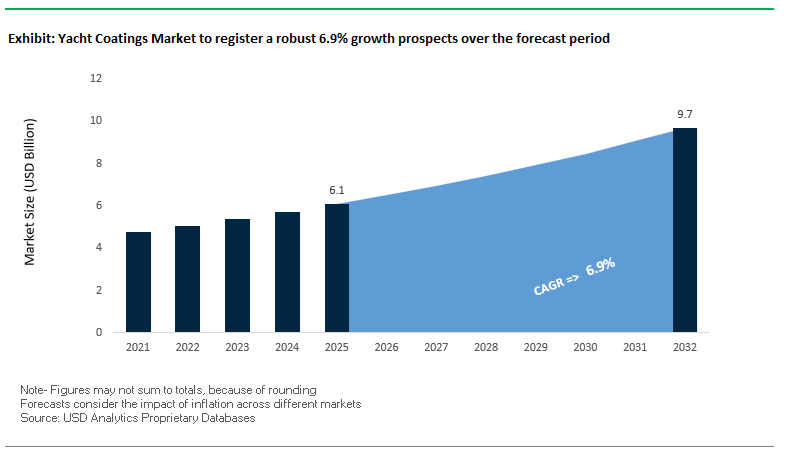
The global Yacht Coatings Market was valued at $6.1 billion in 2025 and is projected to grow at a CAGR of 6.9% from 2025 to 2032, reaching $9.7 billion by 2032. This strong growth trajectory is driven by increasing demand for high-performance marine coatings that deliver corrosion resistance, fouling control, hydrodynamic efficiency, and premium aesthetics across luxury yachts, superyachts, and high-performance sailing vessels.
A key structural driver is the rising focus on fuel efficiency and emission reduction in marine vessels, where advanced yacht coatings play a critical role in minimizing hull friction, drag, and biofouling. Modern coating systems are engineered to enhance hydrodynamic performance, resulting in reduced fuel consumption and lower greenhouse gas emissions. This is particularly important as maritime regulations tighten and yacht owners increasingly prioritize sustainability and operational efficiency.
Technological advancements are reshaping the market through the development of biocide-free fouling control systems, silicone-based coatings, and advanced polymer formulations. These innovations provide long-lasting protection, reduced maintenance cycles, and improved environmental compliance. Additionally, the growing demand for customized finishes, high-gloss aesthetics, and color innovation is driving the adoption of premium coating systems in the luxury yacht segment.
The market is also benefiting from the expansion of explorer yachts, hybrid propulsion vessels, and next-generation sailing technologies, which require coatings capable of withstanding extreme environmental conditions, high-speed stress, and long operational lifecycles. Furthermore, increasing investments in refit and maintenance activities are supporting steady demand for advanced coating solutions across existing fleets.
Market Analysis: High-Performance Partnerships, Low-Carbon Coatings, and Innovation at Extreme Conditions Reshaping Market Dynamics
The Yacht Coatings Market is undergoing rapid evolution driven by high-performance collaborations, sustainability breakthroughs, and advanced material innovation, redefining competitive dynamics across marine coatings manufacturers. A standout development is Boero YachtCoatings’ partnership with Ferrari Hypersail (March 2026), where specialized coating systems are engineered for extreme racing conditions, focusing on weight reduction and minimal film thickness to enhance speed and performance. This collaboration highlights the growing importance of coatings as performance enablers in competitive sailing.
Sustainability remains a central theme in market innovation. Jotun’s verification of 11.8 million tonnes of avoided CO₂ emissions (February 2026) demonstrates the measurable impact of advanced hull coatings in improving fuel efficiency and environmental performance. Similarly, AkzoNobel’s expansion of its partnership with Winning Shipping (December 2025), featuring the Intersleek® 1100SR biocide-free fouling control system, underscores the industry’s shift toward low-carbon, environmentally safe coating technologies.
Strategic initiatives and contracts are reinforcing market positioning. AkzoNobel’s supply of coatings for new ferry projects (March 2026) and its involvement in China’s deep-sea drilling vessel (January 2025) highlight the cross-application of high-performance marine coatings from industrial vessels to luxury yachts. These technologies are increasingly being adapted for explorer-class yachts and hybrid propulsion systems, where durability and efficiency are critical.
Innovation is also being driven through extreme-condition testing and specialized projects. Boero’s collaboration with the SP80 Speed Challenge (February 2026) focuses on coatings capable of withstanding intense hydrodynamic stress and friction, pushing the boundaries of material performance. Meanwhile, Hempel’s “Accelerate to Win” strategy (January 2026) emphasizes expanding innovation in marine coatings, supported by strong growth in its marine segment.
Aesthetic innovation continues to play a significant role in the luxury segment. Mankiewicz’s “Resilience” color collection for 2026 reflects evolving design trends in superyacht interiors, combining visual sophistication with durable coating performance. Additionally, Boero YachtCoatings’ presence at the Balearic Superyacht Forum (April 2025) highlights the importance of industry collaboration and brand positioning in the high-end yacht coatings market.
Market Trend: IMO Cybutryne Ban Accelerating Shift to Biocide-Free and Sustainable Antifouling Coatings
The enforcement of the International Maritime Organization ban on Cybutryne is significantly reshaping the yacht coatings market, particularly in antifouling systems. While the initial prohibition on application began in 2023, 2026 represents a critical compliance phase as vessels undergo mandatory inspections during scheduled dry-docking cycles.
Under MEPC 331(76), yachts with Cybutryne-containing antifouling layers must either remove the coating system or apply a certified barrier layer to prevent biocide leaching. This regulatory mandate is accelerating the replacement cycle across the global yacht fleet, driving demand for next-generation antifouling coatings that meet International Anti-fouling System certification requirements.
The requirement for zero Cybutryne presence in new formulations is pushing manufacturers toward alternative solutions such as booster-free copper oxide systems and organic co-biocides like zinc pyrithione. This transition is reshaping the marine coatings landscape, with increasing emphasis on environmentally compliant yacht coatings and sustainable antifouling technologies that reduce ecological impact in sensitive marine environments.
The updated California Air Resources Board marine coatings regulation is establishing stringent VOC limits for yacht coatings, particularly in high-gloss topcoat applications. As of 2026, the VOC ceiling for yacht finishes is strictly capped at 250 g/L, significantly impacting coating formulations used in luxury marina environments and superyacht refit facilities.
This regulatory shift is effectively eliminating traditional solvent-borne enamel systems, accelerating the transition toward high-solids and waterborne yacht coatings. Industry data from 2026 indicates that approximately 85% of coatings used in California-based superyacht refit centers have already transitioned to compliant formulations to avoid regulatory penalties and maintain operational continuity.
The focus on low-VOC marine coatings is not only improving environmental compliance but also enhancing worker safety and reducing emissions in coastal regions. This trend is reinforcing the adoption of eco-friendly yacht coatings and driving innovation in high-performance, low-emission marine finishes.
The advancement of waterborne polyurethane technology is creating significant opportunities in the yacht coatings market, particularly in high-end superyacht applications where aesthetic quality is critical. Modern waterborne polyurethane topcoats are achieving gloss levels of 95 Gloss Units or higher at a 60-degree angle, delivering the mirror-like finishes demanded in luxury marine environments.
These coatings also provide enhanced durability through self-crosslinking mechanisms, achieving pencil hardness ratings of 2H to 3H within seven days of application. This ensures high resistance to scratching and surface damage, which is essential for maintaining the pristine appearance of yacht exteriors and interiors.
In addition to mechanical performance, waterborne polyurethane coatings offer superior color stability, maintaining a color shift below 1.0 even after prolonged UV exposure. This non-yellowing characteristic is particularly important in regions with high solar intensity such as the Mediterranean and Caribbean, where traditional solvent-based coatings often degrade over time. These attributes position waterborne polyurethane coatings as a premium solution in the luxury yacht coatings market.
The growing adoption of silicone fouling-release coatings is creating a major opportunity in the yacht coatings industry, particularly as environmental regulations push toward zero-copper antifouling systems. These coatings operate on a non-biocidal mechanism, creating ultra-smooth surfaces that prevent marine organisms from adhering to the hull.
Silicone-based fouling-release coatings offer significant operational advantages, including improved hydrodynamic efficiency. By reducing surface drag, these coatings can lower fuel consumption by 5% to 8% for motor yachts operating at cruising speeds above 15 knots, contributing to cost savings and reduced emissions.
Another key benefit is extended service life, with modern silicone coatings designed to last up to five years, compared to 12 to 24 months for traditional ablative coatings. This reduces maintenance frequency and dry-docking costs, providing long-term economic benefits for yacht owners and operators.
Advancements in elastomer technology are also improving performance at lower speeds, enabling effective self-cleaning of biofouling at speeds as low as 8 to 10 knots. This expands the applicability of fouling-release coatings to sailing yachts and displacement vessels. Laboratory testing further supports their effectiveness, showing up to 90% reduction in adhesion strength of hard fouling organisms, allowing for easier maintenance and cleaning.
Yacht Coatings Market Share and Segmentation Insights
Anti-Fouling Coatings Lead with 35.7% Share Due to Essential Hull Protection and Efficiency Gains
The anti-fouling coatings segment dominates the yacht coatings market with a 35.7% market share in 2025, driven by its critical role in protecting hull surfaces and improving vessel performance. In the marine coatings and yacht protection coatings market, anti-fouling coatings prevent the accumulation of barnacles, algae, and mussels, which can significantly increase drag, leading to higher fuel consumption and operational costs. These coatings are essential for all in-water yacht applications, ensuring optimal speed, efficiency, and reduced maintenance frequency. Technological advancements are also shaping the segment, with a shift toward eco-friendly formulations, including low-copper coatings and biocide-free silicone foul-release systems, driven by stringent regulations such as the IMO standards and EU Biocidal Products Regulation. As sustainability and performance efficiency become priorities in the marine industry, anti-fouling coatings continue to lead the global yacht coatings market.
Maintenance and Refit Segment Dominates with 66.9% Share Driven by Recurring Coating Demand
The maintenance and refit segment leads the yacht coatings market with a dominant 66.9% market share in 2025, reflecting the ongoing need for regular upkeep and recoating of existing vessels. In the marine maintenance coatings and yacht refurbishment market, yachts typically undergo haul-out cycles every 12–24 months, during which anti-fouling coatings are reapplied, hulls are cleaned, and topside finishes are refreshed. This recurring maintenance cycle generates consistent demand for marine coatings, protective finishes, and repair solutions. Additionally, the global installed base of yachts—including over 5,000 vessels larger than 24 meters and hundreds of thousands of smaller boats—far exceeds new build volumes, making maintenance the dominant revenue contributor. As yacht owners prioritize performance, longevity, and aesthetic upkeep, the maintenance and refit segment continues to drive growth in the global yacht coatings market, supported by increasing investments in marine asset preservation and operational efficiency.
Competitive Landscape Analysis of the Yacht Coatings Market
AkzoNobel Leads Superyacht Topcoats with Awlgrip HDT and Biocide-Free Marine Innovation
AkzoNobel N.V., through International® and Awlgrip®, remains a dominant force in the yacht coatings market, supported by a Q1 2026 adjusted EBITDA margin of 14.5% and strong Performance Coatings profitability. Its Awlgrip® brand leads the superyacht topcoat segment, while Awlgrip HDT offers a repairable, high-gloss finish engineered for intense tropical UV exposure. AkzoNobel is prioritizing organic growth in sustainable marine coatings, including expansion of its biocide-free B-Free Explore range for leisure yachts. With 31,100 FTEs globally, the company is investing in foul-release coating technologies that reduce hull drag and improve yacht fuel efficiency by up to 5%.
PPG Advances UV-Cure Yacht Coatings and Global Custom Color-Matching Capabilities
PPG Industries, Inc. is strengthening its yacht coatings market position through its Protective & Marine business, which benefited from Q1 2026 net sales of USD 3.9 billion, up 7% year over year. Demand from yacht and coastal infrastructure applications supported organic sales growth. PPG is investing in radiation-curable marine coatings, including UV-cure clearcoats for carbon fiber yacht components that achieve full hardness in minutes instead of days. Its acquisition of Ozark Materials is enabling trials of high-visibility resins for yacht safety and waterline markings. PPG’s global just-in-time distribution supports custom color matching for yacht builds and refits worldwide.
Jotun Targets Asia-Pacific Superyacht Growth with Smart Antifouling Systems
Jotun A/S, through Jotun Yachting, maintains a leading role in the marine yacht coatings market, especially in Asia-Pacific, which represents over 43% of global coatings demand. The company is targeting growing superyacht hubs in Singapore and Thailand with its SeaQuantum and Megayacht antifouling systems, which use silylated acrylate self-polishing technology to maintain hull smoothness during marina idle periods. Jotun has transitioned yacht primers and undercoats to low-VOC, high-solid formulations that exceed 2026 European REACH standards while maintaining adhesion on aluminum and fiberglass. Its 2026 Smart Hull monitoring service helps yacht managers predict cleaning and refit needs.
Hempel Expands Biocide-Free Silicone Foul-Release Coatings for High-Speed Yachts
Hempel A/S is advancing the yacht coatings market through its focus on biocide-free innovation and silicone foul-release coatings. Hempel is helping accelerate adoption of foul-release systems in the yacht segment. Its 2026 roadmap emphasizes the Hempaspeed F range, designed for high-speed motor yachts where traditional antifoulings may deplete prematurely. Hempel is also partnering with automated coating application firms to develop robotic spray systems for large yacht hulls, targeting an 18% reduction in material waste. Its Silic One system brings commercial-grade hydrodynamic performance to smaller yacht owners.
Gruppo Boero Strengthens Mediterranean Refit Leadership with ChallengerPRO Topcoats
Gruppo Boero, through Boero YachtCoatings, holds a strong position in the Mediterranean yacht refit coatings market, a region representing about 29% of global yachting activity. In 2026, the company showcased its ChallengerPRO premium topcoat system at the Singapore Yachting Festival, targeting Southeast Asian humidity and high-UV marine conditions. Boero is also collaborating with Ferrari Hypersail to develop low-friction, ultra-thin coating cycles for high-performance sailing. Its integrated yacht coatings portfolio, from Mistral Fondo primers to Altura and Giraglia antifouling ranges, ensures full chemical compatibility across the paint system, making it a trusted option for superyacht professionals.
Italy’s Leadership in Luxury Yacht Coatings and Sustainable Marine Finishes
Italy continues to dominate the global yacht coatings market, particularly in the superyacht and mega-yacht segments, where aesthetics and performance converge. The country’s leadership is reinforced by continuous product innovation, such as the introduction of high-build epoxy primers engineered for advanced composite hulls used by leading yacht manufacturers. Italian coating producers are also pioneering graphene-enhanced topcoats, delivering significantly improved scratch resistance and durability, especially for high-gloss, dark-pigmented finishes favored in luxury vessels.
Infrastructure expansion is further strengthening Italy’s position, with advanced facilities incorporating climate-controlled environments to ensure optimal application of high-performance coatings. Government initiatives such as the “Sea Transition” decree are promoting the development of waterborne coatings for yacht interiors to meet stringent EU formaldehyde regulations. Italian shipyards are also leading in complex multi-layer coating systems that achieve superior optical clarity and finish quality. Additionally, strict regional environmental standards are accelerating the adoption of foul release coatings, reducing reliance on traditional biocidal antifouling systems.
Netherlands: Precision Engineering and Sustainable Yacht Coating Technologies
The Netherlands is emerging as a global hub for high-precision yacht coating technologies, driven by a strong focus on sustainability and engineering excellence. Innovations such as advanced primers designed to streamline coating cycles are improving efficiency in large-scale yacht construction. The integration of robotic coating systems is enhancing application accuracy, reducing material waste, and ensuring uniform coating thickness across complex hull geometries.
Regulatory frameworks aligned with EU environmental standards are pushing manufacturers toward ultra-low VOC coatings, particularly for interior applications. Investments in infrastructure, including specialized superyacht hubs with advanced filtration systems, are supporting environmentally responsible coating processes. The development of silicone-based foul release coatings using hydrogel technology is enabling non-toxic hull protection, reducing environmental impact while improving hydrodynamic performance. The Netherlands also leads in aluminum hull protection, utilizing specialized coatings to prevent corrosion in harsh marine environments.
United States: Advanced Functional Coatings and Sustainable Retrofitting
The United States yacht coatings market is evolving with a strong focus on sustainability, innovation, and infrastructure development. Regulatory changes, including stricter VOC standards, are accelerating the transition toward low-emission coating systems across yacht maintenance and manufacturing operations. Government initiatives such as green building codes are further reinforcing the adoption of environmentally friendly coatings.
Technological advancements are expanding the capabilities of yacht coatings. Ceramic-infused coatings offering superior hardness and UV resistance are gaining traction, particularly in regions with high solar exposure. The integration of smart technologies, including embedded sensors for corrosion monitoring, is enhancing predictive maintenance capabilities. Infrastructure investments in marina facilities are supporting the growth of eco-friendly dry-docking and maintenance operations. Additionally, strategic expansions by major coating manufacturers are improving supply chain efficiency and ensuring rapid availability of high-performance marine coatings across key regions.
Germany: Smart Coatings and Industry 4.0 Integration in Marine Applications
Germany is positioning itself as a leader in advanced yacht coating technologies, driven by its expertise in precision engineering and Industry 4.0 integration. The development of smart coatings equipped with embedded sensors is enabling real-time monitoring of hull integrity and fouling levels, significantly improving maintenance efficiency and vessel performance.
Innovation in Germany extends to the development of biocide-free coatings for smaller vessels, aligning with stringent environmental regulations for inland waterways. Investments in digital twin technologies are enabling predictive analysis of coating performance under different operating conditions, enhancing lifecycle management. The adoption of waterborne resin systems is increasing in response to low-VOC mandates in marina operations. Additionally, Germany is leading in the development of fire-retardant coatings for yacht interiors, meeting strict safety and environmental standards while ensuring high performance.
United Arab Emirates: High-Temperature Coatings and Luxury Marine Infrastructure
The UAE is rapidly emerging as a key hub in the yacht coatings market, driven by its focus on luxury marine infrastructure and extreme climate resilience. The development of advanced composite coatings designed to withstand high temperatures and salinity is critical for vessels operating in the Arabian Gulf. Infrastructure investments, including the expansion of Dubai Maritime City, are providing state-of-the-art facilities for yacht construction and maintenance.
Product innovation is centered on enhancing comfort and performance in harsh environments. Solar-reflective coatings that significantly reduce deck temperatures are becoming increasingly popular, improving onboard experience. Strategic partnerships with global coating manufacturers are supporting the localization of advanced epoxy systems, strengthening regional supply chains. The UAE is also pioneering specialized applications such as translucent coatings integrated with underwater lighting systems, reflecting its focus on luxury and technological differentiation in yacht design.
China: Expanding Yacht Coatings Market with Green Compliance
China is transitioning into a high-compliance player in the yacht coatings market, supported by environmental regulations and growing domestic demand for leisure vessels. Policies under the “Blue Sky” initiative are encouraging the adoption of waterborne and UV-curable coatings, reducing emissions and improving sustainability in marine applications.
Technological advancements include the development of cost-effective nano-ceramic coatings tailored for the expanding middle-class boating segment. Infrastructure investments in marina development are supporting the growth of the domestic yacht industry, with a focus on environmentally certified coatings. Product innovation is also evident in hybrid self-polishing coatings designed to perform across varying sea conditions. Capacity expansions by major coating manufacturers are ensuring adequate supply to meet the rising demand for advanced marine coatings in China’s growing leisure boating market.
South Korea: High-Performance Hull Coatings and Maritime Innovation
South Korea is leveraging its strong shipbuilding industry to expand into high-end yacht coatings, focusing on durability and performance. Advanced epoxy primers capable of providing long-term corrosion protection are becoming a key differentiator in the market, particularly for long-range vessels.
Government initiatives supporting the shipbuilding sector are accelerating the development of eco-friendly waterborne coatings, aligning with global environmental standards. Technological innovation includes the adaptation of dual-layer coating technologies for yacht applications, enabling simultaneous application of functional and aesthetic layers. Investments in research and development are supporting the creation of high-performance coatings for offshore and marine applications. Additionally, regulatory measures aimed at reducing VOC emissions are driving the adoption of advanced coating technologies, reinforcing South Korea’s position in the global yacht coatings market.
Yacht Coatings Market Report Scope
Yacht Coatings Market
Parameter
Details
Market Size (2025)
$6.1 Billion
Market Size (2032)
$9.7 Billion
Market Growth Rate
6.9%
Segments
By Coating (Anti-Fouling Coatings, Anti-Corrosion Coatings, Foul Release Coatings, Topcoats and Finishes, Primers and Undercoats, Varnishes and Clear Coats, Fairing Compounds and Fillers), By Resin Type (Epoxy, Polyurethane, Acrylic, Alkyd, Vinyl Ester, Silicone), By Technology (Solvent-borne, Waterborne, High Solids, UV-Cured), By Application Area (Hull, Topside and Superstructure, Deck, Interior, Engine Room and Bilge), By Vessel Type (Motor Yachts, Sailing Yachts, Superyachts and Mega-yachts, Catamarans and Multihulls), By End-User (New Build, Maintenance and Refit)
Study Period
2019- 2025 and 2026-2032
Units
Revenue (USD)
Qualitative Analysis
Porter’s Five Forces, SWOT Profile, Market Share, Scenario Forecasts, Market Ecosystem, Company Ranking, Market Dynamics, Industry Benchmarking
US, Canada, Mexico, Germany, France, Spain, Italy, UK, Russia, China, India, Japan, South Korea, Australia, South East Asia, Brazil, Argentina, Middle East, Africa
Yacht Coatings Market Segmentation
By Coating
Anti-Fouling Coatings
Self-Polishing Copolymer
Controlled Depletion Polymer
Hard Anti-Fouling
Anti-Corrosion Coatings
Foul Release Coatings
Topcoats and Finishes
Primers and Undercoats
Varnishes and Clear Coats
Fairing Compounds and Fillers
By Resin Type
Epoxy
Polyurethane
Acrylic
Alkyd
Vinyl Ester
Silicone
By Technology
Solvent-borne
Waterborne
High Solids
UV-Cured
By Application Area
Hull
Topside and Superstructure
Deck
Interior
Engine Room and Bilge
By Vessel Type
Motor Yachts
Sailing Yachts
Superyachts and Mega-yachts
Catamarans and Multihulls
By End-User
New Build
Maintenance and Refit
Leading Countries in the Industry
North America (United States, Canada, Mexico)
Europe (Germany, France, Spain, United Kingdom, Italy, Russia, Rest of Europe)
Asia Pacific (China, India, Japan, South Korea, Australia, South East Asia, Rest of APAC)
South and Central America (Brazil, Argentina, Rest of SCA)
Middle East and Africa (Saudi Arabia, UAE, MENA, Sub-Saharan Africa)
Top Companies in Yacht Coatings Industry
AkzoNobel N.V.
Jotun A/S
Hempel A/S
PPG Industries, Inc.
The Sherwin-Williams Company
Nippon Paint Holdings Co., Ltd.
Axalta Coating Systems
Chugoku Marine Paints, Ltd.
Kansai Paint Co., Ltd.
RPM International Inc.
Boero Bartolomeo S.p.A.
Marlin Yacht Paints
KCC Corporation
Alexseal Yacht Coatings
Stoppani
*- List not Exhaustive
Table of Contents: Yacht Coatings Market
1. Executive Summary
1.1. Market Highlights
1.2. Key Findings
1.3. Global Market Snapshot
2. Yacht Coatings Market Landscape and Outlook (2025–2034)
2.1. Introduction to the Yacht Coatings Market
2.2. Market Valuation and Growth Projections (2025–2034)
2.3. Demand Drivers in Fuel Efficiency, Biofouling Control, and Premium Marine Finishes
2.4. Regulatory Trends and Sustainability Standards in Biocide-Free and Low-VOC Yacht Coatings
2.5. Strategic Opportunities and Future Outlook
4. Competitive Landscape and Strategic Initiatives
4.1. Mergers and Acquisitions
4.2. RandD and Material Innovation
4.3. Sustainability and ESG Strategies
4.4. Market Expansion and Regional Focus
5. Market Share and Segmentation Insights: Yacht Coatings Market
5.1. By Coating
5.1.1. Anti-Fouling Coatings
5.1.2. Self-Polishing Copolymer
5.1.3. Controlled Depletion Polymer
5.1.4. Hard Anti-Fouling
5.1.5. Anti-Corrosion Coatings
5.1.6. Foul Release Coatings
5.1.7. Topcoats and Finishes
5.1.8. Primers and Undercoats
5.1.9. Varnishes and Clear Coats
5.1.10. Fairing Compounds and Fillers
5.2. By Resin Type
5.2.1. Epoxy
5.2.2. Polyurethane
5.2.3. Acrylic
5.2.4. Alkyd
5.2.5. Vinyl Ester
5.2.6. Silicone
5.3. By Technology
5.3.1. Solvent-Borne
5.3.2. Waterborne
5.3.3. High Solids
5.3.4. UV-Cured
5.4. By Application Area
5.4.1. Hull
5.4.2. Topside and Superstructure
5.4.3. Deck
5.4.4. Interior
5.4.5. Engine Room and Bilge
5.5. By Vessel Type
5.5.1. Motor Yachts
5.5.2. Sailing Yachts
5.5.3. Superyachts and Mega-Yachts
5.5.4. Catamarans and Multihulls
5.6. By End-User
5.6.1. New Build
5.6.2. Maintenance and Refit
6. Country Analysis and Outlook of Yacht Coatings Market
6.1. United States
6.2. Canada
6.3. Mexico
6.4. Germany
6.5. France
6.6. Spain
6.7. Italy
6.8. United Kingdom
6.9. Russia
6.10. China
6.11. India
6.12. Japan
6.13. South Korea
6.14. Australia
6.15. South East Asia
6.16. Brazil
6.17. Argentina
6.18. Middle East
6.19. Africa
7. Yacht Coatings Market Size Outlook by Region (2025–2034)
7.1. North America Yacht Coatings Market Size Outlook to 2034
7.1.1. By Coating
7.1.2. By Resin Type
7.1.3. By Technology
7.1.4. By Application Area
7.1.5. By Vessel Type
7.1.6. By End-User
7.2. Europe Yacht Coatings Market Size Outlook to 2034
7.2.1. By Coating
7.2.2. By Resin Type
7.2.3. By Technology
7.2.4. By Application Area
7.2.5. By Vessel Type
7.2.6. By End-User
7.3. Asia Pacific Yacht Coatings Market Size Outlook to 2034
7.3.1. By Coating
7.3.2. By Resin Type
7.3.3. By Technology
7.3.4. By Application Area
7.3.5. By Vessel Type
7.3.6. By End-User
7.4. South America Yacht Coatings Market Size Outlook to 2034
7.4.1. By Coating
7.4.2. By Resin Type
7.4.3. By Technology
7.4.4. By Application Area
7.4.5. By Vessel Type
7.4.6. By End-User
7.5. Middle East and Africa Yacht Coatings Market Size Outlook to 2034
7.5.1. By Coating
7.5.2. By Resin Type
7.5.3. By Technology
7.5.4. By Application Area
7.5.5. By Vessel Type
7.5.6. By End-User
8. Company Profiles: Leading Players in the Yacht Coatings Market
8.1. AkzoNobel N.V.
8.2. Jotun A/S
8.3. Hempel A/S
8.4. PPG Industries, Inc.
8.5. The Sherwin-Williams Company
8.6. Nippon Paint Holdings Co., Ltd.
8.7. Axalta Coating Systems
8.8. Chugoku Marine Paints, Ltd.
8.9. Kansai Paint Co., Ltd.
8.10. RPM International Inc.
8.11. Boero Bartolomeo S.p.A.
8.12. Marlin Yacht Paints
8.13. KCC Corporation
8.14. Alexseal Yacht Coatings
8.15. Stoppani
9. Methodology
9.1. Research Scope
9.2. Market Research Approach
9.3. Market Sizing and Forecasting Model
9.4. Research Coverage
9.5. Data Horizon
9.6. Deliverables
10. Appendix
10.1. Acronyms and Abbreviations
10.2. List of Tables
10.3. List of Figures
Yacht Coatings Market Segmentation
By Coating
Anti-Fouling Coatings
Self-Polishing Copolymer
Controlled Depletion Polymer
Hard Anti-Fouling
Anti-Corrosion Coatings
Foul Release Coatings
Topcoats and Finishes
Primers and Undercoats
Varnishes and Clear Coats
Fairing Compounds and Fillers
By Resin Type
Epoxy
Polyurethane
Acrylic
Alkyd
Vinyl Ester
Silicone
By Technology
Solvent-borne
Waterborne
High Solids
UV-Cured
By Application Area
Hull
Topside and Superstructure
Deck
Interior
Engine Room and Bilge
By Vessel Type
Motor Yachts
Sailing Yachts
Superyachts and Mega-yachts
Catamarans and Multihulls
By End-User
New Build
Maintenance and Refit
Leading Countries in the Industry
North America (United States, Canada, Mexico)
Europe (Germany, France, Spain, United Kingdom, Italy, Russia, Rest of Europe)
Asia Pacific (China, India, Japan, South Korea, Australia, South East Asia, Rest of APAC)
South and Central America (Brazil, Argentina, Rest of SCA)
Middle East and Africa (Saudi Arabia, UAE, MENA, Sub-Saharan Africa)
The global Yacht Coatings Market was valued at $6.1 billion in 2025 and is projected to reach $9.7 billion by 2032, growing at a CAGR of 6.9% during the forecast period. Rising demand for high-performance marine coatings, corrosion protection, fuel-efficiency enhancement, and luxury yacht aesthetics is driving strong market expansion globally.
The enforcement of the IMO Cybutryne ban under MEPC 331(76) is accelerating the transition toward biocide-free and environmentally compliant antifouling technologies. Manufacturers are increasingly developing silicone foul-release coatings, organic co-biocide systems, and low-copper alternatives that reduce ecological impact while improving hull efficiency and maintenance performance.
Silicone foul-release coatings are gaining popularity because they create ultra-smooth, non-stick hull surfaces that minimize biofouling and reduce hydrodynamic drag. These coatings can lower fuel consumption by 5% to 8%, extend service life up to five years, and reduce dry-docking frequency, making them highly attractive for superyachts and performance sailing vessels.
The market is witnessing rapid innovation in UV-cured marine coatings, graphene-enhanced topcoats, ceramic-infused finishes, smart coatings with embedded sensors, and high-gloss waterborne polyurethane systems. These technologies improve scratch resistance, UV stability, corrosion monitoring, hydrodynamic performance, and premium aesthetic quality across luxury yacht and refit applications.
Major companies operating in the market include AkzoNobel N.V., Jotun A/S, Hempel A/S, PPG Industries, Inc., The Sherwin-Williams Company, and Boero Bartolomeo S.p.A.. These companies are investing in biocide-free technologies, silicone foul-release coatings, smart marine coating systems, and advanced superyacht finishing innovations.