Xanthene Derivatives Market Overview 2025–2034: $333.3 Million to $512.6 Million at 4.9% CAGR Fueled by High-Purity Fluorescent Dyes, NIR Bioimaging Probes, and Green Synthesis Technologies
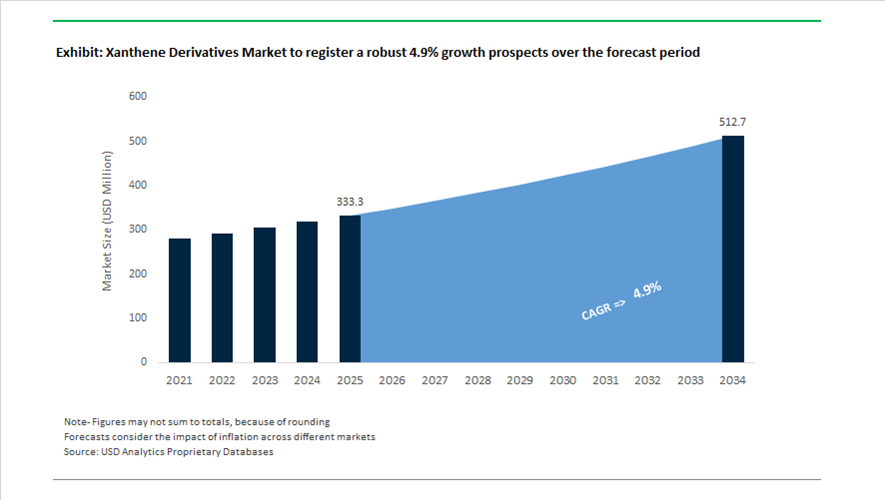
The Xanthene Derivatives market is valued at $333.3 million in 2025 and is projected to reach $512.6 million by 2034, expanding at a CAGR of 4.9%. Xanthene-based compounds, including fluorescein, rhodamine, eosin, and advanced silicon-bridged xanthenes, are critical in fluorescent labeling, cancer imaging, super-resolution microscopy, digital textile printing inks, and analytical titration reagents. Market growth is supported by expanding demand for high-purity fluorescent probes in precision diagnostics, multiplexed bioassays, next-generation imaging platforms, and digital pigment printing technologies. Increasing emphasis on near-infrared (NIR) imaging, photostability enhancement, and environmentally sustainable synthesis methods is reshaping R&D investment across specialty chemical and life science suppliers.
Capacity expansion and portfolio consolidation strengthened supply chains beginning in 2024. In 2024, Sigma-Aldrich, part of Merck KGaA, completed an expansion of its fluorescein production lines to meet rising global demand for multiplexed pharmaceutical research and diagnostic assays. In November 2024, Tate & Lyle finalized its $1.8 billion acquisition of CP Kelco, broadening fermentation-derived expertise relevant to stabilizers and bio-derived intermediates increasingly applied in specialty dye systems. In March 2025, Sudarshan Chemical completed its acquisition of the Heubach Group, consolidating production of high-performance fluorescent pigments and xanthene-based dye preparations within a larger global distribution framework.
Innovation accelerated through 2025 in both biomedical and industrial segments. In early 2025, Thermo Fisher Scientific released ≥98% purity fluorescein tailored for high-precision titration and clinical imaging. In February 2025, ColorJet India launched the Fab Jet Pro digital textile printer, underscoring the transition toward high-purity xanthene-based inks optimized for reduced water usage and lower chemical waste. In April 2025, researchers demonstrated ultrasound-assisted green synthesis of 9-substituted xanthenes, significantly lowering energy consumption and reaction times in line with advanced green chemistry principles. In August 2025, pH-activatable cyanine-xanthene probes were introduced for liver cancer imaging, delivering 3.2-fold higher light absorption than legacy dyes and expanding precision oncology diagnostics. During 2025, AAT Bioquest expanded its Tide Fluor™ series with improved photostability and pH-insensitivity for super-resolution microscopy and live-cell analysis.
Advanced molecular engineering defined late-2025 and 2026 developments. Industry reports highlighted commercial rollout of hybrid silicon- and phosphine oxide-bridged xanthene dyes enabling longer-wavelength NIR emission for non-invasive in vivo bioanalyte detection. Between 2024 and 2025, researchers commercialized novel xanthenoid fluorescent DNA labels designed to illuminate cancer-related genomic disruptions using super-resolution microscopy. In February 2026, MgO@EDTA@Ag nanocatalysts were introduced for sustainable room-temperature synthesis of xanthene derivatives while simultaneously degrading waste dyes such as Rhodamine B, integrating production efficiency with environmental remediation.
The xanthene derivatives market is progressing toward high-purity fluorescein and rhodamine grades, NIR-emitting silicon-bridged dyes, pH-activatable imaging probes, digital textile-compatible pigment systems, and green catalytic synthesis routes. Precision diagnostics, advanced microscopy, oncology imaging, and sustainable dye chemistry remain the primary drivers supporting steady expansion through 2034.
Xanthene Derivatives Market Trends and Opportunities: Biotech-Driven Fluorescence Innovation and Regulatory Realignment
NIR-II Fluorescent Xanthene Probes Transforming Live-Cell Imaging and Precision Diagnostics
The Xanthene Derivatives market is undergoing a high-value transformation driven by the rapid expansion of advanced biotechnology, live-cell imaging, and super-resolution microscopy, where next-generation fluorescent probes are replacing conventional dyes. The industry is shifting toward donor–acceptor–donor (D–A–D) xanthene architectures, engineered for near-infrared (NIR-II) imaging, enabling deeper tissue penetration and higher signal fidelity.
Recent breakthroughs highlight this transition. In early 2025, the development of VIX-1450, a xanthene-based probe with emission at 1450 nm, demonstrated the ability to achieve high-clarity in vivo imaging with minimal optical scattering and near-zero crosstalk. This advancement directly addresses long-standing limitations in deep-tissue imaging, positioning xanthene derivatives as essential tools in angiography, oncology diagnostics, and real-time biological visualization.
Functional innovation is further accelerating demand. The introduction of LipiPB Red in late 2025 enabled real-time monitoring of lipid droplet metabolism using fluorescence lifetime imaging microscopy (FLIM), eliminating the need for destructive sampling. Additionally, compatibility with STED (Stimulated Emission Depletion) microscopy is driving the development of dyes with “on-off” switching capabilities, enabling nanometer-scale resolution of subcellular structures. These advancements are positioning xanthene derivatives as core components in next-generation bioimaging and molecular diagnostics markets.
Regulatory Phase-Out of Synthetic Xanthene Colorants Reshaping Food and Cosmetic Applications
The traditional application base of xanthene derivatives in food colorants, cosmetics, and textiles is facing significant contraction due to escalating regulatory scrutiny on synthetic dyes and petroleum-based additives. Regulatory agencies across North America and Europe are accelerating the phase-out of compounds such as erythrosine (Red No. 3), citing concerns related to toxicity, bioaccumulation, and environmental persistence.
In April 2025, the U.S. FDA initiated a policy shift toward eliminating synthetic dyes from the food supply, reinforced in February 2026 through labeling enforcement measures promoting “no artificial colors” claims. This is being complemented by state-level bans, including West Virginia’s 2026 prohibition of Red Dye 3, following California’s earlier regulatory action. With over 20 U.S. states pursuing similar legislation, manufacturers are increasingly forced to reformulate or exit xanthene-based product lines.
In Europe, regulatory pressure is intensifying under REACH and the ECHA SVHC framework, with new additions to the Candidate List in February 2026 increasing compliance requirements for xanthene dye suppliers. These include stricter Safety Data Sheet (SDS) disclosures and waste management obligations for concentrations exceeding 0.1%. This regulatory environment is accelerating the decline of bulk commodity xanthene dyes, while redirecting market growth toward high-purity, specialty, and biotech-grade derivatives.
Xanthene-Based Photosensitizers Advancing Antimicrobial Photodynamic Therapy and Oncology Treatments
A major growth opportunity in the Xanthene Derivatives market lies in their application as photosensitizers in antimicrobial photodynamic therapy (aPDT) and targeted cancer treatments, offering a non-antibiotic mechanism to combat multi-drug resistant (MDR) pathogens and localized tumors. Compounds such as Phloxine B and Rose Bengal are gaining prominence due to their ability to generate reactive oxygen species (ROS) upon light activation, enabling effective microbial and tumor cell destruction.
Preclinical studies conducted during 2025–2026 demonstrate that xanthene-based aPDT can photoinactivate over 50% of pathogens listed in critical priority categories, including those resistant to conventional antibiotics. This capability is particularly valuable in addressing biofilm-associated infections, where traditional treatments often fail due to limited penetration.
In oncology, innovation is focused on cationic xanthene derivatives engineered for selective tumor targeting, with optimal activation in the 600–800 nm wavelength range for enhanced tissue penetration. These compounds exhibit improved binding affinity to cancer cell membranes, reducing off-target effects and enhancing therapeutic precision. Additionally, synergistic clinical approaches combining xanthene photosensitizers with antifungal agents such as Nystatin are demonstrating promising results in treating invasive candidiasis and resistant fungal infections, expanding the therapeutic scope of xanthene derivatives in clinical and veterinary medicine.
Green Synthesis and Bio-Based Xanthene Production Enabling Sustainable Specialty Chemical Growth
Sustainability-driven innovation is creating a new frontier in the Xanthene Derivatives market through the adoption of green chemistry, bio-based feedstocks, and waste-to-value synthesis pathways. Manufacturers are increasingly shifting away from traditional petrochemical processes toward environmentally benign production methods that reduce energy consumption, hazardous waste, and carbon emissions.
Recent advancements in biogenic catalysis highlight this shift. In September 2025, researchers demonstrated the successful synthesis of xanthene diones using MgO nanoparticles derived from agricultural waste (coconut seed coat ash), achieving up to 90% yield within 2.5 hours. This approach significantly reduces reliance on toxic catalysts while enhancing cost efficiency, making it attractive for large-scale specialty chemical production.
Process innovation is also being driven by ultrasound-assisted synthesis techniques, which enable faster reaction kinetics and milder operating conditions. Studies published in 2025 confirm that one-pot ultrasound-assisted methods can streamline xanthene production while minimizing solvent use, aligning with stringent EU environmental standards. Furthermore, the adoption of solvent-free synthesis using solid acid catalysts is eliminating energy-intensive distillation steps and reducing liquid waste generation.
These advancements are positioning green xanthene production as a high-growth, ESG-aligned segment, enabling manufacturers to meet regulatory compliance while appealing to sustainability-focused investors and end-users. As a result, bio-based and eco-friendly xanthene derivatives are expected to play a pivotal role in the future of specialty dyes, biomedical imaging, and advanced material applications.
Xanthene Derivatives Market Share and Segmentation Insights
Product Type Market Share: Fluorescein Leads with High-Performance Fluorescent Dye Applications
Fluorescein holds a 38.60% share in the xanthene derivatives market in 2025, driven by its strong fluorescence intensity, versatility, and widespread use across medical diagnostics, imaging, and analytical applications. It remains the standard dye for ophthalmic angiography, fluorescence microscopy, and tracer studies. Rhodamines, eosins, phloxine, rhodols, and rose bengal serve specialized applications in dyes, pigments, and biochemical assays. A key trend is the growth in diagnostic imaging, where fluorescein is increasingly used in advanced medical imaging techniques and emerging applications such as tumor visualization and lymphatic mapping.
End-Use Industry Market Share: Medical Research and Diagnostics Leads with Expanding Fluorescent Assay Applications
Medical research and diagnostics account for 38.60% of the xanthene derivatives market in 2025, supported by extensive use of fluorescent dyes in clinical testing, biological research, and imaging technologies. Pharmaceutical manufacturing, chemical production, cosmetics, textiles, and food industries contribute additional demand across diverse applications. A key market trend is the expansion of point-of-care diagnostics, where xanthene-based fluorescent probes are integrated into rapid testing platforms for disease detection. Increasing demand for sensitive, high-precision diagnostic tools continues to drive innovation and consumption of advanced fluorescent dye chemistries.
Xanthene Derivatives Market Competitive Landscape
The Xanthene Derivatives market in 2026 is defined by spectral customization, with advanced D–A–D architectures, click-chemistry compatibility, and enhanced photostability enabling long-wavelength emission, deep-tissue imaging, and high-sensitivity diagnostics across biotechnology, clinical research, and molecular imaging applications.
Thermo Fisher Scientific Leads High-Purity Xanthene Labeling with Alexa Fluor™ and PCR Integration
Thermo Fisher Scientific dominates the xanthene derivatives market through its Molecular Probes™ platform and industry-leading Alexa Fluor™ and Oregon Green™ dye series. These advanced xanthene fluorophores offer superior photostability and resistance to photobleaching, particularly in protein and nucleic acid labeling. The company has optimized amine-reactive succinimidyl ester derivatives for high-efficiency bioconjugation workflows. Its TaqMan Real-Time PCR assays integrate xanthene-based fluorophores tuned for 488 nm excitation, delivering high signal-to-noise ratios in diagnostics. Expansion of ≥97.5% purity xanthene intermediates supports pharmaceutical R&D and custom synthesis. Thermo Fisher’s integrated ecosystem combining reagents, imaging systems, and analytics strengthens its leadership in high-throughput screening.
Merck Advances Precision Xanthene Chemistry for 3D Cell Models and High-Purity Synthesis
Merck KGaA is strengthening its position through high-purity xanthene derivatives tailored for life sciences and advanced organic synthesis. Its collaboration with Promega supports 3D cell-based drug discovery using specialized xanthene fluorophores for real-time cellular imaging. The Sigma-Aldrich portfolio emphasizes ≥99% assay xanthenes for applications in C–H amination and cross-coupling reactions. Integration of UHPLC-Q-Orbitrap HRMS ensures stringent quality control for pharmaceutical and cosmetic-grade colorants. Eosin Y derivatives are being repositioned for DNA-binding assays and molecular biophysics applications. This precision chemistry approach enhances Merck’s role in high-value research and diagnostics markets.
Promega Expands Live-Cell Imaging with Xanthene-Based NanoBRET™ and Diagnostic Platforms
Promega is advancing xanthene derivatives through its focus on live-cell imaging and bioluminescent assay integration. Its NanoBRET™ technology utilizes stabilized xanthene fluorophores to monitor real-time drug–target interactions, improving early-stage drug discovery accuracy. The NMPA approval of its MSI Detection Kit in 2026 expands its footprint in oncology diagnostics using fluorescent xanthene markers. Strengthened intellectual property around luciferase substrates and fluorophore stabilization enhances its competitive positioning. The company’s platforms enable non-invasive visualization of RNA–protein interactions in complex disease models. This capability supports high-resolution, real-time cellular analytics in advanced biomedical research.
Biotium Drives Spatial Biology Innovation with High-Brightness Vis-NIR Xanthene Dyes
Biotium is a key innovator in xanthene-based imaging, focusing on high-performance dyes for spatial biology and multiplex diagnostics. Its TyraMax™ TSA dyes deliver exceptional brightness and photostability for high-plex transcriptomics applications. NucSpot® and CF® dye series provide “turn-on” fluorescence upon DNA binding, improving signal specificity in cell imaging. With over 170 proprietary dyes and 30+ patents, Biotium’s portfolio is widely validated across thousands of scientific publications. Its TrueBlack® quenching technology reduces autofluorescence in aged tissues, enabling clearer imaging results. This specialization positions Biotium at the forefront of high-contrast bio-imaging solutions.
TCI Chemicals Enables Global Xanthene Innovation with Functionalized Derivatives and Rapid Supply Chains
TCI Chemicals supports the xanthene derivatives market through its extensive portfolio of over 150 functionalized compounds for research and industrial applications. Its offerings include Rhodamine and Fluorescein derivatives with azide and alkyne groups, enabling click-chemistry workflows. Xanthene dyes such as Eosin Y and Rose Bengal are increasingly used as metal-free photo-redox catalysts in agrochemical and fine chemical synthesis. Expansion of logistics infrastructure in India and Southeast Asia ensures 95% same-day delivery, supporting rapid R&D cycles. The company’s broad application coverage spans organic electronics, photovoltaics, and specialty chemicals. This functional diversity makes TCI a critical supplier in the global xanthene value chain.
United States Xanthene Derivatives Market Redefined by Food Dye Elimination and Biomedical Innovation
The United States xanthene derivatives market is undergoing a structural reset driven by federal health policy and parallel expansion in advanced imaging sciences. In April 2025, the U.S. Food and Drug Administration in coordination with the Department of Health and Human Services announced a definitive plan to phase out petroleum-based synthetic dyes, including xanthene-derived FD&C Red No. 3, from the food supply by the end of 2026. This followed the January 2025 revocation of Red No. 3 use in foods and ingested drugs, with regulators formally urging manufacturers to transition well ahead of the 2027–2028 final compliance window. The policy signal has rapidly altered procurement strategies across food, nutraceutical, and school nutrition programs, particularly after the formation of the Make America Healthy Again Commission in 2025, which elevated clean-label reformulation as a national public health priority. State-level action has reinforced this shift, with West Virginia enacting House Bill 2354 in March 2025 to prohibit food products containing Red No. 3, accelerating a domino effect across other jurisdictions.
At the same time, the United States remains a global innovation hub for non-food xanthene applications. In early 2025, U.S. research teams reported the development of donor–acceptor–donor xanthene cores capable of NIR-II emission up to 1450 nm, enabling deep-tissue, high-contrast biomedical imaging with zero optical crosstalk. This bifurcation is redefining the domestic market. Legacy food and cosmetic dye demand is contracting under regulatory pressure, while pharmaceutical imaging, diagnostics, and life science research are absorbing higher-value, precision-engineered xanthene derivatives. The net effect is a decisive shift from volume-driven colorant usage toward innovation-led specialty applications.
China Xanthene Derivatives Market Driven by Feedstock Economics and Phototheranostic Research
China’s xanthene derivatives market is being reshaped by upstream petrochemical economics and aggressive investment in advanced materials research. A major structural inflection is underway as Chinese producers transition from naphtha-based cracking to lower-cost U.S. ethane imports. This ethane-to-chemicals shift is forecast to expand China’s ethylene capacity by 121% in 2025, sharply reducing feedstock costs for downstream aromatic and heterocyclic intermediates, including xanthene precursors. Cost advantages are further reinforced by large-scale aromatics investments. Hebei Zhixiang Chemical New Materials continues to advance its $3.6 billion Cangzhou expansion, which includes a 1.2 million metric ton per year aromatics unit scheduled for completion by the end of 2026, strengthening domestic supply resilience despite external trade pressures.
Beyond scale economics, China is positioning xanthene derivatives at the frontier of medical and electronic applications. In August 2025, national research institutes unveiled xanthene-based NIR phototheranostic agents engineered through electronic programming, enabling activatable fluorescence for targeted cancer therapy. Industrially, the BASF Zhanjiang Verbund site reached key operational milestones in 2025, integrating specialty intermediates used in high-performance xanthene dyes and pigments for electronics and display manufacturing. Collectively, these developments indicate that China’s xanthene derivatives market is evolving from cost-led commodity production toward a dual model that combines low-cost synthesis with high-end functional materials for healthcare and advanced electronics.
India Xanthene Derivatives Market Strengthened by PLI-Led Self-Sufficiency and Green Synthesis
India’s xanthene derivatives market is benefitting from policy-driven capacity building and a clear push toward import substitution in pharmaceuticals and specialty chemicals. By September 2025, investments realized under the Production Linked Incentive schemes reached approximately ₹2 lakh crore, directly strengthening domestic manufacturing of bulk drugs and critical chemical intermediates, including xanthine and xanthene-related compounds. According to the Department of Pharmaceuticals, India significantly narrowed its import gap for key drug intermediates by late 2025, reinforcing its position as the world’s third-largest pharmaceutical producer by volume and improving backward integration for dye and heterocyclic chemical supply chains.
Industrial expansion is being complemented by process innovation. In 2025, Aarti Industries ramped up production of specialty intermediates under the PLI framework to supply xanthene derivatives for textile and dye applications, addressing both domestic demand and export opportunities. Concurrently, Indian academic research published in April 2025 demonstrated ultrasound-assisted green sonochemical synthesis routes for functionalized xanthene compounds, delivering higher yields and faster reaction kinetics compared to conventional thermal methods. These advances position India’s xanthene derivatives market at the intersection of scale, sustainability, and process efficiency, appealing to global buyers seeking diversified and environmentally aligned supply chains.
Germany Xanthene Derivatives Market Anchored in REACH Compliance and Smart Monitoring Technologies
Germany’s xanthene derivatives market is defined by regulatory rigor and high-value downstream integration rather than volume growth. Ahead of the 2026 regulatory cycle, German chemical producers completed the re-registration of xanthene-based pigments under updated EU REACH requirements, with a strong emphasis on biodegradable profiles and non-toxic performance for cosmetics and textile applications. This proactive compliance has effectively raised the technical threshold for market participation, favoring suppliers with advanced toxicological documentation and formulation expertise.
Innovation is extending beyond colorant use into environmental and digital infrastructure. Federal Environment Agency reports in 2025 highlighted the integration of xanthene-based fluorescent markers into SmartFilter systems used to detect micro-pollutants in urban wastewater, demonstrating a novel analytical application for these compounds. In parallel, German firms are actively developing xanthene derivatives for green display technologies, particularly OLED materials, as Europe accelerates investment in energy-efficient imaging and display systems. These applications reinforce Germany’s role as a premium innovation center for xanthene derivatives, aligned with sustainability, digital monitoring, and next-generation electronics.
Xanthene Derivatives Market Country Snapshot
Xanthene Derivatives Market County Level Snapshot
Country
Primary Regulatory or Economic Driver
Key Application Focus
Strategic Market Direction
United States
FDA food dye phase-out and clean-label policy
Biomedical imaging, diagnostics
Shift from food dyes to high-value life sciences
China
Ethane-based feedstock economics and R&D scale
Phototheranostics, electronics dyes
Cost-efficient scale with advanced materials
India
PLI-led self-sufficiency and green chemistry
Pharmaceuticals, textiles, dyes
Import substitution and sustainable synthesis
Germany
REACH compliance and smart monitoring
OLEDs, wastewater sensing
Premium, regulation-led innovation
Xanthene Derivatives Market Report Scope
Xanthene Derivatives Market
Parameter
Details
Market Size (2025)
$333.3 Million
Market Size (2034)
$512.6 Million
Market Growth Rate
4.9%
Segments
By Product Type (Fluorescein, Rhodamines, Eosins, Rhodols, Phloxine, Rose Bengal), By Application (Fluorescent Markers and Probes, Dyes and Pigments, Pharmaceuticals, Food Additives, Photographic Chemicals, Electro-Optical Devices), By End-Use Industry (Medical Research and Diagnostics, Pharmaceutical Manufacturing, Chemical Manufacturing, Textiles and Leather, Food and Beverage, Cosmetics and Personal Care)
Study Period
2019- 2025 and 2026-2034
Units
Revenue (USD)
Qualitative Analysis
Porter’s Five Forces, SWOT Profile, Market Share, Scenario Forecasts, Market Ecosystem, Company Ranking, Market Dynamics, Industry Benchmarking
US, Canada, Mexico, Germany, France, Spain, Italy, UK, Russia, China, India, Japan, South Korea, Australia, South East Asia, Brazil, Argentina, Middle East, Africa
Xanthene Derivatives Market Segmentation
By Product Type
Fluorescein
Rhodamines
Eosins
Rhodols
Phloxine
Rose Bengal
By Application
Fluorescent Markers and Probes
Dyes and Pigments
Pharmaceuticals
Food Additives
Photographic Chemicals
Electro-Optical Devices
By End-Use Industry
Medical Research and Diagnostics
Pharmaceutical Manufacturing
Chemical Manufacturing
Textiles and Leather
Food and Beverage
Cosmetics and Personal Care
By Region
North America (United States, Canada, Mexico)
Europe (Germany, France, United Kingdom, Spain, Italy, Rest of Europe)
Asia Pacific (China, India, Japan, South Korea, Australia, Rest of APAC)
South and Central America (Brazil, Argentina, Rest of SCA)
Middle East and Africa (Saudi Arabia, UAE, South Africa, Rest of Middle East, Rest of Africa)
2. Xanthene Derivatives Market Landscape & Outlook (2025–2034)
2.1. Introduction to Xanthene Derivatives Market
2.2. Market Valuation and Growth Projections (2025–2034)
2.3. High-Purity Fluorescent Dyes and Bioimaging Demand
2.4. NIR Imaging, Photostability, and Advanced Molecular Engineering
2.5. Green Synthesis Technologies and Sustainable Production
3. Innovations Reshaping the Xanthene Derivatives Market
3.1. Trend: NIR-II Fluorescent Probes for Live-Cell Imaging and Precision Diagnostics
3.2. Trend: Regulatory Phase-Out of Synthetic Xanthene Colorants
3.3. Opportunity: Photosensitizers in Antimicrobial and Oncology Treatments
3.4. Opportunity: Green Synthesis and Bio-Based Xanthene Production
4. Competitive Landscape and Strategic Initiatives
4.1. Mergers and Acquisitions
4.2. R&D and Material Innovation
4.3. Sustainability and ESG Strategies
4.4. Market Expansion and Regional Focus
5. Market Share and Segmentation Insights: Xanthene Derivatives Market
5.1. By Product Type
5.1.1. Fluorescein
5.1.2. Rhodamines
5.1.3. Eosins
5.1.4. Rhodols
5.1.5. Phloxine
5.1.6. Rose Bengal
5.2. By Application
5.2.1. Fluorescent Markers and Probes
5.2.2. Dyes and Pigments
5.2.3. Pharmaceuticals
5.2.4. Food Additives
5.2.5. Photographic Chemicals
5.2.6. Electro-Optical Devices
5.3. By End-Use Industry
5.3.1. Medical Research and Diagnostics
5.3.2. Pharmaceutical Manufacturing
5.3.3. Chemical Manufacturing
5.3.4. Textiles and Leather
5.3.5. Food and Beverage
5.3.6. Cosmetics and Personal Care
6. Country Analysis and Outlook of Xanthene Derivatives Market
6.1. United States
6.2. Canada
6.3. Mexico
6.4. Germany
6.5. France
6.6. Spain
6.7. Italy
6.8. UK
6.9. Russia
6.10. China
6.11. India
6.12. Japan
6.13. South Korea
6.14. Australia
6.15. South East Asia
6.16. Brazil
6.17. Argentina
6.18. Middle East
6.19. Africa
7. Xanthene Derivatives Market Size Outlook by Region (2025-2034)
7.1. North America Xanthene Derivatives Market Size Outlook to 2034
7.1.1. By Product Type
7.1.2. By Application
7.1.3. By End-Use Industry
7.2. Europe Xanthene Derivatives Market Size Outlook to 2034
7.2.1. By Product Type
7.2.2. By Application
7.2.3. By End-Use Industry
7.3. Asia Pacific Xanthene Derivatives Market Size Outlook to 2034
7.3.1. By Product Type
7.3.2. By Application
7.3.3. By End-Use Industry
7.4. South America Xanthene Derivatives Market Size Outlook to 2034
7.4.1. By Product Type
7.4.2. By Application
7.4.3. By End-Use Industry
7.5. Middle East and Africa Xanthene Derivatives Market Size Outlook to 2034
7.5.1. By Product Type
7.5.2. By Application
7.5.3. By End-Use Industry
8. Company Profiles: Leading Players in the Xanthene Derivatives Market
8.1. BASF SE
8.2. Pfizer Inc.
8.3. Aarti Industries Limited
8.4. Shandong Xinhua Pharmaceutical Co. Ltd.
8.5. Astellas Pharma Inc.
8.6. Sinopec Corporation
8.7. Merck KGaA
8.8. Thermo Fisher Scientific Inc.
8.9. Tate and Lyle plc
8.10. Hebei Xinhai Holdings Group
8.11. Sonneborn
8.12. Maheshwari Chemical
8.13. Clariant AG
8.14. Dayglo Color Corp.
8.15. Hainan Honz Pharmaceutical
9. Methodology
9.1. Research Scope
9.2. Market Research Approach
9.3. Market Sizing and Forecasting Model
9.4. Research Coverage
9.5. Data Horizon
9.6. Deliverables
10. Appendix
10.1. Acronyms and Abbreviations
10.2. List of Tables
10.3. List of Figures
Xanthene Derivatives Market Segmentation
By Product Type
Fluorescein
Rhodamines
Eosins
Rhodols
Phloxine
Rose Bengal
By Application
Fluorescent Markers and Probes
Dyes and Pigments
Pharmaceuticals
Food Additives
Photographic Chemicals
Electro-Optical Devices
By End-Use Industry
Medical Research and Diagnostics
Pharmaceutical Manufacturing
Chemical Manufacturing
Textiles and Leather
Food and Beverage
Cosmetics and Personal Care
By Region
North America (United States, Canada, Mexico)
Europe (Germany, France, United Kingdom, Spain, Italy, Rest of Europe)
Asia Pacific (China, India, Japan, South Korea, Australia, Rest of APAC)
South and Central America (Brazil, Argentina, Rest of SCA)
Middle East and Africa (Saudi Arabia, UAE, South Africa, Rest of Middle East, Rest of Africa)
The xanthene derivatives market is valued at $333.3 million in 2025 and is projected to reach $512.6 million by 2034, growing at a CAGR of 4.9%. Growth is supported by increasing demand for high-purity fluorescent dyes in diagnostics and imaging. Expansion of precision medicine and advanced microscopy platforms is further accelerating adoption.
The market is rapidly shifting toward NIR and NIR-II fluorescent probes for deep-tissue imaging and high-resolution diagnostics. Silicon-bridged xanthenes and D–A–D architectures are enabling longer wavelength emission and improved photostability. These innovations are critical for super-resolution microscopy and real-time bioimaging applications.
Regulatory pressure in the U.S. and Europe is phasing out synthetic xanthene dyes in food and cosmetics due to toxicity and environmental concerns. Compliance with REACH and FDA policies is pushing manufacturers toward high-purity and specialty-grade derivatives. This shift is reducing commodity demand while increasing value-added applications.
Key opportunities include xanthene-based photosensitizers for antimicrobial photodynamic therapy and oncology treatments. Green synthesis methods such as ultrasound-assisted and catalyst-driven processes are gaining traction. Additionally, applications in OLEDs, digital textile printing, and wastewater sensing are expanding market scope.
Major players include BASF SE, Merck KGaA, Thermo Fisher Scientific, Sinopec, Clariant AG, Pfizer Inc., and Aarti Industries. These companies focus on high-purity dye development, biotech integration, and sustainable synthesis technologies. Competitive advantage is increasingly driven by innovation in diagnostics and specialty applications.