Antibacterial Coating Market Size and Growth Driven by Infection Control and Hygiene Regulations
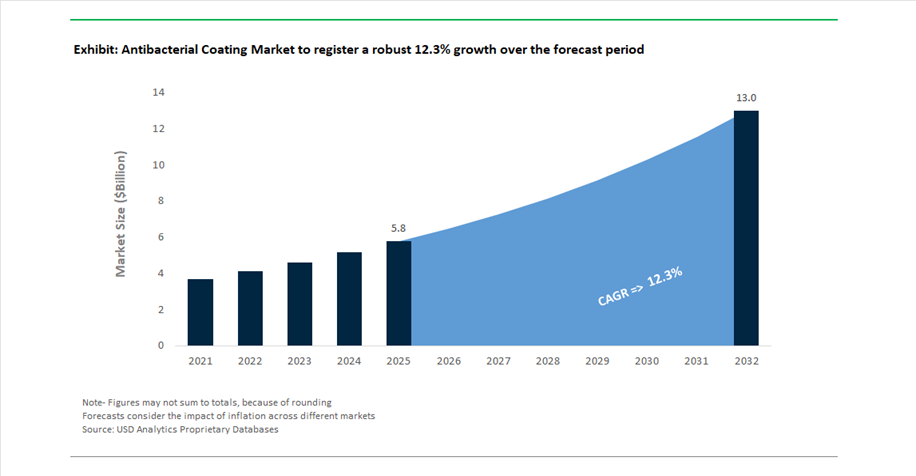
The Antibacterial Coating Market is poised for rapid expansion, growing from USD 5.8 billion in 2025 to USD 13.06 billion by 2032, registering a strong CAGR of 12.3%. This accelerated growth is primarily driven by heightened global awareness around hygiene, infection prevention, and surface contamination control, particularly in healthcare, public transportation, food processing, and high-touch commercial environments.
Antibacterial coatings are engineered with active agents such as silver ions, copper compounds, and advanced antimicrobial additives that inhibit the growth and spread of bacteria on coated surfaces. These coatings are increasingly becoming a standard specification in hospitals, clinics, schools, airports, and mass transit systems, where preventing microbial transmission is critical. The post-pandemic environment has further accelerated adoption, with regulatory bodies and facility operators prioritizing long-lasting, easy-to-maintain antimicrobial surfaces.
Technological advancements are focused on multi-functional coatings that combine antibacterial properties with abrasion resistance, hydrophobicity, and easy-clean characteristics, ensuring durability under frequent cleaning cycles. Innovations in nano-enabled antimicrobial coatings and bio-based formulations are also gaining traction, enabling manufacturers to deliver high-performance solutions while meeting sustainability targets. Additionally, integration with low-VOC and waterborne systems is aligning the market with evolving environmental regulations.
The market is also benefiting from increasing demand in architectural coatings, medical devices, and industrial surfaces, where hygiene standards are becoming more stringent. Competitive dynamics are characterized by intensive R&D investment, strategic collaborations, and expansion of application ecosystems, positioning antibacterial coatings as a critical component of modern surface protection and public health infrastructure
Silver-Ion Innovation, Strategic Consolidation, and Smart Coatings Accelerating Market Adoption
The antibacterial coating market is undergoing rapid transformation driven by advanced material innovation, strategic mergers, and expanding application use cases. A key development occurred in March 2026, when PPG Industries launched Johnstone’s Trade Anti-Bacterial Matt, utilizing silver-ion technology to inhibit bacteria such as MRSA and E. coli on interior surfaces. This product targets high-hygiene environments including healthcare facilities, educational institutions, and food preparation areas, emphasizing durability and resistance to frequent cleaning cycles.
Product innovation is increasingly centered on high-efficacy, multi-functional antimicrobial systems. NEI Corporation’s NANOMYTE® AM-100EC (June 2024) demonstrates the capability to achieve 99.99% bacterial reduction (ISO 22196 certified) while offering easy-to-clean and abrasion-resistant properties, making it suitable for high-touch surfaces. Similarly, NLMK Group’s antibacterial rolled steel (May 2024) integrates copper and silver ions directly into the coating, ensuring long-term antimicrobial performance with a service life of up to 25 years.
Sustainability and environmental compliance are becoming key differentiators. BASF Coatings’ biomass-balanced portfolio expansion supports the integration of antimicrobial additives into low-carbon coating systems, while collaborative initiatives between Arkema, AkzoNobel, and BASF are advancing the use of bio-based resins in functional coatings. These developments align with increasing demand for environmentally responsible antimicrobial solutions.
Market expansion is also supported by application ecosystem development and workforce readiness. PPG’s $10 million investment in skilled trades training ensures proper application of advanced antimicrobial coatings, which is critical to maintaining their efficacy in real-world conditions. Additionally, Nippon Paint’s Premiumization and Servitization strategy, including the deployment of thousands of application service partners, is accelerating the adoption of high-performance antibacterial coatings in Asia-Pacific markets.
Emerging innovations such as Jotun’s smart protective coatings are integrating low-emission systems with antimicrobial functionality, targeting large-scale infrastructure projects such as hospitals and airports.
EPA Public Health Claim Regulations Elevating Performance Standards for Copper-Based Coatings
The antibacterial coating industry is undergoing a stringent regulatory transformation as the U.S. Environmental Protection Agency intensifies enforcement around “public health claims.” Coatings designed to actively kill pathogens in healthcare and high-risk environments are now required to meet the same Good Laboratory Practice standards applied to liquid disinfectants. This regulatory shift is raising the barrier to entry, particularly for coatings marketed with continuous antimicrobial efficacy.
Copper-based antibacterial coatings have emerged as the primary beneficiaries of this framework due to their established regulatory acceptance. To maintain EPA registration, these coatings must demonstrate a bacterial reduction exceeding 99.9% within a two-hour contact period against high-risk pathogens such as MRSA and E. coli O157:H7. Beyond initial efficacy, the EPA’s Continuous Reduction of Bacterial Contaminants protocol requires coatings to sustain this performance even after eight successive contamination cycles within a 24-hour period, without intermediate cleaning.
Durability under real-world conditions is also a critical requirement. Registered coatings must retain at least 99% antibacterial effectiveness after undergoing six simulated wear cycles, including both wet and dry abrasion. This ensures that performance is maintained despite repeated cleaning and surface contact in high-traffic environments. As of 2026, more than 500 copper alloys have achieved EPA registration, while most silver-based coatings remain classified under the Treated Article Exemption, limiting their ability to claim active pathogen elimination in the U.S. market.
This regulatory asymmetry is reshaping competitive dynamics, positioning copper-based antibacterial coatings as the preferred solution for healthcare, transportation, and public infrastructure applications where verified antimicrobial performance is essential.
EU Restrictions on Silver Additives Accelerating Shift to Alternative Antimicrobial Chemistries
In parallel with U.S. regulatory developments, the European market is experiencing significant disruption due to stricter controls under the Biocidal Products Regulation and the recently enforced Omnibus VIII (Regulation EU 2026/78). These regulations impose severe restrictions on the use of silver-based antimicrobial additives, particularly in consumer-facing and high-contact applications, due to concerns related to carcinogenic, mutagenic, and reproductive toxicity classifications.
The regulatory scope now includes both nano-scale colloidal silver and bulk silver forms, significantly limiting their applicability across a wide range of coating systems. In permitted use cases such as specialized medical devices or oral hygiene applications, silver concentrations are capped at extremely low levels, in some cases as low as 0.05%. This effectively eliminates the feasibility of traditional high-loading silver-ion coatings, which historically relied on higher concentrations to achieve sustained antimicrobial activity.
As a result, approximately 28% of European coating formulators have initiated a transition toward alternative antimicrobial technologies, including hybrid systems and non-metal organic biocides. The enforcement deadline of May 1, 2026, has further accelerated this shift, as non-compliant products are required to be withdrawn from the market. This regulatory pressure is driving rapid innovation in new active ingredients and formulation strategies, creating opportunities for companies that can deliver compliant, high-performance antibacterial coatings without reliance on restricted heavy metals.
Aerospace Cabin Surfaces Driving Demand for Durable Antibacterial Coatings
The aviation industry is increasingly prioritizing hygiene and infection control through the adoption of “bio-secure cabin” concepts, creating a strong demand for advanced antibacterial coatings. High-touch surfaces such as lavatories, tray tables, and galley components are primary contamination vectors, often harboring higher bacterial loads than typical household environments. Integrating antibacterial coatings into these surfaces is enabling airlines to reduce cleaning frequency and improve passenger confidence.
Data indicates that the use of integrated antibacterial coatings can extend the interval between deep-disinfection cycles by up to 40%, reducing maintenance workload and operational costs. Additionally, antimicrobial technologies are being incorporated into aircraft environmental control systems. HEPA and HVAC filtration systems equipped with antibacterial treatments are now capable of eliminating up to 99.97% of airborne bacteria before air recirculation, enhancing overall cabin air quality.
From an engineering perspective, weight and durability remain critical considerations. Advanced UV-curable antibacterial coatings are designed to meet stringent aerospace requirements, including resistance to aviation fluids such as Skydrol, while adding less than 50 grams to a standard lavatory module. This ensures that hygiene enhancements do not compromise fuel efficiency or structural performance. As of 2026, approximately 35% of Tier 1 aerospace interior suppliers have integrated antibacterial coatings as a standard line-fit option, signaling a shift from optional retrofit solutions to baseline manufacturing specifications.
Hospital-acquired infections remain a critical global healthcare challenge, and frequently touched surfaces such as privacy curtains represent a significant yet under-addressed contamination source. Traditional curtains, typically made from polypropylene or cotton blends, can become colonized with pathogens such as MRSA and VRE within 48 hours after cleaning, posing a continuous infection risk.
Antibacterial coating technologies are emerging as an effective solution to this problem. Clinical studies have demonstrated that curtains treated with metal-alloy fiber coatings can extend the time to initial contamination from two days to approximately fourteen days, representing a 700% improvement in hygiene duration. This extended protection significantly reduces the frequency of laundering and replacement, lowering operational costs for healthcare facilities.
Further evidence from randomized controlled trials indicates that antibacterial-coated curtains can reduce the risk of VRE contamination by up to eight times compared to untreated materials. In addition, advanced coating systems utilizing tannin-based compounds and quaternary ammonium chloride technologies have shown the ability to reduce total aerobic bacterial counts by 60% to 93% over continuous monitoring periods of up to eight weeks.
These performance gains are driving adoption across hospitals seeking to enhance infection control protocols while optimizing resource utilization. As healthcare systems globally intensify focus on patient safety and operational efficiency, antibacterial coatings for soft surfaces such as privacy curtains represent a high-impact growth opportunity within the broader antimicrobial coatings market.
Silver-Based Antibacterial Coatings Capture 52% Market Share with Superior Broad-Spectrum Efficacy
Active Ingredient Analysis: Silver Nanotechnology Leads with Long-Lasting Antimicrobial Protection
Silver-based coatings dominate the global antibacterial coating market with a 52.0% share in 2025, driven by their unmatched broad-spectrum antimicrobial efficacy against Gram-positive and Gram-negative bacteria, fungi, and enveloped viruses. Leveraging silver ions, silver nanoparticles, and silver zeolites, these coatings disrupt microbial cell walls and inhibit DNA replication, remaining effective even against multi-drug resistant organisms (MDROs) such as MRSA and VRE. A key innovation shaping the market is controlled-release silver technology, including silver glass matrices and silver-silica nanocomposites, which enable moisture-triggered ion release for sustained activity over 10–15 years. This longevity is critical for applications in medical devices, HVAC systems, and high-touch surfaces. Additionally, stringent EPA (FIFRA) and EU BPR regulatory approvals create a strong entry barrier, reinforcing silver’s position as the preferred material in food-contact coatings, healthcare environments, and antimicrobial surface protection solutions.
Medical & Healthcare Sector Drives 36.5% Demand for Antibacterial Coatings with HAI Prevention Focus
End-Use Industry Analysis: Hospital Surfaces and Medical Devices Fuel Market Growth
The medical and healthcare sector accounts for 36.5% of the antibacterial coatings market in 2025, making it the largest end-use industry due to increasing focus on hospital-acquired infection (HAI) prevention and regulatory pressure from reimbursement frameworks like CMS penalties. Hospitals are rapidly adopting antimicrobial surface coatings for high-touch areas such as bed rails, IV poles, door handles, and light switches, forming a continuous defense against microbial contamination. High-value applications include silver-coated indwelling devices like central venous catheters (CVCs) and urinary catheters to prevent CLABSI and CAUTI infections, as well as silver-doped orthopedic implants to reduce periprosthetic joint infections (PJI). Additionally, antibacterial HVAC coil coatings are gaining traction for improving indoor air quality (IAQ) and energy efficiency in critical care settings. The market is shifting from periodic cleaning to 24/7 passive antimicrobial protection, supported by evidence-based design (EBD) standards in modern hospital infrastructure, driving sustained demand in the healthcare antibacterial coatings market.
Antibacterial Coating Market Competitive Landscape Driven by Antimicrobial Technologies and Institutional Demand
The antibacterial coating market is driven by silver-ion coatings, antimicrobial additives, and hygienic surface technologies. Leading companies are focusing on healthcare infrastructure, high-touch surfaces, and VOC-compliant coatings to enhance infection control, durability, and regulatory compliance across hospitals, public spaces, and industrial environments.
PPG Industries leads antibacterial coatings with silver-ion technology and institutional scale
PPG Industries dominates the antibacterial coatings market through its diversified industrial coatings portfolio and strong presence in institutional applications. The company reported $15.9 billion in net sales in 2025, supported by growth in healthcare and transit infrastructure coatings. In 2026, PPG introduced integrated protective systems for hyperscale data centers, incorporating antibacterial coatings for high-touch equipment and antimicrobial flooring. Its silver-ion-based coatings hold steady share in institutional specifications due to established regulatory acceptance and proven performance. Sustainability initiatives include a 15% reduction in carbon emissions and expansion of sustainably advantaged coatings, which account for 43% of total sales. Product development focuses on high-performance antimicrobial coatings for large-scale facilities.
AkzoNobel advances antibacterial coatings with digital specification tools and laser-curing innovation
AkzoNobel strengthens its position in antibacterial coatings through advanced surface technologies and strategic consolidation. The company reported a 14.2% adjusted EBITDA margin in 2025, driven by premium antibacterial and self-cleaning coatings segments. Its proposed merger with Axalta Coating Systems in 2026 is expected to enhance R&D capabilities for next-generation antibacterial clearcoats. The launch of the Dulux Maestro platform in May 2026 enables healthcare facility managers to select antibacterial coating systems aligned with hygiene and design requirements. Collaboration with IPG Photonics supports laser-curing processes that improve dispersion of antimicrobial additives in powder coatings. Product innovation focuses on performance optimization and sustainable coating technologies.
Sherwin-Williams expands antimicrobial coatings through healthcare infrastructure and distribution strength
Sherwin-Williams leads the antibacterial coatings market in North America through its extensive distribution network and healthcare-focused product portfolio. The company generates over $23 billion in revenue, with strong demand driven by hospital construction and renovation projects. Its Unified Hygienic System provides seamless, non-porous coatings that prevent bacterial accumulation and fluid penetration in critical environments. Antimicrobial wall coatings and stain-resistant topcoats are designed for cleanrooms and surgical suites, meeting stringent sterilization standards. Expansion of its retail network by 10% in 2025 has improved delivery speed for antimicrobial coatings to contractors. Product development continues to focus on durability, hygiene, and compliance with healthcare standards.
Bio-Gate develops advanced antimicrobial coatings for medical devices and implants
Bio-Gate AG is a specialized player in antibacterial coatings, focusing on high-performance solutions for medical devices and healthcare applications. Its HyProtect technology is being evaluated in clinical studies for implant coatings that prevent bacterial colonization in the orthopedic market. The MicroSilver BG additive is increasingly used in industrial coatings and plastics, offering a non-toxic antimicrobial solution without heavy metals. Expansion in North America includes increased adoption of antimicrobial products in veterinary care. Laboratory testing in 2026 confirmed effectiveness against multi-resistant bacteria, addressing growing concerns over antimicrobial resistance. Product development centers on advanced antimicrobial technologies and healthcare-driven applications.
Nippon Paint drives antibacterial coatings growth through APAC expansion and industrial applications
Nippon Paint Holdings is a key growth player in antibacterial coatings, particularly across APAC markets. The company achieved 6% revenue growth in 2025–2026, supported by a 12% increase in production capacity in China and India. Its strategy focuses on expanding non-residential applications such as industrial cleanrooms and advanced manufacturing facilities. Workforce expansion includes the addition of 5,000 Authorized Service Providers to improve project execution and delivery timelines. Implementation of a Direct-to-Factory system in Shanghai has enabled 70% of orders to be delivered directly to project sites, ensuring product consistency for antibacterial applications. Product development emphasizes scalability, efficiency, and high-performance antimicrobial coatings.
United States Antibacterial Coating Market: FDA Approvals and Non-Eluting Nanotechnology Transforming Infection Control
The United States antibacterial coating market is witnessing significant advancements, driven by regulatory breakthroughs and cutting-edge nanotechnology innovations. FDA approvals for antibacterial-coated medical devices have set new industry benchmarks, particularly in orthopedic implants where bactericidal surfaces are increasingly used to combat surgical site infections. This regulatory progress is accelerating the commercialization of advanced antimicrobial coatings across healthcare applications.
Technological evolution is reshaping product development, with the growing adoption of non-eluting antibacterial coatings that maintain long-term efficacy without releasing active agents into the bloodstream. Major investments in R&D are fueling innovations such as photodynamic antimicrobial coatings that utilize ambient light for continuous sterilization. Additionally, the introduction of UV-curable antimicrobial coatings is improving application efficiency in aerospace interiors, while the integration of antimicrobial technologies in HVAC systems is enhancing indoor air quality in smart buildings. Streamlined regulatory processes are further reducing time-to-market, strengthening the United States’ leadership in high-performance antibacterial coating solutions.
China Antibacterial Coating Market: Graphene-Silver Nanocomposites and Healthcare Infrastructure Expansion
China’s antibacterial coating market is expanding rapidly, supported by stringent regulatory standards and large-scale healthcare infrastructure investments. Updated national standards are mandating high durability and long-lasting antimicrobial efficacy, pushing manufacturers toward the development of advanced coatings capable of maintaining performance under extensive wear conditions.
Technological innovation is a key growth driver, with the commercialization of graphene-silver nanocomposite coatings offering enhanced conductivity, durability, and broad-spectrum antibacterial properties. Government initiatives focused on healthcare modernization are significantly increasing demand for antibacterial coatings in hospitals and medical facilities. Additionally, the widespread adoption of antimicrobial coatings in public transportation systems and consumer appliances is expanding market applications. Product innovations such as smart color-changing coatings are improving maintenance efficiency, while industrial capacity expansions are strengthening domestic production capabilities.
India Antibacterial Coating Market: Public Health Initiatives and Domestic Manufacturing Boost
India’s antibacterial coating market is experiencing strong growth, driven by government-led healthcare initiatives and increasing domestic manufacturing capabilities. Policy measures supporting local production of medical devices are encouraging the adoption of antibacterial coatings in surgical instruments and healthcare equipment, reducing reliance on imports.
Infrastructure investments in healthcare facilities are further boosting demand for antimicrobial surface treatments, particularly in rural and urban medical centers. Technological innovations tailored to cost-sensitive markets, such as plant-based antimicrobial coatings, are improving accessibility while maintaining performance standards. The expansion of public transportation systems is also increasing the use of antibacterial coatings in high-touch surfaces. Additionally, the introduction of eco-friendly coatings for furniture and consumer goods is aligning with global sustainability standards, strengthening India’s position in the global antibacterial coatings market.
Germany Antibacterial Coating Market: REACH Compliance and Bio-Based Antimicrobial Innovations
Germany’s antibacterial coating market is characterized by its strong emphasis on sustainability, regulatory compliance, and advanced material innovation. The transition toward REACH-compliant formulations is driving the development of safer antimicrobial coatings, eliminating hazardous substances while maintaining high performance in industrial and healthcare applications.
Technological advancements are enabling the creation of bio-based antimicrobial resins that significantly reduce carbon footprints. Innovations such as active-release coatings, which respond to bacterial presence, are enhancing efficiency and reducing unnecessary chemical usage. Additionally, the integration of antibacterial coatings in renewable energy infrastructure and public facilities is expanding application scope. Collaborative research initiatives are also driving the development of multifunctional coatings that combine antimicrobial properties with air purification capabilities, reinforcing Germany’s leadership in sustainable coating technologies.
South Korea Antibacterial Coating Market: IoT-Enabled Smart Surfaces and Semiconductor Applications
South Korea’s antibacterial coating market is evolving through the integration of smart technologies and advanced manufacturing processes. The adoption of IoT-enabled antibacterial surfaces is enabling real-time monitoring of hygiene levels, enhancing safety in commercial and residential environments.
Innovation in material science is driving the development of eco-friendly antimicrobial agents derived from natural sources, reducing reliance on traditional metal-based additives. The semiconductor industry is also emerging as a key application area, with antibacterial coatings being used to prevent contamination during chip manufacturing. Investments in smart manufacturing are improving production efficiency and reducing material waste, while regulatory frameworks are ensuring environmental safety and compliance. These developments are positioning South Korea as a leader in next-generation antibacterial coating technologies.
Japan Antibacterial Coating Market: Photochemical Innovations and Healthcare-Focused Applications
Japan’s antibacterial coating market is advancing through innovations in photochemistry and a strong focus on healthcare applications. The development of coatings that remain effective under low-light conditions is particularly important for modern healthcare facilities, ensuring continuous antimicrobial protection.
Technological advancements are also enabling the creation of coatings capable of operating in extreme environments, including cryogenic conditions required for pharmaceutical transport. Government initiatives supporting smart infrastructure are accelerating the adoption of antibacterial coatings in autonomous systems and public services. Additionally, innovations in high-durability coatings for medical tools and sanitaryware are improving hygiene standards while reducing maintenance requirements. Regulatory updates ensuring long-term antimicrobial performance are further strengthening the market’s growth trajectory.
Brazil Antibacterial Coating Market: Food Safety Regulations and Sustainable Coating Transition
Brazil’s antibacterial coating market is growing steadily, driven by stringent food safety regulations and increasing demand for sustainable coating solutions. Regulatory guidelines promoting the use of antimicrobial coatings in food processing environments are significantly boosting demand for high-performance coatings in industrial applications.
Technological advancements are supporting the transition toward solvent-free and eco-friendly coatings, particularly in food contact applications. Investments in manufacturing capacity are enhancing the availability of advanced antimicrobial coatings for the regional market. Additionally, innovations utilizing natural materials are creating new opportunities for sustainable product development. Infrastructure investments in public facilities and education sectors are further increasing the adoption of antibacterial coatings, reinforcing Brazil’s role in the global market.
Antibacterial Coating Market Report Scope
Antibacterial Coating Market
Parameter
Details
Market Size (2025)
$5.8 Billion
Market Size (2032)
$13.1 Billion
Market Growth Rate
12.3%
Segments
By Active Ingredient (Silver-based Coatings, Copper-based Coatings, Zinc-based Coatings, Titanium Dioxide, Organic Active Agents, Other Metals and Hybrids), By Technology (Surface Modifications and Coatings, Antimicrobial Powder Coatings, Sol-gel Processed Coatings, Water-borne and Solvent-borne Liquid Systems, UV-Cured Antibacterial Coatings), By Mechanism of Action (Contact-Killing Mechanisms, Release-Based Mechanisms, Anti-Adhesion, Multi-Modal Mechanisms), By End-Use Industry (Medical and Healthcare, Food and Beverage, Building and Construction, Consumer Goods and Electronics, Textiles, Transportation, Packaging), By Application Area (High-Touch Surfaces, Indoor Air Quality, Sanitary Facilities and Kitchens, Mold Remediation and Construction Surfaces, Protective Equipment), By User Segment (OEM, MRO, DIY)
Study Period
2019- 2025 and 2026-2032
Units
Revenue (USD)
Qualitative Analysis
Porter’s Five Forces, SWOT Profile, Market Share, Scenario Forecasts, Market Ecosystem, Company Ranking, Market Dynamics, Industry Benchmarking
Companies
Akzo Nobel N.V., PPG Industries, Inc., The Sherwin-Williams Company, Axalta Coating Systems Ltd., Nippon Paint Holdings Co., Ltd., BASF SE, RPM International Inc., Hempel A/S, Jotun A/S, Sika AG, Microban International, Ltd., BioCote Limited, Lonza Group AG, Sciessent LLC, Nanovere Technologies, LLC
Countries
US, Canada, Mexico, Germany, France, Spain, Italy, UK, Russia, China, India, Japan, South Korea, Australia, South East Asia, Brazil, Argentina, Middle East, Africa
Antibacterial Coating Market Segmentation
By Active Ingredient
Silver-based Coatings
Copper-based Coatings
Zinc-based Coatings
Titanium Dioxide
Organic Active Agents
Other Metals and Hybrids
By Technology
Surface Modifications and Coatings
Antimicrobial Powder Coatings
Sol-gel Processed Coatings
Water-borne and Solvent-borne Liquid Systems
UV-Cured Antibacterial Coatings
By Mechanism of Action
Contact-Killing Mechanisms
Release-Based Mechanisms
Anti-Adhesion
Multi-Modal Mechanisms
By End-Use Industry
Medical and Healthcare
Food and Beverage
Building and Construction
Consumer Goods and Electronics
Textiles
Transportation
Packaging
By Application Area
High-Touch Surfaces
Indoor Air Quality
Sanitary Facilities and Kitchens
Mold Remediation and Construction Surfaces
Protective Equipment
By User Segment
OEM
MRO
DIY
Leading Countries in the Industry
North America (United States, Canada, Mexico)
Europe (Germany, France, Spain, United Kingdom, Italy, Russia, Rest of Europe)
Asia Pacific (China, India, Japan, South Korea, Australia, South East Asia, Rest of APAC)
South and Central America (Brazil, Argentina, Rest of SCA)
Middle East and Africa (Saudi Arabia, UAE, MENA, Sub-Saharan Africa)
Top Companies in Antibacterial Coating Market
Akzo Nobel N.V.
PPG Industries, Inc.
The Sherwin-Williams Company
Axalta Coating Systems Ltd.
Nippon Paint Holdings Co., Ltd.
BASF SE
RPM International Inc.
Hempel A/S
Jotun A/S
Sika AG
Microban International, Ltd
BioCote Limited
Lonza Group AG
Sciessent LLC
Nanovere Technologies, LLC
*- List not Exhaustive
Table of Contents: Antibacterial Coating Market
1. Executive Summary
1.1. Market Highlights
1.2. Key Findings
1.3. Global Market Snapshot
2. Antibacterial Coating Market Landscape & Outlook (2025–2032)
2.1. Introduction to Antibacterial Coating Market
2.2. Market Valuation and Growth Projections (2025–2032)
2.3. Infection Control and Hygiene Regulation Drivers
2.4. Post-Pandemic Demand Across Healthcare and Public Infrastructure
2.5. Technological Advancements in Multi-Functional and Nano-Enabled Coatings
3. Innovations Reshaping the Antibacterial Coating Market
3.1. Trend: Silver-Ion and Copper-Based Antimicrobial Technologies
3.2. Trend: Regulatory Shifts Under EPA and EU Biocidal Frameworks
3.3. Opportunity: Aerospace Cabin and High-Touch Surface Applications
3.4. Opportunity: Healthcare Textiles and Privacy Curtain Innovations
4. Competitive Landscape and Strategic Initiatives
4.1. Mergers and Acquisitions
4.2. R&D and Material Innovation
4.3. Sustainability and ESG Strategies
4.4. Market Expansion and Regional Focus
5. Market Share and Segmentation Insights: Antibacterial Coating Market
5.1. By Active Ingredient
5.1.1. Silver-based Coatings
5.1.2. Copper-based Coatings
5.1.3. Zinc-based Coatings
5.1.4. Titanium Dioxide
5.1.5. Organic Active Agents
5.1.6. Other Metals and Hybrids
5.2. By Technology
5.2.1. Surface Modifications and Coatings
5.2.2. Antimicrobial Powder Coatings
5.2.3. Sol-gel Processed Coatings
5.2.4. Water-borne and Solvent-borne Liquid Systems
5.2.5. UV-Cured Antibacterial Coatings
5.3. By Mechanism of Action
5.3.1. Contact-Killing Mechanisms
5.3.2. Release-Based Mechanisms
5.3.3. Anti-Adhesion
5.3.4. Multi-Modal Mechanisms
5.4. By End-Use Industry
5.4.1. Medical and Healthcare
5.4.2. Food and Beverage
5.4.3. Building and Construction
5.4.4. Consumer Goods and Electronics
5.4.5. Textiles
5.4.6. Transportation
5.4.7. Packaging
5.5. By Application Area
5.5.1. High-Touch Surfaces
5.5.2. Indoor Air Quality
5.5.3. Sanitary Facilities and Kitchens
5.5.4. Mold Remediation and Construction Surfaces
5.5.5. Protective Equipment
5.6. By User Segment
5.6.1. OEM
5.6.2. MRO
5.6.3. DIY
6. Country Analysis and Outlook of Antibacterial Coating Market
6.1. United States
6.2. Canada
6.3. Mexico
6.4. Germany
6.5. France
6.6. Spain
6.7. Italy
6.8. UK
6.9. Russia
6.10. China
6.11. India
6.12. Japan
6.13. South Korea
6.14. Australia
6.15. South East Asia
6.16. Brazil
6.17. Argentina
6.18. Middle East
6.19. Africa
7. Antibacterial Coating Market Size Outlook by Region (2025–2032)
7.1. North America Antibacterial Coating Market Size Outlook to 2032
7.1.1. By Active Ingredient
7.1.2. By Technology
7.1.3. By Mechanism of Action
7.1.4. By End-Use Industry
7.1.5. By Application Area
7.1.6. By User Segment
7.2. Europe Antibacterial Coating Market Size Outlook to 2032
7.2.1. By Active Ingredient
7.2.2. By Technology
7.2.3. By Mechanism of Action
7.2.4. By End-Use Industry
7.2.5. By Application Area
7.2.6. By User Segment
7.3. Asia Pacific Antibacterial Coating Market Size Outlook to 2032
7.3.1. By Active Ingredient
7.3.2. By Technology
7.3.3. By Mechanism of Action
7.3.4. By End-Use Industry
7.3.5. By Application Area
7.3.6. By User Segment
7.4. South America Antibacterial Coating Market Size Outlook to 2032
7.4.1. By Active Ingredient
7.4.2. By Technology
7.4.3. By Mechanism of Action
7.4.4. By End-Use Industry
7.4.5. By Application Area
7.4.6. By User Segment
7.5. Middle East and Africa Antibacterial Coating Market Size Outlook to 2032
7.5.1. By Active Ingredient
7.5.2. By Technology
7.5.3. By Mechanism of Action
7.5.4. By End-Use Industry
7.5.5. By Application Area
7.5.6. By User Segment
8. Company Profiles: Leading Players in the Antibacterial Coating Market
8.1. Akzo Nobel N.V.
8.2. PPG Industries, Inc.
8.3. The Sherwin-Williams Company
8.4. Axalta Coating Systems Ltd.
8.5. Nippon Paint Holdings Co., Ltd.
8.6. BASF SE
8.7. RPM International Inc.
8.8. Hempel A/S
8.9. Jotun A/S
8.10. Sika AG
8.11. Microban International, Ltd
8.12. BioCote Limited
8.13. Lonza Group AG
8.14. Sciessent LLC
8.15. Nanovere Technologies, LLC
9. Methodology
9.1. Research Scope
9.2. Market Research Approach
9.3. Market Sizing and Forecasting Model
9.4. Research Coverage
9.5. Data Horizon
9.6. Deliverables
10. Appendix
10.1. Acronyms and Abbreviations
10.2. List of Tables
10.3. List of Figures
Antibacterial Coating Market Segmentation
By Active Ingredient
Silver-based Coatings
Copper-based Coatings
Zinc-based Coatings
Titanium Dioxide
Organic Active Agents
Other Metals and Hybrids
By Technology
Surface Modifications and Coatings
Antimicrobial Powder Coatings
Sol-gel Processed Coatings
Water-borne and Solvent-borne Liquid Systems
UV-Cured Antibacterial Coatings
By Mechanism of Action
Contact-Killing Mechanisms
Release-Based Mechanisms
Anti-Adhesion
Multi-Modal Mechanisms
By End-Use Industry
Medical and Healthcare
Food and Beverage
Building and Construction
Consumer Goods and Electronics
Textiles
Transportation
Packaging
By Application Area
High-Touch Surfaces
Indoor Air Quality
Sanitary Facilities and Kitchens
Mold Remediation and Construction Surfaces
Protective Equipment
By User Segment
OEM
MRO
DIY
Leading Countries in the Industry
North America (United States, Canada, Mexico)
Europe (Germany, France, Spain, United Kingdom, Italy, Russia, Rest of Europe)
Asia Pacific (China, India, Japan, South Korea, Australia, South East Asia, Rest of APAC)
South and Central America (Brazil, Argentina, Rest of SCA)
Middle East and Africa (Saudi Arabia, UAE, MENA, Sub-Saharan Africa)
The antibacterial coating market is valued at USD 5.8 billion in 2025 and is projected to reach USD 13.06 billion by 2032, growing at a CAGR of 12.3%. This strong growth is driven by increasing global focus on infection prevention, stricter hygiene regulations, and rising adoption across healthcare, transportation, and public infrastructure sectors.
Key trends include the shift toward multi-functional coatings combining antimicrobial, hydrophobic, and abrasion-resistant properties. Nano-enabled coatings and bio-based formulations are gaining traction, while low-VOC and waterborne systems align with environmental regulations. Smart coatings with long-term efficacy and self-cleaning capabilities are also emerging.
Regulatory frameworks such as EPA public health claims and EU Biocidal Products Regulation are significantly influencing product development. Copper-based coatings are gaining preference due to regulatory approval, while silver-based coatings face restrictions in Europe. Compliance requirements are driving innovation in alternative antimicrobial chemistries and sustainable formulations.
The healthcare sector leads with 36.5% market share, driven by hospital-acquired infection prevention. High-growth applications include medical devices, HVAC systems, public transport surfaces, and food processing environments. Aerospace cabins and high-touch architectural surfaces are also emerging as key adoption areas.
Leading players include PPG Industries, Inc., Akzo Nobel N.V., The Sherwin-Williams Company, BASF SE, Nippon Paint Holdings Co., Ltd., and RPM International Inc.. These companies focus on antimicrobial innovation, healthcare coatings, and sustainable technologies.