Hydrotherapy Relaxing Bathtub Market Overview: Growth Outlook and Strategic Insights
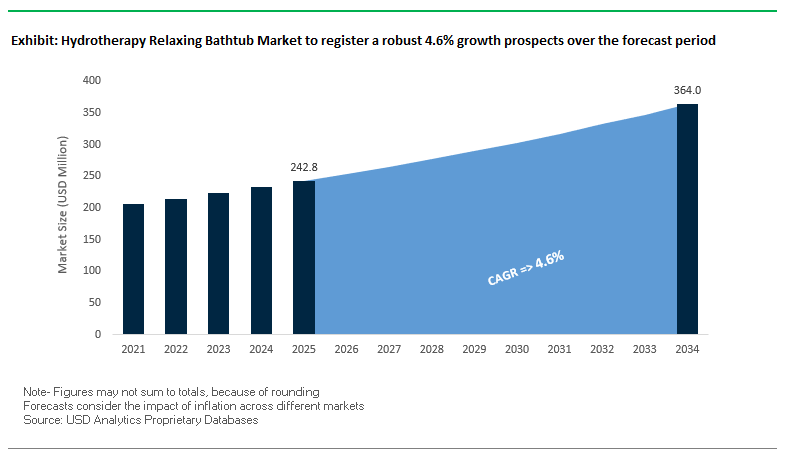
The global hydrotherapy relaxing bathtub market is projected to increase from USD 242.8 million in 2025 to USD 363.9 million by 2034, reflecting a CAGR of 4.6%. This growth is driven by consumer expenditure on home wellness solutions, integration of technology, and adoption of accessible design tenets for the elderly. From being an exclusive item in the past, hydrotherapy bathtubs now are known for their therapeutic qualities such as relief from stress, muscle recovery, and pain relief. The market also gets boosted by advances in voice control, chromotherapy, and aromatherapy systems, and also by increased focus on energy efficiency and sustainability in production
Key Insights for Industry Professionals
- Wellness & Self-Care – Hydrotherapy bathtubs are central to home spa trends, with demand rising for both relaxation and health benefits.
- Smart Technology Integration – Voice commands, app control, and personalized routines are transforming the user experience.
- Accessible Design Growth – Walk-in and low-threshold tubs with hydrotherapy features are gaining traction among older adults.
- Therapeutic Applications – Recommended by healthcare professionals for arthritis, chronic pain, and post-operative recovery.
- Eco-Friendly Manufacturing – Brands are adopting renewable materials and reducing energy consumption in production.
Hydrotherapy Relaxing Bathtub Market Analysis: Design Innovation, Accessibility, and Sustainability Reshape Global Demand
Between August 2024 and August 2025, the market of hydrotherapy relaxation bathtubs saw unprecedented product innovation, smart home integration, and environmentally friendly manufacturing. Hydro Systems launched the Anson freestanding tub with cold-plunge capability in July 2025 as a response to the heightened demand for contrast therapy for wellness and recovery. Kohler's March 2025 collaboration with Remedy Place to create an ice bath product business made Kohler a market leader in the home recovery space.
Smart home integration is also becoming a key differentiator, with November 2024 seeing Samsung and a well-being technology company partner to introduce SmartThings connectivity to hydrotherapy tubs. The integrations allow for fully customized bathing experience, from water temperature to lighting and aromatherapy. Accessibility is also showing itself to be a growth segment, with February 2025 seeing Villeroy & Boch introduce a new accessible hydrotherapy tub line to respond to aging-in-place design trends.
Sustainability continues to be a strategic priority. MTI Baths, in September 2024, highlighted its green manufacturing, such as renewable resources and energy conservation. Jacuzzi Brands continues to invest in new ergonomic and jet technology, such as its April 2025 Fuzion line that merges whirlpool and air bath functionality. International expansion initiatives, such as Superior Wellness's June 2025 acquisition of Portuguese manufacturer Portcril, indicate regional penetration of markets continues to be a competitive priority in the decade ahead
Emerging Trends and Strategic Opportunities in the Hydrotherapy Relaxing Bathtub Market
Full-Body Cryotherapy + Hydro Fusion Transforming Recovery Protocols
The convergence of cryotherapy and hydrotherapy into one unit is revolutionizing bathing system therapy potential, merging hot and cold immersion into clinically proven contrast therapy. An established method in professional sports facilities and rehabilitation clinics, it is now migrating to high-end residential and wellness tourism sectors. Alternating temperature exposure induces vascular constriction and dilation, enhancing circulation, alleviating inflammation, and speeding up muscle recovery. New research has broadened its application in the treatment of arthritis, nerve pain, and post-exercise fatigue, and is now attracting not just sports professionals but also the elderly and chronic pain patients. As manufacturers miniaturize and engineer these systems into homes, the penetration rate should take off especially in high-end home wellness markets where consumers are seeking professional-quality health technology with easy-to-use controls.
Mineral Balancing Using AI for Smooth Water Quality Management.
The complexity of ideally balancing spa water chemistry is being met by AI-powered water management systems that automatically test, analyze, and dispense chemicals. These systems do away with guesswork, providing a consistent and hygienic and skin-friendly experience. With predictive analytics and machine learning technologies, systems can anticipate pH, sanitizer, or mineral content level changes before problems occur, minimizing equipment wear and maintenance costs. The convenience aspect is a major premium driver premium models now offer smartphone connectivity, enabling owners to remotely monitor and tweak water conditions. Premium purchasers value the technology for enhancing the luxury experience by providing low-maintenance ownership while improving confidence in the tub's safety and performance.
Luxury Hotel Suite Differentiation Through In-Room Hydrotherapy
Wellness tourism expansion is creating strong incentives for high-end resorts and hotels to make hydrotherapy bathtubs signature suite amenities. These tubs, backed by multi-zone jet patterns, chromotherapy lighting, and aromatherapy infusions, are a private spa experience, driving room upgrade and guest satisfaction rates. By combining in-room hydrotherapy with wellness programs in hotels, properties can provide seamless relaxation packages, such as combining a spa massage with a personalized hydrotherapy soak. This approach resonates with the rising number of travelers who value privacy, exclusivity, and health-focused experiences over typical luxury designations. For brands competing in oversaturated hospitality environments, these synergies are a high-ROI differentiator, driving repeat visits and premium booking rates.
Postpartum Recovery-Centric Hydrotherapy Solutions
A niche but potentially profitable market is clinically engineered hydrotherapy tubs for postpartum recovery, targeted to hospitals, birthing centers, and home wellness installations for new mothers. Warm water immersion has the ability to reduce swelling, soothe muscular tension, and enhance mental well-being in the critical weeks of postpartum. Working with healthcare professionals, manufacturers can develop medically approved postpartum programs with gentle jet massage, aromatherapy, and ergonomic seating to maximize high safety and hygiene standards. Marketing through healthcare networks, maternity wellness programs, and targeted e-commerce sites could tap into a dedicated, loyal customer base. The strategy positions hydrotherapy products not just as luxury amenities, but as therapeutic devices with the seal of approval from healthcare professionals, gaining authenticity and adding their functional value.
Hydrotherapy Relaxing Bathtub Market Market Share Insights Product and Technology Landscape
Product Type Breakdown: Hydrotherapy Bathtubs Lead in Residential Wellness Adoption
At 40% market share, hydrotherapy bathtubs are still the centerpiece product category, preferred for modularity, ease of installation, and adaptability to home spa settings. Hot tubs and spas come next at 30% and have strong demand in outdoor wellness settings and hospitality uses. Walk-in tubs are increasing in popularity with aging populations that desire safety, accessibility, and therapeutic value. Hydro pools are a niche but serve high-value clinical and rehabilitation markets that pay premium prices. Overall across product categories, the trend is toward customizable wellness experiences, with manufacturers offering modular upgrades that integrate hydrotherapy with ancillary benefits like aromatherapy and chromotherapy.
.png)
Technology Breakdown: Hybrid Air + Water Jets Driving Customizable Therapy Experiences
Hybrid air and water jet systems maintain the largest 35% market share, driven by consumer demand for variable massage intensity and multi-sensory relaxation. Independent water jet systems come in at 30%, appreciated for deep tissue massage and therapeutic use. New technologies chromotherapy, aromatherapy, and smart automated control are extending the luxury character of the category, appealing to residential and hospitality consumers. App and voice control integration is specifically prevalent in higher-end segments, allowing fully personalized hydrotherapy sessions without human intervention. This layering of technology not only increases user comfort but also elevates brand positioning in the luxury wellness category.
Hydrotherapy Relaxing Bathtub Market Leaders Driving Innovation, Luxury, and Wellness Integration
Hydrotherapy relaxation bathtub industry is dominated by heritage brands and new-generation disruptors leveraging technology, design, and wellness positioning to capture market share. Some of the leaders are Jacuzzi Brands LLC, Kohler Co., American Standard Brands, Novatech Enviro Systems Private Limited, Roca Sanitario, S.A., MTI Baths, Duravit AG, Jaquar Group, TOTO Ltd., Hydro Systems, Inc., Kaldewei, Hydro Physio, Trautwein GmbH, BTL Industries, Stas Doyer, Others.
Jacuzzi Brands LLC – The Pioneering Hydrotherapy Company with Innovative Ergonomic Technology
Jacuzzi is the pinnacle of whirlpool technology and remains state-of-the-art in hydrotherapy innovation. Its product line includes tubs and hot tubs through to swim spas, all featuring patented jet systems and ergonomics. In April 2025, Jacuzzi launched the Fuzion line, blending air and whirlpool massage in a body-mind therapy experience. Strategic focus includes increasing wellness opportunities and expansion through acquisitions, reinforcing its leadership in residential and hospitality markets.
Kohler Co. – Premium Bathroom Solutions with Design Emphasis on Health
Kohler combines high-end design with in-built technology, offering hydrotherapy tubs that feature chromotherapy, sound, and programmable massage. Its March 2025 launch of the ice bath with Remedy Place shows how quickly it evolves with new wellness trends. Kohler's strategy is "Total Bathroom" solutions, which combine design and functionality for high-end customers and wellness enthusiasts.
MTI Baths – Customized Luxury and Environmentally Friendly Production Leadership
MTI Baths provides custom hydrotherapy solutions, ranging from air baths through to high-technology therapy systems like Micro-bubbles for skin well-being. MTI Baths' made-to-measure strategy is supported by its sustainability philosophy, including the utilization of renewable materials and low-energy manufacturing. MTI introduced new configurations of jets and high-technology controls in September 2024, supporting marketplace positioning as a made-to-measure company.
Hydro Systems – Personalized Wellness Solutions Coupled with Cold-Plunge
Hydro Systems marries U.S.-produced manufacturing with high-end design, offering freestanding, drop-in, and walk-in tubs. Its July 2025 introduction of the Anson tub included a cold-plunge feature, capitalizing on the growing trend of contrast temperature therapy. The company remains dedicated to its mission of providing customized, high-end bathing with state-of-the-art wellness features.
Villeroy & Boch AG – European Elegance with Accessible Hydrotherapy Focus
Villeroy & Boch is renowned for timeless design and high-quality ceramics, now extending into affordable well-being solutions. Its introduction in February 2025 of hydrotherapy baths with low thresholds is evidence of its responsiveness to demographic transformation and the aging in place of consumers. The brand's emphasis on low-noise, efficient hydrotherapy systems aligns with luxury and wellness market trends
Germany: High-Tech Wellness Engineering and Sustainable Design
Germany is a frontrunner in the hydrotherapy relaxing bathtub market, driven by its strong engineering expertise and collaboration between wellness and medical technology sectors. Manufacturers are equipping products with advanced features like automated water purification, intuitive digital control panels, and integrated safety sensors, making them suitable for both residential wellness and specialized medical use in orthopedics and elder care. This aligns with Germany’s healthcare innovation agenda, where hydrotherapy is increasingly incorporated into rehabilitation programs. Flexible and modular designs are gaining traction, allowing installations in compact urban apartments, wellness spas, and rehabilitation facilities without extensive infrastructure modifications.
Market dynamics in Germany are also shaped by consolidation trends, with larger companies acquiring niche players to expand product portfolios and offer end-to-end solutions including installation, maintenance, and user training. Energy efficiency remains a top priority, in line with the country’s Energiewende policies, prompting manufacturers to invest in low-consumption heating systems and optimized water management. These eco-friendly advancements not only meet strict EU sustainability standards but also appeal to environmentally conscious consumers who see hydrotherapy as a lifestyle investment.
United States: Rehabilitation Leadership and Home Wellness Expansion
The U.S. market is strongly anchored in rehabilitation-focused hydrotherapy solutions, particularly for post-surgery recovery and physical therapy. Hospitals and rehabilitation centers are investing in advanced hydrotherapy systems that allow precise adjustments of water pressure, temperature, and jet configurations to suit patient-specific therapeutic needs. This customization is enhanced by AI-driven interfaces and remote monitoring features, making treatment more effective for conditions such as sports injuries, arthritis, and post-stroke rehabilitation.
On the consumer side, the market is being shaped by two powerful forces: the aging population and the home wellness movement. Older adults are increasingly installing walk-in hydrotherapy bathtubs to promote safe, independent living, while wellness-focused homeowners are investing in compact, luxury-grade bathtubs to create spa-like experiences at home. The pandemic-era shift toward self-care has further boosted demand for home-based hydrotherapy, with manufacturers offering affordable, space-efficient models that make therapeutic bathing accessible beyond clinical environments.
China: Manufacturing Powerhouse and Custom Luxury Innovation
China commands a central role in the global hydrotherapy bathtub supply chain, with advanced manufacturing capabilities that support large-scale production and high customization levels. Manufacturers can quickly adapt designs to meet varying market demands, producing everything from cost-effective standard models to bespoke luxury bathtubs tailored for high-net-worth consumers. The flexibility of China’s supply chain allows rapid integration of emerging technologies like chromotherapy lighting, voice-activated controls, and energy-saving water circulation systems.
The market benefits from rising urbanization and a fast-growing middle class that values wellness-focused home upgrades. This has led to strong adoption in both residential apartments and luxury real estate developments. Government initiatives promoting “green consumption” are also influencing manufacturers to design eco-friendly models with low water and energy usage. Coupled with a robust e-commerce ecosystem on platforms like Tmall and JD.com, Chinese hydrotherapy bathtubs are reaching a broader consumer base both domestically and internationally.
Japan: Policy-Driven Elder Care and Green Transformation
Japan’s rapidly aging population is a critical driver for hydrotherapy bathtub adoption, with government policies such as the “General Principles Concerning Measures for the Aged Society” emphasizing assistive technologies that enable elderly citizens to live independently. Hydrotherapy products designed for pain management, mobility support, and overall wellness are seeing increased integration into elder care facilities and private homes. The cultural emphasis on bathing as a restorative practice further supports market acceptance.
Sustainability is another defining feature, with Japan’s “Green Transformation” policy encouraging manufacturers to produce energy-efficient and low-carbon hydrotherapy solutions. Products are often equipped with advanced heating systems that minimize energy waste and incorporate recyclable materials. Technological integration remains a hallmark of the market, with IoT-enabled systems allowing users to preset water temperature, pressure, and therapy programs, merging traditional bathing culture with modern convenience.
France: Wellness Lifestyle and Luxury Renovation Demand
In France, the hydrotherapy relaxing bathtub market is shaped by a strong cultural preference for wellness, relaxation, and non-invasive therapeutic care. Consumers are increasingly turning to hydrotherapy as a natural remedy for stress, muscle tension, and chronic pain, leading to higher demand in both private residences and boutique spas. The growing popularity of aquatic exercise and rehabilitation tools also complements the market, as consumers seek multi-functional products that combine relaxation with therapeutic benefits.
Luxury home renovation trends are a major growth driver, with homeowners investing in high-end spa-like bathroom installations. Technological enhancements, including smart controls, customizable massage jets, and chromotherapy lighting, are becoming standard in premium models. The market also benefits from France’s design-centric approach, where aesthetic integration with interior décor is as important as functionality, making hydrotherapy bathtubs both a wellness tool and a style statement.
United Kingdom: Smart Home Wellness and Accessibility Solutions
The UK market is seeing strong momentum from the home wellness trend, with a growing number of homeowners installing hydrotherapy bathtubs as part of broader home spa upgrades. This is supported by advancements in smart home technology, where connected bathroom ecosystems allow users to control bath temperature, jet patterns, and energy usage through mobile apps or voice assistants. The UK government’s smart appliance standards are also fostering adoption by promoting energy efficiency and connected device interoperability.
Accessibility is another key market driver, especially with the UK’s aging demographic. Hydrotherapy’s proven benefits for conditions like arthritis and poor circulation are encouraging adoption in both private homes and assisted living facilities. Manufacturers are responding with walk-in and low-entry designs that combine therapeutic features with safety-focused engineering. This dual emphasis on luxury wellness and medical-grade accessibility ensures the UK remains a competitive and innovation-driven market for hydrotherapy solutions.
Hydrotherapy Relaxing Bathtub Market Report Scope
Hydrotherapy Relaxing Bathtub Market
|
Parameter
|
Details
|
|
Market Size (2025)
|
$242.8 Million
|
|
Market Size (2034)
|
$363.9 Million
|
|
Market Growth Rate
|
4.6%
|
|
Segments
|
By Product Type (Hydrotherapy Bathtubs, Walk-in Tubs, Hot Tubs & Spas, Hydrotherapy Pools), By Application (Residential, Commercial (Spas & Wellness Centers, Hospitals & Clinics, Hotels & Resorts, Senior Care Facilities)), By Material (Acrylic, Fiberglass, Steel Enamel, Cast Iron, Stone), By Technology (Air Jets, Water Jets, Combined Air & Water Jets, Chromotherapy, Aromatherapy, Automated Controls), By Distribution Channel (Retail Stores, Online Channels, Direct Sales), By Design (Freestanding, Built-in, Corner, Oval)
|
|
Study Period
|
2019- 2024 and 2025-2034
|
|
Units
|
Revenue (USD)
|
|
Qualitative Analysis
|
Porter’s Five Forces, SWOT Profile, Market Share, Scenario Forecasts, Market Ecosystem, Company Ranking, Market Dynamics, Industry Benchmarking
|
|
Companies
|
Jacuzzi Brands LLC, Kohler Co., American Standard Brands, Novatech Enviro Systems Private Limited, Roca Sanitario, S.A., MTI Baths, Duravit AG, Jaquar Group, TOTO Ltd., Hydro Systems, Inc., Kaldewei, Hydro Physio, Trautwein GmbH, BTL Industries, Stas Doyer, Others.
|
|
Countries
|
US, Canada, Mexico, Germany, France, Spain, Italy, UK, Russia, China, India, Japan, South Korea, Australia, South East Asia, Brazil, Argentina, Middle East, Africa
|
Hydrotherapy Relaxing Bathtub Market Segmentation
By Product
- Hydrotherapy Bathtubs
- Walk-in Tubs
- Hot Tubs & Spas
- Hydrotherapy Pools
By Application
- Residential
- Commercial
- Spas & Wellness Centers
- Hospitals & Clinics
- Hotels & Resorts
- Senior Care Facilities
By Material
- Acrylic
- Fiberglass
- Steel Enamel
- Cast Iron
- Stone
By Technology
- Air Jets
- Water Jets
- Combined Air & Water Jets
- Chromotherapy
- Aromatherapy
- Automated Controls
By Distribution Channel
- Retail Stores
- Online Channels
- Direct Sales
By Design
- Freestanding
- Built-in
- Corner
- Oval
Countries Analyzed
- North America (US, Canada, Mexico)
- Europe (Germany, UK, France, Spain, Italy, Russia, Rest of Europe)
- Asia Pacific (China, India, Japan, South Korea, Australia, South East Asia, Rest of Asia)
- South America (Brazil, Argentina, Rest of South America)
- Middle East and Africa (Saudi Arabia, UAE, Rest of Middle East, South Africa, Egypt, Rest of Africa)
Top Companies in Hydrotherapy Relaxing Bathtub Market
- Jacuzzi Brands LLC
- Kohler Co.
- American Standard Brands
- Novatech Enviro Systems Private Limited
- Roca Sanitario S.A.
- MTI Baths
- Duravit AG
- Jaquar Group
- TOTO Ltd.
- Hydro Systems Inc.
- Kaldewei
- Hydro Physio
- Trautwein GmbH
- BTL Industries
- Stas Doyer
* List Not Exhaustive
Research Coverage
This USDAnalytics study on the Hydrotherapy Relaxing Bathtub Market provides an end-to-end view of value creation across products, materials, technologies, channels, and designs. This report investigates demand drivers such as home-wellness adoption, smart bathroom convergence, and accessibility retrofits; breakthroughs including cryotherapy-hydro fusion and AI water-quality management; and regional expansion plays in the U.S., Europe, and Asia. It analysis reviews competitive moves by global and niche brands, draws out profit pools in residential vs. commercial settings, and highlights growth pockets in luxury hospitality, postpartum recovery, and aging-in-place. With market sizing, forecasts, vendor mapping, and regulatory context, this report is an essential resource for strategy, product, and investment teams planning for 2025–2034. Scope includes-
- Segmentation
- By Product: Hydrotherapy Bathtubs; Walk-in Tubs; Hot Tubs & Spas; Hydrotherapy Pools
- By Application: Residential; Commercial
- By Material: Acrylic; Fiberglass; Steel Enamel; Cast Iron; Stone
- By Technology: Air Jets; Water Jets; Combined Air & Water Jets; Chromotherapy; Aromatherapy; Automated Controls
- By Distribution Channel: Retail Stores; Online Channels; Direct Sales
- By Design: Freestanding; Built-in; Corner; Oval
- Geographic Scope: Analysis spans 25+ countries across North America, Europe, Asia Pacific, Latin America, and the Middle East & Africa.
- Time Frame: Historic data 2021–2024; forecasts 2025–2034 with market size, shares, and CAGR.
- Companies: Analysis/profiles of 15+ companies including Jacuzzi Brands LLC, Kohler, American Standard, MTI Baths, Duravit, Jaquar, TOTO, Hydro Systems, Villeroy & Boch, Kaldewei, Hydro Physio, Trautwein, BTL Industries, Stas Doyer, Roca Sanitario, and others.
Methodology
Market sizing applies a blended top-down/bottom-up approach: triangulating manufacturer revenues, channel sell-out, and installation base data with capacity additions and average selling prices, then normalizing by material mix, technology attachment rates, and design shares. Primary research (executive interviews across OEMs, distributors, hospitality, healthcare, and installers) validates secondary sources (company filings, standards, trade data). Forecasts use driver-based models (aging population, wellness spending, urban housing, retrofit rates), technology S-curves (AI controls, cryo-hydro units), and scenario analysis for pricing, input costs, and regulatory shifts. Currency is USD, inflation-adjusted; CAGRs are 2025–2034.
Deliverables:
- Comprehensive Market Research Report (PDF and Excel) with detailed tables, charts, and interactive visualizations.
- Country-Specific Forecasts & Analysis.
- Segment-Wise Revenue Forecasts (2025–2034).
- Competitive Analysis, Benchmarking, and SWOT Profiles.
- Recent Developments & Innovation Tracker.
- Executive Summary & Analyst Commentary.
- Post-Purchase Analyst Support for Client-Specific Questions and Custom Data Requirements.
