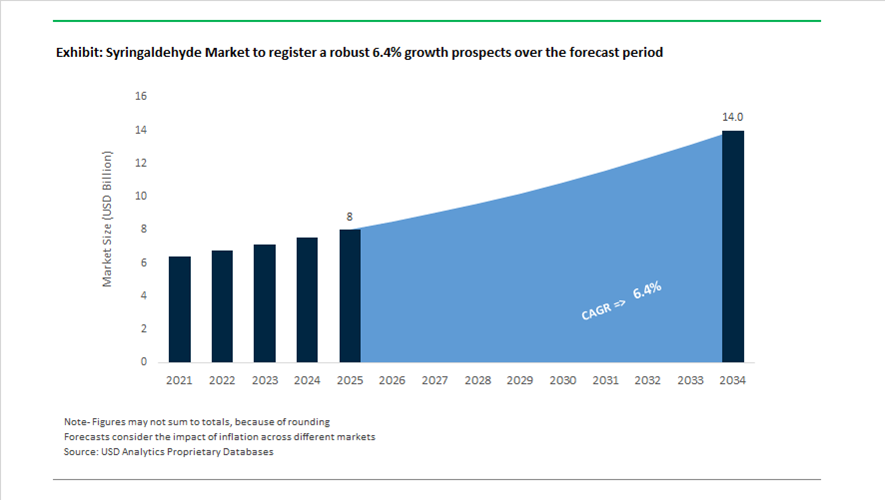
Syringaldehyde Market 2025–2034: $8 Billion to $14 Billion at 6.4% CAGR Driven by Lignin Valorization, Bio-Based Aromatics, and Green Chemistry Mandates
The global syringaldehyde market is valued at $8 billion in 2025 and is projected to reach $14 billion by 2034, expanding at a CAGR of 6.4%. Syringaldehyde, a lignin-derived phenolic aldehyde, is gaining strategic importance as a bio-based aromatic intermediate used in flavors and fragrances, active pharmaceutical ingredient (API) synthesis, agrochemicals, and specialty polymers. Regulatory pressure on fossil-derived aromatics, rising demand for natural-identical fragrance ingredients, and the commercialization of lignin-to-aromatics technologies are reshaping the supply landscape. Increasing integration of biomass valorization, oxidative depolymerization of black liquor, and circular carbon pathways are positioning syringaldehyde as a high-value co-product in biorefinery clusters rather than a niche specialty molecule.
Technology breakthroughs and circular feedstock commercialization accelerated in 2024 and 2025. Throughout 2024, LanzaTech and Sekisui Chemical advanced waste-to-syngas-to-aromatics pathways, enabling municipal solid waste conversion into renewable aromatic building blocks suitable for syringaldehyde synthesis. In 2024 and 2025, pilot plants in Scandinavia and North America scaled oxidative lignin depolymerization processes, producing commercially competitive streams of vanillin and syringaldehyde from pulp and paper black liquor. In May 2024, Symrise introduced SuperBloom and SymAqua fragrance platforms utilizing aromatic aldehydes, including syringaldehyde derivatives, to deliver long-lasting natural-identical scent profiles in home care applications. In August 2024, International Flavors & Fragrances expanded its Shanghai Creative Center with advanced sensory science laboratories focused on incorporating bio-based intermediates into customized fragrance systems for Asian markets. During 2024 and 2025, Emerald Kalama implemented process optimizations to increase yields of 99%+ high-purity syringaldehyde targeting pharmaceutical precursor applications. In 2025, new EU chemical sourcing transparency regulations incentivized brands to adopt biomass-certified aromatic aldehydes to mitigate carbon taxation exposure.
Policy alignment and research innovation intensified in 2026. In January 2026, researchers at the Max Planck Institute for Coal Research published a study demonstrating an illuminated flow reactor capable of scalable production of biomass-derived phenolic aldehydes, significantly improving industrial feasibility. In the same month, India launched funding initiatives under the National Green Hydrogen Mission encouraging integrated biomass-to-chemical clusters, promoting lignin valorization streams that include syringaldehyde extraction from agricultural residues. Also in January 2026, ANERT invited bids for biomass pilot projects in Kerala to demonstrate localized conversion of lignocellulosic feedstocks into green chemicals and fuels. In May 2024, IFRA issued policy recommendations ahead of EU elections advocating regulatory support for green chemistry and bio-based aldehydes, reinforcing substitution trends away from petrochemical aromatics. In May 2024, Merck announced the acquisition of Mirus Bio, strengthening its life science supply chain integration, indirectly supporting increased pharmaceutical demand for high-purity aromatic intermediates.
Structural Trends and High-Value Opportunities in the Syringaldehyde Market
Industrial Upscaling of Syringaldehyde as a Sustainable Platform for Aromatic Polymers
The syringaldehyde market is transitioning from niche lignin valorization into an industrially relevant platform for sustainable aromatic polymers. Major chemical manufacturers are actively reducing dependence on fossil-based phenols by integrating syringaldehyde derived from hardwood lignin into epoxy resins, polycarbonates, and high-performance adhesive systems. The molecule’s dimethoxy-substituted aromatic structure delivers higher thermal stability and improved glass transition temperatures, making it particularly attractive for weather-resistant coatings, structural composites, and insulation materials where long-term thermal endurance is non-negotiable.
A decisive inflection point was reached in late 2025, when a peer-reviewed study in ACS Sustainable Chemistry & Engineering demonstrated oxidative depolymerization routes capable of achieving ~20 wt% yields of aromatic aldehydes, including syringaldehyde, from poplar lignin. This yield threshold materially improves process economics, enabling syringaldehyde to function as a true drop-in alternative to Bisphenol A in resin synthesis rather than a low-volume specialty additive.
Capital allocation is following this chemistry shift. Europe’s first industrial bio-aromatics line, the VITO LignoValue Pilot Plant, reached full operational readiness during 2024–2025. The facility is designed to support multi-ton trials of lignin-derived syringaldehyde for polyurethane insulation foams and acrylic resins, directly aligning with EU circular economy objectives and accelerating commercial qualification by downstream polymer producers.
Direct Sourcing for Specialty APIs and Molecular Hybridization Strategies
Parallel to polymer markets, pharmaceutical R&D is repositioning syringaldehyde as a strategic fine chemical rather than a legacy intermediate. Historically associated with the synthesis of trimethoprim, syringaldehyde is now being explored as a chiral and multifunctional scaffold for next-generation APIs targeting metabolic, inflammatory, and oncological pathways.
In December 2025, researchers affiliated with the National Institutes of Health published data on molecular hybridization strategies that combine syringaldehyde with fibrate pharmacophores. The resulting derivatives exhibited multi-target lipid-lowering activity, highlighting syringaldehyde’s ability to support polypharmacological design rather than single-mechanism drugs. This positions the molecule squarely within the evolving paradigm of chronic disease management, where multifunctional actives are favored over narrowly targeted compounds.
On the supply side, purity has become a critical commercial differentiator. Fine chemical producers in China, including Ningbo Inno Pharmchem, have standardized pharmaceutical-grade syringaldehyde at ≥99.0% purity. This specification is increasingly mandated for anti-tumorigenic and anti-inflammatory drug synthesis to meet global regulatory expectations for impurity profiles, reproducibility, and toxicological safety in regulatory filings.
Clean-Label Natural Preservatives for Food and Cosmetics
One of the most compelling growth opportunities for syringaldehyde lies in clean-label preservation systems for food and personal care. Regulatory scrutiny and consumer resistance toward synthetic antioxidants such as BHT and parabens are accelerating the adoption of bio-derived alternatives with multifunctional efficacy. Syringaldehyde’s phenolic structure enables strong peroxyl radical scavenging, positioning it as a high-potency antioxidant for edible coatings, functional foods, and premium skincare formulations.
Comparative antioxidant studies indicate that syringaldehyde exhibits up to six times higher activity than protocatechuic aldehyde, with Trolox Equivalent Values exceeding those of vanillin and related phenolics. This superior potency allows formulators to achieve oxidative stability at lower inclusion rates, supporting minimalist ingredient lists and cost optimization.
Beyond oxidation control, syringaldehyde demonstrates validated antimicrobial activity against pathogens such as Staphylococcus aureus and Salmonella enterica. This dual antioxidant–antimicrobial profile enables cosmetic and food manufacturers to replace multiple synthetic preservatives with a single bio-based ingredient, directly aligning with 2025 market trends favoring plant-derived, transparent formulations.
Bio-Based Chelating Agents for High-Efficiency Industrial Applications
Syringaldehyde also presents a structurally underexploited opportunity as a biodegradable chelating agent in industrial processing. Its ability to coordinate metal ions makes it a viable alternative to persistent chelators such as EDTA, particularly in pulp and paper bleaching, water treatment, and Clean-in-Place systems.
Industry briefings in October 2025 emphasized the growing role of fine chemicals in optimizing hydrogen peroxide bleaching. Trace metal ions such as iron and manganese catalyze peroxide decomposition, reducing brightness efficiency and increasing chemical consumption. Syringaldehyde-based chelants can selectively sequester these metals, stabilizing bleaching conditions and enabling higher brightness at lower peroxide dosages, directly improving mill economics.
From an environmental standpoint, syringaldehyde derivatives offer a clear advantage. Unlike conventional aminopolycarboxylate chelators, they are readily biodegradable and exhibit lower persistence in aquatic systems. This makes them particularly attractive for boiler descaling, CIP operations, and water treatment in jurisdictions governed by strict effluent controls, including those aligned with the EU Circular Economy Action Plan. As regulatory pressure on non-biodegradable auxiliaries intensifies, syringaldehyde-based chelation represents a scalable, compliance-driven growth avenue.
Syringaldehyde Market Share and Segmentation Insights
High Purity Syringaldehyde Leads Market with Pharmaceutical and Flavor Grade Demand
High purity syringaldehyde accounted for 58.60% of the syringaldehyde market in 2025, reflecting strong demand from pharmaceutical intermediates, flavors and fragrances, and food-grade applications that require strict impurity control and consistent quality. High purity grades are critical for ensuring regulatory compliance, product safety, and sensory performance in high-value end uses. Advanced purification technologies and quality assurance systems support production of pharmaceutical-grade material. The 2025 market driver centers on pharmaceutical synthesis demand, where syringaldehyde is used as a key intermediate in drug manufacturing, prompting investments in high-purity production processes to meet stringent global regulatory standards.
Pharmaceutical Intermediates Segment Drives Syringaldehyde Consumption with Antibiotic Production Demand
Pharmaceutical intermediates accounted for 38.60% of syringaldehyde market demand in 2025, making it the leading application due to its role as a key building block in trimethoprim and other antimicrobial drug synthesis. The scale of global generic pharmaceutical manufacturing, particularly in Asia, ensures stable and recurring demand. Syringaldehyde is essential for maintaining consistent drug quality and synthesis efficiency in antibiotic production. The 2025 trend highlights stable antibiotic demand, as trimethoprim remains widely used in human and veterinary medicine, supported by its inclusion in essential medicines lists, sustaining long-term consumption of syringaldehyde in pharmaceutical supply chains.
Syringaldehyde Market Competitive Landscape
The syringaldehyde market in 2026 is shaped by lignin valorization, enzymatic biocatalysis, and oxidative depolymerization technologies. Key players are advancing bio-based aromatic intermediates for pharmaceuticals, flavors, and clean-label applications, aligning with regulatory incentives for sustainable feedstocks and low-carbon chemical production.
Borregaard Scales Lignin-Based Syringaldehyde Production Through Advanced Biorefinery Integration
Borregaard leads the syringaldehyde market with its fully integrated lignin biorefinery platform. The company reported record EBITDA of NOK 1,878 million in 2025, driven by BioSolutions and BioMaterials growth. Its Sarpsborg facility generated NOK 7,713 million in revenue, producing high-purity lignin-derived aromatics with low carbon footprint. Strategic portfolio optimization included NOK 245 million impairment to focus on high-margin lignin valorization assets. Borregaard’s syringaldehyde is widely used in pharmaceutical intermediates and agricultural antioxidants due to its natural origin. Its vertically integrated biomass processing ensures feedstock security and sustainable chemical production.
Solvay Advances Bio-Sourced Aromatic Chemistry with Decarbonized Supply Chain and Cost Optimization
Solvay is strengthening its position in bio-based aromatic intermediates through operational efficiency and sustainability-led transformation. The company targets €300 million in structural cost savings by end-2026 to fund energy transition initiatives. Its Italy-based bio-sourced silica line signals broader expansion into renewable aromatic derivatives, including syringaldehyde applications. Solvay has reduced Scope 1 and 2 emissions by 29% since 2021, enhancing competitiveness in ESG-driven markets. Growth in Peroxides and Bicarbonate segments supports R&D in oxidative synthesis of fine chemicals. Its decarbonized supply chain aligns with demand from FMCG and personal care manufacturers for sustainable ingredients.
IFF Integrates Syringaldehyde into Flavor Innovation and Biotech-Derived Aroma Systems
IFF leverages its bioscience platform to integrate syringaldehyde into advanced flavor and fragrance systems. The compound’s sweet, smoky, vanilla-like profile supports 2026 trends such as "swicy" and nostalgia-driven flavors. Encapsulation technologies enhance stability and controlled release in food, beverage, and fabric care applications. IFF is developing enzyme-based pathways to synthesize syringaldehyde from renewable biomass and corn feedstocks. Its digital beverage innovation platforms utilize syringaldehyde derivatives to replicate oak-aged sensory profiles without long maturation cycles. The company’s applied science approach strengthens its leadership in bio-based aromatic ingredients.
Jiaxing Zhonghua Strengthens Global Supply of Synthetic Syringaldehyde Through Large-Scale Vertical Integration
Jiaxing Zhonghua dominates the synthetic syringaldehyde segment through large-scale, vertically integrated manufacturing in China. Its "Eternal Pearl" brand delivers high-purity aromatic aldehydes (0.98%–0.99%), widely used in pharmaceuticals and fine chemicals. The company produces key intermediates such as guaiacol and ethyl vanillin, ensuring stable supply chains. Strategic focus on anti-counterfeiting and digital traceability enhances credibility in export markets across Europe and North America. Its cost-efficient production supports large-volume demand for trimethoprim synthesis and other antibacterial intermediates. Strong manufacturing scale positions the company as a key global supplier.
Merck Expands High-Purity Syringaldehyde for Pharmaceutical Research and Bioeconomy Applications
Merck serves the high-purity syringaldehyde segment through its Life Science division, supporting advanced pharmaceutical and biochemical research. Its analytical-grade materials are used in studies involving lignin bioconversion and microbial synthesis pathways. Expansion in APAC markets through direct-to-lab distribution strengthens its reach in biotechnology research hubs. Merck’s syringaldehyde is critical for developing next-generation nutraceuticals and food preservatives due to its antioxidant and antimicrobial properties. Its digital supply chain ensures just-in-time delivery for research and clinical applications. High-purity standards and regulatory compliance underpin its competitive positioning.
Symrise Drives Clean-Label Fragrance Innovation Using Syringaldehyde in Functional Consumer Products
Symrise is advancing syringaldehyde applications in functional fragrance and personal care formulations. Its SuperBloom and SymAqua technologies enhance scent stability and intensity in detergents and fabric softeners. The company is leveraging syringaldehyde as a natural antioxidant alternative to synthetic stabilizers like BHA/BHT in cosmetics. Data-driven "social listening" enables Symrise to tailor fragrance profiles for fast-growing Asia-Pacific markets. Its proprietary bio-based molecule blending creates unique fragrance signatures for premium brands. Strong alignment with clean-label and skin-friendly chemistry trends supports growth in sustainable consumer products.
United States Syringaldehyde Industry Strengthened by Pharma Resilience and Lignin Valorization
The United States syringaldehyde industry is gaining strategic relevance as pharmaceutical supply chain resilience and bio-aromatics innovation converge. In 2025, expanded federal funding for domestic active pharmaceutical ingredient manufacturing directly stimulated demand for syringaldehyde as a key intermediate in antibacterial and antihyperglycemic drug synthesis, including trimethoprim-based formulations. Parallel to pharmaceutical demand, lignin-to-aromatics research has accelerated under funding from the U.S. Department of Energy, with multiple late-2025 pilot projects focusing on high-purity syringaldehyde extraction from hardwood lignin. These initiatives are designed to reduce reliance on fossil-derived aromatic aldehydes while improving yield consistency at scale.
Downstream diversification is reinforcing volume stability. U.S. fragrance houses have expanded “natural-identical” scent portfolios since late 2024, incorporating syringaldehyde for its vanilla-like and balsamic sensory profile as a sustainable alternative to synthetic vanillin in premium perfumery. At the formulation level, the Environmental Protection Agency’s 2025 Safer Choice updates have incentivized cleaning and personal care manufacturers to adopt bio-based antioxidants, positioning syringaldehyde as a multifunctional ingredient with both antioxidant and anti-inflammatory attributes. On the sourcing side, partnerships with sustainable forestry initiatives in the Pacific Northwest are enabling localized extraction from maple and spruce bark, improving traceability and biodiversity compliance.
China Syringaldehyde Industry Anchored in Cost Leadership and High-Purity Scaling
China remains the global volume and cost leader in syringaldehyde production, while simultaneously upgrading purity standards to serve regulated end-markets. The Ministry of Industry and Information Technology’s 2025–2026 high-end chemical roadmap has pushed domestic producers toward 99.0% assay purity to align with international pharmaceutical specifications. In response, chemical parks in Zhejiang completed closed-loop waste treatment upgrades by late 2025, enabling the recovery of phenolic aldehydes from pulp and paper black liquor streams. This integration of waste valorization has lowered marginal production costs while improving environmental compliance.
Export-oriented scaling continues to define China’s competitive position. Producers such as Ningbo Inno Pharmchem expanded fiber drum and specialty packaging capacity in 2025 to meet rising European cosmetics demand. Beyond traditional applications, Chinese materials research institutes are exploring syringaldehyde derivatives for OLED color filters and moisture-sensitive encapsulation, leveraging the compound’s molecular stability. At the process level, the government’s Dual Carbon targets for 2026 are accelerating a shift from hazardous catalysts toward biocatalysis and electrochemical oxidation routes, reshaping synthesis economics without compromising throughput.
India Syringaldehyde Industry Driven by Import Substitution and Waste-to-Value Models
India’s syringaldehyde industry is transitioning from import dependence to domestic value creation under strong policy support. The Production Linked Incentive scheme for specialty chemicals, with realized investments of ₹1.76 lakh crore by March 2025, has catalyzed new capacity for aromatic aldehydes to reduce reliance on Chinese supply chains. This momentum is reinforced by agrochemical diversification, where firms such as Simalin Chemicals have begun using syringaldehyde as a stabilized intermediate in next-generation pesticide formulations that comply with stricter EU toxicity norms.
Institutional funding mechanisms are accelerating innovation. In late 2025, NITI Aayog operationalized a dedicated Chemical Fund offering Viability Gap Funding for waste-to-value startups, including lignin-derived syringaldehyde platforms. Pharmaceutical infrastructure expansion is further amplifying demand. With India’s pharma industry projected to reach $130 billion by 2030, domestic procurement of syringaldehyde for anti-tumor and antihyperglycemic drug synthesis increased by an estimated 12% in 2025, underscoring its growing role as a strategic fine chemical building block.
Germany Syringaldehyde Industry Positioned for Bio-Based Polymers and Regulatory Substitution
Germany’s syringaldehyde landscape is defined by sustainability-led substitution and advanced materials research. In late 2025, BASF integrated bio-based syringaldehyde precursors into its Ludwigshafen Verbund platform, replacing petroleum-derived aromatics within segments of its performance chemicals portfolio. This move reflects broader industry efforts to future-proof specialty intermediates against tightening EU environmental regulations.
Regulatory pressure is translating into material innovation. As Germany prepares for the March 2026 European Chemicals Agency opinion on PFAS, manufacturers are pivoting toward syringaldehyde-based biodegradable resins and adhesives for wood, paper, and construction applications. Concurrently, the German Aerospace Center and industry partners piloted syringaldehyde-based epoxy and polyurethane systems in 2025, targeting sustainable aerospace coatings and composite materials. These initiatives position syringaldehyde as a functional bio-aromatic enabling compliance, performance, and lifecycle sustainability.
Comparative Snapshot: Syringaldehyde Industry by Country
Syringaldehyde Market County Level Snapshot
Country
Primary Demand Driver
Key Applications
Structural Industry Direction
United States
Pharma resilience, lignin valorization
APIs, fragrances, green cleaners
Bio-based sourcing and domestic supply security
China
Cost leadership, purity upgrades
Pharma intermediates, cosmetics, electronics
High-volume exports with green synthesis shift
India
Import substitution, agrochemicals
Pesticides, pharma APIs
Waste-to-value and policy-driven capacity build-out
Germany
Sustainability regulation, polymers
Bio-resins, aerospace coatings
PFAS substitution and advanced material R&D
Syringaldehyde Market Report Scope
Syringaldehyde Market
Parameter
Details
Market Size (2025)
$8 Billion
Market Size (2034)
$14 Billion
Market Growth Rate
6.4%
Segments
By Purity Level (Standard Purity, High Purity), By Source (Natural, Synthetic), By Distribution Channel (Direct Sales, Distributors and Wholesalers, Online Sales), By Application (Pharmaceutical Intermediates, Flavors and Fragrances, Food and Beverage, Chemical Intermediates, Cosmetics and Personal Care, Biotechnology)
Study Period
2019- 2025 and 2026-2034
Units
Revenue (USD)
Qualitative Analysis
Porter’s Five Forces, SWOT Profile, Market Share, Scenario Forecasts, Market Ecosystem, Company Ranking, Market Dynamics, Industry Benchmarking
Companies
TCI Chemicals, Merck KGaA, Thermo Fisher Scientific Inc., Symrise AG, BASF SE, Huntsman Corporation, International Flavors and Fragrances Inc., Zhejiang Longsheng Group Co., Ltd., Ningbo Inno Pharmchem Co., Ltd., Kiri Industries Ltd., Simalin Chemicals Industries Limited, Target Molecule Corp., AK Scientific, Inc., Barentz International, AA Blocks
Countries
US, Canada, Mexico, Germany, France, Spain, Italy, UK, Russia, China, India, Japan, South Korea, Australia, South East Asia, Brazil, Argentina, Middle East, Africa
Syringaldehyde Market Segmentation
By Purity Level
Standard Purity
High Purity
By Source
Natural
Synthetic
By Distribution Channel
Direct Sales
Distributors and Wholesalers
Online Sales
By Application
Pharmaceutical Intermediates
Flavors and Fragrances
Food and Beverage
Chemical Intermediates
Cosmetics and Personal Care
Biotechnology
By Region
North America (United States, Canada, Mexico)
Europe (Germany, France, United Kingdom, Spain, Italy, Rest of Europe)
Asia Pacific (China, India, Japan, South Korea, Australia, Rest of APAC)
South and Central America (Brazil, Argentina, Rest of SCA)
Middle East and Africa (Saudi Arabia, UAE, South Africa, Rest of Middle East, Rest of Africa)
2. Syringaldehyde Market Landscape & Outlook (2025–2034)
2.1. Introduction to Syringaldehyde Market
2.2. Market Valuation and Growth Projections (2025–2034)
2.3. Demand Drivers: Lignin Valorization, Bio-Based Aromatics, and Green Chemistry Mandates
2.4. Strategic Developments: Biorefinery Integration, Circular Feedstocks, and Technology Commercialization
2.5. Market Dynamics: Regulatory Pressure on Fossil Aromatics and Natural-Identical Ingredient Adoption
3. Innovations Reshaping the Syringaldehyde Market
3.1. Trend: Industrial Upscaling for Sustainable Aromatic Polymer Applications
3.2. Trend: API Sourcing and Molecular Hybridization in Pharmaceutical R&D
3.3. Opportunity: Clean-Label Antioxidants and Preservatives in Food and Cosmetics
3.4. Opportunity: Bio-Based Chelating Agents for Industrial Processing
4. Competitive Landscape and Strategic Initiatives
4.1. Mergers and Acquisitions
4.2. R&D and Material Innovation
4.3. Sustainability and ESG Strategies
4.4. Market Expansion and Regional Focus
5. Market Share and Segmentation Insights: Syringaldehyde Market
5.1. By Purity Level
5.1.1. Standard Purity
5.1.2. High Purity
5.2. By Source
5.2.1. Natural
5.2.2. Synthetic
5.3. By Distribution Channel
5.3.1. Direct Sales
5.3.2. Distributors and Wholesalers
5.3.3. Online Sales
5.4. By Application
5.4.1. Pharmaceutical Intermediates
5.4.2. Flavors and Fragrances
5.4.3. Food and Beverage
5.4.4. Chemical Intermediates
5.4.5. Cosmetics and Personal Care
5.4.6. Biotechnology
5.5. By Region
5.5.1. North America
5.5.2. Europe
5.5.3. Asia Pacific
5.5.4. South and Central America
5.5.5. Middle East and Africa
6. Country Analysis and Outlook of Syringaldehyde Market
6.1. United States
6.2. Canada
6.3. Mexico
6.4. Germany
6.5. France
6.6. Spain
6.7. Italy
6.8. UK
6.9. Russia
6.10. China
6.11. India
6.12. Japan
6.13. South Korea
6.14. Australia
6.15. South East Asia
6.16. Brazil
6.17. Argentina
6.18. Middle East
6.19. Africa
7. Syringaldehyde Market Size Outlook by Region (2025–2034)
7.1. North America Syringaldehyde Market Size Outlook to 2034
7.1.1. By Purity Level
7.1.2. By Source
7.1.3. By Distribution Channel
7.1.4. By Application
7.1.5. By Region
7.2. Europe Syringaldehyde Market Size Outlook to 2034
7.2.1. By Purity Level
7.2.2. By Source
7.2.3. By Distribution Channel
7.2.4. By Application
7.2.5. By Region
7.3. Asia Pacific Syringaldehyde Market Size Outlook to 2034
7.3.1. By Purity Level
7.3.2. By Source
7.3.3. By Distribution Channel
7.3.4. By Application
7.3.5. By Region
7.4. South America Syringaldehyde Market Size Outlook to 2034
7.4.1. By Purity Level
7.4.2. By Source
7.4.3. By Distribution Channel
7.4.4. By Application
7.4.5. By Region
7.5. Middle East and Africa Syringaldehyde Market Size Outlook to 2034
7.5.1. By Purity Level
7.5.2. By Source
7.5.3. By Distribution Channel
7.5.4. By Application
7.5.5. By Region
8. Company Profiles: Leading Players in the Syringaldehyde Market
8.1. TCI Chemicals
8.2. Merck KGaA
8.3. Thermo Fisher Scientific Inc.
8.4. Symrise AG
8.5. BASF SE
8.6. Huntsman Corporation
8.7. International Flavors and Fragrances Inc.
8.8. Zhejiang Longsheng Group Co., Ltd.
8.9. Ningbo Inno Pharmchem Co., Ltd.
8.10. Kiri Industries Ltd.
8.11. Simalin Chemicals Industries Limited
8.12. Target Molecule Corp.
8.13. AK Scientific, Inc.
8.14. Barentz International
8.15. AA Blocks
9. Methodology
9.1. Research Scope
9.2. Market Research Approach
9.3. Market Sizing and Forecasting Model
9.4. Research Coverage
9.5. Data Horizon
9.6. Deliverables
10. Appendix
10.1. Acronyms and Abbreviations
10.2. List of Tables
10.3. List of Figures
Syringaldehyde Market Segmentation
By Purity Level
Standard Purity
High Purity
By Source
Natural
Synthetic
By Distribution Channel
Direct Sales
Distributors and Wholesalers
Online Sales
By Application
Pharmaceutical Intermediates
Flavors and Fragrances
Food and Beverage
Chemical Intermediates
Cosmetics and Personal Care
Biotechnology
By Region
North America (United States, Canada, Mexico)
Europe (Germany, France, United Kingdom, Spain, Italy, Rest of Europe)
Asia Pacific (China, India, Japan, South Korea, Australia, Rest of APAC)
South and Central America (Brazil, Argentina, Rest of SCA)
Middle East and Africa (Saudi Arabia, UAE, South Africa, Rest of Middle East, Rest of Africa)
The syringaldehyde market is valued at $8 billion in 2025 and is projected to reach $14 billion by 2034, growing at a CAGR of 6.4%. Growth is driven by increasing demand for bio-based aromatics, pharmaceutical intermediates, and sustainable chemical solutions derived from lignin valorization pathways.
Lignin valorization is transforming syringaldehyde into a high-value co-product of biorefineries. Advanced oxidative depolymerization of lignin enables scalable production from biomass and pulp industry waste streams. This reduces reliance on fossil-based aromatics while improving circular carbon utilization and process economics.
Syringaldehyde is widely used as a key intermediate in antibiotic synthesis, including trimethoprim, and is increasingly explored for multifunctional drug development. High-purity grades above 99% are essential for regulatory compliance, making it a critical building block in modern API manufacturing and advanced therapeutic research.
Syringaldehyde is gaining traction as a clean-label antioxidant and antimicrobial agent in food preservation and skincare formulations. Its strong radical scavenging activity and ability to replace synthetic preservatives like BHT and parabens make it attractive for natural and sustainable product formulations.
Key players include TCI Chemicals, Merck KGaA, Thermo Fisher Scientific, Symrise, BASF, and International Flavors & Fragrances. Companies such as Ningbo Inno Pharmchem and Kiri Industries focus on large-scale production, while others lead in high-purity and specialty applications for pharma and fragrances.