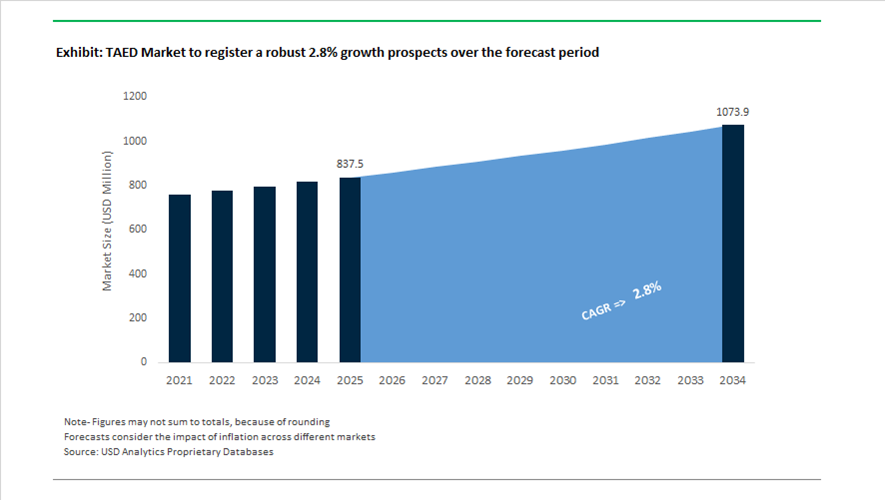
TAED Market 2025–2034: $837.5 Million to $1,073.8 Million at 2.8% CAGR Driven by Cold-Wash Detergents, EPA Safer Choice Recognition, and Microgranular Innovation
The global TAED (Tetraacetylethylenediamine) market is valued at $837.5 million in 2025 and is projected to reach $1,073.8 million by 2034, expanding at a CAGR of 2.8%. TAED remains the dominant bleach activator used in oxygen-based detergent systems, enabling effective stain removal and microbial disinfection at low washing temperatures. Rising adoption of cold-water laundry detergents, enzyme-bleach hybrid systems, and eco-labeled detergent capsules is sustaining structural demand across household, healthcare, hospitality, and industrial cleaning applications. Increasing regulatory scrutiny of chlorine-based bleach chemistries, combined with biodegradability mandates and carbon footprint reduction targets, is reinforcing TAED’s position as a preferred low-temperature peracetic acid precursor in sustainable hygiene formulations.
Capacity expansion and process optimization defined 2024. In early 2024, Henkel completed a 25% capacity expansion at its Düsseldorf TAED facility to strengthen supply resilience for its proprietary laundry brands amid accelerating demand for sustainable cleaning solutions. During 2024 and 2025, WeylChem implemented gas-phase oxidation technologies that reduce energy consumption and CO₂ emissions during TAED synthesis, improving cost efficiency and environmental performance. In mid-2024, Warwick Chemicals, a Lubrizol division and global market leader, introduced a microgranular TAED grade engineered for rapid dissolution in ultra-low temperature wash cycles, addressing residue concerns in modern cold-wash detergents. Throughout 2024 and 2025, the retail shift toward detergent capsules surpassing powders in major European markets such as the UK and Germany drove innovation in encapsulated and co-granulated TAED grades to ensure compatibility with liquid-filled pods and extended shelf-life stability.
Regulatory alignment and formulation innovation intensified in 2025 and early 2026. In early 2025, TAED was prioritized on the U.S. EPA Safer Choice list, accelerating North American transition from chlorine-based bleaches to oxygen-based systems incorporating TAED. The 2025 revision of the EU Detergent Regulation mandated higher biodegradability and ingredient transparency, reinforcing TAED as the standard activator in eco-labeled detergent capsules. In early 2025, European formulators launched enzyme-TAED hybrid bleach systems capable of removing protein-based stains and delivering microbial control at temperatures as low as 20°C, expanding applications in healthcare and hospitality laundering. In late 2025, institutional on-demand laundry providers increased procurement of cold-water specific detergents, boosting demand for high-solubility granular TAED. In February 2026, Acuro Organics introduced specialized TAED-based soaking agents optimized for surgical instrument sterilization and food-grade surface disinfection. By late 2025 and into 2026, supply chain normalization and improved ethylenediamine feedstock management by major producers such as Zhejiang Jinke and Warwick stabilized TAED pricing dynamics, supporting predictable procurement cycles across global detergent manufacturers.
Structural Trends and Commercial Opportunities in the TAED (Tetraacetylethylenediamine) Market
Mandatory Transition to Cold-Wash Detergent Formulations Driven by Energy Mandates
The TAED market is structurally aligned with one of the most powerful non-negotiable shifts in the global home care industry: mandatory energy reduction across household appliances. Heating water accounts for close to 90% of total washing machine energy consumption, making cold-wash performance a core regulatory and brand imperative rather than a marketing differentiator. TAED has become the primary chemical enabler of this transition by activating oxygen bleaching systems at ambient and near-ambient temperatures through in-situ generation of peracetic acid.
By 2025, technical data from detergent formulators confirms that TAED-activated systems deliver measurable stain removal and antimicrobial efficacy at 15°C to 20°C. This performance parity with legacy 40°C cycles is strategically critical as more than 65% of U.S. households and a rapidly growing share of European consumers now default to low-temperature washing programs. From an industry perspective, TAED allows brands to meet cold-wash claims without compromising hygiene benchmarks, a key requirement under emerging appliance energy labeling frameworks.
Concentration strategies further reinforce TAED demand. Ultra-concentrated detergent formats, including solid tiles and compact powders, rely on rapid perhydrolysis in low-water environments. Leading formulations now incorporate TAED at concentrations ranging from 1.4% to as high as 13% to ensure fast activation within the first minutes of a wash cycle. Major players such as Procter & Gamble are scaling these formats globally, structurally embedding TAED into next-generation detergent architectures rather than treating it as an optional additive.
Strategic Integration of TAED in Multi-Chamber Automatic Dishwashing Tablets
Automatic dishwashing is undergoing a parallel transformation, with consumers demanding shorter cycles, lower water usage, and effective sanitation without reliance on high temperatures above 60°C. Multi-chamber tablets in 7-in-1 and 10-in-1 configurations have become the dominant innovation platform, and TAED is now a critical functional component within these systems.
Market data from late 2025 shows that express dishwashing programs of 15 minutes or less are among the fastest-growing appliance features globally. In these compressed cycles, TAED’s rapid solubility and fast peracetic acid generation enable removal of stubborn polyphenolic stains from tea and coffee while also delivering bactericidal performance. This is particularly important as AI-enabled smart dishwashers increasingly optimize for minimal water and electricity use, leaving little margin for slow-acting bleach chemistries.
Regulatory compliance further strengthens TAED’s position. Unlike chlorine-based bleach activators, TAED is classified as readily biodegradable and exhibits a favorable aquatic toxicity profile. This makes it fully compatible with the EU Detergents Regulation 2025, which tightens biodegradability requirements for all organic ingredients used in water-soluble capsules and automatic dishwashing products. As compliance scrutiny increases, TAED is emerging as the default bleach activator for premium and mass-market ADW formulations alike.
Encapsulated TAED Technologies for Liquid and Unit-Dose Detergents
Despite its strong functional profile, TAED has historically been constrained by poor stability in aqueous environments, limiting its use in liquid detergents and unit-dose pods. This limitation is now creating a high-margin innovation opportunity centered on encapsulation and controlled-release delivery systems.
Recent advances in co-granulation with sodium carboxymethylcellulose have extended TAED shelf life to up to two years under standard storage conditions, reducing degradation risks during logistics and warehousing. Building on this foundation, formulators are accelerating development of polymer-coated and micro-encapsulated TAED that remains inert in liquid matrices until mechanical rupture or temperature-triggered release during the wash cycle.
This opportunity is commercially significant because liquid and unit-dose formats account for roughly 60% of global detergent sales by value. Manufacturers that can offer stable TAED solutions for these formats gain access to the fastest-growing detergent segment while providing brand owners with differentiated cold-wash and hygiene claims. Controlled-release TAED is therefore transitioning from a formulation challenge into a strategic value-capture lever within premium liquid detergent portfolios.
High-Level Disinfection Solutions for Healthcare and Institutional Textiles
Beyond consumer laundry, TAED is gaining strategic relevance in healthcare and institutional textile processing, where infection control standards are tightening globally. Conventional chlorine bleaches, while effective, are increasingly avoided due to fabric damage, worker safety concerns, and corrosive wastewater profiles.
Clinical laundering studies conducted during 2024–2025 demonstrate that standard hospital wash cycles often fail to adequately inactivate resilient pathogens such as Clostridioides difficile, with some protocols achieving only partial spore reduction. TAED-activated peroxide boosters offer a compelling alternative, delivering broad-spectrum biocidal activity against bacteria, viruses, and fungi without the fiber degradation associated with chlorine chemistry.
From an economic standpoint, TAED-based systems provide a dual benefit. Comparable whiteness and hygiene performance can be achieved at 60°C rather than traditional boiling washes, reducing energy consumption while extending textile service life by an estimated 20–30%. For hospitals, hotels, and commercial laundries operating at scale, this translates into lower replacement costs, reduced energy expenditure, and improved compliance with hygienically clean textile standards. As a result, institutional disinfection represents one of the most durable long-term growth avenues for the TAED market.
TAED Market Share and Segmentation Insights
Granular TAED Leads Market with Optimized Formulation Performance in Detergent Systems
Granular TAED accounted for 52.80% of the TAED market in 2025, driven by its superior flowability, storage stability, and controlled dissolution characteristics in detergent formulations. Granules are engineered to deliver consistent performance in powdered laundry detergents and automatic dishwashing products, reducing dust formation and improving handling during manufacturing. Their compatibility with large-scale detergent production supports widespread adoption. The 2025 innovation trend focuses on coated TAED granules, where protective coatings enhance shelf stability and enable controlled release of the active ingredient, improving bleaching efficiency and performance across varying wash conditions.
Household Detergents Segment Dominates TAED Demand with Bleach Activator Applications
Household detergents accounted for 72.80% of TAED market demand in 2025, reflecting its critical role as a bleach activator in laundry and dishwashing formulations. TAED reacts with sodium perborate or sodium percarbonate to generate peracetic acid, enabling effective stain removal and whitening at standard wash temperatures. The scale of global detergent consumption drives high-volume TAED usage. The 2025 market trend emphasizes the compact detergent and unit-dose format shift, where high-activity TAED granules are optimized for reduced formulation volumes, ensuring compatibility with water-soluble films and maintaining bleaching performance in concentrated detergent systems.
TAED Market Competitive Landscape
The TAED market in 2026 is defined by operational resilience, encapsulated bleach activators, and co-granulated formulations optimized for humid climates. Leading players are advancing TAED for in-situ peracetic acid (PAA) generation, targeting healthcare disinfection, industrial water treatment, and sustainable detergent formulations as alternatives to chlorine-based bleaching systems.
Clariant Drives Premium TAED Growth Through Digital Platforms and Sustainable Bleach Activator Innovation
Clariant leads the TAED market with its Peractive® portfolio, supported by a 17.8% EBITDA margin in 2025 and strong Care Chemicals volume growth. Its CLARITY™ digital platform, with over 800 users across 38 countries, enhances formulation optimization for bleach activators in detergents. The company achieved CHF 50 million in cost savings, targeting CHF 80 million by 2027, stabilizing margins amid volatile acetic anhydride and EDA prices. Clariant’s innovation sales rate reached 18.8%, reflecting strong adoption of "Safe and Sustainable by Design" chemistries. Its TAED solutions comply with EU Eco-label and ZDHC standards, reinforcing leadership in biodegradable cleaning agents. Focus remains on high-performance encapsulated TAED for controlled reactivity in humid environments.
WeylChem Strengthens Global TAED Supply Through Backward Integration and High-Purity Granular Formulations
WeylChem is a key supplier of high-purity TAED granules, supported by one of the world’s largest production sites in Wiesbaden. Its backward integration into acetic acid derivatives ensures supply chain stability and cost control amid raw material volatility. The WeylClean® TAED range offers tailored particle sizes for automatic dishwashing and professional laundry, enabling rapid dissolution at low temperatures. The company is expanding into healthcare and I&I sectors, leveraging TAED for safe in-situ peracetic acid generation. Manufacturing optimization initiatives have reduced water consumption and waste-to-landfill by over 15%. Strong focus on circular production enhances its positioning in sustainable detergent and disinfectant applications.
Warwick Chemicals Accelerates Cold-Water Bleaching Adoption with High-Performance TAED Systems
Warwick Chemicals, part of Lubrizol, specializes in advanced bleach activators under its Mykon® TAED range, optimized for low-temperature cleaning at 20°C–40°C. These formulations support global energy-efficiency mandates, reducing laundry energy consumption by up to 75%. Integration with Lubrizol’s R&D ecosystem enables continuous innovation in TAED purity and performance enhancement technologies. Expansion of manufacturing capabilities in India strengthens its footprint in the South Asian disinfectant and healthcare hygiene market. The company’s color-coded and multifunctional granules provide differentiation in single-dose detergent pods. Strong positioning in cold-water detergent chemistry aligns with sustainability-driven consumer demand.
Zhejiang Jinke Expands Global TAED Exports with High-Density Granulation and Hybrid Bleach Systems
Zhejiang Jinke dominates the value-driven TAED segment through large-scale production and strong export capabilities from China. Its advanced fluidized bed granulation technology produces high-density, attrition-resistant TAED granules suitable for bulk logistics. The company benefits from Asia-Pacific’s fastest-growing demand, driven by industrial laundry expansion and urbanization. Strategic investments in REACH compliance and sustainability certifications enable continued access to European markets. Its 2025–2026 focus on hybrid bleach systems integrates TAED with specialty enzymes for enhanced cleaning performance. Cost competitiveness and scale position Jinke as a critical supplier in global detergent value chains.
Chemspec Expands TAED and Specialty Additives Portfolio with Strong Global FMCG Partnerships
Chemspec is emerging as a global supplier of TAED and specialty cleaning intermediates, supported by a debt-free balance sheet and CRISIL A/Positive rating. The company exports to over 120 countries, serving Fortune 500 FMCG and pharmaceutical clients with high-quality functional ingredients. Its fully integrated domestic sourcing of key starting materials reduces geopolitical and supply chain risks. The new Mahad manufacturing facility, initiated in late 2025, will significantly expand production capacity for specialty additives. Chemspec’s USFDA-approved Taloja facility provides a competitive advantage in supplying high-purity TAED for pharmaceutical-grade disinfection. Focus remains on scaling multifunctional additives for hygiene, personal care, and industrial cleaning markets.
China TAED Market Anchored by Industrial Scale-Up and FMCG Localization
China remains the most structurally influential geography in the TAED market, driven by large-scale capacity additions and deep integration with global detergent value chains. In late 2025, Zhejiang Jinke Household Chemical Materials committed an 850 million yuan investment to a new materials project in the Tianjin Nangang Industrial Zone, focused on sodium percarbonate and downstream bleach activators such as TAED. This facility is strategically positioned to serve Northern China, where demand for low-temperature laundry and institutional disinfection products is expanding rapidly. The project’s designation as a national-level demonstration base by the TEDA Administrative Commission reinforces its role as a high-tech hub for disinfectant raw materials rather than a conventional bulk chemical site.
Policy alignment is accelerating product upgrading. Under the Ministry of Industry and Information Technology 2025 roadmap linked to the 14th Five-Year Plan, Chinese producers have moved toward crystalline-grade TAED with tighter purity specifications suitable for medical-grade sterilization and institutional hygiene. At the same time, China’s late-2024 antimony export controls have indirectly influenced catalyst and stabilizer choices across the chemical sector, encouraging titanium-based alternatives in formulations used alongside TAED. Commercially, 2025 marked a shift toward long-term procurement stability, with Chinese TAED suppliers securing multi-year agreements with multinational FMCG players including Procter & Gamble, Unilever, and Henkel. This localization strategy, combined with a sharp rise in international eco-label certifications by early 2026, is strengthening China’s export access to environmentally regulated markets.
Germany TAED Market Defined by Process Efficiency and Regulatory Foresight
Germany’s TAED market is characterized by process innovation and early compliance with tightening European chemical regulations. In 2025, WeylChem International GmbH implemented an advanced synthesis pilot at its Wiesbaden site, optimizing the two-step acetylation route for TAED and achieving a reported 15% reduction in energy consumption. This focus on manufacturing efficiency reflects Germany’s broader emphasis on lowering the lifecycle footprint of specialty detergent ingredients rather than competing on volume.
Innovation visibility increased at the K 2025, where German formulators showcased phenol-free and heavy-metal-free stabilizer systems that improve TAED stability in liquid detergents, a segment historically constrained by premature decomposition. In parallel, proactive alignment with forthcoming European Chemicals Agency requirements for 2026 has positioned German producers as preferred suppliers for customers prioritizing ultimate biodegradability in industrial wastewater systems. Beyond detergents, exploratory research at German technical universities in late 2025 examined TAED-derived acetates as low-carbon intermediates for synthetic aviation fuel pathways, underscoring the compound’s emerging relevance beyond household applications.
United Kingdom TAED Market Shaped by Healthcare Demand and Smart Manufacturing
The United Kingdom TAED market is increasingly influenced by healthcare-grade disinfection and digitally enabled manufacturing. By 2025, Warwick Chemicals, part of Lubrizol Corporation, completed a major modernization of its North Wales facility. The integration of AI-driven batch monitoring has improved particle size consistency for automatic dishwashing tablets, a critical quality parameter for downstream OEM customers in the ADW segment.
A parallel demand vector has emerged from the healthcare sector. In 2025, the National Health Service increased procurement of TAED-based peracetic acid precursors for high-end surgical instrument sterilization, citing superior material compatibility compared with chlorine-based systems. This shift is structurally significant, as it positions TAED not only as a laundry bleach activator but as a core input in hospital-grade disinfection. Lubrizol’s UK operations also received the 2025 Christine Sewell Charities and Community Award, reinforcing the strategic importance of localized, lower-impact chemical manufacturing within the UK regulatory and social framework.
India TAED Market Accelerated by Fiscal Incentives and Environmental Infrastructure
India’s TAED market is entering an inflection phase, supported by fiscal rationalization and environmental compliance infrastructure. In mid-2025, the Ministry of Finance reduced GST on biodegradable products from 18% to 5%, materially improving the economics for detergent manufacturers transitioning to TAED-based formulations. This tax shift is particularly impactful in price-sensitive mass laundry segments, where low-temperature washing enabled by TAED delivers both energy savings and compliance with sustainability benchmarks.
Regulatory and infrastructure developments are reinforcing adoption. The Ministry of Environment, Forest and Climate Change introduced the Plastic Waste Management Second Amendment Rules in 2025, mandating full traceability of chemical inputs through a centralized digital portal. This has increased transparency requirements for bleach activators and favored suppliers capable of providing granular environmental data. On the processing side, India’s 222 operational Common Effluent Treatment Plants, including 53 Zero Liquid Discharge facilities as of August 2025, have enabled safer handling of high-volume TAED–hydrogen peroxide bleaching systems, particularly in textiles. Complementing this, late-2025 government pilots under the Make in India initiative explored bio-polymers and starch-based carriers that act as synergistic matrices for TAED in powdered detergents, signaling a move toward localized, biodegradable formulation ecosystems.
Comparative Snapshot: TAED Market by Country
TAED Market County Level Snapshot
Country
Strategic Focus
Key Demand Driver
Structural Direction
China
Capacity expansion and FMCG localization
Low-temperature laundry and institutional hygiene
Scale-up of crystalline-grade, eco-certified TAED
Germany
Process efficiency and REACH readiness
Premium detergents and industrial formulations
Energy-efficient synthesis and stabilizer innovation
United Kingdom
Healthcare-grade disinfection
NHS sterilization and ADW tablets
Smart manufacturing and medical pivot
India
Fiscal incentives and compliance infrastructure
Mass detergents and textile bleaching
GST-driven adoption and bio-based formulation pilots
TAED Market Report Scope
TAED Market
Parameter
Details
Market Size (2025)
$837.5 Million
Market Size (2034)
$1073.8 Million
Market Growth Rate
2.8%
Segments
By Product Form (Powder, Granular, Crystalline), By Grade (Domestic Grade, Industrial Grade), By Application (Household Detergents, Textile Bleaching, Medical and Healthcare, Paper and Pulp, Water Treatment)
Study Period
2019- 2025 and 2026-2034
Units
Revenue (USD)
Qualitative Analysis
Porter’s Five Forces, SWOT Profile, Market Share, Scenario Forecasts, Market Ecosystem, Company Ranking, Market Dynamics, Industry Benchmarking
Companies
WeylChem International GmbH, Warwick Chemicals, Zhejiang Jinke Household Chemical Materials Co., Ltd., Hongye Holding Group Co., Ltd., Henkel AG & Co. KGaA, BASF SE, Clariant AG, Shanghai Deborn Co., Ltd., AK Chemtech Co., Ltd., Chemsfield Korea Co., Ltd., Acuro Organics Limited, Dongyang Tianyu Chemicals Co., Ltd., MATCO Chemicals, Idemitsu Kosan Co., Ltd.
Countries
US, Canada, Mexico, Germany, France, Spain, Italy, UK, Russia, China, India, Japan, South Korea, Australia, South East Asia, Brazil, Argentina, Middle East, Africa
TAED Market Segmentation
By Product Form
Powder
Granular
Crystalline
By Grade
Domestic Grade
Industrial Grade
By Application
Household Detergents
Textile Bleaching
Medical and Healthcare
Paper and Pulp
Water Treatment
By Region
North America (United States, Canada, Mexico)
Europe (Germany, France, United Kingdom, Spain, Italy, Rest of Europe)
Asia Pacific (China, India, Japan, South Korea, Australia, Rest of APAC)
South and Central America (Brazil, Argentina, Rest of SCA)
Middle East and Africa (Saudi Arabia, UAE, South Africa, Rest of Middle East, Rest of Africa)
Top Companies in TAED Industry
WeylChem International GmbH
Warwick Chemicals
Zhejiang Jinke Household Chemical Materials Co., Ltd.
2. TAED Market Landscape & Outlook (2025–2034)
2.1. Introduction to TAED Market
2.2. Market Valuation and Growth Projections (2025–2034)
2.3. Regulatory Landscape and Sustainability Mandates
2.4. Supply Chain, Capacity Expansion, and Pricing Trends
2.5. Demand Evolution Across Household, Industrial, and Healthcare Applications
3. Innovations Reshaping the TAED Market
3.1. Trend: Mandatory Transition to Cold-Wash Detergent Formulations Driven by Energy Mandates
3.2. Trend: Strategic Integration of TAED in Multi-Chamber Automatic Dishwashing Tablets
3.3. Opportunity: Encapsulated TAED Technologies for Liquid and Unit-Dose Detergents
3.4. Opportunity: High-Level Disinfection Solutions for Healthcare and Institutional Textiles
4. Competitive Landscape and Strategic Initiatives
4.1. Mergers and Acquisitions
4.2. R&D and Material Innovation
4.3. Sustainability and ESG Strategies
4.4. Market Expansion and Regional Focus
5. Market Share and Segmentation Insights: TAED Market
5.1. By Product Form
5.1.1. Powder
5.1.2. Granular
5.1.3. Crystalline
5.2. By Grade
5.2.1. Domestic Grade
5.2.2. Industrial Grade
5.3. By Application
5.3.1. Household Detergents
5.3.2. Textile Bleaching
5.3.3. Medical and Healthcare
5.3.4. Paper and Pulp
5.3.5. Water Treatment
5.4. By Region
5.4.1. North America
5.4.2. Europe
5.4.3. Asia Pacific
5.4.4. South and Central America
5.4.5. Middle East and Africa
6. Country Analysis and Outlook of TAED Market
6.1. United States
6.2. Canada
6.3. Mexico
6.4. Germany
6.5. France
6.6. Spain
6.7. Italy
6.8. UK
6.9. Russia
6.10. China
6.11. India
6.12. Japan
6.13. South Korea
6.14. Australia
6.15. South East Asia
6.16. Brazil
6.17. Argentina
6.18. Middle East
6.19. Africa
7. TAED Market Size Outlook by Region (2025-2034)
7.1. North America TAED Market Size Outlook to 2034
7.1.1. By Product Form
7.1.2. By Grade
7.1.3. By Application
7.1.4. By Region
7.2. Europe TAED Market Size Outlook to 2034
7.2.1. By Product Form
7.2.2. By Grade
7.2.3. By Application
7.2.4. By Region
7.3. Asia Pacific TAED Market Size Outlook to 2034
7.3.1. By Product Form
7.3.2. By Grade
7.3.3. By Application
7.3.4. By Region
7.4. South America TAED Market Size Outlook to 2034
7.4.1. By Product Form
7.4.2. By Grade
7.4.3. By Application
7.4.4. By Region
7.5. Middle East and Africa TAED Market Size Outlook to 2034
7.5.1. By Product Form
7.5.2. By Grade
7.5.3. By Application
7.5.4. By Region
8. Company Profiles: Leading Players in the TAED Market
8.1. WeylChem International GmbH
8.2. Warwick Chemicals
8.3. Zhejiang Jinke Household Chemical Materials Co., Ltd.
8.4. Hongye Holding Group Co., Ltd.
8.5. Henkel AG & Co. KGaA
8.6. BASF SE
8.7. Clariant AG
8.8. Shanghai Deborn Co., Ltd.
8.9. AK Chemtech Co., Ltd.
8.10. Chemsfield Korea Co., Ltd.
8.11. Acuro Organics Limited
8.12. Dongyang Tianyu Chemicals Co., Ltd.
8.13. MATCO Chemicals
8.14. Idemitsu Kosan Co., Ltd.
9. Methodology
9.1. Research Scope
9.2. Market Research Approach
9.3. Market Sizing and Forecasting Model
9.4. Research Coverage
9.5. Data Horizon
9.6. Deliverables
10. Appendix
10.1. Acronyms and Abbreviations
10.2. List of Tables
10.3. List of Figures
TAED Market Segmentation
By Product Form
Powder
Granular
Crystalline
By Grade
Domestic Grade
Industrial Grade
By Application
Household Detergents
Textile Bleaching
Medical and Healthcare
Paper and Pulp
Water Treatment
By Region
North America (United States, Canada, Mexico)
Europe (Germany, France, United Kingdom, Spain, Italy, Rest of Europe)
Asia Pacific (China, India, Japan, South Korea, Australia, Rest of APAC)
South and Central America (Brazil, Argentina, Rest of SCA)
Middle East and Africa (Saudi Arabia, UAE, South Africa, Rest of Middle East, Rest of Africa)
The global TAED market is valued at $837.5 million in 2025 and is projected to reach $1,073.8 million by 2034, growing at a CAGR of 2.8%. Growth is driven by rising adoption of cold-water detergents and eco-friendly bleach activators. Regulatory pressure on chlorine-based systems further supports demand. TAED remains a critical component in sustainable detergent formulations.
The market is primarily driven by the global shift toward cold-wash laundry to reduce energy consumption. Increasing adoption of oxygen-based bleach systems and enzyme-bleach hybrid formulations is accelerating usage. Regulatory mandates on biodegradability and carbon reduction also favor TAED. Growth in detergent capsules and concentrated formats further strengthens demand.
Innovation is focused on microgranular, encapsulated, and co-granulated TAED for enhanced solubility and stability. These advancements enable compatibility with liquid detergents and unit-dose pods. Controlled-release technologies improve performance in low-temperature washing. Such developments are expanding TAED applications across premium and high-efficiency detergent systems.
Key players include Clariant AG, WeylChem International GmbH, Warwick Chemicals (Lubrizol), Zhejiang Jinke, and Henkel AG. These companies focus on capacity expansion, sustainable synthesis, and encapsulated TAED technologies. Strategic initiatives include backward integration, digital formulation platforms, and innovation in cold-wash performance. Expansion into healthcare disinfection and industrial cleaning is also a priority.
Household detergents dominate the market, accounting for over 72% of demand due to widespread use in laundry and dishwashing products. TAED is also gaining traction in healthcare textiles and institutional cleaning for disinfection. Additional applications include textile bleaching, water treatment, and paper processing. Growth in automatic dishwashing tablets and unit-dose formats is particularly significant.