Lunch Bags Market Growth Outlook: Size, CAGR, and Industry Shifts
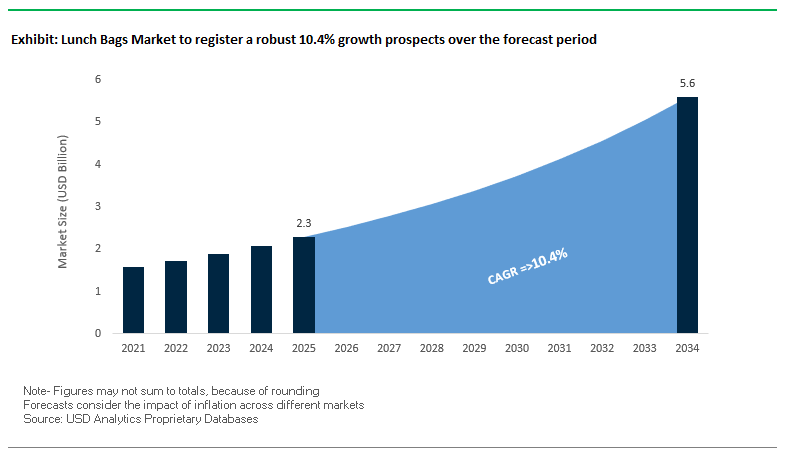
The global lunch bags market is expected to expand significantly from USD 2.3 billion in 2025 to USD 5.6 billion by 2034, registering an impressive CAGR of 10.4%. This growth trajectory highlights how lifestyle shifts, consumer sustainability preferences, and the rise of e-commerce-driven direct-to-consumer (D2C) models are redefining demand. Industry professionals evaluating this segment are particularly focused on how eco-material adoption, insulation innovation, and bento box integration are driving market competitiveness. At the same time, digital platforms are enabling niche brands to scale faster than traditional retail ever allowed. For buyers and stakeholders, key questions revolve around how to meet consumer demand for sustainable yet durable products, which features will dominate (insulation vs. portability vs. customizability), and how global regulatory shifts on plastics will impact product design.
Key Insights for professionals
Eco-material momentum: Recycled plastics, organic cotton, and bamboo are increasingly favored for reusable lunch bags.
Insulation innovation: Advanced thermal linings and reflective barriers are now expected as standard features.
Bento box compatibility: Bags designed to fit multi-compartment containers are rising in demand, driven by meal-prep culture.
E-commerce advantage: Direct-to-consumer platforms are accelerating brand visibility and global product diversification.
Market Analysis: Recent Developments and Emerging Consumer Trends
The lunch bags industry is undergoing a wave of innovation and consumer-driven transformation, with sustainability, technology, and customization defining the competitive landscape. In August 2025, L. May Mfg, known for its “Miner’s Lunchbox,” was nominated for the Ontario Made Awards in the Manufacturer Spotlight category, underscoring the importance of local manufacturing in brand recognition. That same month, a Strategist review highlighted the rise of smart lunch boxes with Bluetooth tracking, signaling the beginning of tech-driven personalization in everyday lunch gear. Parallel to this, Accio’s May 2025 study revealed a 76.34% MoM surge in bento box sales, reflecting the global appetite for leak-proof, compartmentalized solutions that align with health and portion control needs.
Consumer behavior is also increasingly seasonal and convenience-driven. In August 2025, Google Trends data confirmed sharp spikes in searches for “insulated lunch bags” during January and July—corresponding with back-to-school and summer travel peaks. Around the same time, SUNNY BIRD’s foldable insulated lunch bag was spotlighted for its commuter-friendly design, combining portability with functionality. Earlier in July 2025, Forbes Vetted ranked the PackIt Freezable Classic Lunch Box as a top choice for kids, cementing consumer interest in built-in cooling technology. These insights show that insulation, convenience, and portability are becoming baseline expectations.
Meanwhile, customization and material innovation continue to broaden product appeal. A May 2025 report from ReAnIn pointed to growing demand for customizable lunch bags with multiple compartments, driven by the meal-prep and healthy eating trend. In April 2025, a separate industry report emphasized the rise of silicone lunch boxes, celebrated for being lightweight, non-toxic, and durable—a clear reflection of sustainability priorities.
Key Trends and Future Growth Opportunities in the Global Lunch Bags Market
Integration of Advanced, Sustainable Materials Beyond Traditional Fabrics
The lunch bags market is experiencing a strategic shift towards high-performance, eco-friendly materials, moving beyond conventional polyester and nylon. Brands are increasingly adopting fabrics derived from recycled and biodegradable sources to meet corporate sustainability goals and growing consumer demand for environmentally responsible products. For instance, companies like Eco Chic Retail Ltd. manufacture lunch bags from 100% recycled plastic bottles (rPET), reducing landfill waste while providing durable, water-resistant products. Innovative players such as Trashy Bags Africa are leveraging upcycled plastic waste to create functional and sustainable designs, highlighting unique environmental narratives with each product. Biodegradable materials like bamboo fiber and wheat straw plastics are gaining traction for their low carbon footprint and compostable properties, aligning with circular economy principles. Leading initiatives, such as Life Without Plastic, are adopting a “cradle-to-cradle” philosophy, using leftover organic wool and cotton to produce fully compostable and machine-washable lunch bags. This trend underscores the industry’s commitment to sustainability, offering consumers both durability and eco-conscious design.
Demand for Multi-Functional, Office-Return Hybrid Designs
The hybrid work culture has accelerated demand for multi-functional lunch bags that transition seamlessly from commute to office while offering professional aesthetics and practicality. Modern consumers prefer lunch bags that blend with office accessories, prompting brands to introduce minimalist, professional-looking designs suitable for both men and women. Companies like Nestasia are developing bags with multiple compartments to hold not only food but also phones, keys, wallets, and reusable utensils, addressing organization and convenience needs. Durable, water-resistant materials such as Tyvek ensure long-lasting protection for daily commutes, while insulated interiors maintain food freshness for several hours without refrigeration. Leak-proof construction and robust closures further enhance usability, making these hybrid designs a preferred choice for on-the-go professionals seeking functionality, durability, and style in a single package.
Development of Integrated Smart Features for Food Safety and Convenience
There is a growing opportunity for smart lunch bags that integrate technology-driven food safety and convenience features, adding premium value and differentiation. Temperature monitoring solutions, such as color-changing indicators, can alert users if food exceeds safe temperatures, ensuring consumer confidence and safety. Additionally, self-cleaning or antimicrobial liners are emerging as a critical innovation to reduce manual cleaning and prevent bacterial growth, providing a hygienic solution for reusable bags. These technological advancements cater to health-conscious consumers and parents seeking enhanced food safety, while positioning lunch bags as high-value, tech-enabled accessories in the market.
Expansion into Subscription and Customization Services for Niche Segments
The direct-to-consumer (D2C) model presents a lucrative opportunity for brands to offer personalized, subscription-based solutions in the lunch bag market. Customization options, including colors, designs, and personalized embroidery, appeal to consumers seeking unique, tailored products—particularly for children or lifestyle-conscious adults. Subscription services for compostable or recyclable liners create recurring revenue streams while enhancing sustainability for users who prefer convenience over single-use options. This approach transforms the lunch bag from a one-time purchase into an ongoing service, increasing customer engagement and brand loyalty while capturing niche, high-growth segments in the market.
Competitive Landscape: Leading Brands Defining the Lunch Bags Market
The lunch bags market is characterized by a mix of premium outdoor brands, family-focused bento specialists, and innovators in thermal insulation. Competitive strategies range from durability and sustainability to built-in cooling and customization, reflecting the diversity of consumer demands. Below is a breakdown of the top players shaping the market:
YETI dominates the premium segment with its Daytrip Lunch Box, praised for durability and high thermal performance. In a recent Tech Gear Lab test, the model was named “Best Overall Lunch Box” for its waterproof material and reliable insulation. YETI continues to target outdoor enthusiasts and professionals seeking rugged, long-lasting gear. The company’s brand reputation for exceptional thermal performance makes it a strong leader in insulated lunch bags.
Bentgo: Redefining Bento Box Lunch Experiences
Bentgo specializes in multi-compartment bento-style lunch boxes, with offerings like Bentgo Kids and Bentgo Fresh catering to both children and adults. In Forbes Vetted’s review, the Bentgo Kids box was highlighted for durability and leak-proof design, while the new Bentgo MicroSteel Lunch Box introduced customizable partitions. Bentgo’s strategic edge lies in aligning with the meal-prep culture, making it a leader in portion-controlled, stylish, and functional lunch gear.
PackIt: Innovator in Built-In Freezable Technology
PackIt sets itself apart with its patented freezable gel packs, which eliminate the need for separate ice packs. Its Freezable Classic Lunch Box was endorsed by Forbes Vetted in July 2025 as a top choice for kids. The company focuses on convenience and food safety, leveraging its proprietary cooling technology as a unique value proposition. PackIt’s products resonate with consumers prioritizing simplicity and freshness in daily lunch routines.
L.L. Bean: Rugged and Durable Lunch Gear
L.L. Bean, long known for its outdoor durability, offers lunch boxes built with the same resilient materials as its iconic backpacks. In Forbes Vetted’s July 2025 review, its model was ranked the “Most Durable Lunch Box For Kids”, reinforcing its positioning as a reliability-focused brand. With its strong heritage and reputation for quality, L.L. Bean appeals to families and professionals who value long-lasting gear backed by trust.
Thermos L.L.C.: Pioneer in Insulation Technology
Thermos is a global leader in insulated food and beverage containers, leveraging decades of expertise in vacuum insulation technology. A recent Tech Gear Lab review spotlighted its stackable stainless-steel thermos products, reflecting rising consumer demand for modular, thermos-style lunch solutions. Thermos’s strategy revolves around thermal performance innovation, giving it a competitive edge in both lunch bags and food containers.
Lunch Bags Market Share Insights
Insulated Lunch Bags Command Market Share by Product Type in the Lunch Bags Industry
Insulated lunch bags dominate the market with a commanding 65% share, far surpassing non-insulated and disposable alternatives. Their dominance is explained by their ability to maintain food safety, freshness, and temperature control, making them indispensable for modern lifestyles where meals are often prepared in advance. The integration of advanced insulating foams, antimicrobial liners, and stylish exteriors has elevated insulated bags from basic utility items to premium lifestyle accessories. Non-insulated bags continue to cater to fashion-conscious consumers and short-duration use cases but lack the functional advantages of insulation. Disposable lunch bags, once widely used, now occupy a declining niche due to global sustainability trends and the transition away from single-use products. The market’s tilt toward insulated solutions reflects a consumer preference for durability, reusability, and sustainability-driven value, aligning perfectly with health and wellness trends.
Adults Drive Market Share by End-User in the Lunch Bags Industry
Adults represent 58% of the end-user market for lunch bags, making them the largest and most influential consumer group. This dominance is driven by health-conscious professionals, remote workers, and fitness-oriented individuals who prioritize meal planning, portion control, and cost savings. Adults often invest in durable, premium-quality lunch bags with features such as multi-compartment organization, stylish finishes, and superior insulation, reinforcing both utility and brand value. The kids’ segment remains substantial, fueled by consistent school lunch demand and influenced by licensed characters, parental choices for safety, and ease of cleaning. However, the adult segment has overtaken in both volume and value due to lifestyle shifts, including the growing popularity of meal prep culture. This segmentation highlights how adult-driven demand anchors premium value in the lunch bag industry, while kids sustain a stable, style-influenced share.
United States Lunch Bags Market Expands Through FDA Regulations and Innovative Thermal Solutions
The U.S. lunch bags market is heavily influenced by regulations from the Food and Drug Administration (FDA), ensuring that all food contact materials are safe and free from harmful chemicals. The 2024 update mandating BPA-free plastics, food-grade silicone, and stainless steel has accelerated innovation in material development. Technological advancements such as multi-layer foam insulation and vacuum-sealed chambers are enhancing thermal retention, with products now capable of keeping food cold for over eight hours.
Corporate investments are boosting market growth, with major outdoor brands launching back-to-school insulated lunch bag collections that emphasize durability and thermal performance. Key applications are driven by the school and office sectors, fueled by the rising preference for home-cooked meals and the e-commerce boom, which demands durable, attractive, and easily shippable products. Sustainability is a core focus, with brands incorporating recycled plastics, organic cotton, and eco-friendly fabrics, as more than 70% of consumers prefer environmentally responsible products.
Germany’s Lunch Bags Market Leads With Circular Economy Initiatives and Modular Designs
Germany’s lunch bag industry operates under the stringent German Food and Feed Code (LFGB), enforcing high standards for food safety. Strong government emphasis on waste reduction and recycling is driving the adoption of sustainable materials in product development. Technological innovation focuses on lightweight, durable materials and easy-to-clean designs, while modular bento boxes with leak-proof seals cater to organized, mess-free meals.
Germany also leads in circular economy practices, with lunch bags increasingly made from recycled and recyclable materials. Demand is particularly strong among health-conscious students and working professionals, and hybrid work models have increased the need for flexible, durable, and portable lunch solutions.
China’s Lunch Bags Market Booms With Green Initiatives and Smart Food Storage Solutions
China’s lunch bag market is being shaped by the government’s dual carbon goal and the 2024 Action Plan for Large-Scale Equipment Updates and Consumer Goods Replacement, which encourage sustainable materials and reduce excessive packaging. Regulatory reforms for food contact materials are ensuring safety and shared responsibility between manufacturers and printers.
Technological advancements, including automation and AI-driven production, are improving efficiency, while innovative products like electric lunch boxes are gaining popularity among students and office workers. Domestic manufacturing is rising, with local companies expanding capacity to meet growing demand from the e-commerce, electronics, and food & beverage sectors, driving the adoption of high-quality, circular, and convenient lunch bags.
India’s Lunch Bags Market Accelerates With Sustainable Policies and Advanced Leak-Proof Designs
India’s lunch bag market is benefiting from government initiatives promoting sustainability. The FSSAI regulations recognizing recycled plastics for food-grade applications and mandatory barcodes/QR codes for tracking and recycling are driving market transformation. Advanced products featuring leak-proof technology and double-wall insulation are meeting consumer demands for durability and food safety.
Corporate investments from brands like Milton and Cello are expanding production to cater to rising demand in the school and office sectors. The growing middle class and rising exports of industrial products are fueling the need for modern, high-performance lunch bags, making India a rapidly expanding market in both domestic and global contexts.
Japan’s Lunch Bags Market Focuses on Precision Manufacturing and Bio-Based Materials
Japan’s lunch bags industry leverages its precision manufacturing expertise, focusing on advanced materials like bio-polypropylene (bio-PP) to achieve sustainability goals. Regulatory policies effective June 1, 2025, including a positive list for synthetic materials, are driving the market toward safer and compliant lunch bags.
The industry is focusing on high-performance and specialty products, with bento boxes and insulated bags incorporating multiple compartments, self-sealing features, and superior barrier properties. Innovations targeting functionality and aesthetics make Japanese lunch bags highly practical and premium, appealing to both domestic consumers and export markets.
Brazil’s Lunch Bags Market Grows Through Sustainable Materials and Urban Demand
Brazil’s lunch bags market is supported by the National Solid Waste Policy, encouraging sustainable packaging and modern food storage solutions. Technological advancements emphasize biodegradable, recyclable, and compostable materials, including bio-based polyethylene derived from sugarcane, supporting carbon neutrality and reducing fossil fuel dependency.
Corporate investments, such as Ardagh Group’s glass production facility, are fostering innovation and meeting growing demand in the food & beverage and agricultural sectors. The rising urban middle class and increased focus on convenient, high-performance lunch solutions are key drivers for the market, making sustainable and practical lunch bags increasingly popular across Brazil.
Lunch Bags Market Report Scope
Lunch Bags Market
Parameter
Details
Market Size (2025)
$2.3 Billion
Market Size (2034)
$5.6 Billion
Market Growth Rate
10.4%
Segments
By Product Type (Insulated Lunch Bags, Non-Insulated Lunch Bags, Disposable Lunch Bags), By Material (Plastic, Nylon, Canvas, Cotton, Jute, Neoprene, Others), By End-User (Kids, Adults), By Distribution Channel (Offline Retail, Online Retail), By Closure Type (Zipper, Velcro, Snap, Roll-Top, Others)
Study Period
2019- 2024 and 2025-2034
Units
Revenue (USD)
Qualitative Analysis
Porter’s Five Forces, SWOT Profile, Market Share, Scenario Forecasts, Market Ecosystem, Company Ranking, Market Dynamics, Industry Benchmarking
Companies
Thermos L.L.C., YETI Coolers, LLC, Newell Brands, Stanley, PackIt LLC, Bentgo, Fit & Fresh, Wildkin, Carhartt, Hydro Flask (a Helen of Troy Limited brand), Coleman Company, Inc., Lifetime Brands, Inc., Skip Hop, L.L. Bean, Zojirushi Corporation
Countries
US, Canada, Mexico, Germany, France, Spain, Italy, UK, Russia, China, India, Japan, South Korea, Australia, South East Asia, Brazil, Argentina, Middle East, Africa
Lunch Bags Market Segmentation
By Product Type
Insulated Lunch Bags
Non-Insulated Lunch Bags
Disposable Lunch Bags
By Material
Plastic
Nylon
Canvas
Cotton
Jute
Neoprene
Others
By End-User
Kids
Adults
By Distribution Channel
Offline Retail
Online Retail
By Closure Type
Zipper
Velcro
Snap
Roll-Top
Others
Countries Analyzed
North America (US, Canada, Mexico)
Europe (Germany, UK, France, Spain, Italy, Russia, Rest of Europe)
Asia Pacific (China, India, Japan, South Korea, Australia, South East Asia, Rest of Asia)
South America (Brazil, Argentina, Rest of South America)
Middle East and Africa (Saudi Arabia, UAE, Rest of Middle East, South Africa, Egypt, Rest of Africa)
Top Companies in Lunch Bags Market
Thermos L.L.C.
YETI Coolers, LLC
Newell Brands
Stanley
PackIt LLC
Bentgo
Fit & Fresh
Wildkin
Carhartt
Hydro Flask (a Helen of Troy Limited brand)
Coleman Company, Inc.
Lifetime Brands, Inc.
Skip Hop
L.L. Bean
Zojirushi Corporation
* List Not Exhaustive
Methodology
The research methodology for the global Lunch Bags Market combines primary and secondary research techniques to provide a comprehensive, data-driven view for industry professionals. Primary research included detailed interviews with product designers, supply chain managers, and sustainability officers across leading markets to capture insights on material innovations, insulation technology, smart features, and D2C strategies. Secondary research involved analyzing company reports, trade publications, government regulations, and consumer trend studies to validate market dynamics, growth drivers, and regional developments. Market sizing, CAGR projections, and segment forecasts were calculated using both top-down and bottom-up approaches, accounting for product type, material, end-user demographics, and distribution channels. Special attention was given to emerging trends such as eco-material adoption, bento box integration, hybrid work usage, and technological innovations like antimicrobial liners and temperature indicators. The methodology ensures that USDAnalytics delivers a precise, industry-relevant perspective on lunch bag market growth, sustainability adoption, and technological transformation.
Deliverables:
Comprehensive Market Research Report (PDF and Excel) with detailed tables, charts, and interactive visualizations.
Country-Specific Forecasts & Analysis.
Segment-Wise Revenue Forecasts (2025–2034).
Competitive Analysis, Benchmarking, and SWOT Profiles.
Recent Developments & Innovation Tracker.
Executive Summary & Analyst Commentary.
Post-Purchase Analyst Support for Client-Specific Questions and Custom Data Requirements.
Table of Contents: Global Lunch Bags Market
1. Executive Summary
1.1. Market Highlights
1.2. Key Findings
1.3. Global Market Snapshot
2. Global Lunch Bags Market Landscape & Outlook (2025–2034)
2.1. Introduction to Global Lunch Bags Market
2.2. Market Valuation and Growth Projections (2025–2034)
2.3. Key Insights for Professionals
2.4. Recent Developments and Emerging Consumer Trends
2.5. Future Market Dynamics
3. Innovations Reshaping the Lunch Bags Market
3.1. Trend: Integration of Advanced, Sustainable Materials Beyond Traditional Fabrics
3.2. Trend: Demand for Multi-Functional, Office-Return Hybrid Designs
3.3. Opportunity: Development of Integrated Smart Features for Food Safety and Convenience
3.4. Opportunity: Expansion into Subscription and Customization Services for Niche Segments
4. Competitive Landscape and Strategic Initiatives
4.1. Mergers, Acquisitions and Strategic Alliances
4.2. R&D and Material Innovation
4.3. Sustainability and Strategies
4.4. Market Expansion and Regional Focus
5. Market Share and Segmentation Insights: Lunch Bags Market
5.1. By Product Type
5.1.1. Insulated Lunch Bags
5.1.2. Non-Insulated Lunch Bags
5.1.3. Disposable Lunch Bags
5.2. By Material
5.2.1. Plastic
5.2.2. Nylon
5.2.3. Canvas
5.2.4. Cotton
5.2.5. Jute
5.2.6. Neoprene
5.2.7. Others
5.3. By End-User
5.3.1. Kids
5.3.2. Adults
5.4. By Distribution Channel
5.4.1. Offline Retail
5.4.2. Online Retail
5.5. By Closure Type
5.5.1. Zipper
5.5.2. Velcro
5.5.3. Snap
5.5.4. Roll-Top
5.5.5. Others
6. Country Analysis and Outlook of Lunch Bags Market
6.1. United States
6.2. Canada
6.3. Mexico
6.4. Germany
6.5. France
6.6. Spain
6.7. Italy
6.8. UK
6.9. Russia
6.10. China
6.11. India
6.12. Japan
6.13. South Korea
6.14. Australia
6.15. South East Asia
6.16. Brazil
6.17. Argentina
6.18. Middle East
6.19. Africa
7. Lunch Bags Market Size Outlook by Region (2025-2034)
7.1. North America Lunch Bags Market Size Outlook to 2034
7.1.1. By Product Type
7.1.2. Insulated Lunch Bags
7.1.3. Non-Insulated Lunch Bags
7.1.4. Disposable Lunch Bags
7.2. Europe Lunch Bags Market Size Outlook to 2034
7.2.1. By Product Type
7.2.2. Insulated Lunch Bags
7.2.3. Non-Insulated Lunch Bags
7.2.4. Disposable Lunch Bags
7.3. Asia Pacific Lunch Bags Market Size Outlook to 2034
7.3.1. By Product Type
7.3.2. Insulated Lunch Bags
7.3.3. Non-Insulated Lunch Bags
7.3.4. Disposable Lunch Bags
7.4. South America Lunch Bags Market Size Outlook to 2034
7.4.1. By Product Type
7.4.2. Insulated Lunch Bags
7.4.3. Non-Insulated Lunch Bags
7.4.4. Disposable Lunch Bags
7.5. Middle East and Africa Lunch Bags Market Size Outlook to 2034
7.5.1. By Product Type
7.5.2. Insulated Lunch Bags
7.5.3. Non-Insulated Lunch Bags
7.5.4. Disposable Lunch Bags
8. Company Profiles: Leading Players in the Lunch Bags Market
8.1. Thermos L.L.C.
8.2. YETI Coolers, LLC
8.3. Newell Brands
8.4. Stanley
8.5. PackIt LLC
8.6. Bentgo
8.7. Fit & Fresh
8.8. Wildkin
8.9. Carhartt
8.10. Hydro Flask (Helen of Troy Limited)
8.11. Coleman Company, Inc.
8.12. Lifetime Brands, Inc.
8.13. Skip Hop
8.14. L.L. Bean
8.15. Zojirushi Corporation
9. Methodology
9.1. Research Scope
9.2. Market Research Approach
9.3. Market Sizing and Forecasting Model
9.4. Research Coverage
9.5. Data Horizon
9.6. Deliverables
10. Appendix
10.1. Acronyms and Abbreviations
10.2. List of Tables
10.3. List of Figures
Lunch Bags Market Segmentation
By Product Type
Insulated Lunch Bags
Non-Insulated Lunch Bags
Disposable Lunch Bags
By Material
Plastic
Nylon
Canvas
Cotton
Jute
Neoprene
Others
By End-User
Kids
Adults
By Distribution Channel
Offline Retail
Online Retail
By Closure Type
Zipper
Velcro
Snap
Roll-Top
Others
Countries Analyzed
North America (US, Canada, Mexico)
Europe (Germany, UK, France, Spain, Italy, Russia, Rest of Europe)
Asia Pacific (China, India, Japan, South Korea, Australia, South East Asia, Rest of Asia)
South America (Brazil, Argentina, Rest of South America)
Middle East and Africa (Saudi Arabia, UAE, Rest of Middle East, South Africa, Egypt, Rest of Africa)
The lunch bags market is expanding due to lifestyle changes, increased sustainability awareness, and growth in D2C e-commerce channels. Consumers prefer insulated, reusable, and eco-friendly bags, while innovations like bento box compatibility and smart temperature indicators are enhancing convenience, safety, and personalization, fueling market adoption globally.
Insulated lunch bags dominate with a 65% market share, providing temperature control, freshness, and hygiene. Non-insulated and disposable bags are used for short-duration or fashion-oriented purposes, but the shift toward sustainability and reusability favors insulated, durable bags with advanced materials and leak-proof designs.
Eco-conscious consumers and regulations are driving adoption of recycled plastics, organic cotton, bamboo, and biodegradable materials. Companies like Eco Chic Retail Ltd. and Trashy Bags Africa are creating durable, water-resistant, and compostable products, aligning with circular economy principles while offering high-performance and stylish designs.
Smart features such as temperature-monitoring indicators, antimicrobial liners, and Bluetooth-enabled tracking are enhancing food safety and convenience. Built-in cooling gel packs, vacuum-sealed chambers, and modular compartments meet modern consumer needs, positioning lunch bags as high-value, tech-enabled lifestyle accessories.
The U.S., Germany, China, India, Japan, and Brazil are key growth markets. Expansion is supported by regulatory compliance, sustainability initiatives, hybrid work culture, and increasing e-commerce penetration, while local manufacturing and innovative product designs are driving adoption across school, office, and urban lifestyle segments.