Market Overview: Sustainability and Innovation Driving the Shoe Packaging Industry
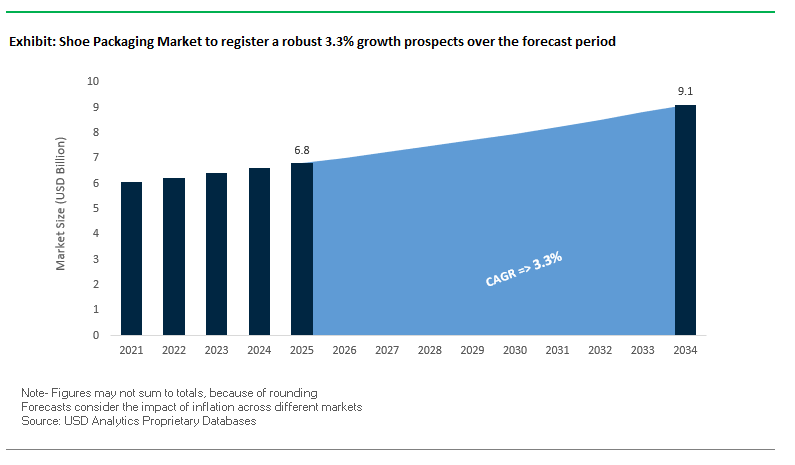
The global shoe packaging market is expected to grow from USD 6.8 billion in 2025 to USD 9.1 billion by 2034, registering a moderate CAGR of 3.3%. This growth is primarily driven by sustainability initiatives, e-commerce expansion, and brand-driven packaging innovation. For industry professionals and buyers, the critical questions center around how shoe brands are balancing sustainability goals, consumer experience, and cost efficiency while maintaining durable protection for products.
Paperboard, particularly corrugated cardboard, continues to dominate the shoe packaging market due to its recyclability, durability, and low cost. Flexible packaging solutions, including polybags and bio-based pouches, are gaining momentum in mass-market footwear as brands seek lightweight, space-efficient, and moisture-resistant alternatives. The circular economy is becoming integral, with leading brands piloting recyclable, reusable, and modular packaging systems that reduce waste and encourage consumer participation. At the same time, the trend toward minimalist designs is reshaping packaging strategies, as companies eliminate plastic wrappings, void-fill, and double-boxing to cut both costs and environmental impact.
Key Insights for Industry Professionals:
Paperboard dominance: Corrugated cardboard leads due to recyclability and cost-effectiveness.
Flexible packaging growth: LDPE and biodegradable plastics gaining adoption in mass markets.
Circular economy focus: Recyclable and modular packaging models being piloted by top brands.
Minimalist packaging trend: Reduced material use aligns with sustainability and cost goals.
Market Analysis: Recent Developments Shaping the Shoe Packaging Market
The shoe packaging industry has seen strategic acquisitions, brand realignments, and cross-industry collaborations that are transforming the competitive landscape.
In August 2025, Authentic Brands Group (ABG) acquired Guess for USD 1.4 billion, highlighting ongoing consolidation in the apparel and footwear sector that influences packaging needs at scale. During the same month, German shoemaker Gabor Shoes launched its “Gabor One” brand strategy, aiming to unify digital and physical customer touchpoints, including packaging. Earlier in July 2025, Coats, a UK-based manufacturer, signed an agreement to acquire OrthoLite Holdings for USD 770 million, expanding into footwear components and indirectly impacting packaging alignment with supply chains. That same month, Softstar Shoes acquired SOM Footwear, strengthening its niche handcrafted footwear presence.
Packaging suppliers also made key moves. Amcor completed its USD 8.4 billion acquisition of Berry Global in May 2025, following an announcement in November 2024, enhancing its flexible packaging capacity. In September 2024, Smurfit Westrock partnered with Papa Johns to produce digitally printed boxes, showcasing packaging as a marketing and branding tool. Amcor also acquired Phoenix Flexibles in India (August 2024), expanding its regional footprint in flexible packaging production for consumer and footwear applications.
Trends and Opportunities Redefining the Shoe Packaging Market
Brand-Led Elimination of Single-Use Plastic and Virgin Materials
The shoe packaging market is undergoing a rapid transformation as leading global footwear brands commit to eliminating single-use plastics and virgin materials from their packaging portfolios. This transition is driven by a combination of consumer activism, ESG-focused investors, and regulatory bans on plastic bags and polybags across key markets. For instance, PUMA reported in its 2024 Sustainability Report that 99.5% of its packaging is paper-based, with nearly all sourced from recycled or FSC-certified fibers. The company also phased out plastic shopping bags, cutting several hundred tons of plastic annually from its operations.
Similarly, Nike’s “Move to Zero” initiative exemplifies how packaging is now integral to broader corporate sustainability strategies. By embedding waste-reduction principles into both product and packaging design, Nike is aligning packaging with its long-term vision of a net-zero future. Adidas has accelerated its material transition, with 96% of polyester used in its operations sourced from recycled bottles by 2024 a shift that extends to its shoe packaging formats as part of its effort to drastically cut virgin plastic use. These examples highlight how the footwear industry is setting benchmarks for sustainable packaging, responding directly to mounting regulatory and consumer scrutiny.
Investment in DTC-Optimized, E-Commerce Ready Packaging
With direct-to-consumer (DTC) and e-commerce channels becoming the dominant retail format for footwear, packaging is being redesigned to withstand logistics challenges and serve as a brand communication tool. The rise of “shipper-in-a-box” designs eliminates the need for an external shipping container by reinforcing the shoebox itself with corrugated layers, tamper-evident seals, and right-sized construction. This not only reduces material use but also lowers dimensional weight, cutting shipping costs by up to 20% according to industry studies.
Beyond function, the unboxing experience has become a strategic focus in the shoe packaging industry, amplified by the influence of social media. Brands are incorporating premium touches such as custom tissue paper, creative inserts, and innovative opening mechanisms to create a shareable experience that drives consumer loyalty. A leading packaging company report noted that memorable unboxing moments directly correlate with repeat purchases and online engagement. As DTC sales expand, the shoebox is evolving from a basic container into a marketing asset that blends durability, efficiency, and brand storytelling.
Development of Integrated Resale and Circularity Platforms
The explosive growth of sneaker resale and circular footwear initiatives is creating significant opportunities for packaging to play an enabling role. Major brands are developing durable, return-ready shoe boxes that support both branded resale programs and consumer trade-in initiatives. For example, Nike Refurbished leverages specialized packaging to identify, transport, and resell returned shoes in a way that maintains consumer trust.
Circularity-focused packaging design ensures shoeboxes are strong enough to be shipped multiple times, supporting take-back programs while reinforcing brand identity. Programs such as Allbirds’ partnership with Soles4Souls further demonstrate how packaging is integrated into social impact initiatives by making consumer returns frictionless. As the resale market for sneakers is now valued at several billion dollars globally, packaging that combines durability, branding, and sustainability will be central to circular business models. This represents a major growth vector for packaging suppliers capable of innovating return-ready, eco-conscious formats.
Smart Packaging for Authentication, Storytelling, and Community Building
The shoe packaging market is also evolving into a digital engagement platform. By embedding QR codes, NFC tags, or augmented reality (AR) triggers into shoeboxes, brands can combat counterfeiting, enhance transparency, and strengthen customer loyalty. With counterfeit footwear costing brands billions annually, companies are increasingly turning to digital fingerprints or NFC-enabled shoeboxes to guarantee authenticity. Technology providers like Origify are pioneering anti-counterfeit packaging by integrating smartphone-verifiable identifiers into shoebox designs.
Beyond security, smart packaging enables interactive storytelling. Scanning a shoebox can unlock AR experiences that showcase the shoe’s design inspiration, highlight sustainable materials, or even allow consumers to virtually try on products. This creates immersive engagement that strengthens brand identity. Additionally, packaging can act as a gateway to exclusive communities for example, by embedding unique codes that grant access to loyalty programs, product drops, or members-only events. In this way, shoe packaging is shifting from a static protective layer into a strategic tool for brand engagement, trust-building, and community development.
Competitive Landscape: Leading Companies in the Shoe Packaging Market
The global shoe packaging industry is characterized by brand-driven sustainability, packaging innovation, and large-scale supply chain optimization. Top footwear brands are redefining packaging as a strategic tool that extends beyond protection to deliver on sustainability, branding, and consumer experience.
Nike: Circular Economy Packaging Innovations
Nike leads in athletic footwear packaging with a strong focus on sustainability. Its “Special Delivery” box eliminates double-boxing, reducing material use. The Nike Refurbished program supports reuse, minimizing new packaging needs. Nike’s partnership with Miniwiz enables shoe packaging made entirely from post-consumer waste materials, such as milk and juice containers, aligning with its goal of transitioning to a circular business model.
Adidas: Sustainable and Brand-Centric Packaging Strategies
Adidas emphasizes sustainability and premium unboxing experiences. Its packaging for Nemeziz 19 football boots showcased dual compartments and bold graphics, designed for social media impact. Adidas’s collaboration with Parley for the Oceans uses upcycled marine plastics for packaging, while its Smurfit Kappa partnership enables closed-loop recycling of packaging waste. These initiatives reinforce Adidas’s focus on circular solutions and marketing integration.
Puma: FSC-Certified and Recycled Packaging Leadership
Puma has positioned itself as a sustainability-focused brand with shoe boxes made of 95% recycled materials and FSC certification. Its 10FOR25 strategy targets 100% certified or recycled sourcing by 2025. The company also launched take-back schemes in the U.S., Germany, and China, promoting packaging circularity. Puma’s strategy centers on embedding eco-friendly practices across high-volume product lines.
New Balance: Expanding Packaging Needs Through Global Growth
New Balance emphasizes packaging durability and efficiency to support its global growth. In 2025, it shipped its first exports from its Tamil Nadu, India plant, requiring standardized packaging solutions for cross-border logistics. With a diverse product range from running shoes to lifestyle sneakers, New Balance’s packaging strategy is focused on protective durability and supply chain optimization to support its expanding international footprint.
Skechers: Cost-Effective and Scalable Packaging Solutions
Skechers serves a wide demographic with affordable footwear, supported by functional, cost-efficient packaging. With operations across 170+ countries, its packaging supports both bulk wholesale shipments and direct-to-consumer e-commerce sales. Skechers’s strength lies in its ability to standardize packaging across its global distribution network, reducing costs and ensuring consistent delivery while maintaining its value-oriented brand positioning.
Shoe Packaging Market Share Insights
Boxes Dominate Shoe Packaging Market Share by Product Type
Boxes command 65% of the shoe packaging market in 2025, reflecting their role as the universal standard across athletic, casual, and luxury footwear. Their dominance is anchored in structural strength, which ensures shoes are protected during warehousing, international shipping, and last-mile delivery. Corrugated boxes also provide unmatched branding potential through high-quality printing and custom design, allowing brands to reinforce their identity with every unboxing. Rising sustainability mandates further strengthen this segment, as recycled and FSC-certified cardboard has become the go-to alternative to plastic-based packaging. Bags, while capturing 20%, remain relevant in low-cost direct-to-consumer retail and premium reusable formats, but their share is constrained by global regulations on single-use plastics. Custom packaging solutions and inserts continue to expand as value-driven categories, primarily within luxury and athletic brands that use packaging as a strategic differentiator to elevate the consumer experience.
Athletic Footwear Leads Shoe Packaging Market Share by End-Use Industry
Athletic footwear accounts for 40% of shoe packaging demand in 2025, making it the largest and most dynamic segment. Global sneaker sales, fueled by performance-driven products, fast fashion collaborations, and limited-edition drops, require packaging that balances durability, sustainability, and brand storytelling. Athletic brands have pioneered recyclable cardboard designs, reduced ink usage, and collapsible structures to meet e-commerce logistics needs while amplifying consumer engagement. Casual footwear follows with 35%, relying heavily on cost-effective corrugated boxes for sandals, everyday sneakers, and mass-market styles. Luxury and dress footwear, while smaller in share, are high-value segments that drive innovation in rigid box design, magnetic closures, specialty foiling, and inserts like dust bags or tissue wraps to justify premium pricing. This segmentation underscores how athletic footwear sets the pace for volume and innovation, while luxury brands push the boundaries of premiumization in shoe packaging.
United States: Sustainability Mandates and E-commerce Growth Transform Shoe Packaging Market
The United States shoe packaging market is undergoing a significant transformation, driven by state-level Extended Producer Responsibility (EPR) laws such as California’s SB-54, Maryland, and Washington regulations. These policies are forcing footwear brands and packaging suppliers to adopt eco-friendly, recyclable, and reusable materials, reducing waste while aligning with consumer sustainability demands. The trend has encouraged investments in minimalist packaging, particularly 100% recycled paper-based foldable boxes, which reduce material use and shipping emissions.
At the same time, the booming U.S. e-commerce sector is reshaping packaging requirements. Shoe brands require lightweight yet durable packaging that can withstand shipping stress while minimizing logistics costs. A key development is the integration of technology in shoe packaging, with augmented reality (AR) and QR codes enhancing consumer engagement through virtual try-on experiences. This digital shift positions shoe packaging not just as a protective layer but as a powerful marketing tool, redefining customer interaction in online retail.
Germany: Circular Economy Leadership and Eco-Design Innovation in Shoe Packaging
Germany’s shoe packaging market operates under a stringent regulatory framework, including the German Packaging Act (VerpackG) and the EU Packaging and Packaging Waste Regulation (PPWR). These strict policies are pushing brands toward highly recyclable and eco-friendly packaging solutions, creating strong momentum for innovation. With the EU’s circular economy goals, companies are collaborating with retailers and recyclers to design shoe packaging that incorporates recycled content and is optimized for end-of-life recyclability.
Innovation is at the heart of the German market, with brands investing in eco-design solutions such as flat-pack boxes that optimize shipping, reduced material usage, and water-based and soy-based inks for environmentally safe printing. These advancements not only reduce carbon footprints but also align with German consumers’ demand for sustainable and minimalist packaging designs. Germany has positioned itself as a European leader in circular economy-driven shoe packaging.
China: Massive Footwear Production and Green Transformation Boost Shoe Packaging Demand
China, the world’s largest footwear manufacturer, remains a critical hub for shoe packaging production due to its massive manufacturing capacity and cost-effective output. The country’s secondary packaging industry is heavily influenced by regulatory frameworks and governmental sustainability initiatives, particularly the “green transformation” of the express delivery industry. This regulatory push requires companies to adopt eco-friendly, reduced, and reusable packaging, which directly impacts shoe packaging strategies.
The explosive growth of e-commerce and logistics in China is a major driver for durable and efficient shoe packaging. With footwear being a top-selling category online, the demand for secure packaging solutions that withstand shipping and automated logistics systems is accelerating. Technological innovation, including automation and robotics in packaging production, further enhances efficiency and quality control, reinforcing China’s dominance in the global shoe packaging market.
India: E-commerce Boom and Sustainable Innovation Drive Shoe Packaging Growth
India’s shoe packaging market is expanding rapidly, supported by the government’s push for non-leather footwear manufacturing, which is attracting global brands like Nike, Puma, and Adidas to increase investments in the country. This shift creates a multiplier effect on packaging demand, particularly for customized and branded shoe packaging solutions. Additionally, the rapid rise of e-commerce platforms in fashion and footwear has boosted the demand for durable and visually appealing packaging that enhances consumer experience.
Sustainability is a central theme in India’s shoe packaging market, driven by the Plastic Waste Management (Amendment) Rules aimed at phasing out single-use plastics. Companies are innovating with paper-based, biodegradable, and plantable packaging solutions, such as boxes embedded with seeds and bio-polymers from renewable resources. These innovations not only comply with regulations but also cater to the eco-conscious younger demographic. India is fast emerging as a hub for sustainable and innovative shoe packaging solutions, bridging global demand with local ingenuity.
Brazil: Regulatory Push and Tech-Driven Sustainability Reshape Shoe Packaging Industry
Brazil’s shoe packaging industry is being reshaped by stringent regulations against single-use plastics, particularly under the National Solid Waste Policy, which emphasizes a circular economy. These laws are propelling the shift toward reusable, recyclable, and durable packaging alternatives. The footwear sector is increasingly adopting eco-friendly packaging materials such as recycled PET (rPET), paperboard, and bioplastics to align with regulatory requirements and consumer demand for sustainable options.
Technological advancements are a defining factor in Brazil’s shoe packaging market. Companies are integrating artificial intelligence (AI) and robotics for operations like automated label selection, defect detection, and production efficiency. These innovations improve accuracy and speed, enabling packaging that meets global quality standards. Brazil’s focus on sustainability and technological sophistication positions it as a fast-growing market in South America for eco-conscious and innovative shoe packaging solutions.
Shoe Packaging Market Report Scope
Shoe Packaging Market
Parameter
Details
Market Size (2025)
$6.8 Billion
Market Size (2034)
$9.1 Billion
Market Growth Rate
3.3%
Segments
By Product Type (Boxes, Bags, Custom Packaging Solutions, Inserts & Accessories), By Material Type (Paper & Paperboard, Plastics, Recycled & Recyclable Materials, Other Materials), By End-Use Industry (Athletic Footwear, Casual Footwear, Luxury Footwear, Dress Footwear, Other End-use Industries), By Application (Offline Retail, E-commerce & Logistics)
Study Period
2019- 2024 and 2025-2034
Units
Revenue (USD)
Qualitative Analysis
Porter’s Five Forces, SWOT Profile, Market Share, Scenario Forecasts, Market Ecosystem, Company Ranking, Market Dynamics, Industry Benchmarking
Companies
International Paper, Smurfit Kappa Group plc, DS Smith Plc, WestRock, Mondi Group, Oji Holdings Corporation, Graphic Packaging Holding Company, Rengo Co., Ltd., Packaging Corporation of America (PCA), Sonoco Products Company, Amcor plc, EPL Limited, Greif, Inc., Walki Group, Zezhi Packaging Technology Co., Ltd.
Countries
US, Canada, Mexico, Germany, France, Spain, Italy, UK, Russia, China, India, Japan, South Korea, Australia, South East Asia, Brazil, Argentina, Middle East, Africa
Shoe Packaging Market Segmentation
By Product Type
Boxes
Bags
Custom Packaging Solutions
Inserts & Accessories
By Material Type
Paper & Paperboard
Plastics
Recycled & Recyclable Materials
Other Materials
By End-Use Industry
Athletic Footwear
Casual Footwear
Luxury Footwear
Dress Footwear
Other End-use Industries
By Application
Offline Retail
E-commerce & Logistics
Countries Analyzed
North America (US, Canada, Mexico)
Europe (Germany, UK, France, Spain, Italy, Russia, Rest of Europe)
Asia Pacific (China, India, Japan, South Korea, Australia, South East Asia, Rest of Asia)
South America (Brazil, Argentina, Rest of South America)
Middle East and Africa (Saudi Arabia, UAE, Rest of Middle East, South Africa, Egypt, Rest of Africa)
Top Companies in Shoe Packaging Market
International Paper
Smurfit Kappa Group plc
DS Smith Plc
WestRock
Mondi Group
Oji Holdings Corporation
Graphic Packaging Holding Company
Rengo Co., Ltd.
Packaging Corporation of America (PCA)
Sonoco Products Company
Amcor plc
EPL Limited
Greif, Inc.
Walki Group
Zezhi Packaging Technology Co., Ltd.
*List not Exhaustive
Research Coverage
This comprehensive report by USDAnalytics investigates the dynamic landscape of the global shoe packaging market, highlighting the latest breakthroughs in sustainable materials, innovative packaging designs, and e-commerce-driven logistics solutions. The analysis reviews critical developments, including the rapid adoption of paperboard and corrugated cardboard, the rise of flexible and bio-based pouches, and the integration of modular and reusable packaging systems aligned with circular economy principles. This report highlights how leading footwear brands are leveraging packaging as a strategic tool for branding, consumer engagement, and cost optimization. With a forward-looking perspective, it explores technological advances such as AI-driven right-sizing, automated assembly lines, and smart packaging with embedded QR codes or NFC tags for authentication and interactive experiences. USDAnalytics’ research is an essential resource for manufacturers, brand owners, and supply chain professionals aiming to navigate regulatory shifts, sustainability mandates, and the competitive pressures driving innovation in shoe packaging. By offering detailed insights into strategic acquisitions, market consolidation, and region-specific developments, the report empowers stakeholders to make data-driven decisions for investment, expansion, and operational optimization in the evolving global footwear packaging landscape.
Scope Highlights:
Segmentation: By Product Type (Boxes, Bags, Custom Packaging Solutions, Inserts & Accessories); By Material Type (Paper & Paperboard, Plastics, Recycled & Recyclable Materials, Other Materials); By End-Use Industry (Athletic Footwear, Casual Footwear, Luxury Footwear, Dress Footwear, Other End-use Industries); By Application (Offline Retail, E-commerce & Logistics)
Geographic Scope: Analysis spans 25+ countries across North America, Europe, Asia Pacific, Latin America, the Middle East & Africa.
Time Frame: Historic data from 2021 to 2024; forecast data from 2025 to 2034.
Companies Covered: Detailed analysis/profiles of 15+ companies including International Paper, Smurfit Kappa Group plc, DS Smith Plc, WestRock, Mondi Group, Oji Holdings Corporation, Graphic Packaging Holding Company, Rengo Co., Ltd., PCA, Sonoco Products Company, Amcor plc, EPL Limited, Greif, Inc., Walki Group, Zezhi Packaging Technology Co., Ltd.
Methodology
The research methodology underpinning this report combines qualitative and quantitative approaches to deliver a robust analysis of the shoe packaging market. Primary data was collected from interviews with industry experts, executives, and supply chain managers, while secondary research utilized trade publications, corporate reports, regulatory filings, and sustainability disclosures. Market sizing and forecasts were derived using a top-down approach, triangulating historical shipment data, production trends, and sales volumes across key regions and segments. Competitive benchmarking involved detailed profiling of leading manufacturers, suppliers, and packaging innovators, with an emphasis on strategic acquisitions, product portfolios, and technology adoption. Emerging trends, including sustainable materials, circular economy initiatives, and smart packaging integration, were analyzed using scenario planning and adoption rate modeling. This methodology ensures comprehensive coverage of market dynamics, regulatory influences, technological disruptions, and evolving consumer preferences, providing actionable insights for decision-makers and industry stakeholders.
Deliverables:
Comprehensive Market Research Report (PDF and Excel) with detailed tables, charts, and interactive visualizations.
Country-Specific Forecasts & Analysis.
Segment-Wise Revenue Forecasts (2025–2034).
Competitive Analysis, Benchmarking, and SWOT Profiles.
Recent Developments & Innovation Tracker.
Executive Summary & Analyst Commentary.
Post-Purchase Analyst Support for Client-Specific Questions and Custom Data Requirements.
2. Shoe Packaging Market Landscape & Outlook (2025–2034)
2.1. Introduction to Shoe Packaging Market
2.2. Market Valuation and Growth Projections (2025–2034)
2.3. Industry Drivers and Market Dynamics
2.4. Technological Advancements and Material Innovations
2.5. Regulatory Environment and Sustainability Trends
3. Innovations Reshaping the Shoe Packaging Market
3.1. Trend: Brand-Led Elimination of Single-Use Plastic and Virgin Materials
3.2. Trend: Investment in DTC-Optimized, E-Commerce Ready Packaging
3.3. Opportunity: Development of Integrated Resale and Circularity Platforms
3.4. Opportunity: Smart Packaging for Authentication, Storytelling, and Community Building
4. Competitive Landscape and Strategic Initiatives
4.1. Mergers, Acquisitions and Strategic Alliances
4.2. R&D and Material Innovation
4.3. Sustainability and Strategies
4.4. Market Expansion and Regional Focus
5. Market Share and Segmentation Insights: Shoe Packaging Market
5.1. By Product Type
5.1.1. Boxes
5.1.2. Bags
5.1.3. Custom Packaging Solutions
5.1.4. Inserts & Accessories
5.2. By Material Type
5.2.1. Paper & Paperboard
5.2.2. Plastics
5.2.3. Recycled & Recyclable Materials
5.2.4. Other Materials
5.3. By End-Use Industry
5.3.1. Athletic Footwear
5.3.2. Casual Footwear
5.3.3. Luxury Footwear
5.3.4. Dress Footwear
5.3.5. Other End-Use Industries
5.4. By Application
5.4.1. Offline Retail
5.4.2. E-commerce & Logistics
6. Country Analysis and Outlook of Shoe Packaging Market
6.1. United States
6.2. Canada
6.3. Mexico
6.4. Germany
6.5. France
6.6. Spain
6.7. Italy
6.8. UK
6.9. Russia
6.10. China
6.11. India
6.12. Japan
6.13. South Korea
6.14. Australia
6.15. South East Asia
6.16. Brazil
6.17. Argentina
6.18. Middle East
6.19. Africa
7. Shoe Packaging Market Size Outlook by Region (2025–2034)
7.1. North America Shoe Packaging Market Size Outlook to 2034
7.1.1. By Product Type
7.1.2. By Material Type
7.1.3. By End-Use Industry
7.1.4. By Application
7.2. Europe Shoe Packaging Market Size Outlook to 2034
7.2.1. By Product Type
7.2.2. By Material Type
7.2.3. By End-Use Industry
7.2.4. By Application
7.3. Asia Pacific Shoe Packaging Market Size Outlook to 2034
7.3.1. By Product Type
7.3.2. By Material Type
7.3.3. By End-Use Industry
7.3.4. By Application
7.4. South America Shoe Packaging Market Size Outlook to 2034
7.4.1. By Product Type
7.4.2. By Material Type
7.4.3. By End-Use Industry
7.4.4. By Application
7.5. Middle East and Africa Shoe Packaging Market Size Outlook to 2034
7.5.1. By Product Type
7.5.2. By Material Type
7.5.3. By End-Use Industry
7.5.4. By Application
8. Company Profiles: Leading Players in the Shoe Packaging Market
8.1. International Paper
8.2. Smurfit Kappa Group plc
8.3. DS Smith Plc
8.4. WestRock
8.5. Mondi Group
8.6. Oji Holdings Corporation
8.7. Graphic Packaging Holding Company
8.8. Rengo Co., Ltd.
8.9. Packaging Corporation of America (PCA)
8.10. Sonoco Products Company
8.11. Amcor plc
8.12. EPL Limited
8.13. Greif, Inc.
8.14. Walki Group
8.15. Zezhi Packaging Technology Co., Ltd.
9. Methodology
9.1. Research Scope
9.2. Market Research Approach
9.3. Market Sizing and Forecasting Model
9.4. Research Coverage
9.5. Data Horizon
9.6. Deliverables
10. Appendix
10.1. Acronyms and Abbreviations
10.2. List of Tables
10.3. List of Figures
Shoe Packaging Market Segmentation
By Product Type
Boxes
Bags
Custom Packaging Solutions
Inserts & Accessories
By Material Type
Paper & Paperboard
Plastics
Recycled & Recyclable Materials
Other Materials
By End-Use Industry
Athletic Footwear
Casual Footwear
Luxury Footwear
Dress Footwear
Other End-use Industries
By Application
Offline Retail
E-commerce & Logistics
Countries Analyzed
North America (US, Canada, Mexico)
Europe (Germany, UK, France, Spain, Italy, Russia, Rest of Europe)
Asia Pacific (China, India, Japan, South Korea, Australia, South East Asia, Rest of Asia)
South America (Brazil, Argentina, Rest of South America)
Middle East and Africa (Saudi Arabia, UAE, Rest of Middle East, South Africa, Egypt, Rest of Africa)
Sustainability initiatives, e-commerce expansion, and brand-focused packaging innovation are driving growth. Companies are adopting recyclable materials, modular designs, and smart packaging solutions to enhance consumer engagement while reducing environmental impact. Regulatory mandates and circular economy goals further accelerate adoption of eco-friendly solutions.
Paperboard, particularly corrugated cardboard, dominates due to recyclability, durability, and cost-effectiveness. Flexible packaging like LDPE and bio-based pouches is growing in mass-market footwear, offering lightweight, moisture-resistant, and space-efficient alternatives aligned with sustainability trends.
E-commerce has driven the adoption of “shipper-in-a-box” designs, right-sized corrugated packaging, and tamper-evident solutions that minimize shipping costs and protect products. Packaging now serves as a branding tool, with unboxing experiences, digital integration, and premium inserts enhancing consumer engagement.
The U.S., Germany, China, and India are leading sustainability and innovation efforts. Regulatory mandates like Extended Producer Responsibility (EPR) laws, circular economy policies, and plastic reduction initiatives are accelerating adoption of recyclable, reusable, and bio-based packaging solutions across these markets.
Smart packaging integrates QR codes, NFC tags, and AR technology to ensure product authentication, reduce counterfeiting, and provide interactive consumer experiences. It also supports circularity programs, resale initiatives, and direct-to-consumer engagement, transforming packaging into a multifunctional marketing and sustainability tool.