Cosmetic and Perfume Glass Packaging Market Overview: Expansion to $4.6 Billion by 2034
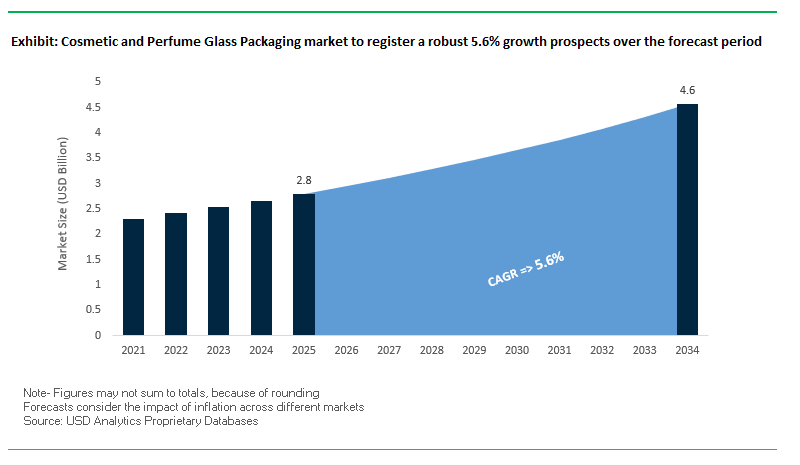
The global cosmetic and perfume glass packaging market is forecast to grow from $2.8 billion in 2025 to $4.6 billion by 2034, at a CAGR of 5.6%. Glass remains the material of choice in the beauty and fragrance industry, representing luxury, durability, and sustainability. It is favored for its superior barrier properties, premium aesthetic appeal, and strong recyclability profile, making it indispensable for high-end cosmetics and perfumes. For industry professionals and buyers, the key strategic questions include: How will brands balance sustainability with premium aesthetics? What role will refillable and lightweight designs play in reducing carbon footprints? And how will advanced decoration technologies help differentiate in an increasingly competitive beauty landscape?
Key Insights driving market growth:
Recycled Content Integration: New designs using up to 100% post-consumer recycled (PCR) glass reduce energy usage by ~40% compared to virgin glass.
Refillable Systems: Global luxury and mass-market brands are accelerating refillable glass bottles and jars, aligning with circular economy initiatives and consumer demand for eco-friendly products.
Lightweighting Innovation: Emerging technologies are enabling lower weight-to-volume ratios, cutting transport emissions while preserving strength and luxury appeal.
Advanced Decoration: Over 70% of new launches now use embossing, digital printing, or etching, elevating brand identity and shelf presence.
This expansion underscores the sector’s dual focus on luxury branding and sustainable transformation, making cosmetic and perfume glass packaging a strategic battleground for eco-conscious yet prestige-driven innovation.
Market Analysis: Sustainability, M&A, and Digital Tools Redefining 2025
The cosmetic and perfume glass packaging sector in 2025 has been shaped by sustainable launches, acquisitions in luxury segments, and digital innovations in manufacturing.
In August 2025, Verallia unveiled its Vista bottle, made entirely from PCR glass, highlighting energy savings of 40% over virgin production. That same month, Constantia Flexibles announced new Ecolutions lidding materials with low-carbon aluminum closures for integration with luxury glass packaging. Also in August, Saverglass was acquired by Orora Group for €1.29 billion, underscoring the rising valuation of luxury cosmetic and fragrance packaging assets.
In July 2025, industry reports emphasized the adoption of AI and predictive analytics to optimize glass manufacturing forecasting demand, managing inventories, and ensuring efficiency in premium cosmetic container production. A month earlier, in June 2025, SGD Pharma expanded its global cosmetic glass offering, appointing senior leadership to accelerate sustainability and “glassification” strategies. In May 2025, SGD Pharma also launched mini fragrance samplers and refillable jars, catering to sustainable and convenience-driven trends.
In March 2025, Verescence introduced its Glass Score tool, helping customers track lightweighting progress and carbon impact reductions. Earlier, in January 2025, Constantia Flexibles won two WorldStar Packaging Awards for eco-friendly solutions that complement glass packaging formats.
These developments highlight three defining trends: refill and recycle innovations, luxury market consolidation, and AI-driven optimization. Together, they are transforming how glass packaging meets the twin demands of premium brand experience and eco-responsibility.
Trends and Opportunities Defining the Future of the Cosmetic and Perfume Glass Packaging Market
Strategic Shift Towards Lightweighting and Advanced Manufacturing for Sustainability
The cosmetic and perfume glass packaging market is undergoing a strategic transformation as brands and manufacturers pursue lightweighting technologies to balance sustainability with premium aesthetics. Advanced techniques such as Narrow Neck Press and Blow (NNPB) are enabling companies to engineer glass bottles that are lighter yet equally durable, reducing the raw material required while enhancing energy efficiency in production and logistics. Over the past two decades, the glass packaging sector has achieved an average 30% weight reduction, directly lowering carbon emissions and optimizing transportation costs for global supply chains.
Manufacturers are making substantial capital investments to expand these technologies. Vetropack’s Echovai innovation, which produces returnable bottles 30% lighter than standard reusable formats, stands as a leading example. Having won the WorldStar Award in 2024, Echovai demonstrates how premium aesthetics and sustainability can be achieved simultaneously, and its deployment across European plants reflects surging brand adoption. Beyond weight reduction, integrating higher levels of recycled glass (cullet) magnifies the sustainability benefits. According to the European Container Glass Federation (FEVE), every 10% increase in cullet reduces energy use by 3% and CO₂ emissions by 5%, amplifying the carbon savings achieved through lightweighting strategies.
Integration of Augmented Reality (AR) and Smart Features for Brand Engagement
The market is also being reshaped by the digital transformation of glass packaging, where cosmetic and perfume bottles are evolving into interactive engagement platforms. Technologies like AR triggers, NFC chips, and serialized QR codes are being embedded into glass bottles to create immersive consumer experiences, reinforce product authenticity, and deliver valuable supply chain insights. For instance, perfume brands are leveraging AR to transport consumers into virtual storytelling experiences such as walking through lavender fields in Provence or watching a perfumer explain their craft directly from the bottle.
This digital evolution also combats counterfeiting, a major challenge in the luxury perfume and cosmetics sector. By scanning an NFC or QR-enabled bottle, consumers can instantly verify authenticity, while brands gain access to supply chain traceability that pinpoints potential diversion risks. Beyond security, interactive packaging supports direct-to-consumer engagement strategies. According to a 2025 report on interactive packaging, brands are using advanced QR codes to connect buyers to loyalty programs, sustainability claims, or ingredient transparency portals. This shift provides a privacy-conscious method of collecting first-party data, strengthening brand-consumer relationships in an increasingly digital marketplace.
Development of Closed-Loop, Refillable Glass Systems
The strongest growth opportunity lies in building a closed-loop refillable ecosystem for cosmetic and perfume packaging, reducing reliance on single-use bottles while aligning with consumer and regulatory sustainability expectations. This involves designing durable, refillable glass containers that retain their premium look and feel while integrating with efficient reverse logistics systems for collection, cleaning, and re-use.
Manufacturers like Gerresheimer are partnering with beauty brands to launch refillable jars that feature robust outer shells paired with replaceable inner components. This innovation allows brands to retain luxurious glass aesthetics while minimizing waste, particularly in high-turnover categories like skincare. At the same time, leading brands such as L’Occitane are expanding refill programs across global markets, demonstrating the commercial viability of refillable systems. A single reusable glass bottle has the potential to replace up to 50 single-use containers, cutting the global warming potential by as much as 40%, while creating new revenue opportunities through refill services and consumer loyalty.
Adoption of High-Post-Consumer Recycled (PCR) and Cullet-Based Glass
Another major opportunity lies in scaling up the use of post-consumer recycled (PCR) glass, particularly in premium, flint-grade cosmetic and perfume bottles where clarity and aesthetics are critical. Technological advances in glass purification and sorting systems now make it possible to incorporate 20% to over 70% recycled content without compromising product quality or appearance. This development directly addresses rising regulatory mandates and consumer expectations for sustainable luxury packaging.
According to the Glass Packaging Institute (GPI), recycled glass can replace up to 95% of virgin raw materials, drastically reducing the need for energy-intensive quarrying and mining. Additionally, for every 10% of cullet added to a furnace, manufacturers save approximately 3% in energy costs while lowering emissions, reinforcing both environmental and economic advantages. European suppliers are already commercializing high-PCR glass jars and bottles for cosmetics, showcasing that sustainability and premium branding can coexist seamlessly. For brand owners, integrating PCR glass not only ensures compliance with EU PPWR regulations but also resonates with consumers increasingly prioritizing eco-friendly purchases in the luxury beauty and fragrance sector.
Competitive Landscape: Leading Companies in Cosmetic and Perfume Glass Packaging
The global cosmetic and perfume glass packaging market is dominated by specialized glassmakers and integrated packaging leaders. Each company leverages sustainability, advanced decoration, and innovation in refillable and lightweight systems to secure competitive advantage.
Gerresheimer AG focuses on sustainability and eco-design innovation
Gerresheimer offers one of the broadest portfolios of molded and tubular glass packaging for cosmetics and fragrances, spanning samplers, vials, and jars. Its sustainability roadmap includes 100% renewable electricity by 2030 and a 50% CO₂ reduction target. With over 40 global plants, Gerresheimer integrates plastic and glass capabilities with advanced decoration, offering clients end-to-end packaging partnerships.
Verallia drives recycled glass adoption with Vista innovation
Verallia’s Selective Line brand delivers premium cosmetic glass bottles and jars, recognized for variety and craftsmanship. In August 2025, it launched the Vista bottle, made entirely from PCR glass, reducing energy use by 40%. As part of the Close the Glass Loop initiative, Verallia leads circularity efforts while expanding its aesthetic and sustainable solutions for more than 10,000 global clients.
Saverglass Group strengthens luxury portfolio under Orora ownership
Saverglass is renowned for luxury and premium glass bottles for cosmetics, spirits, and perfumes, offering over 200 decanter and bottle designs. Its expertise in etching, color coating, and hot stamping makes it a partner of choice for prestige brands. In August 2025, its €1.29 billion acquisition by Orora Group enhanced its resources and global reach, securing its position as a luxury packaging innovator.
SGD Pharma accelerates glassification and refill systems
SGD Pharma, traditionally strong in pharmaceuticals, is expanding rapidly in cosmetics and personal care. In June 2025, it announced global expansion of its cosmetic glass division and introduced refillable jars and fragrance samplers in May 2025. Its “glassification” strategy replacing plastics with recyclable glass aligns with brand sustainability goals. SGD Pharma’s global footprint in Asia-Pacific, Europe, and the Americas supports its growing beauty client base.
Stölzle Glass Group integrates high recycled content in PharmaCos line
Stölzle Glass Group serves the perfume, cosmetic, spirits, and healthcare markets, with a legacy of over 200 years. In its new PharmaCos line, launched in 2025, amber glass includes up to 73% recycled content, while flint glass uses 38%. With seven plants in Europe and the U.S., the company balances heritage craftsmanship with modern eco-initiatives. Recognized with a gold EcoVadis sustainability rating, Stölzle continues to prioritize circular design, reduced energy, and water efficiency.
Cosmetic and Perfume Glass Packaging market Share Insights
Bottles Dominate Market Share by Product Type
Glass bottles account for 65% of the cosmetic and perfume glass packaging market in 2025, making them the undisputed backbone of luxury fragrance and liquid cosmetic packaging. Their dominance is anchored in both function and brand strategy glass offers unmatched impermeability to protect volatile fragrance notes and sensitive formulations, while its ability to be molded into distinctive, weighty shapes provides a tactile and visual expression of luxury. The heavy-bottomed bottle has become synonymous with prestige perfumes, serums, and foundations, driving sustained demand. Glass jars hold 20% of the market, primarily fueled by premium skincare creams and masks, where consumers expect packaging that conveys efficacy and indulgence. Vials and ampoules represent a fast-growing niche, especially in precision skincare and professional treatments, where sterility and controlled dosing are key differentiators. The "other containers" category, including dropper bottles and rollers, acts as the design innovation frontier, giving brands the flexibility to launch limited-edition or ultra-luxury lines that capture consumer attention and reinforce premium positioning.
Perfumes & Fragrances Anchor Market Share by End-Use Industry
Perfumes and fragrances lead the market with a 40% share, underlining their role as the cornerstone of the cosmetic and perfume glass packaging industry. Here, the glass bottle is not just a functional vessel but a central component of brand storytelling and luxury perception. Decorative techniques such as embossing, metallization, and colored finishes are widely employed to differentiate high-end launches, making this segment the hub of packaging innovation. Skincare follows closely with 35% of the market, reflecting the global premiumization of self-care routines and rising consumer preference for clean beauty. Glass jars and droppers are increasingly chosen to reinforce claims of purity, clinical efficacy, and natural formulation integrity, driving growth in this segment. In makeup, glass packaging plays a selective but high-value role primarily in luxury foundations, nail polishes, and limited-edition compacts where the weight and clarity of glass help elevate products into the prestige tier. Hair care remains an emerging niche, where glass packaging is selectively applied to premium oils and serums, signaling exclusivity and product purity even though mass-market adoption is limited due to handling and practicality challenges.
France: Global Leader in Luxury and Eco-Designed Cosmetic Glass Packaging
France remains the global hub for luxury cosmetic and perfume glass packaging, driven by its rich heritage of artistry and craftsmanship. The market is characterized by high-end, custom-designed glass bottles that are central to brand identity for world-renowned perfume and cosmetic brands. Companies like Verescence and Groupe Pochet leverage advanced glassmaking techniques to create intricate shapes, embossed logos, and decorative finishes, meeting the demands of luxury consumers worldwide.
Sustainability is a growing focus, with innovations in eco-designed and recycled glass packaging. For example, Chanel collaborated with Pochet du Courval to launch a recycled glass bottle for its No. 5 fragrance, balancing environmental responsibility with luxury standards. Refillable and reusable systems are also gaining traction, enabling brands to reduce packaging waste while offering consumers cost-effective and eco-conscious solutions. These trends position France as both a luxury packaging innovator and a leader in sustainable cosmetic glass solutions.
United States: Premiumization and Sustainable Glass Packaging Trends
The U.S. cosmetic and perfume glass packaging market is witnessing a significant shift toward sustainable and recyclable materials, as brands respond to growing consumer awareness and potential regulatory pressures. Glass packaging, being chemically inert and infinitely recyclable, is preferred over plastics, offering a safe and environmentally friendly alternative for cosmetics and perfumery.
The market is also driven by premiumization, with brands using glass to differentiate products and enhance aesthetic appeal. There is strong demand for dropper bottles, particularly for serums, essential oils, and other liquid beauty products, as consumers seek precise application and protection of delicate formulations. The combination of durability, aesthetic appeal, and sustainability is reinforcing glass as the material of choice for high-end beauty and skincare products across the U.S. market.
Germany: Regulatory Compliance and High-Quality Cosmetic Glass Solutions
Germany’s cosmetic and perfume glass packaging market is heavily shaped by European Union cosmetic regulations, which enforce strict standards for product safety, labeling, and hygiene. These regulations drive demand for high-quality, non-reactive glass packaging that preserves product integrity and ensures compliance.
Innovation and technological advancement are also key, with companies like Gerresheimer AG developing functional and sustainable packaging solutions for both healthcare and beauty applications. The German market emphasizes hygiene, product preservation, and quality, making glass the preferred choice for high-end cosmetics and pharmaceuticals. This focus on premium, safe, and regulatory-compliant packaging positions Germany as a leader in both innovation and quality assurance in the European market.
China: Expanding Production and High-End Customization in Glass Packaging
China has emerged as a major manufacturer and exporter of cosmetic and perfume glass packaging, offering large-scale production capabilities and cost-effective manufacturing for both domestic and international markets. The rapid growth of the cosmetics and perfumery sector, combined with the rise of local and global brands, is driving demand for a diverse range of high-quality glass packaging.
There is also a strong focus on customization and high-end decorative techniques, including frosting, screen printing, and embossing, to meet the expectations of an increasingly affluent middle class. Manufacturers are investing in advanced technologies to deliver unique, visually appealing glass bottles that appeal to premium consumers, making China a strategic hub for both large-scale production and luxury cosmetic packaging solutions.
India: Surging Domestic Demand and Investment in High-Quality Glass Packaging
India’s cosmetic and perfume glass packaging market is experiencing rapid growth, fueled by rising disposable incomes and the emergence of a younger generation of consumers willing to invest in premium beauty products. This growth is encouraging both domestic and international companies to invest in manufacturing facilities to meet increasing demand.
Companies like Piramal Glass and AGI Glaspac are expanding production capabilities to offer a wide range of high-quality, aesthetically appealing glass containers. The market is also seeing a strong focus on export-quality standards, as India’s cosmetic and pharmaceutical industries seek to supply products that meet international durability and design criteria. This combination of domestic consumption growth and global export potential is positioning India as an emerging hub for premium cosmetic glass packaging.
Cosmetic and Perfume Glass Packaging Market Report Scope
Cosmetic and Perfume Glass Packaging market
Parameter
Details
Market Size (2025)
$2.8 Billion
Market Size (2034)
$4.6 Billion
Market Growth Rate
5.6%
Segments
By Product Type (Bottles, Jars, Vials & Ampoules, Other Glass Containers), By Material Type (Type I Glass, Type II Glass, Type III Glass), By Capacity (Below 50 ml, 50–150 ml, Above 150 ml), By End-Use (Perfumes & Fragrances, Skin Care, Make-Up, Hair Care, Other Cosmetic Products)
Study Period
2019- 2024 and 2025-2034
Units
Revenue (USD)
Qualitative Analysis
Porter’s Five Forces, SWOT Profile, Market Share, Scenario Forecasts, Market Ecosystem, Company Ranking, Market Dynamics, Industry Benchmarking
Companies
Gerresheimer AG, Verescence France SAS, Stoelzle Glass Group, Pochet du Courval, Saverglass, Zignago Vetro S.p.A., Vidrala S.A., SGD S.A., Piramal Glass, Vitro S.A.B. de C.V., AGI glaspac, Baralan International S.p.A., Bormioli Luigi S.p.A., Stolzle-Oberglas GmbH, Heinz-Glas GmbH
Countries
US, Canada, Mexico, Germany, France, Spain, Italy, UK, Russia, China, India, Japan, South Korea, Australia, South East Asia, Brazil, Argentina, Middle East, Africa
Cosmetic and Perfume Glass Packaging market Segmentation
By Product Type
Bottles
Jars
Vials & Ampoules
Other Glass Containers
By Material Type
Type I Glass
Type II Glass
Type III Glass
By Capacity
Below 50 ml
50–150 ml
Above 150 ml
By End-Use
Perfumes & Fragrances
Skin Care
Make-Up
Hair Care
Other Cosmetic Products
Countries Analyzed
North America (US, Canada, Mexico)
Europe (Germany, UK, France, Spain, Italy, Russia, Rest of Europe)
Asia Pacific (China, India, Japan, South Korea, Australia, South East Asia, Rest of Asia)
South America (Brazil, Argentina, Rest of South America)
Middle East and Africa (Saudi Arabia, UAE, Rest of Middle East, South Africa, Egypt, Rest of Africa)
Top Companies in Cosmetic and Perfume Glass Packaging Market
Gerresheimer AG
Verescence France SAS
Stoelzle Glass Group
Pochet du Courval
Saverglass
Zignago Vetro S.p.A.
Vidrala S.A.
SGD S.A.
Piramal Glass
Vitro S.A.B. de C.V.
AGI glaspac
Baralan International S.p.A.
Bormioli Luigi S.p.A.
Stolzle-Oberglas GmbH
Heinz-Glas GmbH
*List not Exhaustive
Research Coverage
This comprehensive report by USDAnalytics investigates the global cosmetic and perfume glass packaging market, providing a thorough examination of current industry dynamics, breakthrough innovations, and strategic growth drivers shaping the sector through 2034. The analysis reviews market trends including lightweighting technologies, high PCR (post-consumer recycled) glass adoption, refillable and closed-loop systems, advanced decoration techniques, and digital engagement features like AR, QR codes, and NFC integration. The report highlights sustainability initiatives, premiumization strategies, and AI-driven manufacturing optimizations, positioning this study as an essential resource for packaging engineers, brand managers, procurement professionals, and investors seeking actionable insights. By combining historical data (2021–2024) with forecast projections (2025–2034), the report evaluates market shifts, M&A activity, and regional developments in key markets including France, the U.S., Germany, China, and India. This study further offers an in-depth look at competitive strategies adopted by leading players, assessing technological capabilities, design innovations, and circular economy initiatives that influence market share and profitability across luxury and mass-market segments. Overall, this report equips industry professionals with the knowledge needed to navigate the evolving cosmetic and perfume glass packaging landscape, identify opportunities for sustainable growth, and benchmark against global leaders.
Scope Highlights:
Segmentation: By Product Type (Bottles, Jars, Vials & Ampoules, Other Glass Containers), Material Type (Type I Glass, Type II Glass, Type III Glass), Capacity (Below 50 ml, 50–150 ml, Above 150 ml), and End-Use (Perfumes & Fragrances, Skin Care, Make-Up, Hair Care, Other Cosmetic Products).
Geographic Scope: Analysis spans 25+ countries across North America, Europe, Asia Pacific, Latin America, the Middle East & Africa.
Companies Covered: Gerresheimer AG, Verescence France SAS, Stoelzle Glass Group, Pochet du Courval, Saverglass, Zignago Vetro S.p.A., Vidrala S.A., SGD S.A., Piramal Glass, Vitro S.A.B. de C.V., AGI Glaspac, Baralan International S.p.A., Bormioli Luigi S.p.A., Stolzle-Oberglas GmbH, Heinz-Glas GmbH.
Methodology
The methodology underpinning this report integrates both primary and secondary research techniques to ensure accuracy and reliability for industry professionals. Primary research includes structured interviews with senior executives, R&D specialists, and packaging engineers across leading glass packaging companies, providing insights into innovation, sustainability adoption, and market demand trends. Secondary research leverages company filings, industry journals, trade associations, government databases, and sustainability reports to validate production, sales, and technological developments. Quantitative modeling and forecasting techniques were applied to historical data (2021–2024) to generate CAGR projections and market valuation estimates through 2034. Market sizing and share analysis are supported by triangulating supply-side production metrics with end-use demand, regional consumption patterns, and macroeconomic indicators. Additionally, competitive benchmarking evaluates company capabilities in circular packaging, lightweighting, and advanced decoration technologies. All data points are verified against multiple sources to provide actionable insights for strategic decision-making, ensuring this report meets the high standards expected by experienced packaging professionals, luxury brand managers, and investors in the cosmetic and perfume sectors.
Deliverables:
• Comprehensive Market Research Report (PDF and Excel) with detailed tables, charts, and interactive visualizations.
• Country-Specific Forecasts & Analysis.
• Segment-Wise Revenue Forecasts (2025–2034).
• Competitive Analysis, Benchmarking, and SWOT Profiles.
• Recent Developments & Innovation Tracker.
• Executive Summary & Analyst Commentary.
• Post-Purchase Analyst Support for Client-Specific Questions and Custom Data Requirements.
Table of Contents: Cosmetic and Perfume Glass Packaging Market
2. Cosmetic and Perfume Glass Packaging Market Landscape & Outlook (2025–2034)
2.1. Introduction to Cosmetic and Perfume Glass Packaging Market
2.2. Market Valuation and Growth Projections (2025–2034)
2.3. Sustainability Initiatives and Recycled Glass Adoption
2.4. Premiumization and Lightweighting Trends
2.5. Digital and Interactive Packaging Innovations
3. Innovations Reshaping the Cosmetic and Perfume Glass Packaging Market
3.1. Trend: Lightweighting and NNPB Technology for Sustainability
3.2. Trend: Integration of AR, NFC, and QR Codes for Consumer Engagement
3.3. Opportunity: Closed-Loop and Refillable Glass Systems
3.4. Opportunity: High Post-Consumer Recycled (PCR) Glass for Premium Packaging
4. Competitive Strategies and Market Positioning
4.1. Strategic Partnerships and M&A in Luxury Packaging
4.2. Circular Economy and Sustainability Roadmaps
4.3. Investment in Advanced Decoration and Digital Manufacturing
4.4. Regional Expansion and Supply Chain Optimization
4.5. Branding and Differentiation Approaches for Luxury Products
5. Market Share and Segmentation Insights: Cosmetic and Perfume Glass Packaging Market
5.1. By Product Type
5.1.1. Bottles
5.1.2. Jars
5.1.3. Vials & Ampoules
5.1.4. Other Glass Containers
5.2. By Material Type
5.2.1. Type I Glass
5.2.2. Type II Glass
5.2.3. Type III Glass
5.3. By Capacity
5.3.1. Below 50 ml
5.3.2. 50–150 ml
5.3.3. Above 150 ml
5.4. By End-Use
5.4.1. Perfumes & Fragrances
5.4.2. Skin Care
5.4.3. Make-Up
5.4.4. Hair Care
5.4.5. Other Cosmetic Products
6. Country Analysis and Outlook of Cosmetic and Perfume Glass Packaging Market
6.1. United States
6.2. Canada
6.3. Mexico
6.4. Germany
6.5. France
6.6. Spain
6.7. Italy
6.8. UK
6.9. Russia
6.10. China
6.11. India
6.12. Japan
6.13. South Korea
6.14. Australia
6.15. South East Asia
6.16. Brazil
6.17. Argentina
6.18. Middle East
6.19. Africa
7. Cosmetic and Perfume Glass Packaging Market Size Outlook by Region (2025–2034)
7.1. North America Cosmetic and Perfume Glass Packaging Market Size Outlook to 2034
7.1.1. By Product Type
7.1.2. By Material Type
7.1.3. By Capacity
7.1.4. By End-Use
7.2. Europe Cosmetic and Perfume Glass Packaging Market Size Outlook to 2034
7.2.1. By Product Type
7.2.2. By Material Type
7.2.3. By Capacity
7.2.4. By End-Use
7.3. Asia Pacific Cosmetic and Perfume Glass Packaging Market Size Outlook to 2034
7.3.1. By Product Type
7.3.2. By Material Type
7.3.3. By Capacity
7.3.4. By End-Use
7.4. South America Cosmetic and Perfume Glass Packaging Market Size Outlook to 2034
7.4.1. By Product Type
7.4.2. By Material Type
7.4.3. By Capacity
7.4.4. By End-Use
7.5. Middle East and Africa Cosmetic and Perfume Glass Packaging Market Size Outlook to 2034
7.5.1. By Product Type
7.5.2. By Material Type
7.5.3. By Capacity
7.5.4. By End-Use
8. Company Profiles and Strategic Insights
8.1. Gerresheimer AG – Sustainability and Eco-Design Innovation
8.2. Verescence France SAS – PCR Glass Leadership
8.3. Stoelzle Glass Group – High Recycled Content Initiatives
8.4. Pochet du Courval – Luxury Glass Artistry
8.5. Saverglass – Premium Decanter Solutions
8.6. Zignago Vetro S.p.A. – Decorative Glass Capabilities
8.7. Vidrala S.A. – Custom Cosmetic Solutions
8.8. SGD S.A. – Refillable and Glassification Strategies
8.9. Piramal Glass – Emerging Market Expansion
8.10. Vitro S.A.B. de C.V. – Latin America Presence
8.11. AGI Glaspac – Indian Market Leadership
8.12. Baralan International S.p.A. – Dropper and Ampoule Expertise
8.13. Bormioli Luigi S.p.A. – Design and Sustainability Focus
8.14. Stolzle-Oberglas GmbH – Heritage Craft with Eco-Innovation
8.15. Heinz-Glas GmbH – Premium Glass Packaging Solutions
9. Methodology
9.1. Research Scope
9.2. Market Research Approach
9.3. Market Sizing and Forecasting Model
9.4. Research Coverage
9.5. Data Horizon
9.6. Deliverables
10. Appendix
10.1. Acronyms and Abbreviations
10.2. List of Tables
10.3. List of Figures
Cosmetic and Perfume Glass Packaging market Segmentation
By Product Type
Bottles
Jars
Vials & Ampoules
Other Glass Containers
By Material Type
Type I Glass
Type II Glass
Type III Glass
By Capacity
Below 50 ml
50–150 ml
Above 150 ml
By End-Use
Perfumes & Fragrances
Skin Care
Make-Up
Hair Care
Other Cosmetic Products
Countries Analyzed
North America (US, Canada, Mexico)
Europe (Germany, UK, France, Spain, Italy, Russia, Rest of Europe)
Asia Pacific (China, India, Japan, South Korea, Australia, South East Asia, Rest of Asia)
South America (Brazil, Argentina, Rest of South America)
Middle East and Africa (Saudi Arabia, UAE, Rest of Middle East, South Africa, Egypt, Rest of Africa)
The market is primarily driven by the rise of sustainable packaging initiatives, increasing adoption of lightweight and refillable designs, and premiumization trends in perfumes and skincare. Advanced decoration technologies and digital engagement tools like AR, NFC, and QR codes further enhance brand differentiation, supporting luxury and mass-market growth globally.
Lightweighting reduces glass bottle mass by up to 30% through technologies like Narrow Neck Press and Blow (NNPB), minimizing raw material consumption, lowering transport emissions, and decreasing production energy requirements. Brands benefit from cost efficiency while preserving the premium aesthetic consumers expect.
Europe, particularly France and Germany, leads PCR adoption due to stringent sustainability regulations and circular economy mandates. Companies such as Verallia, Gerresheimer, and Stoelzle are pioneering high-PCR glass bottles, combining eco-friendly benefits with premium clarity and luxury finishes.
Integration of AR, NFC, and QR codes in glass packaging allows consumers to access immersive storytelling, loyalty programs, and product authentication. This not only combats counterfeiting but also strengthens direct-to-consumer engagement, enabling brands to collect first-party data and elevate the luxury experience.
Refillable systems reduce single-use glass consumption while maintaining luxury appeal. Companies like L’Occitane and Gerresheimer have implemented durable, reusable jars and bottles, enabling reverse logistics and loyalty-driven refill services, creating both environmental and commercial benefits in the long term.